• Trains in the Movies: Drama on Rails

    Trains in the Movies: Drama on Rails

    by 

    in
    4 responses

    Trains have always been very good for drama. They are symbols of departures and arrivals. They are conveyors of prisoners and vehicles of escape. They are objects of romance and objects to “hobo around” on. They are harbingers of civilization, and they are transports be robbed. You can fight on top of them. You can make out with Eva Marie Saint, or you can protect Marie Windsor so that she can testify against the mob. You can shuffle off to Buffalo.

    From the beginning, trains have provided good escapist fun at the movies. This week on “Picture Perfect,” we’ve got an hour of music from four memorable films in which trains play an important role.

    In “Strangers on a Train” (1951), arguably Alfred Hitchcock’s most underrated film of the 1950s, Farley Granger plays a tennis pro who unwittingly becomes involved in a double-murder plot (criss-cross!) through a chance encounter on a passenger train with a psychopath named Bruno (probably Robert Walker’s finest performance). The music is by Dimitri Tiomkin, who scored four films for Hitch – including “Shadow of a Doubt,” “I Confess,” and “Dial M for Murder.”

    Burt Lancaster stars in a film titled, simply, “The Train” (1964), as a reluctant railroad inspector who is persuaded to join the French Underground’s efforts to delay the transport of masterpieces looted from the museums of Paris by the Nazis, since Allied liberation of France is imminent. Paul Scofield plays the art-loving German officer determined to move the art at all costs. Real trains were destroyed in the making of the film, real dynamite was employed, and Lancaster, as was often the case, did all his own stunts. The score is by Maurice Jarre.

    “Murder on the Orient Express” (1974) is based on one of the best-known Agatha Christie vehicles involving her recurring character, celebrated detective Hercule Poirot. The late Albert Finney portrays Poirot most memorably in this, the first and best of the all-star Christie thrillers, set on a long-distance passenger train connecting Paris to Istanbul. The list of suspects includes Lauren Bacall, Martin Balsam, Ingrid Bergman, Sean Connery, John Gielgud, Anthony Perkins, Richard Widmark, and Michael York. The unforgettable score is by Richard Rodney Bennett (whose birthday it is today).

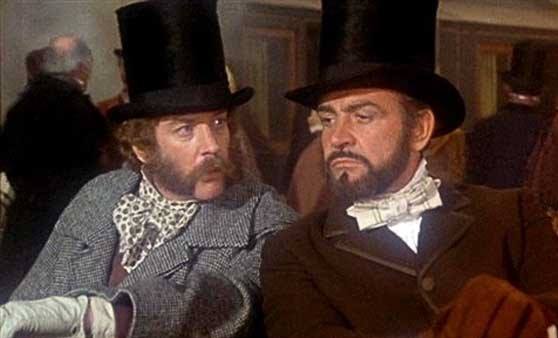
    Finally, we turn to the lighthearted caper “The Great Train Robbery” (1979), starring Sean Connery, Donald Sutherland, and Leslie-Anne Down. Michael Crichton wrote the screenplay, after his own novel, which in turn was based on an actual historical incident – an 1855 heist, in which an unbelievable amount of gold disappeared from a moving train. Crichton also directed the film. The music is by the great Jerry Goldsmith.

    All aboard! We’ll be taking the train today, on “Picture Perfect,” music for the movies, this Friday evening at 6:00 EDT, on WWFM – The Classical Network and wwfm.org.


    (Top) Sutherland and Connery; (bottom, left to right) Farley Granger and Alfred Hitchcock pass in the night; Finney as Hercule Poirot; Lancaster means business
  • Vikings Sack Paris 845 plus Song of the Viking Guest

    Vikings Sack Paris 845 plus Song of the Viking Guest

    by 

    in
    4 responses

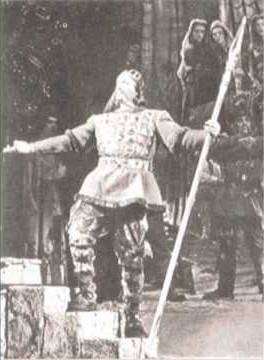
    The Vikings sacked Paris on this date in 845. Hear Mark Reizen sing the “Song of the Viking Guest” from Rimsky-Korsakov’s “Sadko.”


  • Heinz Winbeck A Lost Symphony Found

    Heinz Winbeck A Lost Symphony Found

    by 

    in
    2 responses

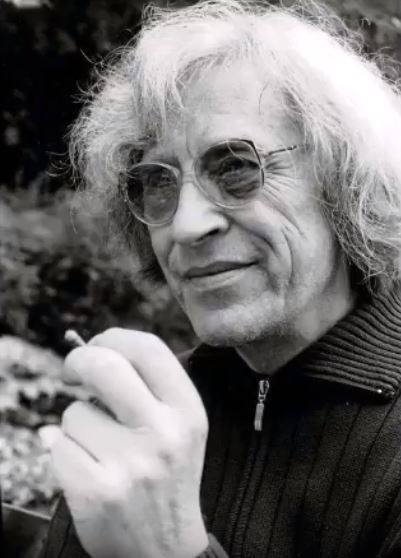
    The German composer Heinz Winbeck has died. I’m ashamed to say, before today I knew nothing about this man, who forged five epic symphonies. It would seem, upon listening to the Fifth, that my existence up until now has been a barren one.

    The symphony, composed in 2009, bears the subtitle “Jetzt und der Stunde des Todes” nach Motiven insbesondere des Finales der IX. Symphonie von Anton Bruckner (“Now and in the hour of death” on motives particularly from the finale of the 9th Symphony of Anton Bruckner).

    So much wonderful music in the world. It is one of life’s great tragedies that one will never be able to hear all of it. If you like Bruckner, prepare to be totally blissed out.

    https://www.youtube.com/watch?v=TmLmpqI2UX4&feature=youtu.be&t=2895


  • Saint-Saëns’ Fury Franck Holmès Music from Marlboro

    Saint-Saëns’ Fury Franck Holmès Music from Marlboro

    by 

    in
    One response

    It’s music to get Camille Saint-Saëns’ blood boiling, on the next “Music from Marlboro.”

    Saint-Saëns was the dedicatee of the Piano Quintet in F minor by his friend, César Franck. But as he sight-read through the piano part at the work’s premiere in 1879, he became more and more agitated, angry even. At the conclusion of the piece, he rejected Franck’s attempt to shake his hand, and stormed off without acknowledging the applause.

    He wasn’t the only one. Franck’s wife also made no secret of hating it.

    Here was music of sublimated desire, and everyone knew the cause. Saint-Saëns knew, because he felt the same way about Franck’s pupil, Augusta Holmès. Franck tutored Holmès in organ and composition. No doubt he admired her musical talent, but equally there was no doubt his interest went beyond that of master-disciple. Don’t let those mutton chops fool you. A man is only flesh and blood.

    There must have been something about Holmès, the French composer of Irish descent, because she had the same effect on just about every man she crossed paths with. Saint-Saëns had proposed marriage to her multiple times, always without success. He would refer to her as a “beautiful pythoness.” Methinks his vines had tender sour grapes.

    We’ll hear a performance of Franck’s incendiary piece, featuring pianist Mitsuko Uchida, violinists Soovin Kim and David McCarroll, violist Milena Pajaro-van de Stadt, and cellist Matthew Zalkind, from the 2012 Marlboro Music Festival.

    The hour will open with a work by Claude Debussy. Debussy composed “En blanc et noir” in 1915, making it one of his later creations, contemporaneous with the Cello Sonata, the Sonata for Flute, Viola and Harp, and the Etudes for solo piano.

    It is to be remembered that Saint-Saëns, who basically lived forever, was 80 years-old by this time. He loathed the work. “We must at all costs bar the door of the Institute against a man capable of such atrocities,” he fumed. “They should be put next to the cubist pictures.”

    The first movement, an energetic waltz, is dedicated to Serge Koussevitzky; the second, a somber slow movement, to Debussy’s friend, Jacques Charlot, who was killed during the First World War; and the third, a playful scherzando, to Igor Stravinsky.

    We’ll hear it played at Marlboro in 2017 by pianists Xiaohui Yang and Cynthia Raim.

    The forbidden fruit tastes the sweetest, thanks to Saint-Saëns’ anger management issues, on the next “Music from Marlboro,” this Wednesday evening at 6:00 EDT, on WWFM – The Classical Network and wwfm.org.

    BONUS: Tune in early to hear one of Holmès’ symphonic poems in the 5:00 hour!

    Marlboro School of Music and Festival: Official Page


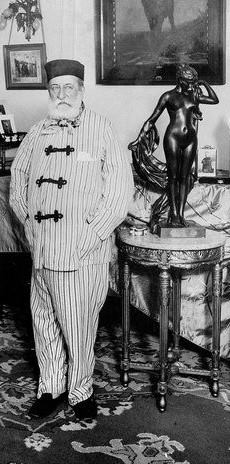
    PHOTOS (clockwise from left): Saint-Saëns, all dressed up with nowhere to go; Franck at the organ; Holmès with her je ne sais crois; Debussy, transfixed by a cigarette


  • Remembering Biava Plus Franck’s Passion

    Remembering Biava Plus Franck’s Passion

    by 

    in
    2 responses

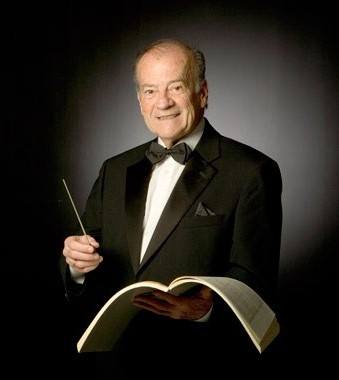
    At 4:00 EDT, we’ll remember Philadelphia violinist and conductor Luis Biava, who died yesterday at the age of 85.

    We’ll hear two of Biava’s recordings, made with The Philadelphia Orchestra and the Temple University Symphony Orchestra, respectively. Biava was a long-time faculty member at the Boyer College of Music and Dance – Temple University. Then toward the latter portion of the hour we’ll celebrate the birthday anniversaries of composer-arrangers Ferde Grofé and Richard Hayman.

    In the 5:00 hour, we’ll blow out some more candles for composer Vincent d’Indy and cellist and conductor Mstislav Rostropovich, both also born on this date. As a special added bonus, we’ll hear a symphonic poem by the woman who destroyed Camille Saint-Saëns and César Franck’s friendship, Augusta Holmès.

    At 6:00, on this week’s “Music from Marlboro,” the featured highlight will be Franck’s Piano Quintet in F minor, the work into which Franck poured all his sublimated passion for Holmès, a fact which, unfortunately, was not lost on Saint-Saëns, who played the piano part at the work’s premiere in 1879.

    Life is messy. Embrace the music, from 4 to 7 p.m. EDT, on WWFM – The Classical Network and wwfm.org.


Tag Cloud

Aaron Copland (93) Beethoven (95) Composer (114) Film Music (145) Film Score (143) Film Scores (255) Halloween (94) John Williams (195) KWAX (229) Leonard Bernstein (104) Marlboro Music Festival (125) Movie Music (160) Mozart (91) Opera (213) Philadelphia Orchestra (89) Picture Perfect (174) Princeton Symphony Orchestra (109) Radio (88) Ross Amico (244) Roy's Tie-Dye Sci-Fi Corner (290) The Classical Network (101) The Lost Chord (269) Vaughan Williams (105) WPRB (397) WWFM (881)

DON’T MISS A BEAT

Receive a weekly digest every Sunday at noon by signing up here


RECENT POSTS