
• Black Composers Series Reissue Neglect

    Black Composers Series Reissue Neglect

    by 

    in
    7 responses

    This is really weird. Arguably the most exciting set of reissues in years, and Sony Classical is giving it absolutely no promotion. It’s not on their Facebook page. It’s not listed anywhere on their official website. Instead, they keep pushing their recording of the same old tired New Year’s Concert from Vienna.

    Yet I know for a fact that my postings about, and airing highlights from, the newly released “Black Composers Series” have generated notable enthusiasm and resulted in a number of confirmed orders. It’s evident from social media that others who have learned of its reappearance are no less excited. Unfortunately, it looks like, if this set is going to achieve anywhere near the success it deserves, it’s going to have to be totally through word of mouth. Which is a real shame, Sony.

    The Black Composers Series was a bold undertaking in the 1970s, a pioneering effort and an idealistic investment in the future – nine albums of unknown repertoire by minority composers, only several of whom may have been on the very periphery of a few collectors’ consciousness, at best. Even so, it’s rumored that the series was originally intended to run to 20 volumes. We are so lucky to have what we got.

    On some level, it’s hardly surprising that the plug might have been pulled 40 years ago. After all, the series was a bold gamble. (On the other hand, record labels did take more chances back then, and it was an accepted fact that classical records needed time to find their audience.)

    Sadly it appears that, even all these years later, the Black Composers’ Series struggles for the exposure and respect it deserves. It’s especially distressing that the company that produced it displays so little confidence, or perhaps awareness, of its true worth that they have essentially just dumped it on the market.

    I don’t mean to sound ungrateful. I am so, so happy that Sony finally got around to making these recordings available again. I only wish the label were more nurturing.

    Be that as it may, I’ll continue to do what I can by devoting the entire month of February, #BlackHistoryMonth, to airing highlights from this terrific set. Tune in tonight to hear works by George Walker (pictured) and José Maurício Nunes Garcia.

    Walker was the first African-American recipient of the Pulitzer Prize for Music – as recently as 1996 – for his work, “Lilacs for Voice and Orchestra.” He was the first black musician to graduate from the Curtis Institute of Music and a pupil of Nadia Boulanger. We’ll hear his virtuosic Trombone Concerto of 1957.

    Then we’ll travel to South America for music by Nunes Garcia. Nunes Garcia was Master of Music of the Royal Chapel in Rio de Janeiro. He composed over four hundred pieces of music, including the first Brazilian opera. We’ll hear his Requiem Mass, from 1816, written at the request of John VI of Portugal for funeral services for his mother, Maria I.

    It’s just an example of this set’s amazing diversity. I hope you’ll join me “Black to the Future, Part II” – the second of four programs devoted to Columbia Records’ forward-looking, if neglected, Black Composers Series – this Sunday night at 10:00 EST, on WWFM – The Classical Network and wwfm.org.

  • Black Composers Garcia & Walker on “Lost Chord”

    Black Composers Garcia & Walker on “Lost Chord”

    by 

    in
    5 responses

    Hear contrasting works by José Maurício Nunes Garcia and George Walker tonight on “The Lost Chord.”

    Walker was the first African-American recipient of the Pulitzer Prize for Music – as recently as 1996 – for his “Lilacs for Voice and Orchestra.” He was the first black musician to graduate from the Curtis Institute of Music. He also studied at the Eastman School and was a pupil of Nadia Boulanger. Tune in for Walker’s Trombone Concerto of 1957.

    Then it’s off to South America for Nunes Garcia’s Requiem Mass of 1816. Nunes Garcia was Master of Music of the Royal Chapel in Rio de Janeiro. He composed over four hundred pieces of music, including the first Brazilian opera. The Requiem was written at the request of John VI of Portugal for funeral services for his mother, Maria I.

    Join me for this second installment in celebration of the reissue on Sony Classical, after 40 years, of the legendary Black Composers Series. We’re sharing highlights throughout #BlackHistoryMonth, Sunday nights at 10:00 EST, on WWFM – The Classical Network and wwfm.org.

  • The Dark Allure of Bluebeard’s Tale

    The Dark Allure of Bluebeard’s Tale

    by 

    in
    6 responses

    Do you know the tale of Bluebeard?

    Hot on the heels of yesterday’s “Picture Perfect” featuring Gothic romances, my mind is full of this disturbing fairy story, which, like any myth worth its salt, embeds itself in the recesses of the unconscious, only to color and confirm certain anxieties or perceived truths about the wider world.

    The best known version of the story is the one by Charles Perrault, set down in the 17th century. Perrault’s popular retellings of Little Red Riding Hood, Cinderella, The Sleeping Beauty, and Puss in Boots served to codify these timeless folk tales for the modern age.

    Bluebeard as an archetype informs the characterizations of so many of the tortured antiheroes of the Gothic novel – the mysterious and brooding nobleman who lives in a dank castle of many chambers that surely contain their share of skeletons, be they literal or figurative.

    Sometimes Bluebeard really is the menace of Perrault, the volatile madman who lives in a house full of corpses. At others (as in “Jane Eyre”), he is a tragic hero who harbors a guilty secret that cuts him off from all happiness, love, and normalcy. Only gradually do the heavy doors grind open on rusty hinges to reveal their truths. The chambers are like the dark corners of his psyche, vulnerabilities he holds close, to the point of near-destruction and sometimes beyond. Only understanding and acceptance have the power to alter his world.

    That said, sometimes Bluebeard really is a murderous creep who’s all about control and over-the-top cruelty.

    And what about his bride, named Judith in Béla Bartók’s opera, “Bluebeard’s Castle?” Is her curiosity a liberating force or a destructive one? The parable of fatal curiosity extends back through the Biblical stories of Lot’s wife and Eve and the Classical myths of Pandora, Orpheus and Psyche.

    The tale positively drips with allegory. If there is anything that is clear about the Bluebeard story, it’s that it would take two very special people to make this unusual relationship work. There’s no way any outside observer would ever, ever, EVER understand.

    Bartók’s “Bluebeard’s Castle” will be heard worldwide as part of a double-bill – with Tchaikovsky’s “Iolanta,” a happier tale extolling the virtues of faith (in this case literally blind) – on The Metropolitan Opera’s weekly radio broadcast, which will commence today at 12:30 p.m. EST. If you’re interested, Google yourself an affiliate.


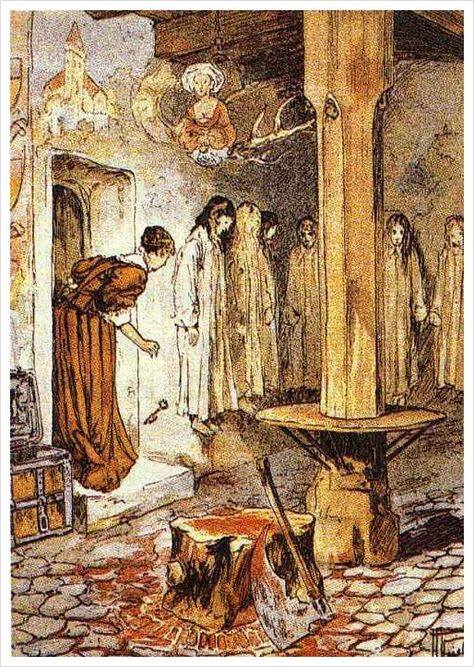
    Illustration from “Bluebeard” (1887) by Hermann Vogel


  • Gothic Romance Movie Music for Valentine’s Day

    Gothic Romance Movie Music for Valentine’s Day

    by 

    in
    7 responses

    Windswept moors. Destructive passions. Byronic guilt.

    The term “Gothic romance” doesn’t necessarily denote a love story. In 19th century literary tradition, “romance” was often suggestive of the mysterious, the adventurous, the sensational – a kind of pleasing terror, often touched by elements of horror.

    This week on “Picture Perfect, I strike my annual blow against Valentine’s Day with music from movies featuring creepy old houses, ghosts, malevolent housekeepers, and madwomen in the attic.

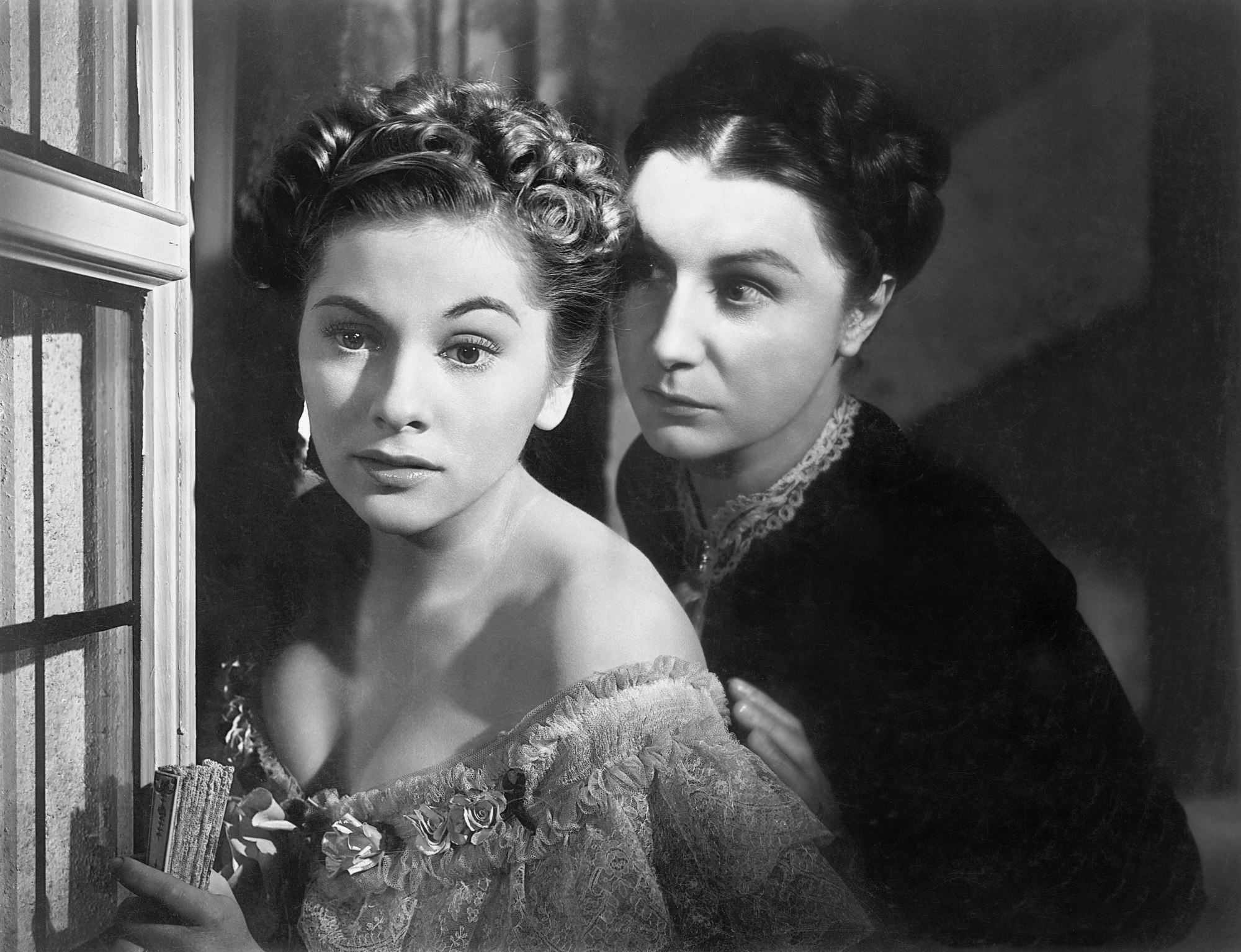
    Alfred Hitchcock’s “Rebecca” (1940), based on the Gothic novel of Daphne DuMaurier, is a clear throwback to the works of the Brontë sisters. Laurence Olivier and Joan Fontaine star, but Judith Anderson steals the show as the ice-cold Mrs. Danvers. The film was the recipient of an Academy Award for Best Picture, the only Hitchcock film to be so honored. Franz Waxman’s opulent and atmospheric score flares at its operatic climax.

    Collectively, the Brontë sisters were responsible for some of the most tortured romances in English literature. Charlotte Brontë’s “Jane Eyre,” a work which clearly anticipates “Rebecca,” was adapted most famously in 1940, again with Joan Fontaine, and featuring Orson Welles as Rochester. Three decades later, a television version of “Jane Eyre” (1971) appeared, with Susannah York and George C. Scott. The music for the latter was by an up-and-coming composer, only a few years away from superstardom: John Williams.

    “Uncle Silas” (1947) is a Gothic that sidesteps the love story altogether. Forced to live under the guardianship of a sinister uncle and a malevolent French governess, its heroine is thrust into an atmosphere of insinuating menace. Sheridan LeFanu’s “old dark house” thriller was made into a film by Gainsborough Studios, released in the United States as “The Inheritance.” A young Jean Simmons plays the imperiled heiress. The music was by Alan Rawsthorne, a distinguished concert composer, who nonetheless managed to compose 27 film scores. Bernard Herrmann considered the score for “Uncle Silas” to be one of the finest ever written.

    Finally, we’ll hear music from a beloved adaptation of Emily Brontë’s tale of star-crossed love, “Wuthering Heights” (1939). Merle Oberon is Cathy and Laurence Olivier is Heathcliff. Alfred Newman’s music yearns and sobs right along with us.

    I hope you’ll join me for an hour of gloom and doom for Valentine’s Day – Gothic romances on “Picture Perfect,” this Friday evening at 6:00 EST, on WWFM – The Classical Network and wwfm.org.


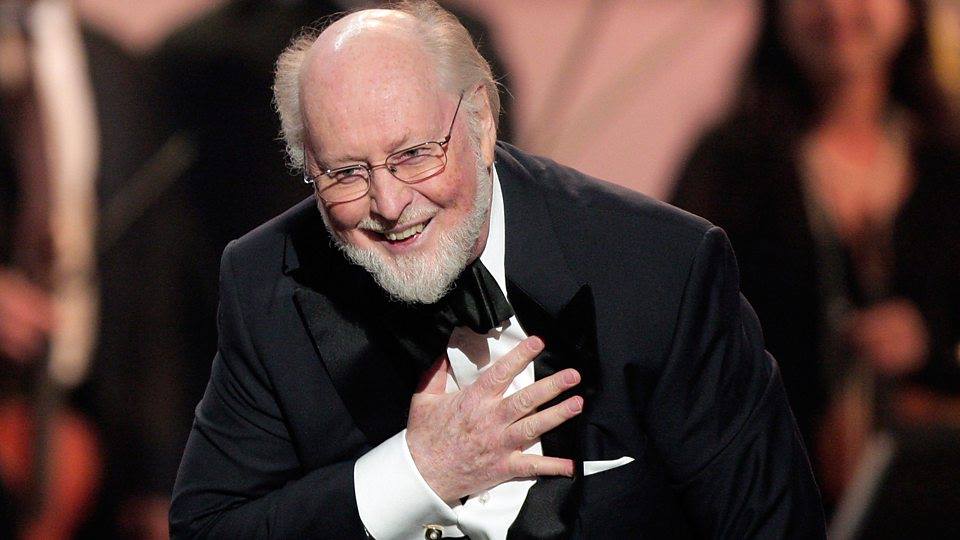
    BONUS: Today is “Jane Eyre” composer John Williams’ 87th birthday! Tune in early to enjoy some of his other film and concert works between 4 and 6 p.m.


  • Happy 87th Birthday John Williams Tune In!

    Happy 87th Birthday John Williams Tune In!

    by 

    in
    6 responses

    Happy birthday, John Williams!

    Williams is 87 today. We’ll hear a suite from his lovely and rarely-heard score to “Jane Eyre” on “Picture Perfect” tonight at 6:00 EST, part of an anti-Valentine’s program devoted to doomed love and Gothic romances.

    But tune in a little earlier – between 4 and 6 – to enjoy a few additional Williams surprises. I’ll have something for you in each of my three hours on the air, from 4 to 7 p.m. EST, on WWFM – The Classical Network and wwfm.org.


Tag Cloud

Aaron Copland (93) Beethoven (95) Composer (114) Film Music (145) Film Score (143) Film Scores (255) Halloween (94) John Williams (195) KWAX (229) Leonard Bernstein (104) Marlboro Music Festival (125) Movie Music (160) Mozart (91) Opera (213) Philadelphia Orchestra (89) Picture Perfect (174) Princeton Symphony Orchestra (109) Radio (88) Ross Amico (244) Roy's Tie-Dye Sci-Fi Corner (290) The Classical Network (101) The Lost Chord (269) Vaughan Williams (105) WPRB (397) WWFM (881)

DON’T MISS A BEAT

Receive a weekly digest every Sunday at noon by signing up here


RECENT POSTS