• Saint-Saëns, Rossini & More From Marlboro

    Saint-Saëns, Rossini & More From Marlboro

    by 

    in
    5 responses

    On this week’s “Music from Marlboro,” we’ll travel from Saint-Saëns to Saint Petersburg, with a performance by Lara St. John tossed into the mix.

    Works by two child prodigies (well, one of them “former”) will be heard on the first half of the program.

    Camille Saint-Saëns demonstrated perfect pitch at the age of two and gave his first public concert at five. He was 72, at the other end of a very long career, when he composed his Fantaisie, Op. 124. We’ll hear it performed by violinist Thomas Zehetmair and harpist Alice Giles, at the 1982 Marlboro Music Festival.

    Gioachino Rossini would blossom into one the most productive of opera composers, but even as a boy there was evidence of his remarkable facility and fecundity. He wrote his six string sonatas, scored for two violins, cello, and double bass, in 1804, over a period of three days. Rossini was twelve years-old. The sonatas are rhythmically vital and full of the kinds of melodies that would soon endear him to audiences the world over. We’ll hear the third of these, the String Sonata in C major, in a 1989 performance, featuring violinists St. John and Ivan Chan, cellist Paul Tortelier, and double bassist Timothy Cobb.

    Then we’ll round out the hour with Anton Arensky’s Piano Trio No. 1 in D minor. Arensky, a pupil of that icon of Russian nationalism, Nikolai Rimsky-Korsakov, gravitated more toward the cosmopolitan sound of Rimsky’s rival, Peter Ilych Tchaikovsky. His trio is full of good tunes, always charming, regardless of whether the music is melancholy, turbulent, reflective, or good humored. It’s the kind of piece that will have you humming for the rest of the day. It was played at the 1982 Marlboro Music Festival by pianist Frederick Moyer, violinist Isodore Cohen, and cellist John Sharp.

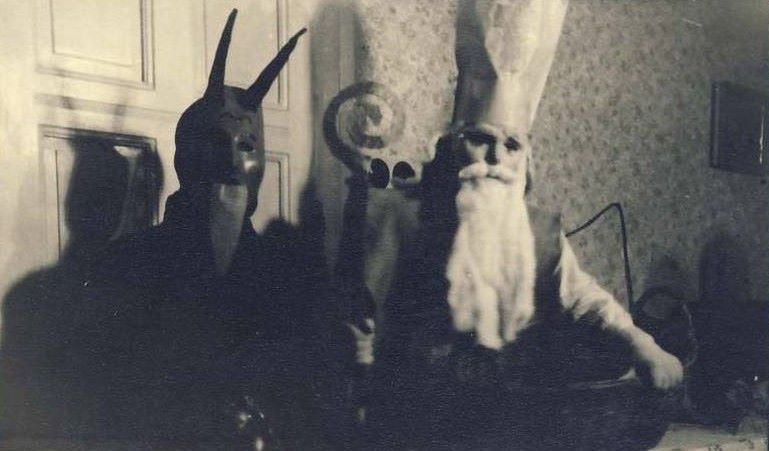
    We’re grasping for saints on this Krampusnacht. I hope you’ll join me for the next “Music from Marlboro,” this Wednesday evening at 6:00 EST, on WWFM – The Classical Network and wwfm.org.

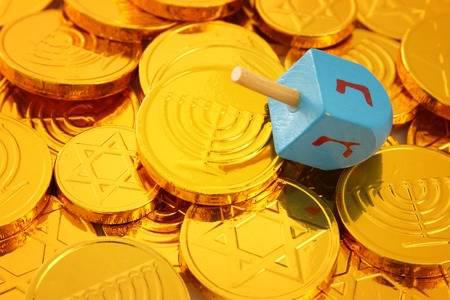
    In the meantime, here’s a link to Lara St. John’s new “Hanukkah Carol,” co-written with accordionist Ronn Yedidia and sung by countertenor Aryeh Nussbaum Cohen.

    Marlboro School of Music and Festival: Official Page


  • Handel’s Judas Maccabaeus on WWFM

    Handel’s Judas Maccabaeus on WWFM

    by 

    in
    3 responses

    During these shortest days of the year, we can use all the light we can get. With three candles in the menorah last night, we’ll celebrate the second day of Hanukkah with a complete recording of Handel’s other holiday oratorio, “Judas Maccabaeus.”

    Handel’s overshadowed masterpiece relates the successful victory of the Jewish people over the Seleucids, who would have had them worshiping Zeus! (In 170 BC, that was actually a thing.) Cannily, the premiere was scheduled to take place at Covent Garden in April 1746, to coincide with the return of William Augustus, Duke of Cumberland and youngest son of King George II, who had only just successfully routed the Jacobites at Culloden. Surfing the predicted wave of patriotic fervor, the 61 year-old Handel had engineered another smash.

    We’ll hear a complete performance of the work, following today’s Noontime Concert – another holiday treat centuries in the making – “Nowell Sing We: A Medieval Celebration,” presented by the Brooklyn-based ensemble Alkemie. The program is organized around the theme of Twelfth Night and/or Epiphany, celebrated at the far end of the Christmas season, and illustrated through musical selections from the 11th through 16th centuries.

    The performance took place on January 4, 2018, at St. Bartholomew’s Church, 50th Street and Park Avenue, in Midtown Manhattan, where free concerts are held every Thursday at 1:15 p.m.

    The broadcast is made possible in part by Gotham Early Music Scene, or GEMS. GEMS is a non-profit corporation that supports and promotes artists and organizations in New York City devoted to early music – music of the Middle Ages, Renaissance, Baroque, and early Classical periods. For more information and GEMS’ events calendar, look online at gemsny.org.

    Immediately following today’s concert broadcast, enjoy Norman Dello Joio’s “Variants on a Mediaeval Tune” – the tune being the familiar Christmas melody “In dulci jubilo.” Then at 1:00, arrange yourself a plate of rugelach and settle in for “Judas Maccabaeus.”

    What’s old is new, with the ensemble Alkemie; then get a Handel on the Maccabees, between 12 and 4 p.m. EST, on WWFM – The Classical Network and wwfm.org.


  • Webern Fine Rota and More on WWFM

    Webern Fine Rota and More on WWFM

    by 

    in
    7 responses

    When is music not Fine? When it’s by Webern, of course!

    The playlist today will consist of works by birthday celebrants Irving Fine, Anton Webern, Nino Rota (both film and concert pieces), Jose Serebrier, Antonio Soler, and Paul Turok. We’ll also mark the second evening of Hanukkah.

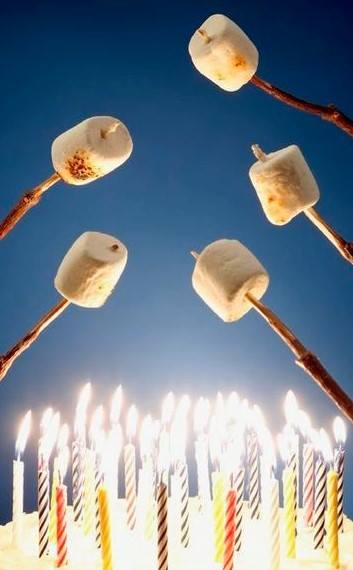
    Better pick up some more candles!

    All fire codes will be flouted, from 4 to 7 p.m. EST, on WWFM – The Classical Network and wwfm.org.


  • December Holiday Calendar Your Guide to Winter Celebrations

    December Holiday Calendar Your Guide to Winter Celebrations

    by 

    in
    3 responses

    It’s December 2, and the holidays kick into high gear. You know I am a total maniac for mid-winter celebrations, and the wackier the better. If I am missing anything – and, with so many cultures and so much history in the world, how could it not be? – please add to this year’s list in the comments below.

    12/2 – Advent begins; Hanukkah begins (sunset); inauguration of the Gävle Goat (Sweden)
    12/5 – Krampusnacht!
    12/6 – Feast Day of Saint Nicholas
    12/7 – Day of the Little Christmas (Colombia)
    12/8 – Sibelius’ birthday
    12/12 – Arrival of the Yule Lads (Iceland); Poinsettia Day (established 1851)
    12/13 – Saint Lucia’s Day
    12/17 – Saturnalia
    12/21 – Winter Solstice; Yule begins
    12/22 – Giant Lantern Festival (Philippines)
    12/23 – Festivus!
    12/24 – Christmas Eve
    12/25 – Christmas Day; Establishment of the Celestial Cow (Kemetic Orthodox)
    12/26 – Saint Stephen’s Day; Boxing Day; Kwanzaa begins
    12/31 – New Year’s Eve; Ghambar Maidyarem (Zoroastrian)
    1/1 – New Year’s Day
    1/5 – Twelfth Night; La Befana! (Italy)
    1/6 – Epiphany; Feast of the Three Kings
    1/7 – Coptic Christmas; Eastern Orthodox Christmas


    Follow the Gävle Goat on Twitter! The opening celebrations take place now. Link to live streaming here:

    https://twitter.com/Gavlebocken?ref_src=twsrc%5Egoogle%7Ctwcamp%5Eserp%7Ctwgr%5Eauthor


  • Hanukkah Music on The Lost Chord

    Hanukkah Music on The Lost Chord

    by 

    in
    6 responses

    Hanukkah begins at sunset. Get ready for the eight-day Festival of Lights. This Sunday night on “The Lost Chord,” I hope you’ll join me for music on Jewish themes and by Jewish composers, including “Aspects of a Great Miracle” by Michael Isaacson, “Three Hassidic Dances” by Leon Stein,” and “The Klezmer Concerto” by Ofer Ben-Amots. Enjoy your fill of light and latkes, on “Pieces of Eight,” this Sunday night at 10:00 EST, on WWFM – The Classical Network and wwfm.org.


Tag Cloud

Aaron Copland (93) Beethoven (95) Composer (114) Film Music (145) Film Score (143) Film Scores (255) Halloween (94) John Williams (195) KWAX (229) Leonard Bernstein (104) Marlboro Music Festival (125) Movie Music (160) Mozart (91) Opera (213) Philadelphia Orchestra (89) Picture Perfect (174) Princeton Symphony Orchestra (109) Radio (88) Ross Amico (244) Roy's Tie-Dye Sci-Fi Corner (290) The Classical Network (101) The Lost Chord (269) Vaughan Williams (105) WPRB (397) WWFM (881)

DON’T MISS A BEAT

Receive a weekly digest every Sunday at noon by signing up here


RECENT POSTS