• Berlioz Passion Madness & Rediscovered Mass

    Berlioz Passion Madness & Rediscovered Mass

    by 

    in
    5 responses

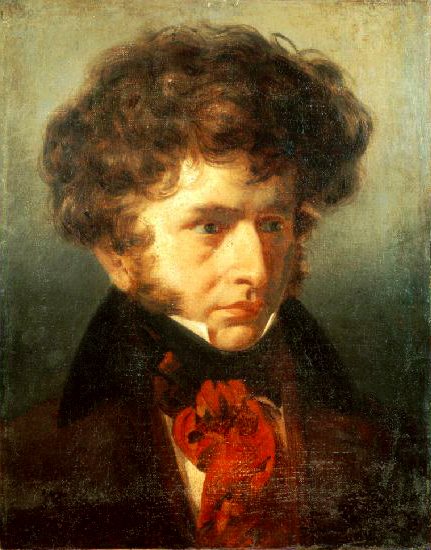
    Hector Berlioz was a man easily swept away by his passions.

    When denied by the object of his affection, the Shakespearean actress Harriet Smithson, he furiously scribbled his “Symphonie fantastique,” an opium-induced fever dream that imagines his own execution for murdering her. She then reappears during the course of a witches’ sabbath to mock his corpse. Perhaps counterintuitively, Smithson went for this in a big way, and the two were married, though, perhaps unsurprisingly, not at all happily.

    Berlioz’s biography is full of crazy adventures . Whether in regard to his affairs of the heart, his musical education, or his notorious compositions, always he was driven by mercurial passions and excesses.

    He lived large, and he dreamed big music. One need only think of his Requiem, with its massive choir, antiphonal brass ensembles, and 16 timpani. The composer even suggested the orchestration could be doubled or tripled, depending on the size of the space. (However, in an uncharacteristic show of restraint, he recommended the chorus be kept to only 400 singers, except for some of the larger numbers.)

    Today is Berlioz’s birthday. It also happens to be the Christmas season, so naturally my thoughts gravitate to “L’enfance du Christ” – which, I must say, is not my favorite Berlioz work. Fortunately, he also composed a “Messe solennelle” in 1824, on virtually the same subject – the commemoration of the Feast of the Slaughter of the Holy Innocents by King Herod in his attempt to the snare the baby Jesus.

    Berlioz was only 20 years-old at the time, but he was already driven by his creative demons. If you are a fan of the composer, you must hear this piece, which teems with presentiments of many of his major works, including the “Symphonie fantastique,” “The Damnation of Faust,” “Benvenuto Cellini” (with its “Roman Carnival Overture”), and of course the Requiem.

    Berlioz himself played the tam-tam at the work’s premiere, and in his excitement gave it such a blow that it blew everyone back in their pews. The “Messe” was favorably received (unusual for this composer), but Berlioz decided he hated the piece and wound up burning the score.

    The work was believed lost for nearly 170 years, until it was rediscovered by a Belgian schoolteacher in an organ gallery in Antwerp in 1991. Sir John Eliot Gardiner conducted the first modern performance two years later, and directs the live recording we will hear this afternoon.

    I’ll preface that with a knock-out recording of the “Symphony fantastique,” led by the Argentinean powder keg Carlos Païta.

    First, today’s Noontime Concert will feature the Dolce Suono Ensemble. Artistic director and flutist Mimi Stillman will join David Osenberg for “Music in the Second Capital,” which explores the musical tastes of the Founding Fathers and Philadelphia musical culture in the last quarter of the 18th century. Featured composers will include Wolfgang Amadeus Mozart, Franz Joseph Haydn, Johann Christian Bach, Arcangelo Corelli, Antonio Vivaldi, and Francis Hopkinson. That begins at 12:00 EST.

    I’ll be along following the concert, around 1:40. Our celebration of Berlioz begins at 2:00. The passionate seething will continue unabated until 4:00, on WWFM – The Classical Network and wwfm.org.

  • Kalevala Chaos Sampo Lost at Sea

    Kalevala Chaos Sampo Lost at Sea

    by 

    in
    10 responses

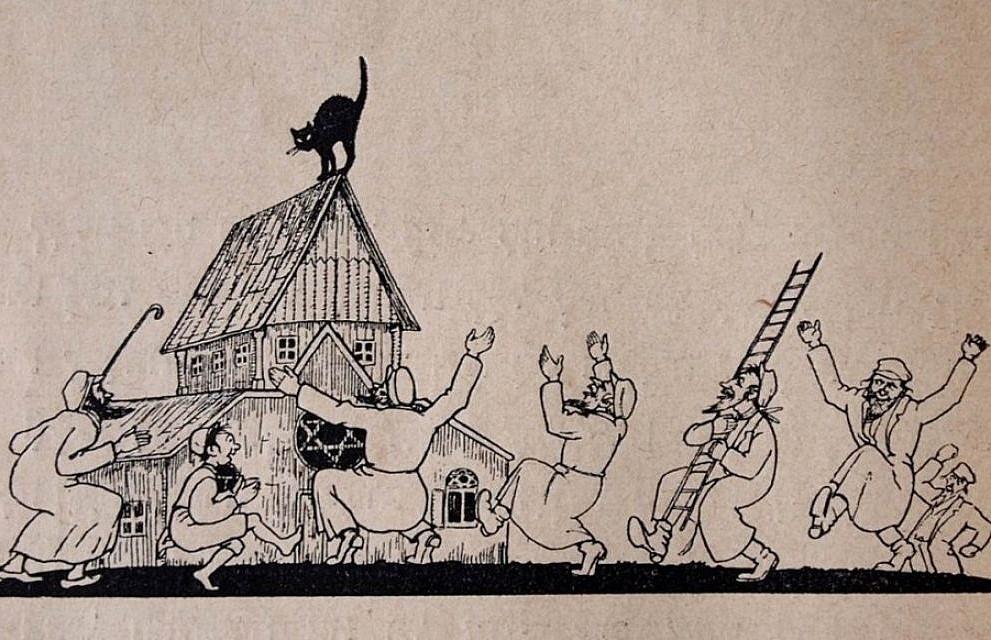
    Väinämöinen is mocked by a salmon, the Sampo is lost at sea, and the Kalevala program did not air last night on “The Lost Chord.” Alas, I must not have loaded it into the playlist properly. Instead my Hanukkah program aired twice in eight days.

    Hang on to your stoicism. Lemminkäinen will return. With Christmas and New Year’s fast approaching, it may not be until 2019. Or it could be this Sunday. Whet your sword and watch this space for omens, auguries and portents.


  • Chelm’s Wise Fools Meet Bach on WWFM

    Chelm’s Wise Fools Meet Bach on WWFM

    by 

    in
    3 responses

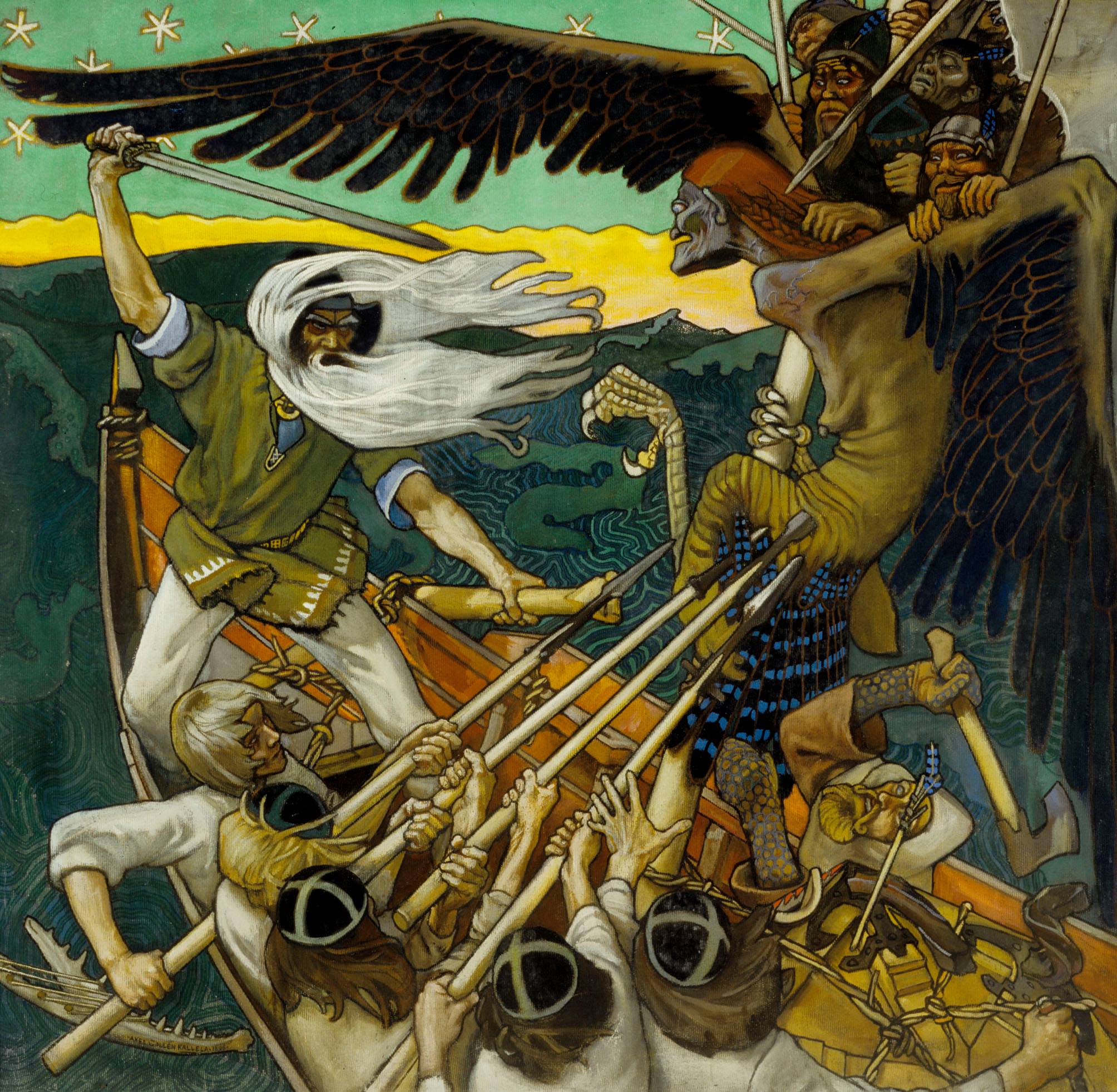
    In Jewish lore, the wise men of the Polish city of Chelm may be very wise indeed, but they sure do lack common sense. For example, when carrying logs down a mountain to build their dwellings, they encounter someone who suggests it might be easier simply to roll them down. They recognize this as a very good idea – so they carry the logs back up the mountain and proceed to roll them down.

    This kind of playful irony informs the tales of Isaac Bashevis Singer, Aaron Zeitlin, and Sholem Aleichem. More to our purposes, the folkloric antics inspired composer Matthew H. Fields when he came to write his “Sages of Chelm.” The work falls into three movements: “Khutzpah,” “Tsores,” and “Simchas.” We’ll enjoy the piece on this last day of Hanukkah, beginning at 3:00 EST.

    In the meantime, here’s a link to a round-up of favorite Chelm stories:

    https://www.myjewishlearning.com/article/the-sages-of-chelm/

    I’ll actually be in a little earlier than usual today, to host “Bach at One.” The Choir of Trinity Wall Street and Trinity Baroque Orchestra will present the Cantata BWV 8 “Liebster Gott, wenn Werd ich sterben” (“Dearest God, when will I die?”), under the direction of Julian Wachner. Then we’ll get a taste of “Pipes at One,” with Kent Tritle on the organ of Trinity’s St. Paul’s Chapel. Featured composers will include Dietrich Buxtehude, Nicolas de Grigny, Louis Marchand, Jean Langlais, Felix Mendelssohn, and of course Bach. As the titles of the programs suggest, these concerts will be broadcast back-to-back (Bach-to-Bach?), beginning at 1:00 EST.

    Then, following “Sages of Chelm,” it will be business as usual at 4:00 EST, as I offer a skillful juxtaposition of birthday anniversaries and commuter entertainment, with some intimations of Christmas folded into the mix.

    The “ch” in “Chelm” is pronounced like the “ch” in “Bach.” It’s not just the cold weather that will have me clearing my throat during this musical marathon run, from 1 to 7 p.m. EST, on WWFM – The Classical Network and wwfm.org.

    The People of Chelm and the Cat:

    https://www.yiddishbookcenter.org/collections/oral-histories/excerpts/woh-ex-0002054/people-chelm-and-cat


  • Finnish Music Epic Tales of the Kalevala

    Finnish Music Epic Tales of the Kalevala

    by 

    in
    One response

    In a week when Finnish conductors are very much in the news (with announcements that Esa-Pekka Salonen is headed to San Francisco in 2020 and that Osmo Vänskä will be stepping down in Minnesota in 2022), we’ll hear music inspired by movers and shakers of the “Kalevala.”

    The “Kalevala,” a disparate collection of long narrative poems culled from the oral tradition, is frequently referred to as the Finnish national epic. Its fantastic and heroic tales informed the work of Finland’s greatest artists at a time when the country began to surge toward independence after 700 years of Swedish rule and an additional century as a duchy of the Russian Empire.

    In a nod to Finnish endeavor, this Sunday night on “The Lost Chord,” we’ll hear “Aino” by Robert Kajanus. Kajanus was Sibelius’ first great champion, who conducted first performances of many of the composer’s major works and led the Helsinki Philharmonic for 50 years. He also wrote over 200 pieces himself. “Aino” was composed in 1885 for the Kalevala Society, to mark the 50th anniversary of the poem’s publication.

    The subject is the wizard Väinämöinen, one of the poems’ heroes, who always seems to be plagued by ill luck. In this particular tale, he wins a singing contest, plunging his rival, Joukahainen, into a swamp. When the latter promises the wizard his sister’s hand in marriage if Väinämöinen will save him from drowning, the sister, Aino, drowns herself rather than submit to this seemingly unbearable fate. She later returns to taunt the grieving Väinämöinen in the form of a salmon.

    One of the most important Finnish composers after Sibelius was Uuno Klami. Klami brought a degree of French polish back from his studies in Paris, where he fell under the irreverent sway of Les Six. This led to the composition of an unusually anti-heroic take on the Kalevala legends, “Lemminkäinen’s Island Adventures.” However, in spite of his occasionally Gallic disposition, Klami grew into one of Finland’s most respected composers. Sibelius recognized his talent and even lobbied for a small lifetime income for Klami from the Finnish government.

    Klami’s most ambitious Kalevala inspiration is his “Kalevala Suite,” of 1933, which he extensively revised ten years later, when this former “enfant terrible” recognized the importance of his role as an artist in a country at war. Unlike Sibelius’ better-known “Four Legends from the Kalevala,” Klami’s suite scrupulously sidesteps the heroes’ actual adventures. He opts instead to paint on a much broader canvas, with movements titled “The Creation of the Earth,” “The Sprout of Spring,” “Terhenniemi” (replete with the sounds of nature and the sunny bliss of a summer’s day), “Cradle Song for Lemminkäinen” (Lemminkäinen’s mother’s song, sung over his dead body, soon to be resurrected), and “The Forging of the Sampo” (a kind of talisman everyone seems to want).

    Of course, no composer had more success drawing on the Kalevala legends than Jean Sibelius. We’ll conclude the hour with a Sibelius rarity, “A Song for Lemminkäinen,” from 1896. This follows on the heels of the composer’s “Lemminkäinen Suite” (also known as “Four Legends from the Kalevala”), written earlier in the decade.

    I hope you’ll join me in acquiring some “Epic Finnish,” this Sunday night at 10:00 EST, on WWFM – The Classical Network and wwfm.org.


  • Sibelius Birthday Tribute Finnish Music

    Sibelius Birthday Tribute Finnish Music

    by 

    in
    6 responses

    All hail Finland’s great composer! Happy birthday, Jean Sibelius!

    Sibelius wrote a ton of music inspired by the Kalevala, the Finnish national epic. Join me for one of the lesser known of these, tomorrow night on “The Lost Chord,” at 10:00 EST, on WWFM – The Classical Network and wwfm.org. The program will also include works by Robert Kajanus and Uuno Klami.

    Cigars and vodka all around!


    Here’s Kajanus conducting Sibelius’ Symphony No. 3.

    https://www.youtube.com/watch?v=5kaz56nbwns

    I was playing this recording when Sibelius’ grandson fortuitously wandered into my bookshop in, I believe, 1998. A formula for instant friendship!


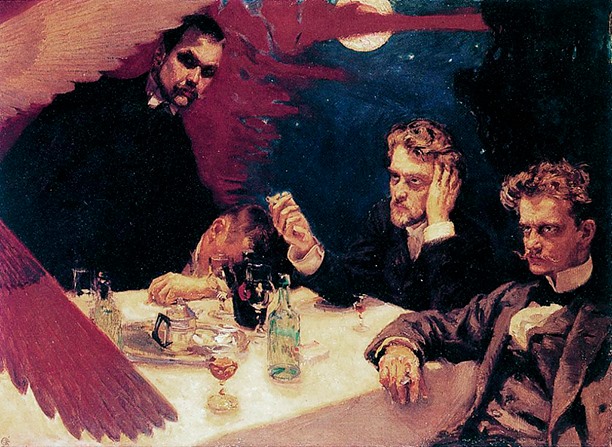
    IMAGE: “Kajustaflan,” painted by Akseli Gallén-Kallela. Pictured (from left to right): the artist, composer Oskar Merikanto (blacked out), Robert Kajanus and Jean Sibelius.

    More about “The Symposium,” with the original version of Gallén’s painting, here:

    http://www.sibelius.fi/english/elamankaari/sib_symbosion.htm

    Party on, gentlemen!


Tag Cloud

Aaron Copland (93) Beethoven (95) Composer (114) Film Music (145) Film Score (143) Film Scores (255) Halloween (94) John Williams (195) KWAX (229) Leonard Bernstein (104) Marlboro Music Festival (125) Movie Music (160) Mozart (91) Opera (213) Philadelphia Orchestra (89) Picture Perfect (174) Princeton Symphony Orchestra (109) Radio (88) Ross Amico (244) Roy's Tie-Dye Sci-Fi Corner (290) The Classical Network (101) The Lost Chord (269) Vaughan Williams (105) WPRB (397) WWFM (881)

DON’T MISS A BEAT

Receive a weekly digest every Sunday at noon by signing up here


RECENT POSTS