• Beethoven Birthday Bash Great Music Gift

    Beethoven Birthday Bash Great Music Gift

    by 

    in
    3 responses

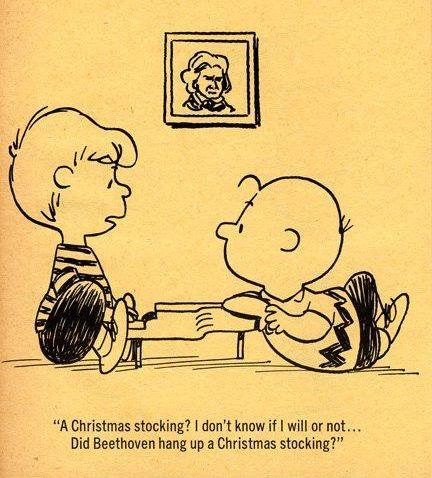
    Whether or not Beethoven bothered to hang a Christmas stocking, he certainly brought Joy to the world through the gift of great music.

    We here at The Classical Network salute the King of Composers on this Friday with one example after another of his stunning invention and humanity, as we mark the Master’s birthday. (He was born on December 16, 1770.) That’s right – it’s our annual Beethoven Bash!

    How much is Beethoven’s music worth to you? In this season of giving, consider supporting The Classical Network as our community’s most accessible conduit to the composer’s genius. We in turn pledge to continue to honor the inspiring legacy of Beethoven and his brethren, as we have done for over three and a half decades.

    This time around, we are offering a special thank you gift for your donation of $120: a particularly attractive 12-CD box set of the composer’s major orchestral works – the symphonies, the concertos, and the overtures – in performances drawn from the Naxos catalogue. It’s a great beginner’s set, attractively packaged. It would make a perfect gift for anyone just getting interested in classical music, or perhaps even the Beethoven completist in your life.

    However, quantities are limited! These boxes flew out of our studios when we first offered them in the fall, but we were able to track down the last available copies from a warehouse overseas. These are expected to be equally in demand, especially so during the holidays. If you would like one in time for Christmas, you’ll have to act fast. Although we have no control over delivery once the package is shipped, we pledge to get your Beethoven box out the door and into the hands of a delivery service ASAP.

    Join us today from 9 AM to 6 PM EST in celebrating Ludwig Van with your gift of membership at 1-888-232-1212 or wwfm.org. Because of listeners just like you, we have been able to share 36 years of some of the greatest music ever written.

    All of us at WWFM – The Classical Network wish you the happiest of holidays and thank you for your continued generosity.


  • Literary Classics on Film Music

    Literary Classics on Film Music

    by 

    in
    4 responses

    2018 marks the 150th anniversary of the publication of “Little Women.” Among the many enduring charms of Louisa May Alcott’s magnum opus is a memorable Christmas chapter, in which the women of the March family help out a neighbor in need by donating their Christmas breakfast – only to be rewarded later in the day with a feast of their own.

    This week on “Picture Perfect,” we’ll have music from movies based on literary classics for little women. Of course readers of either gender have enjoyed these books, but with female protagonists and female authors, they have proved great favorites among generations of female readers. All of them have been adapted for film numerous times.

    We’ll hear selections from a 1993 version of “The Secret Garden.” Frances Hodgson Burnett’s 1911 novel tells of an ill-tempered child who loses her neglectful parents in India, only to blossom at the discovery of the titular garden on her uncle’s otherwise gloomy estate on the Yorkshire moors. Agnieszka Holland directed. The film was released through Francis Ford Coppola’s independent studio, American Zoetrope. Zbigniew Preisner provided the music.

    Another popular novel by the same author, from 1905, is “A Little Princess.” Alfonso Cuarón directed his adaptation in 1995. In Cuarón’s version, a well-bred English girl, again brought up in India, is placed in a boarding school in New York. Her fortunes change when her father goes missing in action during World War I. The girl entertains her fellow students by reciting tales from the Hindu epic, “The Ramayana.” Her Indian connection is reflected in Patrick Doyle’s score.

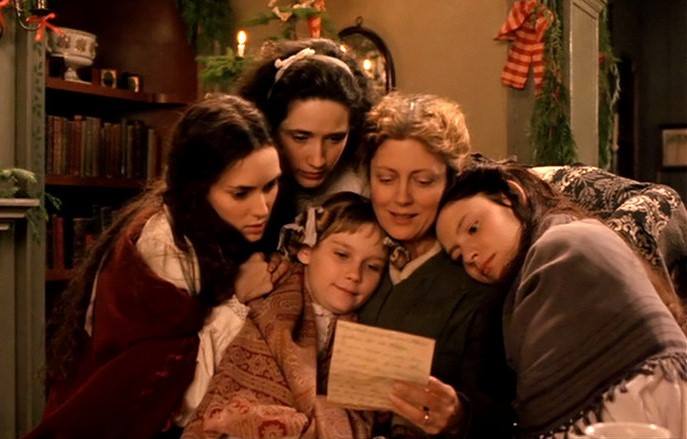
    “Little Women” follows the lives of four sisters of the March family, as they pass from childhood to adulthood in Concord, Massachusetts, during and after the American Civil War. A sensation on its publication in 1868, the book remains one of the most beloved of all time. In 1994, it received its fifth adaptation for the big screen, with Winona Ryder as Jo and Susan Sarandon as Marmee. Thomas Newman, one of the sons of famed film composer Alfred Newman and a cousin of Randy Newman, wrote the music.

    Finally, “Heidi,” by the Swiss writer Johanna Spyri, recounts the events in the life of a young girl who shares a home with her grandfather in the Swiss Alps. There have been roughly 20 film or television productions of “Heidi” to date. This one, from 1968, starred Jennifer Edwards, daughter of Blake Edwards and stepdaughter of Julie Andrews. Maximilian Schell, Jean Simmons and Michael Redgrave were in the supporting cast. The music was written by an up-and-coming composer then known as “Johnny” Williams. And there’s plenty in the score to indicate great things to come.

    Make “Picture Perfect” your secret garden, with music from film adaptations of girl’s literary classics, this Friday evening at 6:00 EST, on WWFM – The Classical Network and wwfm.org.


  • Mykola Leontovych Carol of the Bells Composer

    Mykola Leontovych Carol of the Bells Composer

    by 

    in
    3 responses

    Today is the birthday of Mykola Leontovych (1877-1921). You may not know his name, but you most certainly know “Carol of the Bells.”

    Leontovych conceived “Carol of the Bells” as “Shchedryck” in 1919. It is actually a New Year’s carol, traditionally sung in Ukraine on the eve of the Julian New Year (January 13). The title is derived from the Ukrainian word for “bountiful.” The original text is about a swallow that foretells great fortune with the arrival of spring:

    A little swallow flew
    and started to twitter,
    to summon the master:
    “Come out, come out, O master,
    look at the sheep pen,
    there the ewes have yeaned
    and the lambkins have been born
    Your goods are great,
    you will have a lot of money.
    If not money, then chaff:
    you have a dark-eyebrowed wife.”
    Shchedryk, shchedryk, a shchedrivka,
    A little swallow flew.

    The song was popularized in the West, following an appearance at Carnegie Hall in 1921 by the Ukrainian Republic Cappella, a group which Leontovych co-founded. American choral master Peter Wilhousky, himself of Ukrainian stock, was in the audience. He outfitted the melody with new lyrics to create “Carol of the Bells.”

    I’m always sorry to have to define a composer, in part, through the manner of his death, since that is what we always seem to remember. Unfortunately, the circumstances of Leontovych’s demise were extraordinary enough to invite comment. He happened to be visiting his parents’ house for Christmas in 1921, when a traveler came to the door and requested lodging for the night. The stranger was put up in a room with Leontovych. At sunrise, Leontovych was shot and the family robbed.

    The murder may have been politically motivated. The Ukrainian Republic Cappella was active in promoting Ukrainian independence, and Leontovych had earned his share of enemies. His eldest daughter recalled him saying that he had documents that would allow him to leave the country for Romania. He claimed those papers had been rifled through. Also, the stranger turned out to be an agent of the secret police.

    Do you know the legend of the Christmas Spider? The Eastern European folk tale tells of a poor but hard-working widow who can’t afford to decorate the family tree (a chance result of a fallen pine cone) that happens to be growing in the middle of the house. The family is too poor to decorate, but the children awake on Christmas morning to find the branches bedecked with spider webs that turn to gold and silver, at one stroke saving the holiday and rescuing them all from poverty.

    The story is not for the arachnophobic, as it is often told from the perspective of spiders. Anyway, if you ever wondered at the spider web ornaments that turn up on Christmas trees from time to time, you need wonder no more.


  • Icelandic Yule Lads Mischief and Mayhem

    Icelandic Yule Lads Mischief and Mayhem

    by 

    in
    5 responses

    December 12. Here come the Yule Lads!

    What’s that? You’re unfamiliar with the Icelandic tradition of the Yule Lads? This unruly party is clearly a precursor to the thirteen dwarves [sic] who enlist a certain Hobbit as “burglar,” eating him out of house and home and imperiling his dishes in the process.

    Chip the glasses and crack the plates!
    Blunt the knives and bend the forks!
    That’s what Bilbo Baggins hates—
    Smash the bottles and burn the corks!

    Cut the cloth and tread on the fat!
    Pour the milk on the pantry floor!
    Leave the bones on the bedroom mat!
    Splash the wine on every door!

    Dump the crocks in a boiling bowl;
    Pound them up with a thumping pole;
    And when you’ve finished if any are whole,
    Send them down the hall to roll!

    That’s what Bilbo Baggins hates!
    So, carefully! carefully with the plates!

    Today, the Yule Lads are usually personified as a kind of bevy of affable Santa Clauses. Except, being Icelandic, they either leave gifts (if you’ve been nice) or rotting potatoes (if you’ve been naughty). That’s the sanitized version. You don’t have to dig too deeply to discover their true selves.

    The Lads are thirteen in number. In Icelandic lore, they are annoying pranksters at best; at worst, they are homicidal trolls who devour children. Mostly they steal from and harass Icelandic farmers.

    The Lads descend from the mountains, staggering their arrivals and departures, beginning thirteen nights before Christmas. Each has his own exasperating speciality.

    There’s the peg-legged Stekkjarstaur (Sheep-Cote Clod), who harasses sheep. He arrives on December 12 and takes his leave on Christmas Day.

    There’s Giljagaur (Gully Gawk), who lurks in gullies, biding his time to sneak into the cowshed and steal milk. He turns up on December 13 and returns to his lair on December 26.

    There’s the diminutive Stúfur (Stubby), who steals pans in order to eat the crust out of them. He trots in on December 14 and totters off on December 27.

    There’s Þvörusleikir (Spoon-Licker), who, well, licks spoons. He’s very gaunt, due to malnutrition. He shows up on December 15 and disappears, like Kafka’s hunger artist, into the straw on December 28.

    There’s Pottaskeffil (Pot-Scraper), another one who steals leftovers from pots. He comes a-calling on December 16 and returns to the hills on December 29.

    There’s Askasleikir (Bowl-Licker). Again, he licks bowls. I’d advise you to use extra soap, except once he licks the bowls, he usually steals them. He slips in on December 17 and slips out on December 30.

    There’s Hurðaskellir (Door-Slammer), who slams doors in the night. He raises a ruckus from December 18 to December 31.

    There’s Skyrgámur (Skyr-Gobbler), a Yule Lad who’s crazy for skyr, a kind of Icelandic yogurt. He sates himself from December 19 to January 1.

    There’s Bjúgnakrækir (Sausage-Snatcher), who’s crazy for the pig-products. He hides in the rafters and swipes smoked sausages. He makes his mark from December 20 to January 2.

    There’s Gluggagægir (Window-Peeper), who peeps, creepily, through windows, looking for things to steal. He cases the joint from December 21 to January 3.

    There’s Gáttaþefur (Doorway-Sniffer), who sniffs around the door jamb with his abnormally large proboscis, in search of laufabrauð, Icelandic Christmas bread. He hungers from December 22 to January 4.

    There’s Ketkrókur (Meat-Hook), who uses a hook to steal meat. He steals from December 23 to January 5.

    And finally, there’s Kertasníkir (Candle-Stealer), who pursues children so that he can eat their candles. (He likes tallow.) He’s a “light” eater from Christmas Eve, December 24, to Epiphany, January 6.

    And you thought holiday visits from your relatives drove you batty!

    Their mother is the ogress Grýla, who descends from the mountains in search of children to boil in her cauldron. If you happen to find yourself in her gnarled claws, remember, she has to release you if you repent.

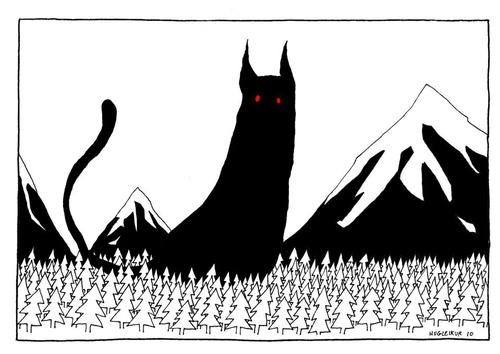
    The Yule Lads are frequently accompanied by the Yule Cat, which eats children who do not receive new clothes before Christmas. This is tied in to the Icelandic work ethic. In the old days, if farm hands processed their autumn wool in a timely fashion, they were rewarded with new clothes. If not, they received nothing, leaving them fair game for the Yule Cat. Better sheer them sheep!

    To my knowledge, there has been no classical music written about the Yule Lads. As with Krampus, some enterprising composer could make a real killing. All you need is a Christmas hit, and you can kick back and collect those sweet holiday royalties.

    Be that as it may, I’ll be doing what I can, playing the “Icelandic Folk Dances” by Jón Leifs, among my featured works, this afternoon between 4 and 6 p.m. EST, on WWFM – The Classical Network and wwfm.org.

  • Danish Light: Kuhlau, Nielsen & Marlboro

    Danish Light: Kuhlau, Nielsen & Marlboro

    by 

    in
    5 responses

    As we approach the shortest day, it’s all the more important to keep looking on the bright side.

    Just ask German-Danish composer Friedrich Kuhlau. At the age of seven, Kuhlau lost an eye when he slipped on the ice and fell on a bottle. In 1810, he fled to Copenhagen to avoid conscription into Napoleon’s army. There, he struggled to gain acceptance into Danish musical life. It was a bumpy ride, marked by modest success and spectacular failure.

    Then, only a few years after he scored his greatest hit, in 1828, with incidental music to the play “Elverhøj” (“The Elf’s Hill”), his house caught fire. He was forced to spend most of the night out in the freezing cold, as a result of which he developed a chest ailment that drove him to an untimely death at the age of 46.

    Happily, his ill-fortune is nowhere in evidence in his flute quintets. We’ll hear one of them on this week’s “Music from Marlboro.” The Flute Quintet in D major, Op. 51, No. 1, will be performed by flutist Julia Bogorad, violinist Ralph Evans, violists Ira Weller and Samuel Rhodes, and cellist Marcy Rosen, at the 1979 Marlboro Music Festival.

    Like “The Ugly Duckling” of his compatriot, Hans Christian Andersen, Carl Nielsen emerged from humble beginnings to blossom into Denmark’s national composer. Internationally, Nielsen has flitted in and out of the seemingly inescapable shadow of Finnish master Jean Sibelius. Both men were born in 1865. In fact, Nielsen was six months older. But it is an unfair comparison, not so much apples and oranges; more like kipper and pickled herring.

    The very fact that Nielsen is not referred to reductively as “The Sibelius of Denmark” is attributable to an unusually strong individual voice. His music is modern, yet traditional; Scandinavian, yet Germanic. Most important, it is full of personality, freshness and vitality.

    Nielsen’s Wind Quintet of 1922 reflects the composer’s optimism and good humor. These he retained despite great personal, professional, and global turmoil. Each part of the quintet was tailored to the personality of the individual performer for which it was written (members of the Copenhagen Wind Quintet). There is also something of the outdoors about the piece. Nielsen was always fascinated by nature, and there are ample suggestions of bird song woven into the texture of the work’s pastoral neoclassicism.

    We’ll enjoy a recording made at Marlboro in 1971, with flutist Paula Robison, oboist Joseph Turner, clarinetist Larry Combs, bassoonist William Winstead, and hornist Robin Graham.

    Lighten up with an hour of Danish quintets, on the next “Music from Marlboro,” this Wednesday evening at 6:00 EST, on WWFM – The Classical Network and wwfm.org.
    Marlboro School of Music and Festival: Official Page


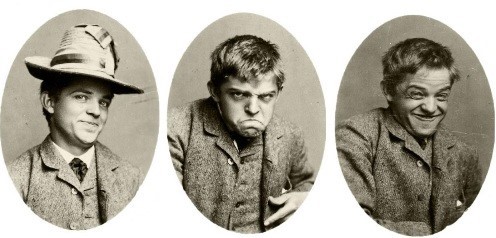
    PHOTOS: Tak for kaffe, with cheese Danish: the young Carl Nielsen


Tag Cloud

Aaron Copland (93) Beethoven (95) Composer (114) Film Music (145) Film Score (143) Film Scores (255) Halloween (94) John Williams (195) KWAX (229) Leonard Bernstein (104) Marlboro Music Festival (125) Movie Music (160) Mozart (91) Opera (213) Philadelphia Orchestra (89) Picture Perfect (174) Princeton Symphony Orchestra (109) Radio (88) Ross Amico (244) Roy's Tie-Dye Sci-Fi Corner (290) The Classical Network (101) The Lost Chord (269) Vaughan Williams (105) WPRB (397) WWFM (881)

DON’T MISS A BEAT

Receive a weekly digest every Sunday at noon by signing up here


RECENT POSTS