• Vaughan Williams Christmas Music & Darwin’s Legacy

    Vaughan Williams Christmas Music & Darwin’s Legacy

    by 

    in
    3 responses

    Ralph Vaughan Williams may have been the son of a clergyman – his father was a vicar who died when he was three – but he was also the great nephew of Charles Darwin. Let’s just say, liberal social and philosophical opinions ran in the family.

    While Darwin was never an outright atheist, he did hold his own unconventional ideas on religion. When young Ralph inquired of his mother after his great uncle’s “On the Origin of the Species,” she replied, “The Bible says God made the world in six days. Great Uncle Charles thinks it took longer: but we need not worry about it, for it is equally wonderful either way.”

    By college, Vaughan Williams branded himself an atheist, but later he settled into a lifetime of “cheerful agnosticism.” He may have embraced some rather progressive ideals, but Vaughan Williams was no rebel angel. He was invariably respectful and well-behaved, in a distinctly English kind of way.

    Also, he loved Christmas. It’s possible that no other major composer wrote as much music influenced by the birth of Christ than did Vaughan Williams. In particular, he loved both the pageantry and simple joys of the season.

    It will be with comparative ease, then, that I will fill the bulk of my afternoon program today with selections from Vaughan Williams’ Christmas music, which is as varied as it is plentiful. We’ll enjoy the massive cantata “Hodie,” the rarely-heard “masque,” or ballet, “On Christmas Night” (after Charles Dickens’ “A Christmas Carol”), and even the Suite for Viola and Orchestra, which includes movements titled “carol” and “Christmas Dance.”

    First, our Noontime Concert will be a unique and thoughtfully constructed Christmas program presented by the Philadelphia-based choir, The Crossing. The Crossing has built a reputation as one of the foremost interpreters of contemporary choral music. The group was the recipient of a 2018 Grammy Award for Best Choral Performance, for its recent recording of Gavin Bryars’ “The Fifth Century.”

    Bryars’ “The Open Road” will be included on today’s concert, which will feature twelve works by living composers, organized around the theme of motherhood. Poignant reflections on the Nativity are set against apposite musical meditations by contemporary artists, including the world premiere of music by Michael Gilbertson – his setting Nobel laureate Wisława Szymborska’s poem, “Born.”

    This program, recorded last year, was presented on two Jeffrey Dinsmore Memorial Concerts. Dinsmore, who was the ensemble’s co-founder, died suddenly in 2014 at the age of 42. The Crossing’s Christmas concerts are made possible in part through contributions to the Jeffrey Dinsmore Memorial Fund. The fund also underwrites the commissioning of new works. You can learn more about it and the “Jeff Quartets,” a project that incorporated music by fifteen composers whose lives Dinsmore touched, at the organization’s website, crossingchoir.org. Search to the right of the homepage, under “Projects.”

    I hope you’ll join me for The Crossing@Christmas, on today’s Noontime Concert. A Vaughan Williams Christmas will follow. It’s music of reflection, rejoicing, and good cheer, from 12 to 4 p.m. EST, on WWFM – The Classical Network and wwfm.org.


  • Saturnalia Ancient Roman Holiday Traditions

    Saturnalia Ancient Roman Holiday Traditions

    by 

    in
    6 responses

    December 17. Io Saturnalia!

    In keeping with winter solstice tradition, it is a day to visit friends and bear gifts, especially candles. Schools are closed. Courts are not in session. Oh yeah, there’s also a sacrifice to Kronos (a.k.a. Saturn) and a riotous feast with benefits.

    On this most popular holiday to emerge from Ancient Rome, the social order is inverted and strictures are loosened. Slaves are served by their masters. Gambling is permitted in public. There is drinking, noise, mirth, and wantonness. The populace is showered with figs, nuts, and dates, women fight in the arena, and cranes are hunted by dwarfs. In short, it’s an old-fashioned Christmas, before there was Christmas. Hey, if the Flintstones can celebrate the birth of Jesus, why not?

    In the interest of converting rather than alienating, Christianity kept the candles, but frowned on the orgies, or at least looked the other way. But Saturnalia traditions continued to be practiced down the centuries, as evidenced in the medieval Feast of Fools, in the Victorian revival of gift-giving, in the lighting of candles, and in the eating, drinking, singing, and dancing.

    Saturnalia, at its peak, was practiced through December 23. Wishing you and yours a merry one!

    I can’t promise that I’ll be playing any music for Saturnalia, exactly, but if you join me today between 4 and 7 p.m. EST, I’ll be serving up plenty for Christmas and mid-winter, on WWFM – The Classical Network and wwfm.org.

    As you set the table for Saturn, here’s John Ireland’s “Satyricon Overture:”


  • Christmas Roses A Holiday Bouquet

    Christmas Roses A Holiday Bouquet

    by 

    in
    7 responses

    This Sunday night on “The Lost Chord,” it’s a Christmas bouquet of sorts.

    Hugo Distler’s “Die Weihnachtsgeschichte” (“The Christmas Story”), completed in 1933, is an otherworldly, a cappella masterpiece punctuated by seven variations on the carol “Es ist ein Ros entsprungen” (“Lo, how a Rose e’er blooming”). Over the course of some 40 minutes, the work reinvents the Baroque Christmas cantata, after the manner of Heinrich Schütz, and does so quite beautifully, conjuring the quiet and calm of a bygone era. The composer described the piece as “an oratorio with chamber music character.”

    Distler’s case was a tragic one. A man of conscience, yet he remained in Nazi Germany. With reluctance he joined the Party, when he realized his employment at the Lübeck Conservatory hinged on his doing so. Nevertheless, it did not smooth his path. The war separated him from his family, robbed him of many of his friends, and battered his pysche with nerve-wracking aerial attacks. Job pressures and fear of being conscripted into the German army further contributed to his stress.

    His devotion to sacred music put him at odds with the authorities, very much intent on appropriating the Lutheran Church for its own ends. The Nazis wound up branding Distler’s works “entartete,” or “degenerate.” Unable to reconcile the irreconcilable – serving both God and the Nazis – one day Distler pushed his bed into the kitchen and turned on the gas, committing suicide in 1942. He was 34 years-old.

    Though Emil Waldteufel had long been a mainstay of Paris society balls during the Second Empire, he was nearly 40 by the time he achieved international fame. It was the Prince of Wales – the future King Edward VII – who introduced him to London, and his music came to dominate Queen Victoria’s state balls at Buckingham Palace. One of his best-known works, “Les Patineurs” (“The Skaters’ Waltz”) was introduced there in 1882.

    For our purposes, we’ll round out the hour with one of Waldteufel’s most successful waltzes from the other end of the decade, “Roses de Noël” (“Christmas Roses”).

    The holidays are in bloom this week. I hope you’ll join me for “Christmas Roses,” this Sunday night at 10:00 EST, on WWFM – The Classical Network and wwfm.org.


  • Beethoven Bash Success Thanks to WWFM Listeners

    Beethoven Bash Success Thanks to WWFM Listeners

    by 

    in
    5 responses

    You know how it is, I hope. Personal and holiday obligations have a way of burning through dates on an Advent calendar.

    Nearly two days after the fact, I wanted to take a break from attempted Christmas shopping in order to thank those of you who supported The Classical Network during our annual Beethoven Bash. Thanks to you, and listeners just like you, we were able to reach our fundraising goal of $8,000 before the end of the day on Friday.

    I hope you will take especial pleasure in the music this time of year, knowing that you did your part to make it possible. Personally, I always take extra care when putting together my playlists in the days leading up to Christmas. Enjoy holiday favorites, both jolly and meditative, during the course of my air shifts in the coming afternoons (4:00-7:00 pm M, W, F, and 12:00-4:00 p.m. Tues.). It is my gift to you, brought to you courtesy of the generous support of WWFM listener-members.

    What’s that, you say? Didn’t have a chance to pledge? Still looking for a gift for that certain music-lover? We’ve still got some of those 12-CD box sets of Beethoven’s orchestral works, all eager for a last-minute ride in Santa’s sleigh, for your donation of $120. You’ll find it, and a list of other options, by clicking on our “Thank You Gift” drop-box here:

    https://wwwfm.secureallegiance.com/wwfm/WebModule/Donate.aspx?P=DEFAULT&PAGETYPE=PLG&CHECK=vOU2bz5JCWmgCDbf53nm9ezWDeZ%2beA1M

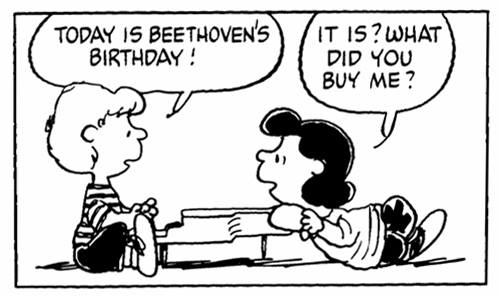
    Happy birthday, Beethoven! Thanks again, all the warmth and good cheer of the season, and best wishes for a new year of great music from WWFM – The Classical Network and wwfm.org.


  • Ida Haendel: Violinist, Chelm Survivor

    Ida Haendel: Violinist, Chelm Survivor

    by 

    in
    7 responses

    Earlier this week, I posted about the “Sages of Chelm,” in connection with a piece of music bearing that name by Matthew H. Fields. In Yiddish lore, the citizens of Chelm, Poland, were notorious for their batty solutions to everyday problems. This Chelm is a kind of never-never land that charms with its inevitably ironic punchlines.

    There is nothing light-hearted, however, about the real-life fate of the citizens of Chelm, who were liquidated during World War II. Most of the 18,000 Jews living there were murdered by the Nazis.

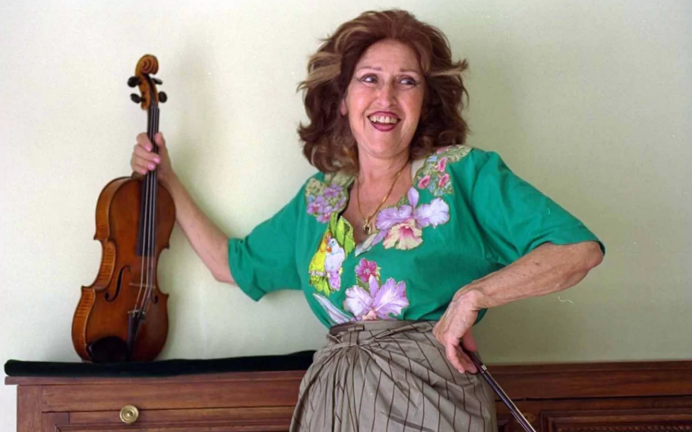
    The violinist Ida Haendel was born in Chelm on this date in 1928, only a decade before the death marches and extermination camps were implemented. To say that Haendel was a gifted prodigy is an understatement. She won the Warsaw Conservatory’s Gold Medal and first Huberman Prize in 1933, at the age of five, for her performance of the Beethoven Violin Concerto. At seven, she was competing against David Oistrakh and Ginette Neveu, about twenty years her senior, to become a laureate of the first Henryk Wieniawski Violin Competition. Soon, she was studying in Paris with legendary pedagogues Carl Flesch and George Enescu.

    During WWII she employed her talent to help boost the morale of British and American troops and factory workers. In 1937, she made her first appearance at the Proms. She went on to perform at the Proms no less than 68 times.

    Internationally, she played with many of the great conductors, drawing particular acclaim for a recording of the Sibelius Concerto. Sibelius personally wrote her to say, “I congratulate you on the great success, but most of all I congratulate myself, that my concerto has found an interpreter of your rare standard.” In all, her recordings span some 70 years.

    In 2006, she played before Pope Benedict XVI at the former concentration camp of Auschwitz-Birkenau. The organizers suggested that she play something Jewish. Instead, she chose Handel’s prayer from the “Dettingen Te Deum.” The work was arranged by her teacher, Carl Flesch.

    Haendel was extremely fortunate in that her talent allowed her to escape the fate of so many of her townspeople. Today, she is 90 years-old. Happy birthday, Ida Haendel.

    More about Ida Haendel:

    http://www.interlude.hk/front/great-women-artists-shaped-music-vi-ida-haendel/


Tag Cloud

Aaron Copland (93) Beethoven (95) Composer (114) Film Music (145) Film Score (143) Film Scores (255) Halloween (94) John Williams (195) KWAX (229) Leonard Bernstein (104) Marlboro Music Festival (125) Movie Music (160) Mozart (91) Opera (213) Philadelphia Orchestra (89) Picture Perfect (174) Princeton Symphony Orchestra (109) Radio (88) Ross Amico (244) Roy's Tie-Dye Sci-Fi Corner (290) The Classical Network (101) The Lost Chord (269) Vaughan Williams (105) WPRB (397) WWFM (881)

DON’T MISS A BEAT

Receive a weekly digest every Sunday at noon by signing up here


RECENT POSTS