• 23 Years on WWFM Classical Radio Memories

    23 Years on WWFM Classical Radio Memories

    by 

    in
    5 responses

    23 years ago tomorrow, I made my first appearance on WWFM – The Classical Network. Somehow, despite all the challenges – and there have been many: societal, interpersonal, economic, technological, and office-political – I’m still standing.

    My first time on microphone was in the 9:00 hour of Bliss Michelson’s morning air shift, on Thursday, September 28, 1995. I took over Saturday and Sunday mornings immediately following and continued to cover weekends for the next 18 ½ years.

    Since then, of course, I’ve been on weekday afternoons. Oh yeah. There was that hiatus of a year or so when I had no live air shifts but was kept on invoice as an independent contractor. But we won’t talk about that, other than to say if it hadn’t happened, I probably wouldn’t be here on Facebook. So lucky you!

    Here’s the music I selected for my first ever hour on WWFM:

    HOWARD HANSON – Merry Mount: Suite

    SIR PETER MAXWELL DAVIES – Farewell to Stromness

    MUZIO CLEMENTI – Symphony No. 1

    ARNOLD SCHOENBERG – Aria from “The Mirror of Arcadia”

    Though I had already had nine years’ experience in community radio, cutting my teeth on a couple of college stations in and around Allentown, PA, I remember I was shaking like a leaf. Sensing my apprehension about going before such an imposing listenership – WWFM covered much of central and southern New Jersey and portions of eastern Pennsylvania – Bliss’ words of advice were sage: “Remember, it’s just you and the microphone.”

    It’s been a crazy ride. Looking back, there are times I think maybe I should have worked in rodeo instead of radio.


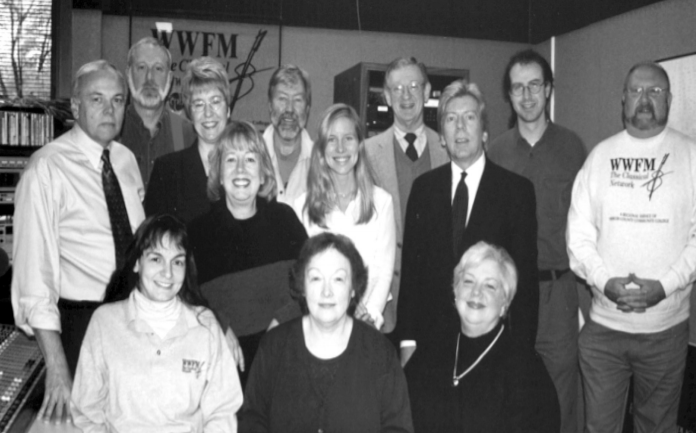
    Check out this old WWFM staff photo!

    Pictured in 2003, in the old broadcast booth (we have since moved next door to a room with a better window, and this was turned into a production studio), from left to right:

    (front) Darlene Berson, Sandy Steiglitz, and Nancy Fish;

    (middle) Walt Gradzki, Marjorie Herman, Diane D’Ascoli, Jeffery Sekerka, and Phil Joiner

    (back) Bliss Michelson, Alice Weiss, Andrew Rudin, Glenn Smith, and Yours Truly.

    Of those pictured, only Alice and I remain, with Walt and Glenn returning on a contractor basis. Radio is not for the financially needy or the weak of heart!
  • Fauré, Gounod: Ageless Music from Marlboro

    Fauré, Gounod: Ageless Music from Marlboro

    by 

    in
    3 responses

    Maybe it’s all that red wine.

    From a certain, limited perspective, Gabriel Fauré might have been considered a little long in the tooth when he came to write the music we’ll hear on this week’s “Music from Marlboro.” But, as he so eloquently proved, when it comes to art, age is only a number.

    At 76 years-old, Fauré surprised just about everyone when he unveiled his Piano Quintet No. 2 in C minor in 1921. For one thing, no one except his wife knew he was even working on anything. For another, he was supposed to be retired, having stepped down from the directorship of the Paris Conservatory only the year before.

    Though the composer’s health in his later years was far from the best, thanks in part to decades of heavy smoking, the Quintet conveys a surprisingly youthful spirit, full of tenderness and ardor. Paradoxically, a knowing serenity hangs over the piece, lending it a kind of wisdom and balance. I am reminded of Wordsworth’s assessment that poetry is the spontaneous overflow of powerful feelings recollected in tranquility.

    We’ll hear it performed at the 2015 Marlboro Music Festival by pianist Roman Rabinovich, violinists YooJin Jang and Scott St. John, violist Shuangshuang Liu, and cellist Will Chow.

    The program will open with Charles Gounod’s classically proportioned and wholly delightful “Petite symphonie” for nine wind instruments. Gounod, best known for his opera “Faust” and for his setting of “Ave Maria,” was 66 at the time of the work’s premiere in 1885. Though the structure is well-worn, based on the standard symphonic form developed a hundred years earlier by composers like Haydn and Mozart, its long-limbed melodies and occasional harmonic surprises mark it as a product of its time. In spite of its evident nostalgia, its spirit of youth seems ever-green.

    The performance, from 2013, will feature flutist Marina Piccinini, oboists Nathan Hughes and Joseph Peters, clarinetists Anthony McGill and Alicia Lee, bassoonists Brad Balliett and Steven Dibner, and hornists David Cooper and Radovan Vlatković.

    It’s an hour of French music that belies and defies the passage of time, with performances from the archives of the legendary Marlboro Music Festival, this Wednesday evening at 6:00 EDT, on WWFM – The Classical Network and wwfm.org.

    Marlboro School of Music and Festival: Official Page


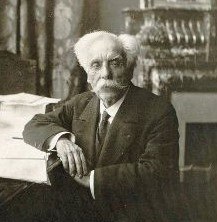
    FOREVER YOUNG: Gabriel Fauré (left) and Charles Gounod


  • Shostakovich Birthday Broadcast on WWFM

    Shostakovich Birthday Broadcast on WWFM

    by 

    in
    7 responses

    At last! The day is upon us!

    We’ll light 112 candles for Dmitri Shostakovich for his birthday. I thought I’d announce the plan right up front, since, understandably, Shostakovich didn’t care much for surprises.

    We’ll hear the Symphony No. 10 in one of the most acclaimed Shostakovich recordings of recent years, with the Boston Symphony Orchestra conducted by Andris Nelsons. That’s the one with the harrowing Stalin scherzo. Shostakovich is said to have written the symphony following the wise leader and teacher’s death. It was Shostakovich’s first symphony to be composed since his second denunciation in 1948. He had been accused, alongside Prokofiev and Khachaturian, under the Zhdanov decree of promoting “formalism” – decadent Western tendencies – in his music, a serious business. People had disappeared for less.

    According to the book “Testimony,” alleged to have been taken down from Shostakovich’s own observations by the musicologist Solomon Volkov, the Symphony No. 10 is “about Stalin and the Stalin years. The second part, the scherzo, is a musical portrait of Stalin, roughly speaking. Of course, there are other things in it, but that’s the basis.”

    Also encoded, in the symphony’s third movement, is the composer’s famous signature, DSCH, which appears alongside one meant to suggest his student, Elmira Nazirova (E La Mi Re A), with whom Shostakovich was in love. The themes alternate and draw gradually closer.

    The authenticity of “Testimony” as an official memoir has been much disputed. Though some of the details may have been fabricated, it does seem to add up to a larger truth. We’ll hear Shostakovich’s symphony at 2:00.

    First, it’s another Noontime Concert from Gotham Early Music Scene, or GEMS, and it’s an unusual one. Douglas Lundeen, principal horn of the Princeton Symphony Orchestra and an associate professor at Rutgers University, will push the outer limits of GEMS’ traditional area of focus (i.e. Early Music) to present works from the 19th and 20th centuries performed on a French piston horn. Composers will include Robert Planel, Henri Tomasi, Eugene Bozza, Charles Gounod, and Paul Dukas. The concert took place at St. Bartholomew’s Church, 50th Street and Park Avenue, in New York City. GEMS’ free lunchtime concerts series is offered on Thursdays at 1:15 p.m. To learn more, visit gemsny.org.

    Lundeen’s program reflects that of his new release, “Le cor francais authentique (The Truly French Horn),” issued on the Affetto Records label. Affetto is the Princeton-based company founded by engineer John C. Baker. Baker handles the audio for many of the broadcast concerts heard on WWFM. Lundeen’s album was recorded at All Saints’ Church, Princeton.

    The 1:00 hour will be devoted to further releases on Affetto. We’ll decompress from the intensity of the Shostakovich at 3:00 with ballet music by a composer who helped him greatly, Alexander Glazunov.

    Happy birthday, Shostakovich! We’ll help ourselves to a stimulating variety of great music, from 12 to 4 p.m. EDT, on WWFM – The Classical Network and wwfm.org.


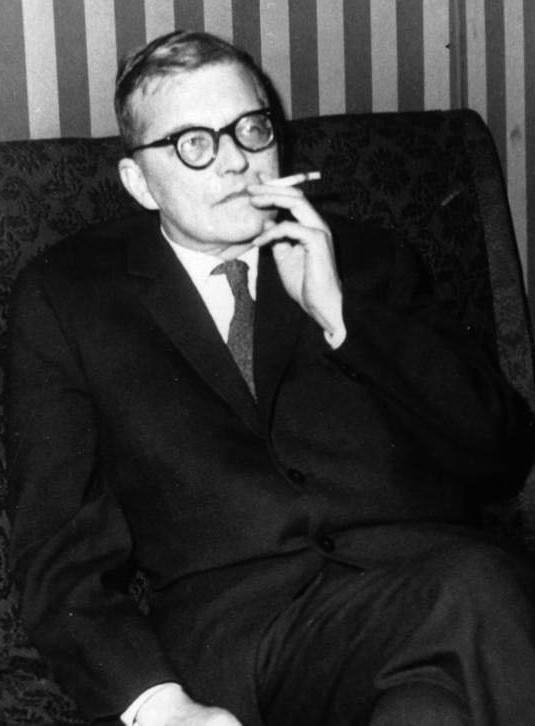
    The many moods of Shostakovich


  • Panufnik, Nelhýbel & Rutter: Rediscovering Masters

    Panufnik, Nelhýbel & Rutter: Rediscovering Masters

    by 

    in
    3 responses

    I’ve said it before, and I’ll say it again: Andrzej Panufnik (1914-1991) is the sleeping giant of Polish music. He’s one of those figures, like Bohuslav Martinu, who always seems perched on the verge of greatness, and yet never quite achieves the full degree of recognition he deserves.

    To begin with, his particular brand of modernism was eclipsed by the avant-garde experiments of his compatriot and friend, Witold Lutoslawski. Panufnik’s relationship with Lutoslawski dated back to the war years. During the German occupation, the two formed a piano duo which played in Warsaw cafes – at the time the only way to share live music in public, since there was a ban on organized gatherings.

    In the meantime, Panufnik quietly produced subversive works celebrating Polish heroism and the resistance. Following the war, he was instrumental in the re-establishment of the Warsaw Philharmonic. However, increasing friction with Poland’s communist regime led to the composer’s defection, under hair-raising circumstances, in 1954. He was granted asylum in England, where he received a knighthood in the year of his death.

    Panufnik’s “Sinfonia Rustica,” composed in 1948 and revised in 1955, as the title implies, is a work very much of the people, making use of fragmented Polish themes, meant to reflect the rustic, semi-abstract, paper-cut art of the peasantry. Not only the symphony’s framework, but also the layout of the orchestra, is meant to reflect the symmetry found in Polish folk art. Nevertheless, despite the work’s direct character, it was denounced in 1949 as “alien to the great socialist era.”

    The Czech composer Václav Nelhýbel (1919-1996) was also displaced. Nelhybel left Nazi-occupied Prague for Switzerland in 1942. Later, he settled in the United States, where he taught at Lowell State College. He also served as composer-in-residence at the University of Scranton for several years until his death. During his time in America, he oversaw many bands and youth ensembles. He is remembered as an energetic and demanding though ultimately endearing taskmaster.

    Nelhýbel was dizzyingly prolific, with 400 published works to his credit and an additional 200 left in manuscript. The “Etude Symphonique” of 1964 is as exacting and propulsive as the artist who created it, with a three-note motive exhaustively developed. The work’s churning rhythms and cross-rhythms lend it a sense of vitality, and new ideas are continually formulated and examined.

    Of a more reflective nature is John Rutter’s Requiem. Rutter (b. 1945) is best known for his all-pervasive music for Christmas. His setting of the Requiem, composed in 1985, eschews the terror and high drama of Berlioz and Verdi to offer solace and tranquility in the manner of Gabriel Fauré’s most beloved essay in the form. I think you’ll find it the perfect restorative music for an early autumn evening.

    Works by these three composers will form the loom upon which I hope to weave a compelling program for your late September satisfaction, today from 4 to 7 p.m. EDT, on WWFM – The Classical Network and wwfm.org.


    Clockwise from left: Andrzej the Giant; Vaclav the Vital; and John the Rejuvenator


  • Panufnik Wonder Woman’s Lost Anthem?

    Panufnik Wonder Woman’s Lost Anthem?

    by 

    in
    3 responses

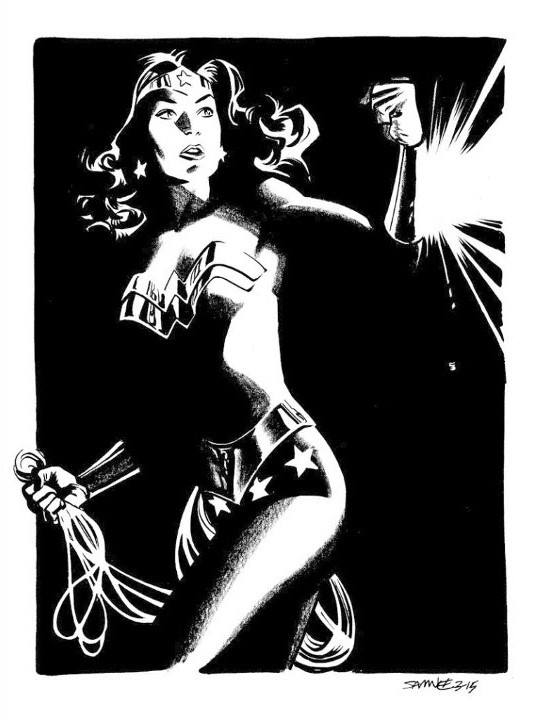
    This guy thinks Andrzej Panufnik’s “Sinfonia Rustica” should have been used in “Wonder Woman.”

    Hear the complete symphony on this, Panufnik’s birthday, coming up in the 5:00 hour EDT, on WWFM – The Classical Network and wwfm.org.


Tag Cloud

Aaron Copland (93) Beethoven (95) Composer (114) Film Music (145) Film Score (143) Film Scores (255) Halloween (94) John Williams (195) KWAX (229) Leonard Bernstein (104) Marlboro Music Festival (125) Movie Music (160) Mozart (91) Opera (213) Philadelphia Orchestra (89) Picture Perfect (174) Princeton Symphony Orchestra (109) Radio (88) Ross Amico (244) Roy's Tie-Dye Sci-Fi Corner (290) The Classical Network (101) The Lost Chord (269) Vaughan Williams (105) WPRB (397) WWFM (881)

DON’T MISS A BEAT

Receive a weekly digest every Sunday at noon by signing up here


RECENT POSTS