
• Celebrating Autumn with American Composers

    Celebrating Autumn with American Composers

    by 

    in
    9 responses

    After one last dose of tropical miserableness, coquettish Summer decided to show us what she could do yesterday with a glorious afternoon in the Princeton area that really was more like Autumn. It turns out she was holding back all along, the big tease. Well, good riddance, baby!

    We all know that Summer is high maintenance and that Autumn has the better disposition anyway. Why fight all the time with Summer, when it’s so much easier to get along with Autumn? The riot of colors, the crunching leaves underfoot, the comfy sweaters, hot beverages savored, used book fairs, classic horror movies, infinite night skies, and Thanksgiving. Welcome, O Happy Season!

    This Sunday night on “The Lost Chord,” we’ll celebrate the first full day of autumn with musical evocations by two American composers.

    Henry Hadley (1871-1937) studied at home with George Whitefield Chadwick and in Vienna with Eusebius Mandyczewski. In Europe, he befriended Richard Strauss and conducted the Berlin Philharmonic in his own Symphony No. 3. He was assistant conductor at the Mainz Opera, later music director of the Seattle Symphony, and became the first conductor of the San Francisco Symphony. One of his operas, “Cleopatra’s Night,” was performed at New York’s Metropolitan Opera. He served a stint as assistant conductor of the New York Philharmonic, he founded the National Association of Composers and Conductors, and he was instrumental in establishing the Berkshire Music Festival at Tanglewood. He guest conducted orchestras from Buenos Aires to Tokyo. Why then do so few remember him?

    We’ll dig deep into the leaf pile of music history to revive Hadley’s Symphony No. 2, from 1901, subtitled “The Four Seasons.” The work begins with an evocation of a turbulent winter storm, followed by “Spring,” then “Summer.” The symphony concludes with a melancholy portrait of autumn, enlivened by the appearance of some rollicking hunting horns.

    Toward the end of the hour, we’ll have just enough time for music by Leo Sowerby (1895-1968), sometimes called “the Dean of American Church Music.” Sowerby was awarded the Pulitzer Prize for Music in 1946 for his cantata “Canticle to the Sun.” As antidote to the reflective nature of Hadley’s “Autumn,” we’ll conclude with the exuberant “Comes Autumn Time,” an uplifting work for solo organ.

    I hope you’ll join me for “Well-Seasoned” – American composers of experience celebrate autumn – this Sunday night at 10:00 EDT, on WWFM – The Classical Network and wwfm.org.
  • Shostakovich Rocks! Young Musicians Reimagine Classics

    Shostakovich Rocks! Young Musicians Reimagine Classics

    by 

    in
    5 responses

    The next time you despair of young people losing touch with classical music, please consider the following. Three days in advance of Dmitri Shostakovich’s birthday (on September 25), here are a few links to some incredible videos, which apparently have been in circulation, but I only just came across them the other day.

    Connor Gallagher is a composer, conductor, and arranger with lots of genre-hopping experience between the worlds of classical, jazz, and heavy metal. Here is his virtuosic take on the second movement from Shostakovich’s Symphony No. 10.

    And the second movement of the String Quartet No. 8.

    Similarly, Joe Parrish, of the progressive rock band Oraton, devotes an awful lot of time to electric guitar overdubs of classical masterworks. His rendition of the first movement from Shostakovich’s Piano Concerto No. 2 is a knockout.

    Apparently the guitarists are hitting their marks, with enthusiastic feedback from young metal heads side by side with that of seasoned classical collectors in their 70s. Search for these guys on YouTube and prepare to be awed.


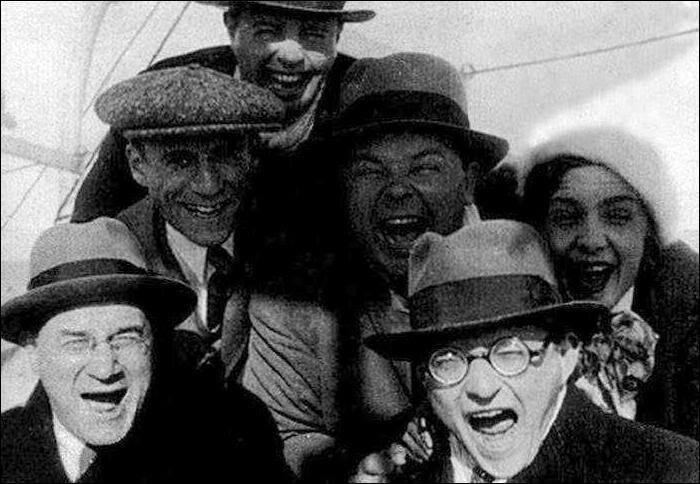
    A delighted Shostakovich rocks out (bottom right)


  • Small Town Secrets Movie Soundtracks

    Small Town Secrets Movie Soundtracks

    by 

    in
    3 responses

    This week on “Picture Perfect,” our unifying theme is two-pronged, as we explore the dark underbelly of small-town life and the consequences of bucking conformity.

    The events of “Peyton Place” (1957) unfold in a picturesque New Hampshire town, in which all sorts of sordid goings-on roil beneath the surface. Grace Metalious’ runaway bestseller spawned a film, starring Lana Turner, and also a subsequent TV series, with Mia Farrow. Neither version is nearly as seedy as the original, which was about an idyllic New England community whose residents have more than their share of skeletons in the closet. The score includes one of Franz Waxman’s best-known themes.

    “Far From Heaven” (2002) is set in a Connecticut suburb during the 1950s. Therefore, it makes sense that the filmmakers deliberately attempted to conjure the vibe of a Douglas Sirk film. In common with Sirk melodramas like “All That Heaven Allows” and “Imitation of Life,” “Far From Heaven” deals with social issues, in this instance regarding race, class, gender roles and sexual orientation.

    The score was the last by the great Elmer Bernstein, who had actually been composing for film since the ‘50s. Over the course of his career, he was nominated for 14 Academy Awards. Despite his work on such classics as “The Ten Commandments,” “The Magnificent Seven” and “To Kill a Mockingbird,” his only win would be for “Thoroughly Modern Millie,” of all things, in 1967. He received his final nomination for his work on this film.

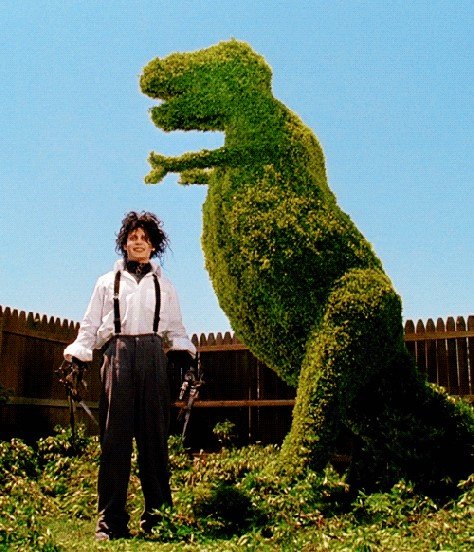
    “Edward Scissorhands” (1990) is Tim Burton’s satirical-yet-touching update of the “Frankenstein” tale, transported to a contemporary American suburb. An artificial man with unusual appendages gradually wins over his suspicious neighbors with his aptitude for hairstyling and lawn sculpture. However, things quickly go south. For the very differences for which Edward was briefly celebrated, he is now hunted by an angry mob.

    Burton presents a cookie-cutter suburbia, simultaneously tacky and anonymous. The houses are painted in faded pastels, and everyone follows the same routine. The score, by Danny Elfman, alternately antic and romantic, has proved to be one of his most memorable.

    Finally, we turn to “Kings Row” (1942), based on the novel by Henry Bellamann. The film is a spiritual forerunner, not only of “Peyton Place,” but also, to an extent, of David Lynch’s “Blue Velvet” and “Twin Peaks,” in the sense that it presents life in an idyllic small town that nonetheless casts some very long shadows.

    The film of “Kings Row” accomplishes a remarkable balancing act, in that it manages to maintain an air of hope and optimism, despite all the horrible things that happen to a number of the characters. In this sense, it pulls some of the punches thrown by the original book, in part as a concession to the Hays Code, which forced some of the rougher themes to be altered, dropped or implied. Bellamann’s novel is a much bleaker experience.

    The score was by Erich Wolfgang Korngold, at this point in his career associated with historical adventure films, as Errol Flynn’s regular composer. He wrote the brash theme music for “Kings Row” wholly in this vein, allegedly on an initial assumption drawn from the film’s title.

    Good fences make good neighbors. Join me for “Suburban and Small Town Blues” this week, on “Picture Perfect,” music for the movies, this Friday evening at 6:00 EDT, on WWFM – The Classical Network and wwfm.org.


  • Ennio Morricone Retires Film Music?

    Ennio Morricone Retires Film Music?

    by 

    in
    10 responses

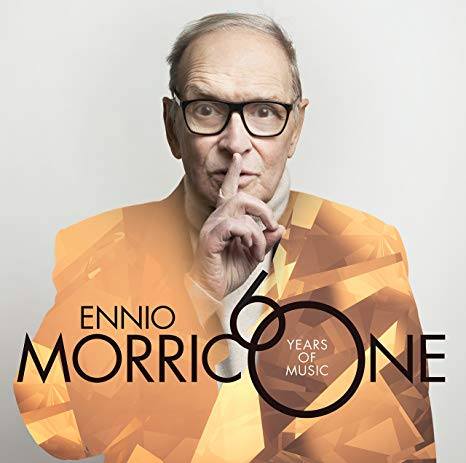
    Ennio Morricone, who has been engaged this year in farewell appearances conducting his “60 Years of Music Tour,” in sold-out arenas and to standing ovations all across Europe, allegedly announced to Italian media that he has retired from film scoring. Multiple Google searches have so far turned up nothing in the way of confirmation, but such an announcement would not be far-fetched. Morricone will turn 90 on November 10. With over 500 film and television scores to his credit, on top of 100 concert works, he may very well be the most prolific film composer who ever lived.


  • Happy Birthday Ildebrando Pizzetti

    Happy Birthday Ildebrando Pizzetti

    by 

    in
    5 responses

    Why couldn’t I have been blessed with a name like Ildebrando Pizzetti?

    Pizzetti was one of the composers of the “generazione dell’Ottanta” (“Generation of the ‘80s”), contemporaries of Ottorino Respighi, all born around 1880. These artists of the post-Puccini generation made their reputations largely in the concert halls as opposed to the opera houses – quite the change of pace for Italy.

    Pizzetti was best-known as an associate of Gabriele d’Annunzio, providing incidental music for a number of d’Annunzio’s plays and setting “Fedra” as an opera. He also wrote the music for “Cabiria” (1914), the film that kicked off the “Masciste” craze. You know, all those badly dubbed imports that feature Hercules, Goliath, Samson, etc. More often than not, in Italian, the protagonist is named Masciste. You can thank D’Annunzio for the creation of the modern prototype.

    Pizzetti lived from 1880 to 1968. Today is his birthday. Here is some of his music for D’Annunzio’s hyper-sensual lyric drama, “La Pisanella.” (The complete title is “La Pisanella où la Mort parfumée.”) Ida Rubinstein danced the title role of the courtesan-saint who seduces and destroys the royal family of the medieval kingdom of Cyprus. At the play’s conclusion, she is smothered by a downpour of rose petals!

    Here’s the orchestral suite:

    Happy birthday, Ildebrando Pizzetti!


    Pizzetti (right) with Arturo Toscanini


Tag Cloud

Aaron Copland (93) Beethoven (95) Composer (114) Film Music (145) Film Score (143) Film Scores (255) Halloween (94) John Williams (195) KWAX (229) Leonard Bernstein (104) Marlboro Music Festival (125) Movie Music (160) Mozart (91) Opera (213) Philadelphia Orchestra (89) Picture Perfect (174) Princeton Symphony Orchestra (109) Radio (88) Ross Amico (244) Roy's Tie-Dye Sci-Fi Corner (290) The Classical Network (101) The Lost Chord (269) Vaughan Williams (105) WPRB (397) WWFM (881)

DON’T MISS A BEAT

Receive a weekly digest every Sunday at noon by signing up here


RECENT POSTS