• Remembering Bill Shedden a Radio Voice

    Remembering Bill Shedden a Radio Voice

    by 

    in
    3 responses

    So much for news traveling fast.

    Every once in a while, if I think of it, I’ll take to the Google to check up on some of my old radio acquaintances. Over thirty years, I’ve gotten to know a lot of folks and, I don’t have to tell you, the obligations of the present make it very easy to lose touch.

    Well, it must have been a longer gap than usual, because last night, I am sorry to say, I only just learned of the passing of Bill Shedden. 3 ½ years ago, Bill lost control of his SUV, went off a snow-covered road in upstate New York, and struck a tree. According to a news report, he was alert and talkative after the crash, but was taken to the hospital and later died of internal injuries.

    Bill was a radio presence in Eastern Pennsylvania and Central/Southern New Jersey for decades. I got to know him pretty well when we worked together at WWFM – The Classical Network, located in the Trenton-Princeton area. But I felt a special bond with him going to back to his days at WFLN. WFLN, if you don’t know, was Philadelphia’s classical music station for 48 years, until a format change to “popular hits” (as the short-lived WXXM Max 95.7) in 1997. I was but a listener at the time, but I always connected with Bill’s enthusiasm for the music of Ralph Vaughan Williams, and called him occasionally during his WFLN shifts to chat briefly and to thank him for his work.

    By the time WFLN folded, I had been working at WWFM for a few years, so when I heard Bill had applied for an air shift, I put in a good word. It was an honor to finally get to meet him and to actually be able to work with him. Bill was one of the most genial personalities in classical radio. His secret, he professed, was that whenever he spoke on the air, he didn’t speak to everyone, but to one person only, and as if that person were in the room with him.

    In 2001, Bill left to take over the music directorship of WCNY in Syracuse, NY. There, he continued to play plenty of English music, as the station’s weekday morning host. He also produced a program of sacred choral music and co-hosted a Saturday opera show with his wife, Maureen.

    I am happy for his success in Syracuse, where he was evidently – and not surprisingly – much loved by his listeners, but I am sorry that it had to be curtailed so soon. Bill was 62 years-old. R.I.P., my friend.


    Bill’s obituary:
    https://www.tjpfuneralhome.com/obituaries/William-Shedden-Iii/#!/Obituary

    News report of the crash:
    https://cnycentral.com/news/local/liverpool-man-dies-after-driving-into-a-tree

    The demise of WFLN:
    http://www1.udel.edu/nero/Radio/readings/Classical/lastclass.html

    For Bill:

  • Picaresque Novels on Film Rogues and Music

    Picaresque Novels on Film Rogues and Music

    by 

    in
    6 responses

    Calling all rapscallions and scapegraces! This week on “Picture Perfect,” get ready to revel in some freewheeling lack of judgment, with an hour of films based on picaresque novels.

    In case you weren’t an English major, picaresque novels are generally characterized by having rogues or anti-heroes as protagonists, episodic, wayward structures, and, not infrequently, low humor.

    We’ll hear music from “The Reivers,” after William Faulkner’s Pulitzer Prize-winning novel, a coming-of-age story about a boy swept into automobile theft and illicit horseracing in the American South. Mark Rydell directed the 1969 film, which starred Steve McQueen as the rakish Boon Hogganbeck and featured narration by Burgess Meredith. John Williams wrote the breezy Americana score.

    Mark Twain’s “The Adventures of Huckleberry Finn” is frequently characterized as an American picaresque. It’s certainly one of the funniest of “serious” books. A middling film adaptation was made in 1960, directed by Michael Curtiz, with Tony Randall given top billing, shifting the focus of the story to the con artistry of the King and the Duke. It features an evocative score by Jerome Moross.

    If Hervey Allen’s “Anthony Adverse” had any humor to begin with, it was definitely lost in translation. (Too bad the novel was written in English.) However, the 1936 screen adaptation certainly does sprawl. One could say it’s picaresque in the worst way. It just doesn’t go anywhere. It does, however, feature a top-notch cast (Frederic March, Olivia De Havilland, Claude Rains, etc.) and an Academy Award-winning score by Erich Wolfgang Korngold.

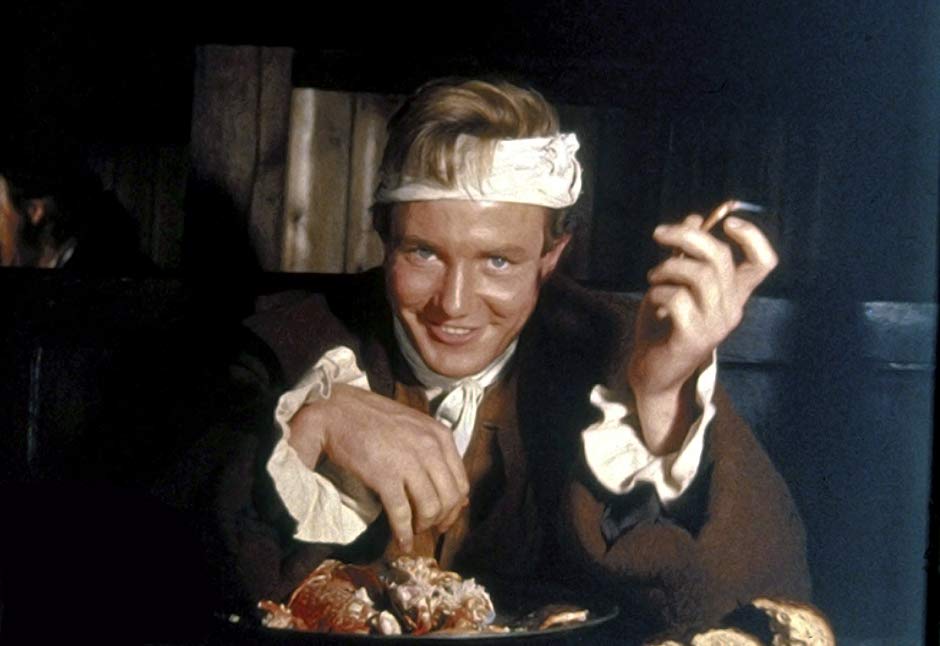
    While the modern picaresque novel had its roots in the Renaissance, the genre really seemed to hit its stride in the 18th century, with comic novelists like Henry Fielding. Fielding’s “Tom Jones,” perhaps the quintessential picaresque, was made into a film in 1963. It went on to win Academy Awards for Best Picture, Best Director (Tony Richardson), Best Adapted Screenplay (John Osborne) and Best Original Score (John Addison). Addison’s music suits Richardson’s quirky virtuosity like an off-kilter powdered wig.

    We’re up to no good, with an hour of picaresque adventures, this Friday evening at 6:00 EDT, on WWFM – The Classical Network and wwfm.org.


  • Pizza Delivery Guy Plays Beethoven Viral

    Pizza Delivery Guy Plays Beethoven Viral

    by 

    in
    6 responses

    We’ve all heard of “moonlighting” as a way to make ends meet, but this is taking things to a whole other level.

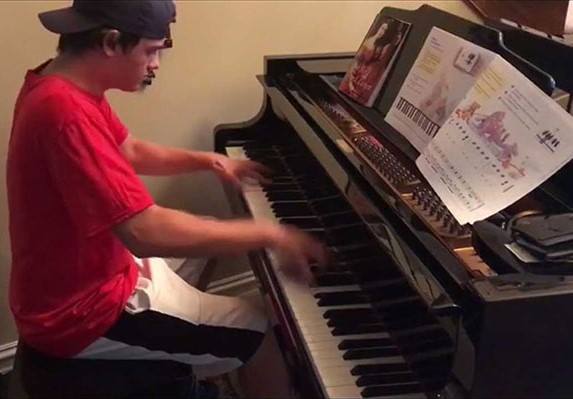
    While out delivering pizzas, Bryce Dudal, soon to begin his freshman year of college, surprised one of his customers by sitting down at his piano and effortlessly dispatching the third movement of Beethoven’s “Moonlight” Sonata (which, obviously, is not the sheet music on the piano). This would be remarkable in itself; but then Dudal claims to be entirely self-taught.

    Here’s the full “story,” complete with inane newscaster commentary:

    If you listen closely, you can hear he’s transposed it to Cheese sharp minor.


  • Verdi, Mendelssohn & Italian Music from Marlboro

    Verdi, Mendelssohn & Italian Music from Marlboro

    by 

    in
    2 responses

    Viva Italia!

    We’re off to sunny Italy for this week’s “Music from Marlboro.”

    Like a kind of musical Hannibal, Giuseppe Verdi brought elephants to the operatic stage. The premiere of “Aida” in Cairo in 1871 featured a dozen pachyderms and fifteen camels into the bargain. But when a Naples performance of Verdi’s grandest grand opera was delayed, the composer sought diversion on a much smaller scale. Verdi tossed off his first piece of chamber music at the age of 60.

    The String Quartet in E minor was given an informal performance at the Hotel delle Crocelle on April 1, 1873. Said Verdi of his latest creation, “I don’t know whether the Quartet is beautiful or ugly, but I do know that it’s a Quartet!” We’ll get to hear it in a 1969 performance featuring violinists Pina Carmirelli and Endre Granat, violist Martha Strongin Katz, and cellist Ronald Leonard.

    Felix Mendelssohn’s Symphony No. 4 – known as the “Italian” – had its origins in a European tour undertaken by the composer between 1829 and 1831. Mendelssohn’s Italian sojourn threw him into ecstasies. In a letter to his parents, he effused, “Italy at last! …[W]hat I have all my life considered as the greatest possible felicity is now begun, and I am basking in it. …[T]hank you, my dear parents, for having given me all this happiness.”

    The composer did his best to capture his impressions in music. The symphony’s first performance in London in 1833, which Mendelssohn himself conducted, made him the most emulated composer in England for the remainder of the 19th century. However, despite the work’s overwhelmingly positive reception, he continued to feel a nagging dissatisfaction with it. He revised the symphony in 1834, with plans for further changes, and the score was never published in his lifetime. He even claimed that it caused him some of the bitterest moments of his career. Naturally, it went on to become his best-loved symphony.

    We’ll hear Pablo Casals lead an enviable roster of musicians from the 1963 Marlboro Music Festival. It’s difficult to single anyone out, but Bernard Goldberg, John Mack, Myron Bloom, Shmuel Ashkenasi, Jaime Laredo, Caroline Levine, Irene Serkin, Sidney Curtiss, Samuel Rhodes, Herman Busch, Lynn Harrell, Julius Levine, and all four members of the Guarneri String Quartet are among the personnel. Casals was affiliated with Marlboro for the last 13 years of his life, from 1960 until his death, at the age of 96, in 1973.

    We’ve got sunshine on a rainy day on the next “Music from Marlboro,” this Wednesday evening at 6:00 EDT, on WWFM – The Classical Network and wwfm.org.


    This summer’s Marlboro Music Festival continues through August 12. Find out more at marlboromusic.org.

    Marlboro School of Music and Festival: Official Page


  • Sara Buechner Plays Mozart & More on The Classical Network

    Sara Buechner Plays Mozart & More on The Classical Network

    by 

    in
    6 responses

    Sara Davis Buechner offers 88 keys to enjoyment on today’s Noontime Concert on The Classical Network.

    On the program will be Mozart’s Fantasy in C minor, K.475, and Sonata No. 14 in C minor, K. 457; Chopin’s Introduction and Rondo in E flat major, Op. 16; Anton Arensky’s “Four Salon Pieces,” and Gershwin’s “Second Rhapsody,” in Davis’ own arrangement for solo piano.

    Buechner, a top prize winner at the Queen Elisabeth (Brussels), Leeds, Mozart (Salzburg), Beethoven (Vienna), and Sydney International Piano Competitions, is currently on the faculty of Temple University’s Boyer College of Music and Dance. She was a Bronze Medalist at the 1986 Tchaikovsky Competition in Moscow and a Gold Medalist at the 1984 Gina Bachauer International Piano Competition.

    Among her recordings are rarely-heard works of Rudolf Friml, Joseph Lamb, Joaquin Turina, Miklós Rózsa, and Ferruccio Busoni, including the world premiere recording of Busoni’s arrangement of Bach’s “Goldberg Variations.” Stereophile magazine selected her Gershwin CD as “Recording of the Month.” Her album of Hollywood piano concertos was the recipient of Germany’s Deutsches Schauplatten Preis.

    The concert was originally presented as part of last season’s Silberman Recital Series at New York’s Baruch Performing Arts Center. Ted Altschuler, the center’s director, will offer an overview of the upcoming season’s offerings at the conclusion of today’s program.

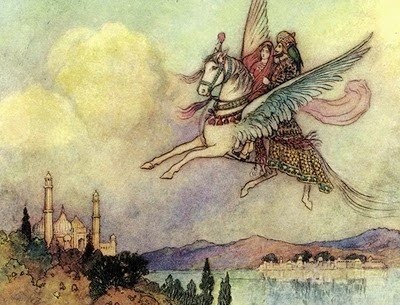
    Then stay tuned for the complete ballet “The Arabian Nights” by Azerbaijani composer Fikret Amirov. The ballet, given its premiere in 1979, is one of the rare adaptations to emerge from a region which gave us the original stories that make up “A Thousand and One Nights.” The world famous adventures of Sinbad, Ali Baba and Aladdin are enshrined in these tales, and each of them make an appearance in the ballet’s second act. Scheherazade will captivate with 90 minutes of her storytelling genius, beginning around 2:00.

    You’ll discover days and nights of musical enchantments, from 12 to 4 p.m. EDT, on WWFM – The Classical Network and wwfm.org.


Tag Cloud

Aaron Copland (93) Beethoven (95) Composer (114) Film Music (145) Film Score (143) Film Scores (255) Halloween (94) John Williams (195) KWAX (229) Leonard Bernstein (104) Marlboro Music Festival (125) Movie Music (160) Mozart (91) Opera (213) Philadelphia Orchestra (89) Picture Perfect (174) Princeton Symphony Orchestra (109) Radio (88) Ross Amico (244) Roy's Tie-Dye Sci-Fi Corner (290) The Classical Network (101) The Lost Chord (269) Vaughan Williams (105) WPRB (397) WWFM (881)

DON’T MISS A BEAT

Receive a weekly digest every Sunday at noon by signing up here


RECENT POSTS