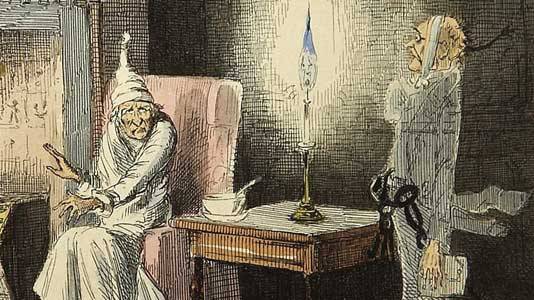
Look to see me no more, Thursday mornings on WPRB. But look here, that you may remember what has transpired between us, Sunday mornings from 7 to 10 EST, on WPRB 103.3 FM and wprb.com.
-
WPRB Radio Show Sundays Recall Thursdays
by
-
John Williams Turns 86 Happy Birthday Maestro
by
5 responses
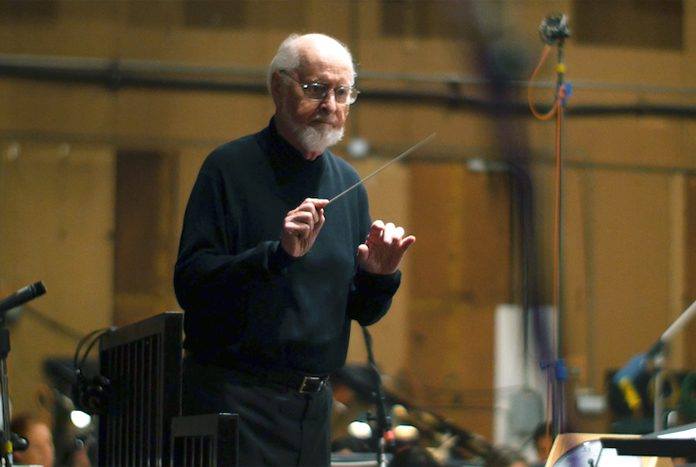
Happy birthday, John Williams, 86 years-old today.
Here’s a clip of Williams conducting at a recording session for “Star Wars: The Last Jedi” in December of 2016. Note the the opening crawl on the monitor in front of the podium.
-
Enescu Bartók Unity at Marlboro

by
4 responses
Romania and Hungary share a common border, if an uneasy history. They also happen to share two of the 20th century’s most talented composers, both of them born in 1881. On this week’s “Music from Marlboro,” as always, we look past nationalistic concerns to seek unity in music.
George Enescu (1881-1955) was arguably Romania’s greatest musical export, a child prodigy who excelled also as a violinist, a pianist, a conductor, and a teacher. At the age of seven, he became the youngest student ever to be admitted to the Vienna Conservatory. He graduated before his 13th birthday. From there, he went to Paris and embarked on a charmed career with too many highlights to detail here. Pablo Casals, who was affiliated with the Marlboro Music Festival for the last 13 years of his life, described him as “the greatest musical phenomenon since Mozart.”
Enescu’s Violin Sonata No. 2 in F minor (1899), was completed during his final year at the Paris Conservatory. He had already composed an ambitious, thirty-minute “Romanian Poem” (1898), when just 16, and wasn’t far from achieving world fame with his “Romanian Rhapsody No. 1” (1901). Enescu later claimed that the sonata, along with his Octet for Strings, marked the point where he felt he had truly become himself.
We’ll hear it performed at the 1974 Marlboro Music Festival, by violinist Pina Carmirelli and pianist Alan Weiss.
Hungarian composer Béla Bartók (1881-1945) was also a gifted pianist and a pioneering ethnomusicologist, who did much to deepen musical understanding through his documentary journeys and insights into the cultures of Eastern Europe and North Africa – including the region of Transylvania, which was to become the source of such complicated feelings between Hungary and Romania.
He also happened to be one of the most innovative musical thinkers of his time, beating an alternative route to modernism through the assimilation of folk music into a highly personal idiom that owes little to either Stravinsky or Schoenberg.
Bartók’s “Divertimento for String Orchestra” (1939) is a fascinating chimera – it takes its name from an 18th century form (appropriate for its neo-classical ambitions), shares qualities with the Baroque concerto grosso (with a small group of soloists at times contrasting with the greater body of the orchestra), and yet remains distinctly of its time. Even here, the composer’s love of folk music is evident.
The “Divertimento” was Bartók’s final composition before fleeing Nazi Europe for the United States. He wrote the work in only fifteen days, while staying at the Swiss chalet of conductor Paul Sacher, who had commissioned the piece. Though it was composed very quickly, as befits a divertimento – which traditionally, in the 18th century, was regarded as “entertainment” music – Bartók left meticulous instructions for its performance.
We’ll hear it played by a collection of Marlboro string players, conducted by Sándor Végh, in 1974. Végh, born in Transylvania, was one of the great chamber musicians. He participated in the first Hungarian performance of Bartók’s String Quartet No. 5.
That’s music by Enescu and Bartók on the next “Music for Marlboro,” this Wednesday evening at 6:00 EST, on WWFM – The Classical Network and wwfm.org.
Marlboro School of Music and Festival: Official Page
Sándor Végh promoting unity on this week’s “Music for Marlboro”
-
Black Marble Opera on The Classical Network

by
3 responses
Marble is the new black, on today’s Noontime Concert on The Classical Network.
The violin duo of Jörg-Michael Schwarz and Karen Marie Marmer, collectively known as Black Marble, will perform a program titled “Opera for Two,” consisting of works by Jean-Marie Leclair, William Shield, Emanuele Barbella, and Wolfgang Amadeus Mozart.
Schwarz and Marmer are co-directors of the popular Baroque ensemble REBEL (pronounced Re-BEL), named for French master Jean-Féry Rebel. “Black Marble” is an amalgam of the performers’ last names (Schwarz is German for “black,” and Marmer is Dutch for “marble”). The duo appears courtesy of the Midtown Concerts series presented by Gotham Early Music Scene (GEMS).
The concert was recorded on September 21, 2017, at St. Bartholomew’s Church, 50th Street and Park Avenue, in Midtown Manhattan, where free concerts are held every Thursday at 1:15 p.m. This Thursday, Les Soûls d’amour will present a program titled “Love and War,” exploring the many ways in which the trials of war and travails of love intersect and collide. You’ll find a complete schedule of lunchtime performances at midtownconcerts.org.
In addition, GEMS presents evening concerts. The Boston-based Lorelei Ensemble will perform music spanning the centuries from the Medieval Era to contemporary Americana, this Friday at 7:30 p.m., at the Church of St. Luke in the Fields, 487 Hudson Street (just south of Christopher).
The Ensemble Origo and UConn Collegium Musicum will perform a program of sacred Bach cantatas, this Saturday at 8, at Good Shepherd-Faith Presbyterian Church, 152 West 66th Street.
And the Bach Choir of Holy Trinity and Bach Orchestra will perform on Sunday afternoon at 5, at Holy Trinity Lutheran Church, 3 West 65th Street.
Gotham Early Music Scene is a non-profit corporation that supports and promotes artists and organizations in New York City devoted to early music – music of the Middle Ages, Renaissance, Baroque, and early Classical periods. For more information and GEMS’ events calendar, look online at gemsny.org.
It’s a concert for all the marbles, with winners guaranteed, this Tuesday at 12:00 EST, on WWFM – The Classical Network and wwfm.org.
Rebel: Ensemble for Baroque Music
-
Eagles Win Celebrated With Eagle-Inspired Music

by
3 responses
Fly, Eagles, fly! Celebrate the Eagles’ first Super Bowl victory* with music about – well, eagles, today on The Classical Network.
Anthony Philip Heinrich, dubbed by one contemporary critic “The Beethoven of America,” was the first full-time American composer to write on a large scale. Incredibly, he didn’t embark on the career that would ensure his lasting notoriety until the age of 36.
Heinrich was born in Bohemia in 1781. When his uncle’s fortune was wiped out during the Napoleonic Wars, young Heinrich turned to the violin. He immigrated to America and settled for a time in Philadelphia. There, he learned of a job in Pittsburgh. He embarked in high spirits, traveling the 300 miles mostly on foot, but when he arrived he found the job had already been filled. Disconsolate, he wandered southwest into the wilderness of Kentucky.
At the end of a 700 mile journey, Heinrich awoke from a raging fever to find himself in a log cabin. He set about reinventing himself as a composer, writing music for impractically large forces in an idiom that would have seemed advanced at the time, full of chromaticism and jangling harmonies. He also somehow managed to pull together enough musicians to perform Beethoven’s First Symphony – only its second performance in the United States.
Later, Heinrich would become a founding member of the New York Philharmonic Society, perform some of his own music before President Tyler, and make several extended trips to Europe. Still, he was not to escape poverty, and he died in neglect in New York City in 1861.
Hardly surprising for a personal friend of John James Audubon, a number of Heinrich’s works deal with ornithological themes. The most ambitious of these must be “The Ornithological Combat of Kings, or the Condor of the Andes and the Eagle of the Cordilleras” (1847). While it might not be the most polished or compelling work of art, it is the one I think best reflects the scrappy can-do spirit of long-suffering Philadelphia Eagles fans.
Hear it this afternoon, one of several pieces inspired by eagles – in honor of the Eagles. America’s got talons, between 4 and 7 p.m. EST, on WWFM – The Classical Network and wwfm.org.
*Just to clarify, the Eagles previously won the NFL championship in 1948, 1949, and 1960 – the first “Super Bowl” did not take place until 1967 – so please don’t tear down my goal post!
Tag Cloud
Aaron Copland (93) Beethoven (95) Composer (114) Film Music (145) Film Score (143) Film Scores (255) Halloween (94) John Williams (195) KWAX (229) Leonard Bernstein (104) Marlboro Music Festival (125) Movie Music (160) Mozart (91) Opera (213) Philadelphia Orchestra (89) Picture Perfect (174) Princeton Symphony Orchestra (109) Radio (88) Ross Amico (244) Roy's Tie-Dye Sci-Fi Corner (290) The Classical Network (101) The Lost Chord (269) Vaughan Williams (105) WPRB (397) WWFM (881)
5 responses