• GEMS Early Music Concerts in NYC on The Classical Network

    GEMS Early Music Concerts in NYC on The Classical Network

    by 

    in
    4 responses

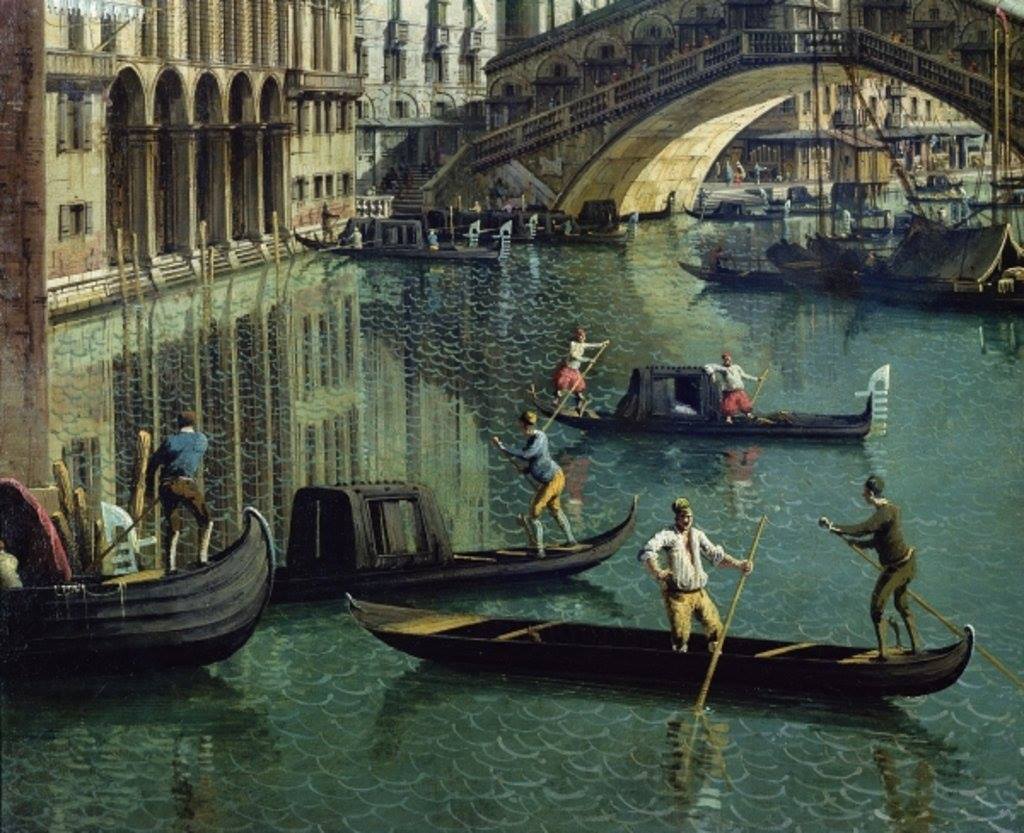
    I’ll be arriving by gondola for today’s Noontime Concert, as The Classical Network continues its partnership with Gotham Early Music Scene (GEMS).

    We’ll hear selections from another one of GEMS’ Downtown Concerts: The Queens Consort will present a program titled “Venetian Masters,” with music by Dario Castello, Biagio Marini, Giovanni Lagrenzi, Marco Uccellini, and Antonio Vivaldi.

    Concerts in GEMS Downtown Concerts series are held at Saint Bartholomew’s Church, 50th St. and Park Avenue, in midtown Manhattan. You’ll find a complete schedule of free lunchtime performances at midtownconcerts.org.

    In addition, GEMS presents evening concerts, such as “Big Wig: A French Baroque Dance Mix,” with music by Rameau, Lully, Purcell, and Handel, which will be performed by New York Baroque Incorporated, directed by Grammy-winning baroque violinist Robert Mealy, and featuring virtuoso baroque dancers Caroline Copeland and Carlos Fittante. That concert will take place on December 20 at 7 p.m. at The Metropolitan Museum of Art. Tickets to the event will include same day museum admission. A special 10th anniversary GEMS gala reception will follow the concert.

    Other upcoming highlights include a program of “Christmas Vespers” by Johann Rosenmüller, to be presented by the ensemble Artek with members of Les Sacqueboutiers de Toulouse on December 29 at 8 p.m. at Old Saint Patrick’s Cathedral, 273 Mott Street, in Tribeca.

    The next concert of The Queens Consort, “Music for Yuletide,” will take place on December 16 at 7 p.m. at Saint Mark’s Church, 30-50 82nd Street, Jackson Heights, Queens.

    You’ll find more information about GEMS and a complete listing of events, at gemsny.org.

    Following today’s Noontime Concert, stick around for more music, including Stephen Dodgson – composer’s cantata “Last of the Leaves,” Gerald Finzi’s “The Fall of the Leaf,” and Lawrence Ashmore’s “Four Seasons,” among others. I’ll keep mining the gems until 4:00 EST, on WWFM – The Classical Network and wwfm.org.


  • Krampusnacht Creepy Christmas Traditions

    Krampusnacht Creepy Christmas Traditions

    by 

    in
    6 responses

    Advent may have begun on December 3, but the season really picks up steam on December 5, the eve of St. Nicholas Day, otherwise known as Krampusnacht. Krampusnacht jumpstarts a shadow season of creepy Christmas traditions. Christmas isn’t just about buying things, you know; it’s about scaring the bejeezus out of your kids.

    What exactly is Krampus? Why, he’s St. Nicholas’ dark helper. Horned, hairy and horrifyingly long-tongued, Krampus emerges from his Alpine domain to dole out corporal punishment to the young and the wicked. For milder offenses, there is the sting of the switch; but for the especially ill-behaved, there are chains, a short ride in a wicker basket, and then drowning in a stream or immolation by hellfire. When a naughty child hears the dull clatter of approaching cow-bells, he knows it’s all over. He only wishes his stocking were full of coal.

    Happy holidays, everyone! Get ready for Black Pete, the Yule Lads, and the Gävle goat.

    Krampus cards were once widely circulated, not only on Christmas, but also on Valentine’s Day. I can think of no better way to catch a sweetheart.

    All hail Krampus!


    “A Krampus Carol” (incorporating a stop motion Krampus!):

    Family-friendly segment on the Krampus Renaissance in Bavaria, produced by The New York Times:

    A real, old-fashioned Krampuslauf:

    Pretty good Krampus carol (full text when you click on “show more”):

    Here comes Krampus:

    Nicholas and Krampus play “good cop/bad cop” with Tobias:

    Small child cowers behind door at 1:25:

    Academy Award-winner Christoph Waltz explains Krampus to Jimmy Fallon:

    The commercialization of Krampus:


  • Alex North Film Music Pioneer

    Alex North Film Music Pioneer

    by 

    in
    4 responses

    This afternoon on The Classical Network, we are North-bound, as we celebrate the anniversary of the birth of composer Alex North.

    North was born in Chester, Pennsylvania (just outside of Philadelphia), on December 4th, 1910. His journey took him from a working class background to the Curtis Institute of Music, the Juilliard School, and the Moscow Conservatory. He also studied with Aaron Copland and Ernst Toch.

    He became involved with the Federal Theatre Project. He worked in the ballet, especially with Martha Graham and Anna Sokolow. He accompanied the latter to Mexico, where he had an opportunity to study with Silvestre Revueltas. Perhaps not coincidentally, his three North American teachers, Copland, Toch, and Revueltas, had all worked in film.

    North wrote his first film score as far back as the 1930s, around the time he met up with director Elia Kazan. North was drafted during the war, and put his talent to use writing music for the Office of War Information documentaries.

    With the cessation of hostilities, he returned to the theater. He also composed some concert pieces. It was his theatre scores for plays like “A Streetcar Named Desire” that earned him an invitation to Hollywood, where he wrote the music for Kazan’s classic film adaptation. It was the first time jazz would be fully integrated into an onscreen drama, as opposed to merely play in the background of a given scene. Its success opened the door to a new “film score” sensibility, paving the way for composers like Elmer Bernstein, Henry Mancini, and his beloved Duke Ellington.

    In all, North wrote 50 film scores, racking up 15 Academy Award nominations, yet never taking home the prize. In 1986, he received lifetime achievement recognition from the Academy, the first composer to be so honored.

    There were times, during the course of his career, when his music took on an independent life, distinct from the films for which it was written. He scored major hits with “Unchained Melody” (originally written for the film “Unchained” and recorded some 500 times), and the love theme from “Spartacus.” The original soundtrack to “A Streetcar Named Desire” also sold extremely well.

    His acclaimed contribution to “Spartacus” didn’t keep the film’s director, Stanley Kubrick, from rejecting North’s score for “2001: A Space Odyssey” – without telling him. (North found out only at the film’s premiere.) But director John Huston was very happy to have him. Later in his career, North became Huston’s composer of choice, for films like “The Misfits,” “Under the Volcano,” “Prizzi’s Honor,” and “The Dead.”

    This afternoon, we’ll enjoy North’s rarely-heard Concerto for Piano and Orchestra with Trumpet Obbligato, and yes, selections from “Spartacus,” among our featured works, as we’ll also observe the birthdays of André Campra and Sir Hamilton Harty. We’ll face true North, between 4 and 7 p.m. EST, on WWFM – The Classical Network and wwfm.org.

    BETTER LATE THAN NEVER: North with his honorary Oscar


  • Norwegian Composers on The Lost Chord

    Norwegian Composers on The Lost Chord

    by 

    in
    6 responses

    This Sunday night on “The Lost Chord, we’re off to Norway for music by a couple of composers, neither of which are terribly well-known.

    Halfdan Cleve (1879-1951) received an unusually strict musical upbringing. His father was an organist, who insisted his son play nothing but Bach until he was 16! The young Cleve later went to Germany, where he received instruction from the Scharwenkas, brothers Philipp and Franz Xaver. The latter, a pupil of Franz Liszt, was regarded as one of the towering keyboard virtuosos of his day.

    Cleve became widely known as a composer and pianist, but his popularity waned after World War I. He reacted to the rise of modernism by clinging more firmly to his Norwegian roots, celebrating the Norwegian countryside and its folk idioms in his music. His Violin Sonata of 1919 is reflective of this attitude.

    Also from 1919, we’ll hear the Piano Concerto of Eyvind Alnaes (1872-1932), a figure who is known, if at all, for his art songs, some of which were recorded by Kirsten Flagstad and Feodor Chaliapin. Alnaes’ musical language is less overtly “Norwegian” than that of Cleve. In fact, his concerto echoes Brahms and Tchaikovsky, with some interesting suggestions of Rachmaninoff’s Piano Concerto No. 4, which was not completed until seven years later. Did Rach know this work? You can’t a-fjord to miss it!

    I hope you’ll join me for “Dark Horse Norsemen,” works by neglected Norwegian composers, this Sunday night at 10:00 EST, on WWFM – The Classical Network and wwfm.org.


    Flagstad sings Alnaes: https://www.youtube.com/watch?v=5aT6ZdY320Q

    PHOTO: Norwegian horse can’t stop yawning because of “The Lost Chord” late start time


  • Emiko Edwards Plays Beethoven in Plainsboro NJ

    Emiko Edwards Plays Beethoven in Plainsboro NJ

    by 

    in
    3 responses

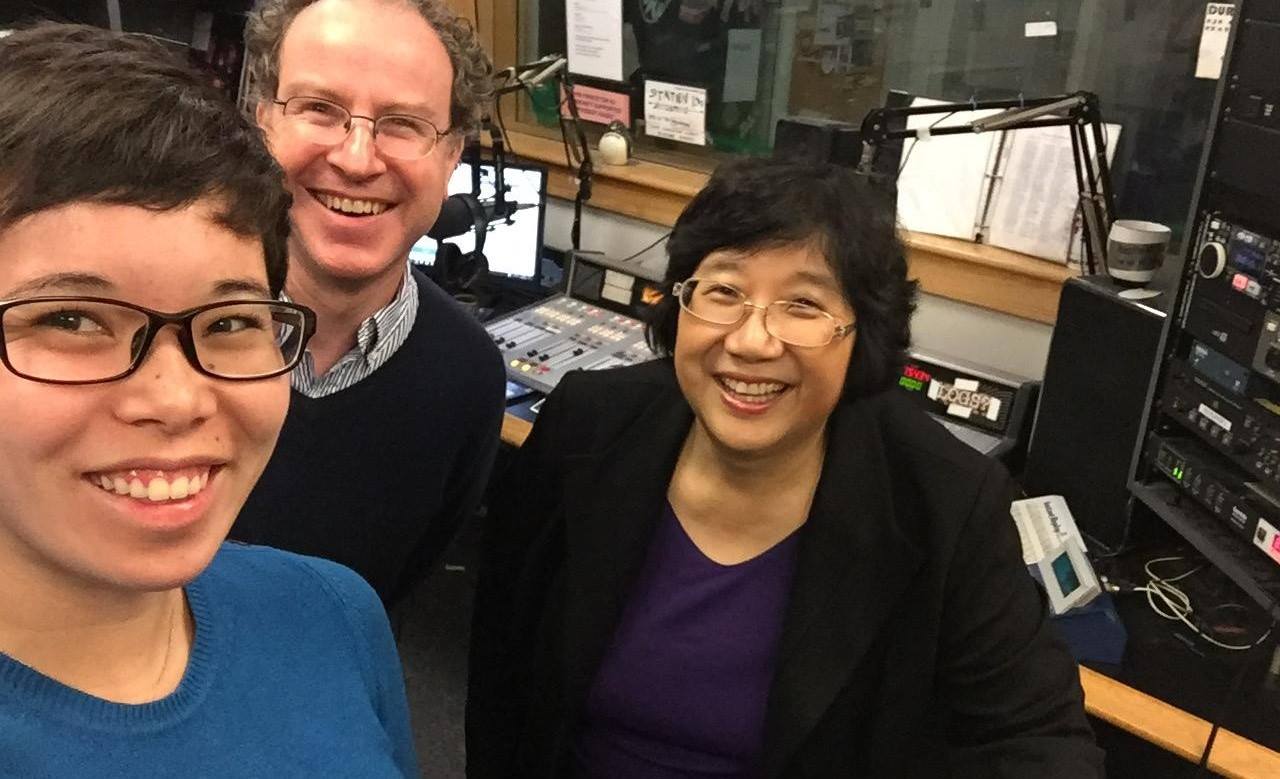
    Here’s a snapshot taken during the incredible Emiko/Amico segment of this past Thursday’s broadcast on WPRB 103.3 FM and wprb.com.

    Emiko Edwards, Juilliard-trained pianist (left), will join the Bravura Philharmonic Orchestra and its music director Chiu-Tze Lin (right) for Beethoven’s “Emperor” Concerto, this Sunday night at 7:00 at Princeton Alliance Church in Plainsboro, NJ.

    Also on the festive program will be the “Polovtsian Dances” by Alexander Borodin, the “Toy Symphony” attributed to Franz Joseph Haydn, selections from Handel’s “Messiah,” and a holiday audience sing-along. More information is available at bravuraphil.org.


Tag Cloud

Aaron Copland (93) Beethoven (95) Composer (114) Film Music (145) Film Score (143) Film Scores (255) Halloween (94) John Williams (195) KWAX (229) Leonard Bernstein (104) Marlboro Music Festival (125) Movie Music (160) Mozart (91) Opera (213) Philadelphia Orchestra (89) Picture Perfect (174) Princeton Symphony Orchestra (109) Radio (88) Ross Amico (244) Roy's Tie-Dye Sci-Fi Corner (290) The Classical Network (101) The Lost Chord (269) Vaughan Williams (105) WPRB (397) WWFM (881)

DON’T MISS A BEAT

Receive a weekly digest every Sunday at noon by signing up here


RECENT POSTS