• Friendly Aliens in Film Scores Close Encounters ET

    Friendly Aliens in Film Scores Close Encounters ET

    by 

    in
    One response

    People of Earth! We come in peace!

    This week on “Picture Perfect,” in honor of the 40th anniversary of the release of “Close Encounters of the Third Kind” (November 16, 1977) and the 35th anniversary of “E.T. The Extra-Terrestrial” (June 11, 1982), we listen to music from films about benevolent visitors from other worlds.

    Friendly E.T.’s have been out of fashion now for quite some time. We seem to be mired in some neo-‘50s zeitgeist, as far as paranoia and invaders are concerned. But that certainly wasn’t the case back in 1982, when Steven Spielberg’s “E.T. The Extra-Terrestrial” almost singlehandedly turned everything on its head.

    No more invaders from Mars. Spielberg would get to that a couple of decades later, when he remade H.G. Wells’ “The War of the Worlds.” No, during the Reagan Era, with the Cold War winding down and terrorism not yet so much in the news, cinematic E.T.’s were benevolent at best, or at worst, just trying to do their thing. They were there to be misunderstood and even imperiled by man until the warm, fuzzy, often poignant finale.

    Spielberg had already explored the concept of the benevolent visitor from space, of course, with 1977’s “Close Encounters of the Third Kind.” But there was an ambiguity for much of the film as to what exactly the aliens’ intentions were. In fact, there is at least one sequence that would have given a child nightmares. Whatever tension is generated dissolves in the euphoric finale, centered on the communicative power of music. Like so many films back then and so few now, “Close Encounters” doesn’t so much exhaust the viewer as leave him or her with a feeling of hope.

    John Williams wrote the music for both “Close Encounters” and “E.T.,” and the two scores couldn’t be more different. For “CE3K,” the avant garde syntax of the early, eerier sequences dissolves into unabashed lyricism for the transcendent finale. “E.T” takes a much more intimate approach. The moving story of a friendship between a boy and a stranded space botanist is rendered in music that is by turns tender, buoyant, and touching. The score earned Williams a much-deserved fourth Academy Award. “E.T.” may very well be Williams’ masterpiece, and Spielberg’s too.

    The “friendly” alien of “The Day the Earth Stood Still” (1951), Klaatu, may come in peace, but it is a message delivered with tough love. If mankind refuses to abide, his giant robot, Gort, will destroy the planet. At a time when Martians invariably meant trouble, this was actually progressive. Bernard Herrmann’s score is one of his best, and certainly one of his most interesting. Always an eccentric orchestrator, Herrmann’s concept of extra-terrestrial music incorporates violin, cello, electric bass, two theremins, two Hammond organs, a large studio electric organ, three vibraphones, two glockenspiels, two pianos, two harps, three trumpets, three trombones and four tubas. Overdubbing and tape-reversal techniques were also employed.

    Finally, Ron Howard’s “Cocoon” (1985) is one of the more worthwhile of the seemingly endless procession of extra-terrestrial films to be released in the wake of “E.T.” At least this one took a different approach by bringing alien forces into contact with a Florida retirement community with the unexpected result of rejuvenating its inhabitants. A modern take on the fabled Fountain of Youth, the film is a showcase for veteran actors Hume Cronyn, Jessica Tandy, Jack Gilford and Don Ameche (who won an Academy Award). James Horner’s score is much sought after by collectors.

    Klaatu barada nikto! Join me for the touchdown of friendly alien films, on “Picture Perfect” – music for the movies – this Friday evening at 6:00 EDT, on WWFM – The Classical Network and wwfm.org.
  • Warm Autumn Blues on WPRB

    Warm Autumn Blues on WPRB

    by 

    in
    One response

    Why is it whenever I do one of these shows, it’s projected to hit 75 degrees?

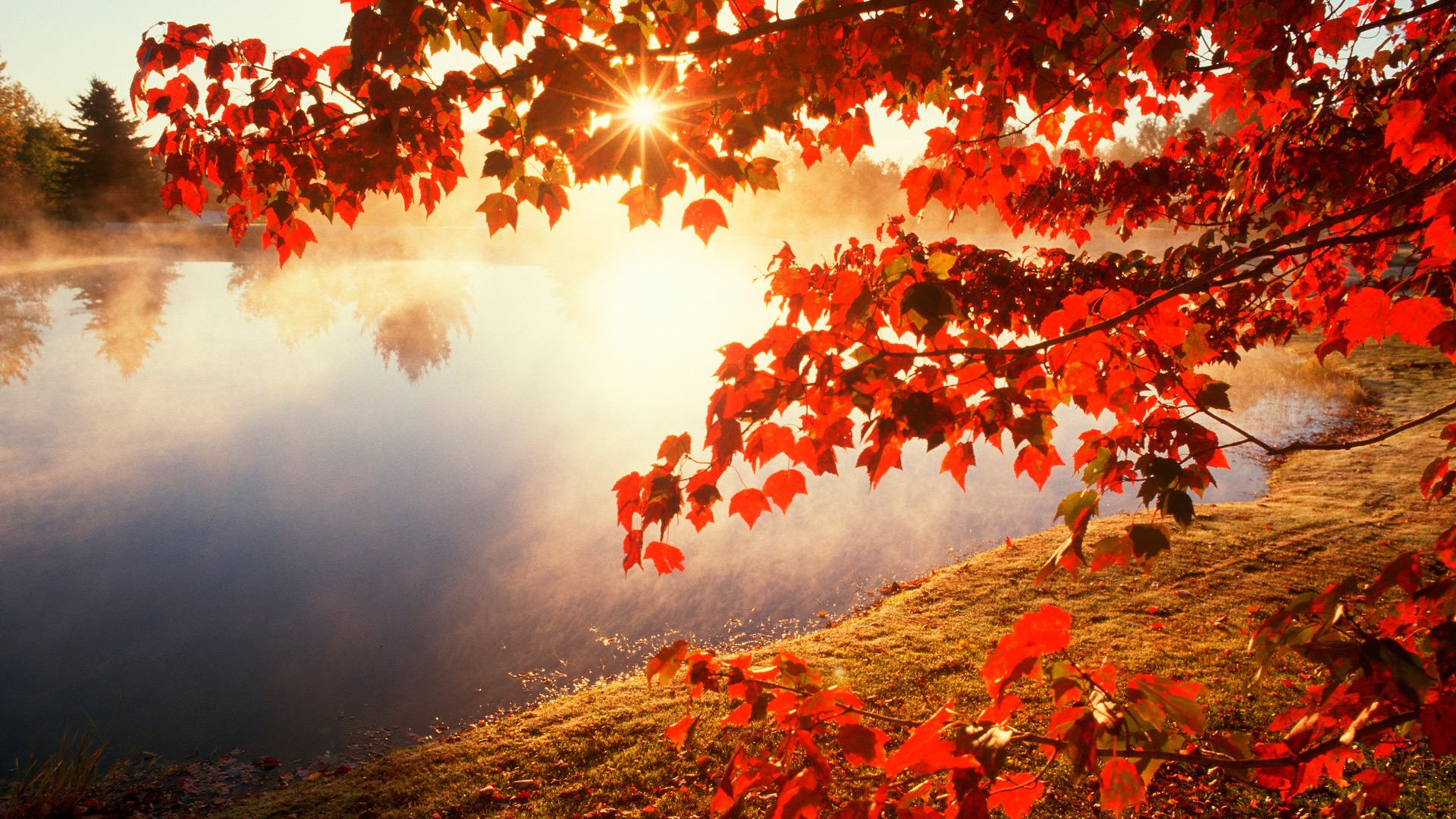
    This Thursday morning on WPRB, it’s our annual tribute to Autumn – and as usual, she’s a no-show. Face it, folks, a handful of days excepted, it’s been an unusually warm season, and some of the trees don’t seem to know what to do. I guess it’s good for the deer, but the rest of us are starving – for hot cider, November woods, wool sweaters, and migrating geese. Halloween is past; bring it on already!

    Still, a few of the trees seem to have gotten the memo. This one goes out to them. Maybe the rest will pick up on the vibe already. Tune in for some color commentary, this Thursday morning from 6 to 11 EDT, on WPRB 103.3 FM and wprb.com. The times they are a-changin’, even if the leaves aren’t, on Classic Ross Amico.


  • Support WPRB Independent Radio

    Support WPRB Independent Radio

    by 

    in
    6 responses

    While we’re all enjoying this morning’s salute to elusive autumn on Classic Ross Amico, I thought I would offer a gentle reminder that the music you hear on WPRB 103.3 FM is made possible thanks to listener contributions. True, we are the radio station of Princeton University, but we are independently owned and funded. It’s what’s called a paradox.

    Now, we’re not going to hammer you with incessant pitches for your cash with a little music sandwiched in between. This is a “silent drive.” We’re just putting it out there and leaving it up to you to follow your conscience and accept responsibility. The sad fact of the matter is that many people listen, but very few give. I believe the percentage is something like one in ten.

    I know that everyone is clamoring for you to give this time of year. But even if it’s only a few bucks, we’ll take it. In fact, when you follow the link, I think you’ll notice that the thank you gifts are tailored to encourage donations at all levels. You’ll find some updates about the station and get a glimpse of the swag by going here:

    http://wprb.com/wprb-fundraising-drive-fall-2017/

    Take the plunge into autumn until 11:00 this morning. Enjoy the music knowing that you are instrumental in keeping it going. Thank you in advance for your tax-deductible contribution to WPRB. When you get to the comments section, don’t forget to mention your fondness for the hard-working Classic Ross Amico!


  • Saint-Saëns Mozart & Marlboro

    Saint-Saëns Mozart & Marlboro

    by 

    in
    3 responses

    On this All Saints’ Day, we’ll have music by Saint-Saëns, to open this week’s “Music from Marlboro.” In fact, works by two former prodigies will frame tonight’s program.

    Saint-Saëns demonstrated perfect pitch at the age of two and gave his first public concert at the age of five. He was 72, at the other end of a very long career, when he composed his Fantaisie, Op. 124. We’ll hear it performed by violinist Thomas Zehetmair and harpist Alice Giles, from the 1982 Marlboro Music Festival.

    Mozart, of course, was composing from the age of five; he wrote his first symphony at the age of eight. He lived less than half as long at Saint-Saëns (who died at 86), but in his comparatively brief span managed to hit greater heights. We’ll conclude with Mozart’s Piano Trio in B-flat major, K. 502, written in 1786, when he was about 30 years-old and at the peak of his powers. We’ll hear a recording made at Marlboro in 1968, with pianist (and Marlboro co-founder) Rudolf Serkin, violinist Jaime Laredo, and cellist Madeline Foley.

    In between, we’ll have “Ainsi la nuit” (Thus the Night) by Henri Dutilleux. The seven-movement string quartet was meticulously crafted by the composer between 1973 and 1976, after intensive study of the works of Beethoven, Bartok, and Webern, and a series of preliminary sketches he called “Nights.” Nevermind the prodigy status; Dutilleux was about 60 at the time he completed the piece. All the hard work certainly paid off – the quartet was embraced as a modern masterpiece. We’ll hear it performed at Marlboro in 2001 by violinists Joseph Lin and Harumi Rhodes, violist Richard O’Neill, and cellist Marcy Rosen.

    I hope you’ll join me for music by Saint-Saëns, Dutilleux, and Mozart, on the next “Music from Marlboro,” this Wednesday evening at 6 EDT, on WWFM – The Classical Network and wwfm.org.

    Marlboro School of Music and Festival: Official Page


    Caricature of Saint-Saëns playing the harp, by his pupil, Gabriel Fauré


  • Autumn Music on WPRB

    Autumn Music on WPRB

    by 

    in
    5 responses

    With Halloween safely in our rear view mirror, I guess this is about as autumnal as it’s going to get. This Thursday morning on WPRB, we’ll ignore the stubborn temperatures and the tenacious greenery to celebrate the joy and melancholy of this most exhilarating of seasons.

    We’ll have a vibrant mix of concerted works, works for voice, solo instrumental and chamber music, and even symphonies, in praise of apples, Bacchus, and the colors of autumn.

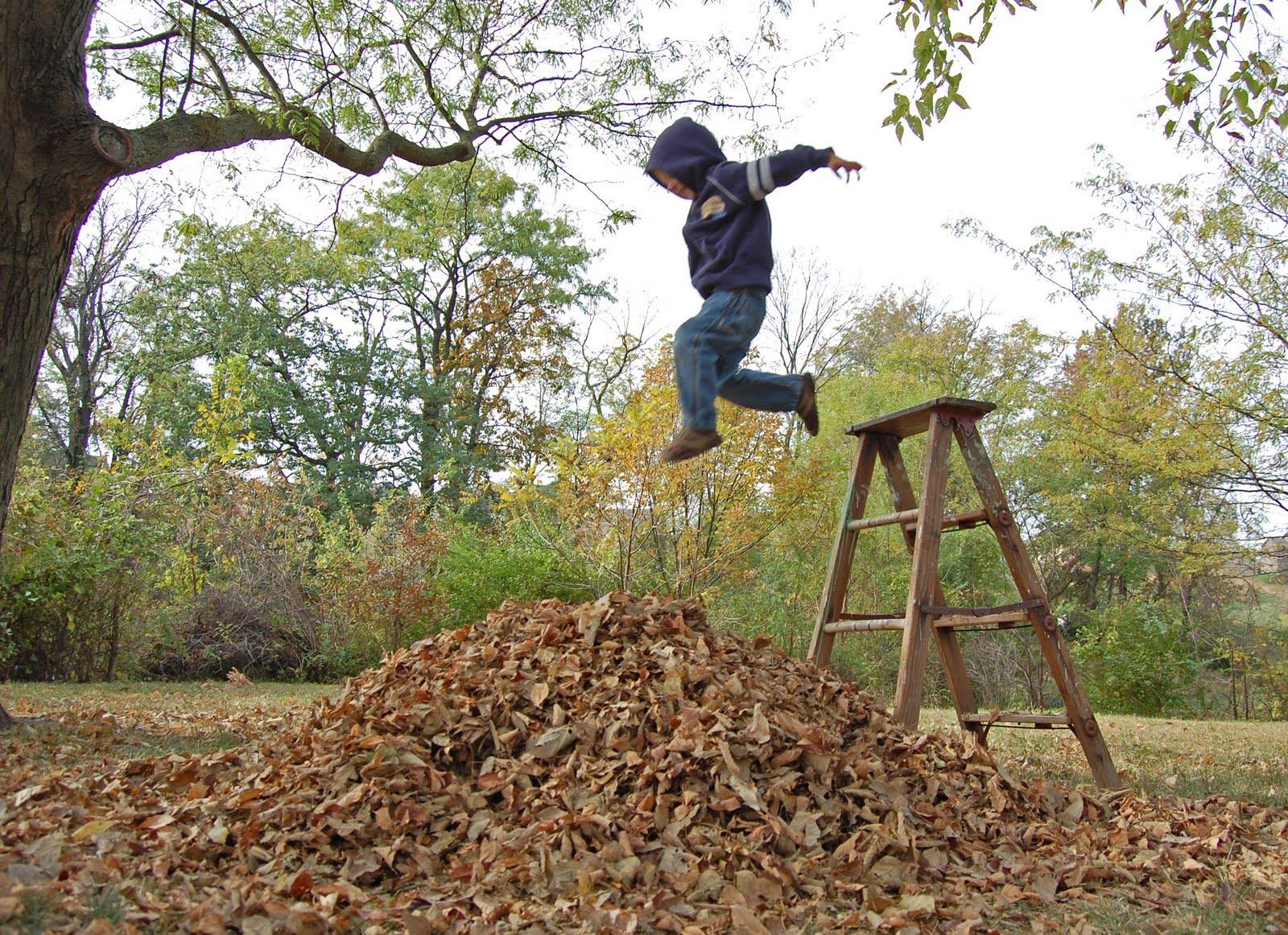
    Get ready for the mother of all leaf fights, this Thursday morning from 6 to 11 EDT, on WPRB 103.3 FM and wprb.com. I’ll be fortifying myself with pie and cider, on Classic Ross Amico.


Tag Cloud

Aaron Copland (93) Beethoven (95) Composer (114) Film Music (145) Film Score (143) Film Scores (255) Halloween (94) John Williams (195) KWAX (229) Leonard Bernstein (104) Marlboro Music Festival (125) Movie Music (160) Mozart (91) Opera (213) Philadelphia Orchestra (89) Picture Perfect (174) Princeton Symphony Orchestra (109) Radio (88) Ross Amico (244) Roy's Tie-Dye Sci-Fi Corner (290) The Classical Network (101) The Lost Chord (269) Vaughan Williams (105) WPRB (397) WWFM (881)

DON’T MISS A BEAT

Receive a weekly digest every Sunday at noon by signing up here


RECENT POSTS