• Viola Love from Marlboro Music Festival

    Viola Love from Marlboro Music Festival

    by 

    in
    4 responses

    The viola gets some love on this week’s “Music from Marlboro.” We’ll hear two very different quintets, composed over a century apart, that yet reveal their creators’ shared affinity for the instrument’s dark, rich timbre.

    Ralph Vaughan Williams’ “Phantasy Quintet,” written in 1912, was one of numerous works commissioned from England’s great composers by one Walter Wilson Cobbett, a businessman and amateur musician whose dual passions were chamber music and music of the Elizabethan era. (“Phantasy” was Cobbett’s preferred spelling.) The work is full of Tudor inflections and stamped by Vaughan Williams’ tell-tale love of folk music. Vaughan Williams doubles his violas, and the instrument is heard to great effect throughout the piece. We’ll hear a performance from the 1975 Marlboro Music Festival, with James Buswell and Sachiko Nakajima, violins; Philipp Naegele and Caroline Levine, viola; and Anne Martindale, cello.

    Wolfgang Amadeus Mozart, too, adds a second viola to his String Quintet No. 5 in D Major, K. 593. Composed in 1790, the work was recollected by the composer’s widow, Costanze, to have been written for another musical amateur, speculated to be Johann Trost. Trost must have been quite the gifted dilettante. He also knew Haydn from Esterhaza, and Haydn dedicated some of his quartets to him. When Haydn and Mozart played through the D Major Quintet together before Haydn’s first visit to London, the two men took turns indulging in the first viola part.

    The work was known for centuries as the “Zigzag” because of an alteration to the original manuscript that modified what had been a descending chromatic figure in the final movement into something decidedly more humorous. We’ll hear a performance from Marlboro in 2005, with Sarah Kapustin and Diana Cohen, violins; Mark Holloway and Sebastian Krunnies, viola; and David Soyer, cello.

    The two quintets will be divided by an evocative “Elegiac Trio” by Sir Arnold Bax, composed in 1916. The work, scored for flute, viola, and harp, appeared the year after Debussy’s trio for the same instrumental combination (which Bax may or may not have known). Its alluring melancholy emerged from a world at war. Bax was especially affected by escalating tensions between England and his beloved Ireland, which had just boiled over into violence with the Easter Rising. We’ll hear a performance of the trio from 1978, with Carol Wincenc, flute; Caroline Levine, viola; and Moya Wright, harp.

    Leave your viola jokes in the comments section, if you must; then join me for more exceptional music-making from the archives of the Marlboro Music Festival, this Wednesday evening at 6 EDT, on WWFM – The Classical Network and wwfm.org.

    Marlboro School of Music and Festival: Official Page

  • Ralph Vaughan Williams Birthday Celebration

    Ralph Vaughan Williams Birthday Celebration

    by 

    in
    4 responses

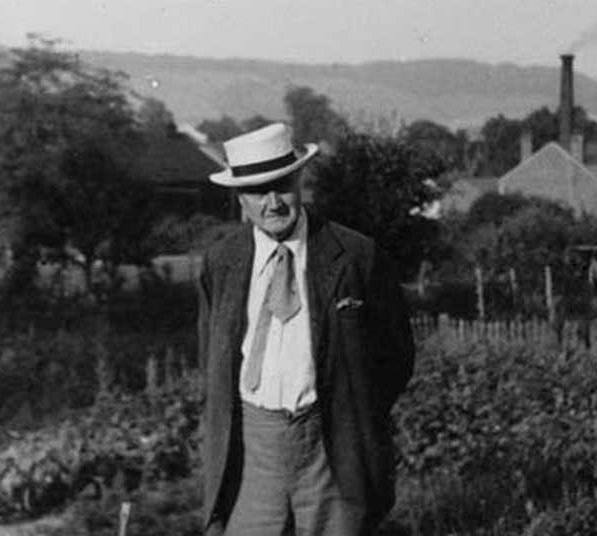
    It’s never truly autumn until we can celebrate the birthday of Ralph Vaughan Williams. One of England’s greatest composers, Vaughan Williams looked back to his country’s agrarian roots as a roundabout way of securing the future of its cultural identity. This Thursday morning on WPRB, we will salute the great man in all his rumpled glory by sampling from a broad cross-section of his multifaceted output.

    As did so many composers who were caught in the wildfire of nationalism that swept across Europe from the mid-19th century forward, Vaughan Williams rebelled against the prevailing academicism that stretched its tendrils all the way from Germany to choke the musically “provincial” outlands. He emerged from an environment that had produced far too many knock-offs of Mendelssohn and Brahms. Vaughan Williams would revolutionize his compatriots’ perception of art music by embracing the sounds of the English countryside.

    However, much like Béla Bartók, he was no simplistic, twee purveyor of folk music. On the contrary, the rhythms and inflections of his native land were already in his DNA. The songs he documented while roaming the fields and fens with his colleague, Gustav Holst, merely brought to the surface what was already innate. What he expressed in his original music was thoroughly digested and deeply personal.

    Some of Vaughan Williams’ best loved works are imbued with nostalgia for a faded world, but the composer pushed forward, as well, through two world wars and into the Great Beyond. He was not a conventionally religious man, but mysticism seems to color a fair amount of his music. Other pieces stare desolation unflinchingly in the face. His lessons with Maurice Ravel made him a thoughtful orchestrator, so that throughout his life he deployed his instrumental forces with considerable creativity and expertise. Given the proper attention, there is much to engage on all levels of his music.

    I hope you’ll join me as we salute this fascinating composer with five hours of lesser-known works and recordings of historic significance. While you might not want to take his instruction on the best way to tie ties, musically you will be in the hands of a master, this Thursday morning from 6 to 11 EDT on WPRB 103.3 FM and wprb.com. You can put your faith in Ralph (pronounced “Rafe”), on Classic Ross Amico.


    Ralph Vaughan Williams Society


  • Dolce Suono Ensemble Plays Higdon & More

    Dolce Suono Ensemble Plays Higdon & More

    by 

    in
    2 responses

    Artistic director Mimi Stillman named her Dolce Suono Ensemble after a passage in Dante’s “Divine Comedy” that reads “…in voce mista al dolce suono” (“…the words blending with the sweet sound”).

    There will be sweet sounds aplenty on today’s Noontime Concert on The Classical Network, which will come your way from the Brandywine River Museum of Art in Chadds Ford, PA. On the program will be music by Jean Sibelius, Philippe Gaubert, Antonin Dvořák, Claude Debussy, and Leonard Bernstein, with two works by Philadelphia composers: Andrea Clearfield’s “Spirit Island” and Jennifer Higdon’s “American Canvas.”

    “American Canvas” falls into three movements, each named for a different visual artist – Georgia O’Keefe, Jackson Pollock, and Andrew Wyeth. The Brandywine Museum, of course, houses an extensive collection of canvases painted by three generations of the Wyeth family.

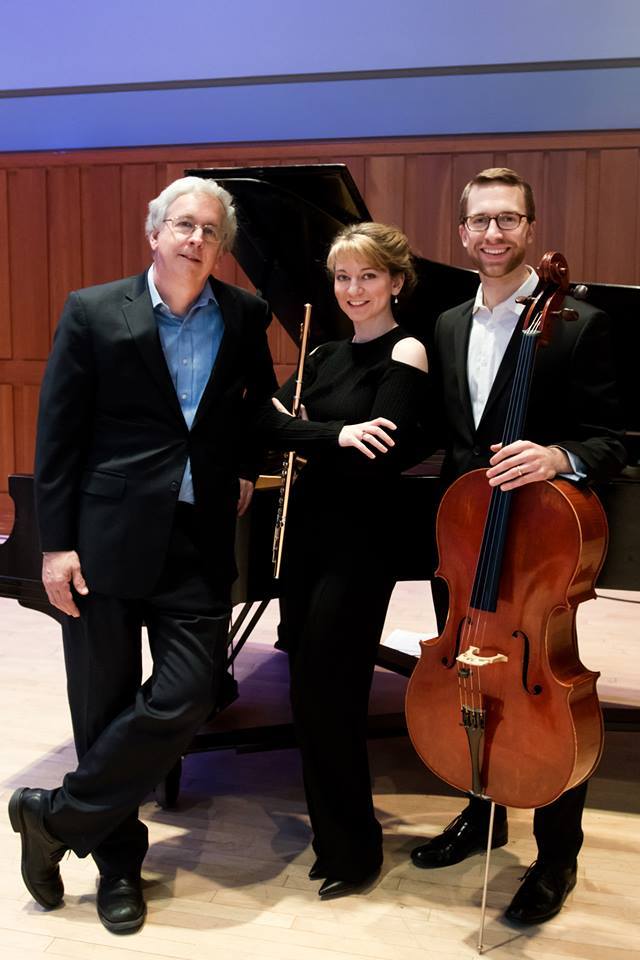
    “American Canvas” was composed on a commission from the Dolce Suono Ensemble with grants from the Musical Fund Society of Philadelphia and the William Penn Foundation. The Dolce Suono Trio consists of flutist and artistic director Mimi Stillman, pianist Charles Abramovic, and cellist Nathan Vickery. Stillman will introduce each of the pieces from the Brandywine stage.

    Dolce Suono’s next concert will explore the musical tastes of the Founding Fathers and the musical culture of Philadelphia around the founding of our nation. The ensemble will present “Music in the Second Capital” this Sunday at 3 p.m. at Old Pine St Presbyterian Church, 412 Pine Street, Philadelphia. For more information, look online at dolcesuono.com/events.

    Following today’s Noontime Concert, stick around for a complete recording of the “Messa da Requiem” by Giuseppe Verdi, as we celebrate the Italian master’s 204th birthday. There will be sweet sounds aplenty, this Tuesday, from 12 to 4 p.m. EDT, on WWFM – The Classical Network and wwfm.org.


  • Columbus Day Classical Composers

    Columbus Day Classical Composers

    by 

    in
    6 responses

    On this Columbus Day, discover music by Johann Wilhelm Hertel, Camille Saint-Saëns, Janis Ivanovs, and Einojuhani Rautavaara. We’ll celebrate the birthday anniversaries of this very interesting assortment, from 4 to 7 p.m. EDT, on WWFM – The Classical Network and wwfm.org.


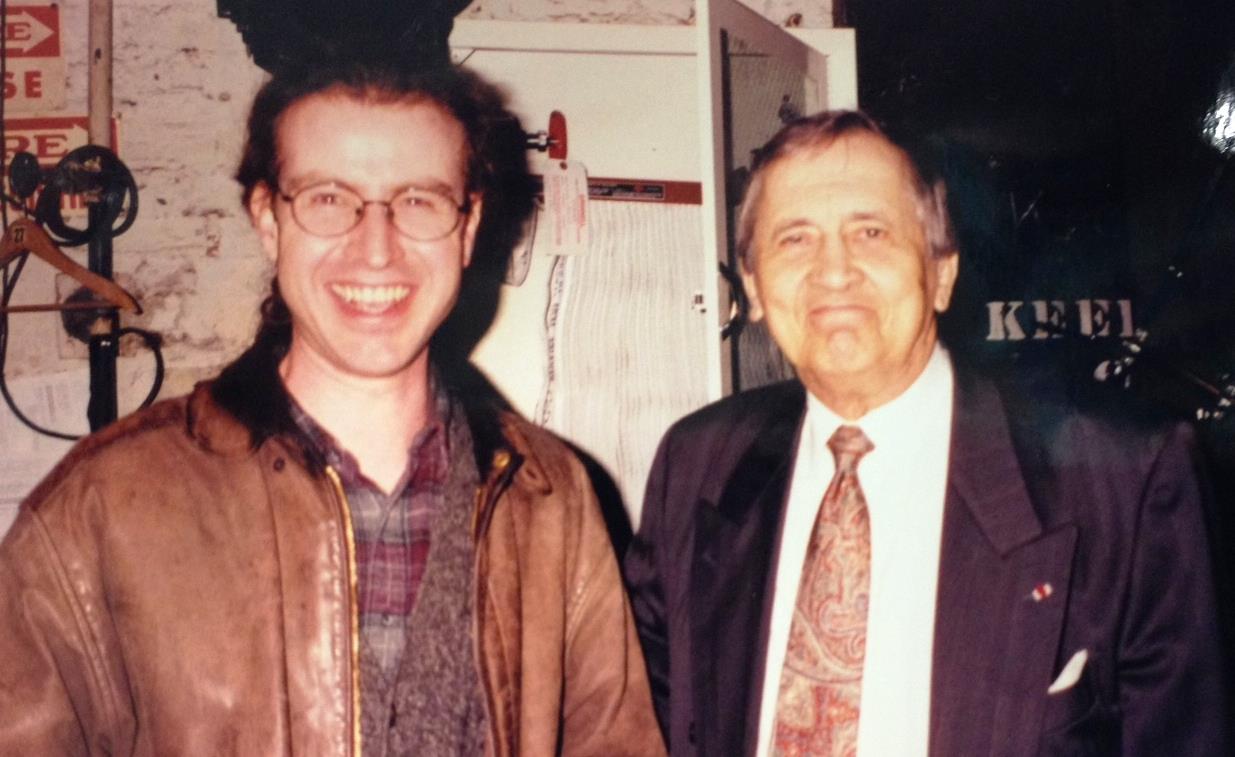
    PHOTO: A callow Classic Ross Amico backstage with Einojuhani Rautavaara at Philadelphia’s Academy of Music in 2000, following the premiere of the composer’s Symphony No. 8 “The Journey.” The photo was taken by Anssi Blomstedt, grandson of Jean Sibelius.


  • Janis Ivanovs Symphony No 20 WWFM

    Janis Ivanovs Symphony No 20 WWFM

    by 

    in
    5 responses

    This is making the rounds on the Twitters, but I thought I’d also share it here. Coming up at 4:30 EDT on WWFM – The Classical Network and wwfm.org, we celebrate the birthday of Latvian composer Janis Ivanovs with his Symphony No. 20 — heard on glorious vinyl!


Tag Cloud

Aaron Copland (93) Beethoven (95) Composer (114) Film Music (145) Film Score (143) Film Scores (255) Halloween (94) John Williams (195) KWAX (229) Leonard Bernstein (104) Marlboro Music Festival (125) Movie Music (160) Mozart (91) Opera (213) Philadelphia Orchestra (89) Picture Perfect (174) Princeton Symphony Orchestra (109) Radio (88) Ross Amico (244) Roy's Tie-Dye Sci-Fi Corner (290) The Classical Network (101) The Lost Chord (269) Vaughan Williams (105) WPRB (397) WWFM (881)

DON’T MISS A BEAT

Receive a weekly digest every Sunday at noon by signing up here


RECENT POSTS