• Atreus’ Fall: Music of Vengeance & Justice

    Atreus’ Fall: Music of Vengeance & Justice

    by 

    in
    6 responses

    For some of us living here in the Northeast, autumn brings with it the pleasures of baked goods, homemade soups, colored leaves, moody skies, carved pumpkins, black-and-white horror movies, used book shopping, sweaters, Brahms, and cozy cups of tea. But for the House of Atreus, “fall” meant something completely different.

    This Sunday night on “The Lost Chord,” we’ll hear music inspired by “The Oresteia,” a trilogy of surviving plays by Aeschylus that relates the effects of a curse on the House of Atreus. Dating from the 5th century B.C., the overall story arc follows the shift from perpetual vengeance to the formation of a rational social justice system – the thinking being that man cannot hope to build a progressive civilization if he is engaged in unremitting bloodshed.

    However, along the way to that all-important message, the audience gets to have its cake and eat it, too, as it is treated such lurid incidentals as human sacrifice, incest, adultery, filicide, fratricide, mariticide, matricide, and cannibalism. The name of the cycle derives from Orestes, who avenges the murder of his father, Agamemnon, who in turn was killed by his wife, Clytemnestra, and her lover, Aegisthus.

    The subject was a popular one with the playwrights of antiquity – it was also treated by Sophocles and Euripides – and it continues to have resonance in the present day. It is certainly very well represented in the classical music world.

    French composer Darius Milhaud treated all three surviving plays in the Aeschylus cycle, as “The Oresteia of Aeschylus,” composed over a ten year span. Combined, the cycle runs to three hours and involves over 300 singers and players. Allegedly, Milhaud considered it his greatest work.

    The second part is titled “Les Choéphores,” or “The Libation-Bearers,” referring to the women who offer up ritual sacrifices at Agamemnon’s grave. The story, the familiar one, concerns the victorious Agamemnon returning from the Trojan War, only to be murdered in his bathtub Clytemnestra and Aegisthus.

    They go on to rule a resentful populace, with Agamemnon’s daughter Electra, consumed by her thirst for vengeance, which is delivered eventually, upon the secret return of her brother, Agamemnon’s brother, Orestes. In the meantime, Clytemnestra, racked by guilt and haunted by nightmares, attempts to appease her husband’s ghost and avert her fate by sending an offering of libations to his tomb.

    Milhaud worked with poet, playwright and frequent collaborator Paul Claudel to structure Aeschylus’ play, the second of the trilogy, into seven scenes, beginning with a threnody and concluding with a plea for justice.

    We’ll round out the hour with incidental music written by Dutch composer Alphons Diepenbrock, inspired by Sophocles’ “Electra.”

    That’s comedy tomorrow, tragedy tonight. Join me for “Fall at the House of Atreus,” music inspired by “The Oresteia,” this Sunday night at 10:00 EDT, on WWFM – The Classical Network and wwfm.org.


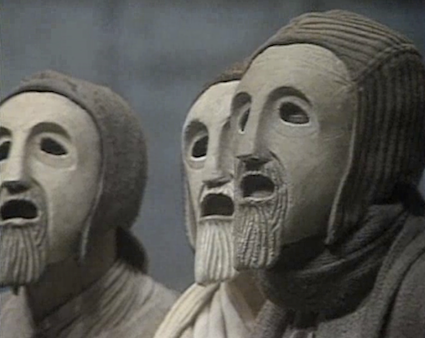
    PHOTO: The fall has seldom been so grim

  • Scott’s Antarctic Playlist What Explorers Listened To

    Scott’s Antarctic Playlist What Explorers Listened To

    by 

    in
    7 responses

    What was on Robert Falcon Scott’s iPod?

    Scott, perhaps better known as Scott of the Antarctic, perished on his attempted return from the South Pole, after learning that he had been beaten to the mark by his rival, Roald Amundsen.

    I learned of the existence of this fascinating EMI collection while presenting my explorers show on WPRB this Thursday:

    Revealed: the secrets of Captain Scott’s playlist

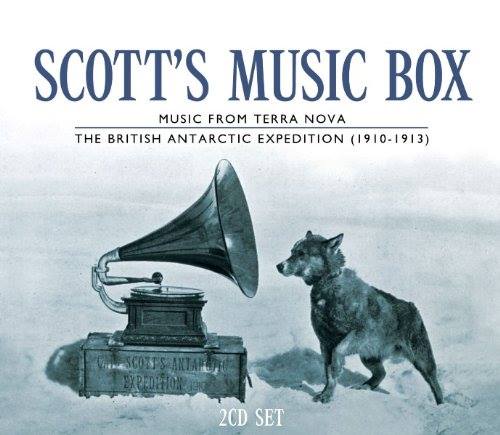
    The 2012 release replicates and remasters material drawn from the several hundred 78 rpm records donated to the expedition by The Gramophone Company (later to become EMI). Repertoire ranges from opera and operetta to music hall to brass band to drawing room ballads to hymns to ragtime, and looks to provide some informative glimpses of what the men on Scott’s team must have listened to when searching for inspiration or dreaming of home.

    The set is currently unavailable in the United States, but may be downloaded or obtained by way of secondhand dealers operating through Amazon UK. I just bought the only used copy posted on the site of its American counterpart for a penny!

    This country, and by extension the world, has really got some misplaced priorities. I don’t expect everyone to like what I like, but I do despair for the future of music, which is to say music history. If only I had some of Scott’s stoicism in the face of certain defeat…


  • English Documentary Music: Vaughan Williams & More

    English Documentary Music: Vaughan Williams & More

    by 

    in
    3 responses

    It’s not that I don’t have any commercial sense; I just don’t care. If I were in it for the money, I’d be in another line of work. Anyway, if it moves me or interests me, I am pretty sure it will interest some of you. After all, what could be more engaging than an hour of… ENGLISH DOCUMENTARY MUSIC?

    This week on “Picture Perfect,” though perhaps not exactly by popular demand, we’ll listen to four examples of such scores.

    In England, unlike in the United States, there is no demarcation between “film composer” and “concert composer.” What is often regarded here as “hack work,” is seen there as just another aspect of what it means to be a working artist. There is no disgrace in a composer earning a living, and some of the nation’s greatest musicians – including those in the employ of the Royal Family – have contributed finely-crafted works to its body of cinema.

    With this in mind, we’ll hear music by Ralph Vaughan Williams, from “The People’s Land” (1942), Benjamin Britten, from “The King’s Stamp” (1935), William Alwyn, from “The Green Girdle” (1941), and Sir Arthur Bliss, from “The Royal Palaces of Britain” (1966). All four films are patriotic utterances on distinctly English themes.

    You may not have seen any of the movies, but the music is beautiful. I hope you’ll join me for selections from English documentaries, this Friday evening at 6 EDT, on WWFM – The Classical Network and wwfm.org.

    The complete documentary short, “The People’s Land,” is posted on YouTube:

    https://www.youtube.com/watch?v=jpRtM8FcBb4

    As is “The Green Girdle:”

    And “The King’s Stamp”:

    https://www.youtube.com/watch?v=6gSsJHlLFg4

    Thank you, Internet!


    PHOTO: It’s not about what you think


  • Age of Exploration Music Adventure on WPRB

    Age of Exploration Music Adventure on WPRB

    by 

    in
    One response

    No smartphones. No Starbuck’s. No 7-Elevens.

    In their place, strange microbes, uncharted shoals, unknown perils.

    Once they left, they were really gone, and they didn’t know when – or if – they were coming back. Now that’s adventure!

    Regardless of how you may personally feel about some of the behavior of the great European explorers, you have to admit, they had cojones.

    This Thursday morning on WPRB, in advance of Columbus Day, the focus will be on the Age of Exploration, the push, beginning in the late 15th century, toward discovery – and yes, in many cases, conquest and colonization – of new lands.

    We’ll hear music inspired by Henry Hudson, Sir Walter Raleigh, Juan Ponce de Leon, Francisco Pizarro, and of course Christopher Columbus. We’ll even include a few works in honor of Icelandic explorer Leif Erikson, who arrived in North America 500 years before Columbus’ first voyage.

    As a special treat, Sir Edmund Hillary will narrate “Landfall in Unknown Seas,” composed by Douglas Lilburn to commemorate the 300th anniversary of the arrival of Abel Tasman in New Zealand. From the early years of the 20th century, we’ll travel to the polar regions with Roald Amundsen and Robert Falcon Scott. And to bring us up to the present, we’ll listen to Joaquin Rodrigo’s salute to NASA and its commitment to the final frontier, “In Search of the Beyond.”

    For centuries, the great explorers were celebrated as heroes. In more recent decades, the best we can hope for is a more nuanced view. But consider this: without the courage of these bold rascals, where would most of us be? On an overcrowded continent without coffee or potatoes. That sounds like a very cranky existence indeed.

    I hope you’ll be able to rise above any personal revulsion to join me for these armchair explorations, this Thursday morning from 6 to 11 EDT, on WPRB 103.3 FM and wprb.com. We’ll provide the suntan lotion and mosquito repellant, on Classic Ross Amico.


  • Ravel, Les Six, and Marlboro’s French Trios

    Ravel, Les Six, and Marlboro’s French Trios

    by 

    in
    3 responses

    Maurice Ravel’s Piano Trio in A minor had been gestating for at least six years before he finally sat down to write the work over the summer of 1914. At first, progress was slow, but when war was declared in August, Ravel put on a burst of speed to finish the piece so that he could he could do his patriotic duty and enlist in the French army. He was rejected from the infantry and the air force on account of his diminutive size and precarious health, but he learned to drive a truck and cared for the wounded at Verdun on the Western Front.

    We’ll hear Ravel’s Piano Trio on this week’s “Music from Marlboro,” alongside a couple of other trios by composers of the next generation – Francis Poulenc and Darius Milhaud – both of whom had complex reactions to Ravel’s music.

    Poulenc and Milhaud together formed one-third of Les Six, that collective of French composers who rose to prominence in Paris in the late ‘teens and 1920s. Each had his or her own distinctive style – the group’s other members included Arthur Honegger, Georges Auric, Germaine Tailleferre, and Louis Durey – but together they displayed a united front in resistance to the so-called Impressionists (Debussy and Ravel) and most of all Richard Wagner. Any trace of Wagnerian portentousness would be blown out between the tent flaps, as the spirit of the circus, café and cabaret came to dominate a new aesthetic.

    You’ll hear it embodied in Poulenc’s Trio for Oboe, Bassoon and Piano (1926), which begins very somberly indeed, before taking off with irrepressible joie de vivre. The central movement is both elegant and wistful in a manner characteristic of this composer, and the cheeky finale is presented with an ironic smile.

    Interestingly, Milhaud’s Suite for Clarinet, Violin and Piano (1936) revisits material from incidental music he composed for Jean Anouilh’s play “Le Voyageur sans bagages” (“The Traveler without Luggage”), about an amnesiac World War I soldier. The piece falls into four movements: “Ouverture;” “Divertissement;” “Jeu;” and “Introduction et Final.” As the titles suggest, much of the music is sassy and full of play, and it is to be wondered what Ravel, a veteran of the Great War would have thought of it.

    I hope you’ll join me for a trio of French trios, performed by musicians of the legendary Marlboro Music Festival, this Wednesday evening at 6 EDT, on WWFM – The Classical NetworkWWFM The Classical Network and wwfm.org.

    Marlboro School of Music and Festival: Official Page


    PHOTO: Ravel in uniform


Tag Cloud

Aaron Copland (93) Beethoven (95) Composer (114) Film Music (145) Film Score (143) Film Scores (255) Halloween (94) John Williams (195) KWAX (229) Leonard Bernstein (104) Marlboro Music Festival (125) Movie Music (160) Mozart (91) Opera (213) Philadelphia Orchestra (89) Picture Perfect (174) Princeton Symphony Orchestra (109) Radio (88) Ross Amico (244) Roy's Tie-Dye Sci-Fi Corner (290) The Classical Network (101) The Lost Chord (269) Vaughan Williams (105) WPRB (397) WWFM (881)

DON’T MISS A BEAT

Receive a weekly digest every Sunday at noon by signing up here


RECENT POSTS