• NBCO at Zimmerli Art Museum

    NBCO at Zimmerli Art Museum

    by 

    in
    4 responses

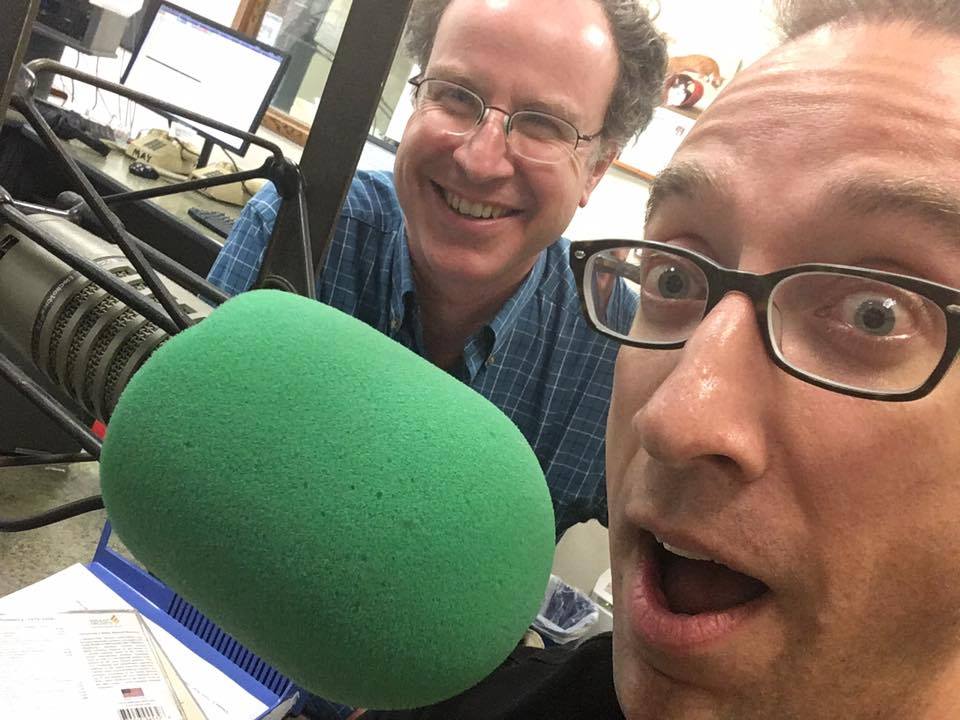
    Still new to the whole selfie thing. This is from when Mark Hyczko and I were guest villains on the television series “Batman.” (Just kidding. We’re at WWFM – The Classical Network. Ha ha.)

    Mark was in today to co-host the Noontime Concert and to talk about the New Brunswick Chamber Orchestra’s next NBCO@Zimmerli salon, to be held this Sunday at 2 p.m. at the Zimmerli Art Museum at Rutgers University. On the program will be works by Fanny Mendelssohn, Amy Beach, Libby Larsen, Jennifer Higdon and Caroline Shaw. The event is free, but registration is required. You can reserve your seat at newbrunswickchamberorchestra.org.

    Thanks for the visit, Mark. You’re a natural!

    NBCO@Zimmerli “After Clara”


  • Classical Music Birthday Bash on WWFM

    Classical Music Birthday Bash on WWFM

    by 

    in
    2 responses

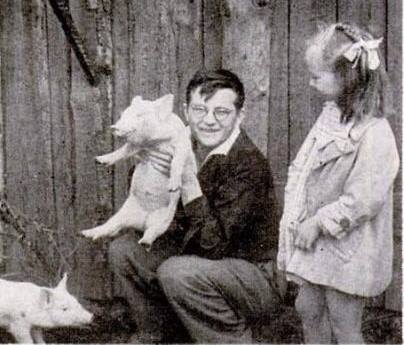
    It is quite the day for birthdays! Jean-Philippe Rameau. Dmitri Shostakovich. Glenn Gould. Sir Colin Davis. And those are just the top of the pile. I’ve been wrapping gifts all day. Drop by for some ice cream and cake, metaphorically speaking, from 4 to 7 p.m. EDT, on WWFM – The Classical Network and wwfm.org.


    PHOTO: Shostakovich pigs out on his birthday


  • Romeo Cascarino Philly’s Unsung Opera Genius

    Romeo Cascarino Philly’s Unsung Opera Genius

    by 

    in
    One response

    With a name like Romeo, he had to learn to use his fists.

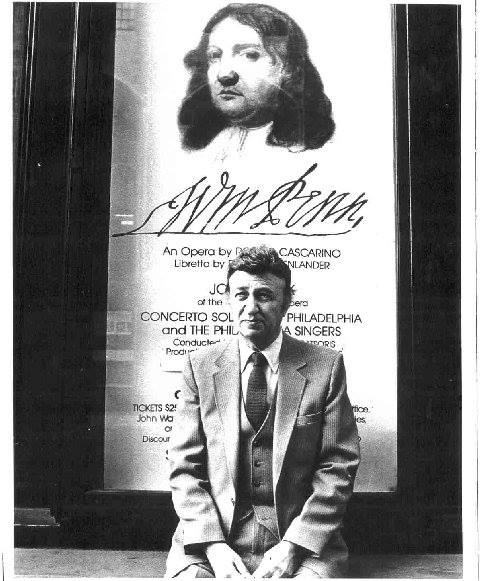
    Composer Romeo Cascarino grew up in an unforgiving neighborhood in South Philadelphia. While navigating the School of Hard Knocks, he taught himself privately, gleaning the mechanics of music theory from books checked out of the Free Library of Philadelphia. He was discovered by composer Paul Nordoff, who recognized his genius, and the two became more friends than master-disciple.

    For many years, Cascarino was a professor of composition at Combs College of Music. The recipient of two Guggenheim Fellowships, he labored at his magnum opus, the opera “William Penn,” for the better part of three decades. The work received its premiere at Philadelphia’s Academy of Music in 1982 to mark the 300th anniversary of the founding of the city.

    Metropolitan Opera singer bass-baritone John Cheek sang the title role, Cascarino’s wife, soprano Dolores Ferraro, created the part of Gulielma, Penn’s wife, and Christofer Macatsoris conducted the Philadelphia Singers and the Concerto Soloists of Philadelphia.

    Cascarino died in 2002; September 28th would have been his 95th birthday. Ferraro and arts writer Tom DiNardo sat down with me in 2012 to share their reminiscences and insights into Cascarino the man and the composer. I’ve assembled some of their remarks and punctuated the conversation with rare audio from the family archives, as well as studio recordings made by JoAnn Falletta and Sol Schoenbach, former principle bassoonist of the Philadelphia Orchestra.

    A seductive, twilit beauty informs much of Cascarino’s output. If only he had completed “William Penn” 30 years earlier, I believe it would have been as well known as Carlisle Floyd’s “Susanna” or Robert Ward’s “The Crucible.”

    I hope you’ll join me for a rebroadcast of “Remembering Romeo,” this Sunday night at 10:00 EDT, on WWFM – The Classical Network and wwfm.org.
  • Titanic’s Haunting “Valse Septembre”

    Titanic’s Haunting “Valse Septembre”

    by 

    in
    4 responses

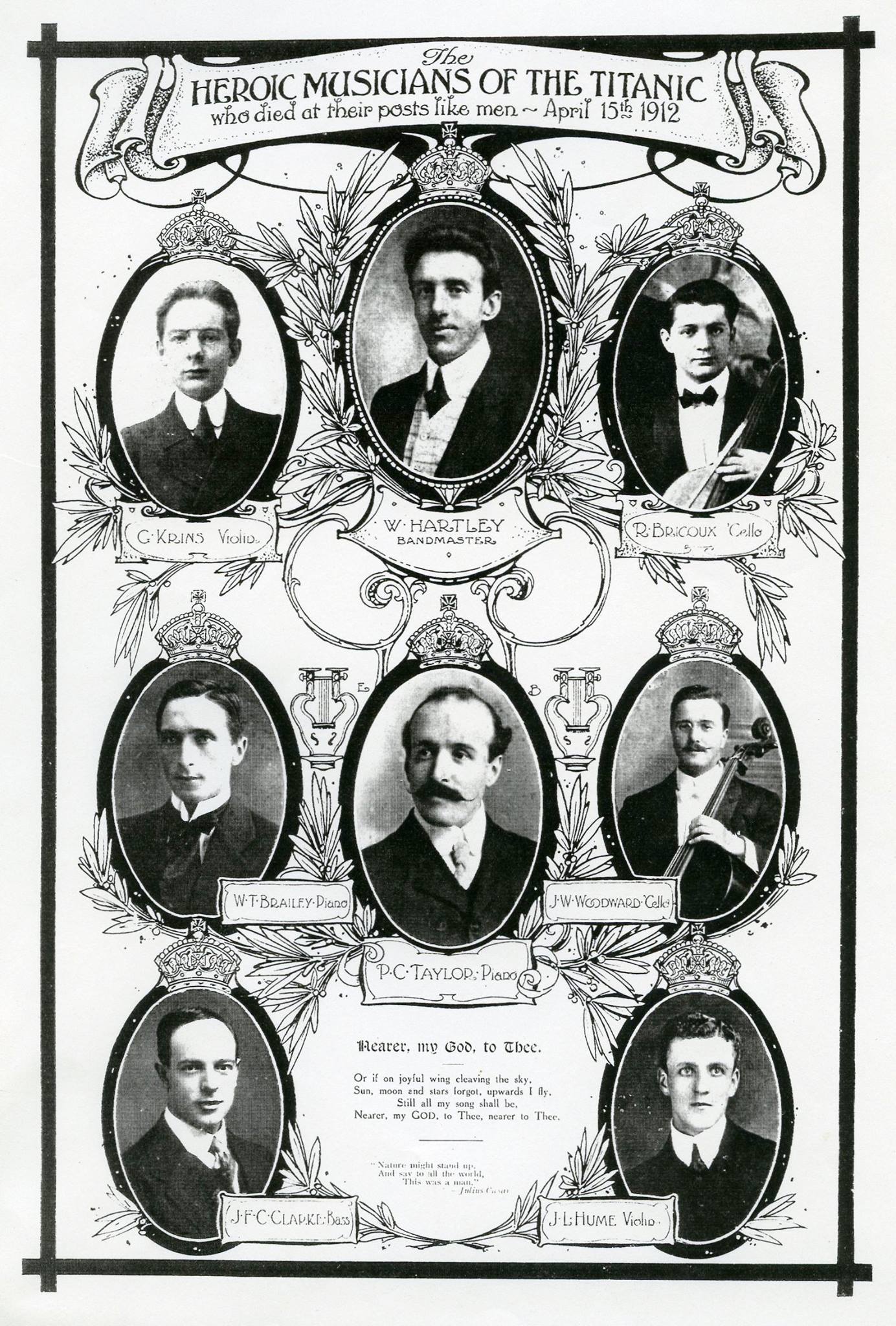
    As heard aboard the RMS Titanic, here’s Felix Godin’s “Valse Septembre” (1909). Godin was actually a pseudonym for light music composer Henry Albert Brown. The musicians of the Titanic, of course, are legendary for having played as long as possible during the ship’s sinking, in an attempt to keep calm among the passengers. In a sense, they wound up performing their own requiem.

    I Salonisti portrayed the ship’s band in the 1997 film “Titanic.”


  • Jewish Film Music for the High Holy Days

    Jewish Film Music for the High Holy Days

    by 

    in
    7 responses

    This week on “Picture Perfect,” to coincide with the Jewish High Holy Days, we’ll have music from movies and television series inspired by aspects of the Jewish experience.

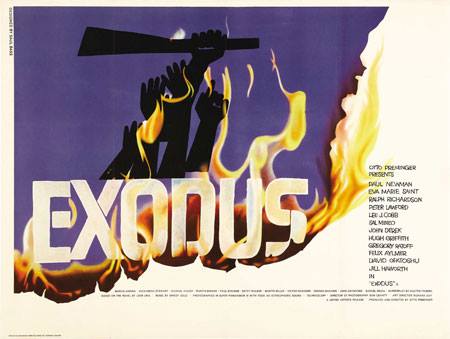
    We’ll begin with “Exodus” (1960), based on the bestselling novel by Leon Uris, about the founding of the State of Israel. The book is said to have been the biggest seller in the United States since “Gone With the Wind.” The film was directed by Otto Preminger. Paul Newman and Eva Marie Saint lead an all-star cast. Ernest Gold’s stirring music was recognized with an Academy Award and is probably his best-known achievement.

    Barry Levinson’s semi-autobiographical “Avalon” (1990) explores the immigrant experience and, for better or worse, the assimilation of a Jewish family into American life. Alongside his work on “The Natural,” Randy Newman’s score is probably one of his best-loved.

    We’ll round out the hour with music from two acclaimed television scores: for the NBC mini-series “Holocaust” (1978), written by the esteemed concert composer Morton Gould, and Emmy Award-winning music from the PBS series “Heritage: Civilization and the Jews” (1984), by John Duffy.

    I hope you’ll join me as we celebrate the Jewish experience this week, on “Picture Perfect” – music for the movies – this Friday evening at 6 EDT, on WWFM – The Classical Network and wwfm.org.

Tag Cloud

Aaron Copland (93) Beethoven (95) Composer (114) Film Music (144) Film Score (143) Film Scores (255) Halloween (94) John Williams (195) KWAX (229) Leonard Bernstein (104) Marlboro Music Festival (125) Movie Music (159) Mozart (91) Opera (213) Philadelphia Orchestra (89) Picture Perfect (174) Princeton Symphony Orchestra (109) Radio (88) Ross Amico (244) Roy's Tie-Dye Sci-Fi Corner (290) The Classical Network (101) The Lost Chord (269) Vaughan Williams (105) WPRB (397) WWFM (881)

DON’T MISS A BEAT

Receive a weekly digest every Sunday at noon by signing up here


RECENT POSTS