• Arnell’s Bruckner Symphony on WWFM Today

    Arnell’s Bruckner Symphony on WWFM Today

    by 

    in
    6 responses

    I know, I play an awful lot of Bruckner on WWFM on Tuesday afternoons. It’s a way for me to regroup as I come down off the adrenaline rush of hosting the live noon concerts, which are unscripted and basically improvised from a sheaf of papers handed to me, which I do my best to assimilate in advance.

    I also know I have been going on an awful lot about Richard Arnell, the neglected English master, in connection with the centenary of his birth, which was last Friday. (Yesterday I played his String Quintet No. 3.)

    So, in the interest of mixing it up, today I will offer something a little different: Arnell’s Bruckner-inflected Symphony No. 3. Arnell’s wartime symphony bears other diverse influences – some Sibelius here, a dash of Nielsen there; perhaps even some Shostakovich – but try listening to it with Bruckner in mind, especially the earlier movements.

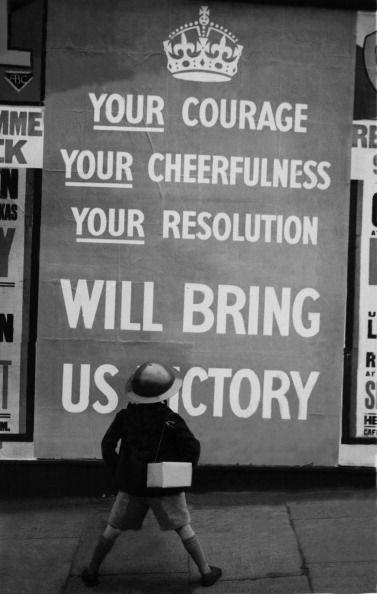
    The six-movement piece was composed in the United States, where Arnell found himself stranded while visiting the World’s Fair in 1939, his return home cut off by the outbreak of the Second World War. His mother would be killed in the Blitz in 1942. Arnell dedicated his symphony “to the political courage of the British people.”

    It certainly achieves an ambitious scale, running to over an hour in length. And don’t get me wrong: despite the multiplicity of influences – there’s even a kind of barn dance that recalls American symphonic music of the era – it is English, and most certainly Arnell, to the core. I think you’ll agree, it works up a good head of steam and achieves passages of genuine nobility. Judge for yourself; I’ll be playing it around 2:00.

    First, today’s Noontime Concert will be made up of performances by the New York Chamber Ensemble, drawn from this summer’s Cape May Music Festival. We’ll hear selections from two programs. The first will include music by Philippe Hersant (“Héliades” for flute and strings), Johan Kvandal (from his Hardanger fiddle quintet) and Felix Mendelssohn (his String Quartet No. 2 in B-flat major). Then saxophonist Eddie Barbash will join the group for riffs on a variety of old favorites by Cole Porter, Ruben Fuentes, Manuel Ponce, Vincenzo Bellini, Harry Warren, and the ever-prolific Anonymous. Next year’s Cape May Music Festival will run from May 27 to June 14. Further developments, as they become available, will be posted at the festival’s website, capemaymac.org.

    I hope you’ll join me today, from 12 to 4 p.m. EDT, for chamber music, an epic symphony and more, on WWFM – The Classical Network and wwfm.org.
  • Lord Berners: Eccentric Genius and Musical Wit

    Lord Berners: Eccentric Genius and Musical Wit

    by 

    in
    4 responses

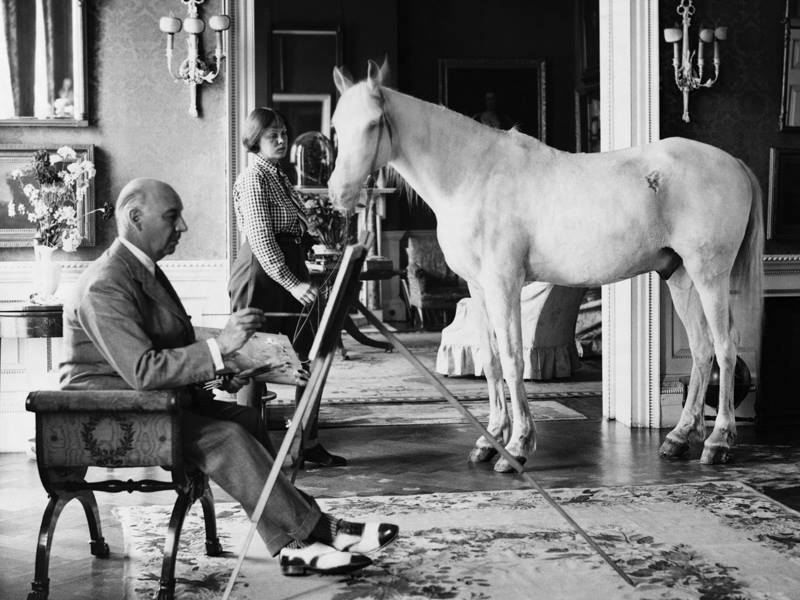
    He kept a clavichord in the back seat of his Rolls Royce. A pet giraffe roamed the grounds of his estate. He invited a horse to his indoor tea parties. He constructed a 100-foot folly tower, “just to annoy the neighbors.”

    Today is the birthday of Gerald Hugh Thyrwitt-Wilson, 14th Baron Berners (1883-1950), whose enduring reputation is as one of England’s great eccentrics. More than likely, he was perfectly sane, as sane as you or I, but that sanity was leavened by a highly cultivated sense of the absurd.

    A multitalented individual, Berners’ fortune allowed him the luxury to indulge his whims and enthusiasms. He wrote wry and entertaining books, he became a painter (he included moustaches in his portraits, whether the sitter had one or not), and he composed some thoroughly delightful music.

    His most famous work is “The Triumph of Neptune,” one of only two ballets commissioned from English composers by the Ballets Russes. The work became a great favorite of Sir Thomas Beecham, who made multiple recordings of it.

    I hope you’ll join me for music by Lord Berners. His will be among the birthday anniversaries we’ll observe today, between 4 and 7 p.m. EDT, on WWFM – The Classical Network and wwfm.org.
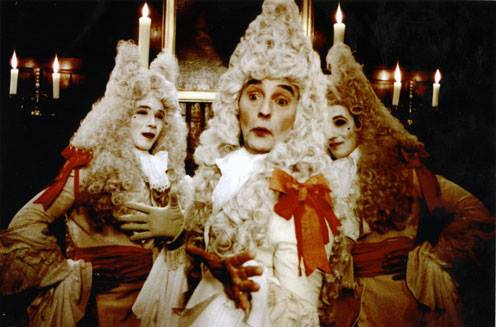

    PHOTO: Berners, no doubt contemplating the placement of a moustache


  • French Composers Beyond Orchestration

    French Composers Beyond Orchestration

    by 

    in
    3 responses

    This Sunday night on “The Lost Chord,” it’s music by French composers better known for their skill as orchestrators of others’ works. We’ll hear original compositions by Henri Rabaud (orchestrator of Gabriel Fauré’s “Dolly Suite”), André Caplet (orchestrator of Claude Debussy’s “Children’s Corner,” “Clair de lune,” “Le Martyre de saint Sébastien,” and “La Boite à joujoux”), Henri Büsser (orchestrator of Debussy’s “Petite Suite” and “Printemps”) and Charles Koechlin (orchestrator of Fauré’s “Pelléas et Mélisande” and Debussy’s “Khamma”).

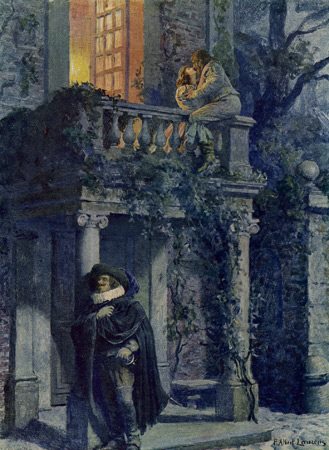
    These musical Cyranos emerge from the shadow of Roxane’s balcony, on “French Connections,” this Sunday night at 10:00 EDT, on WWFM – The Classical Network and wwfm.org.


  • Nadia Boulanger: Influential Music Teacher

    Nadia Boulanger: Influential Music Teacher

    by 

    in
    5 responses

    Today is the anniversary of the birth of Nadia Boulanger (1887-1979), pedagogue and Patron Saint of American – some might argue “20th Century” – Music. Certainly, her influence continues to be felt into our own time.

    Among Boulanger’s hundreds of pupils: Daniel Barenboim, Idil Biret, Elliot Carter, Aaron Copland, John Eliot Gardiner, Philip Glass, H. Wiley Hitchcock, Quincy Jones, Robert Kapilow, Dini Lipatti, Igor Markevitch, Astor Piazzolla, Walter Piston, Stanislaw Skrowaczewski, Virgil Thomson and George Walker.

    Writes Ned Rorem (the rare American who did not study with Boulanger), “Myth credits every American town with two things: a 10-cent store and a Boulanger student.”

    Here is Rorem writing about Boulanger in the New York Times in 1982:

    http://www.nytimes.com/1982/05/23/books/the-composer-and-the-music-teacher.html?pagewanted=all&mcubz=3


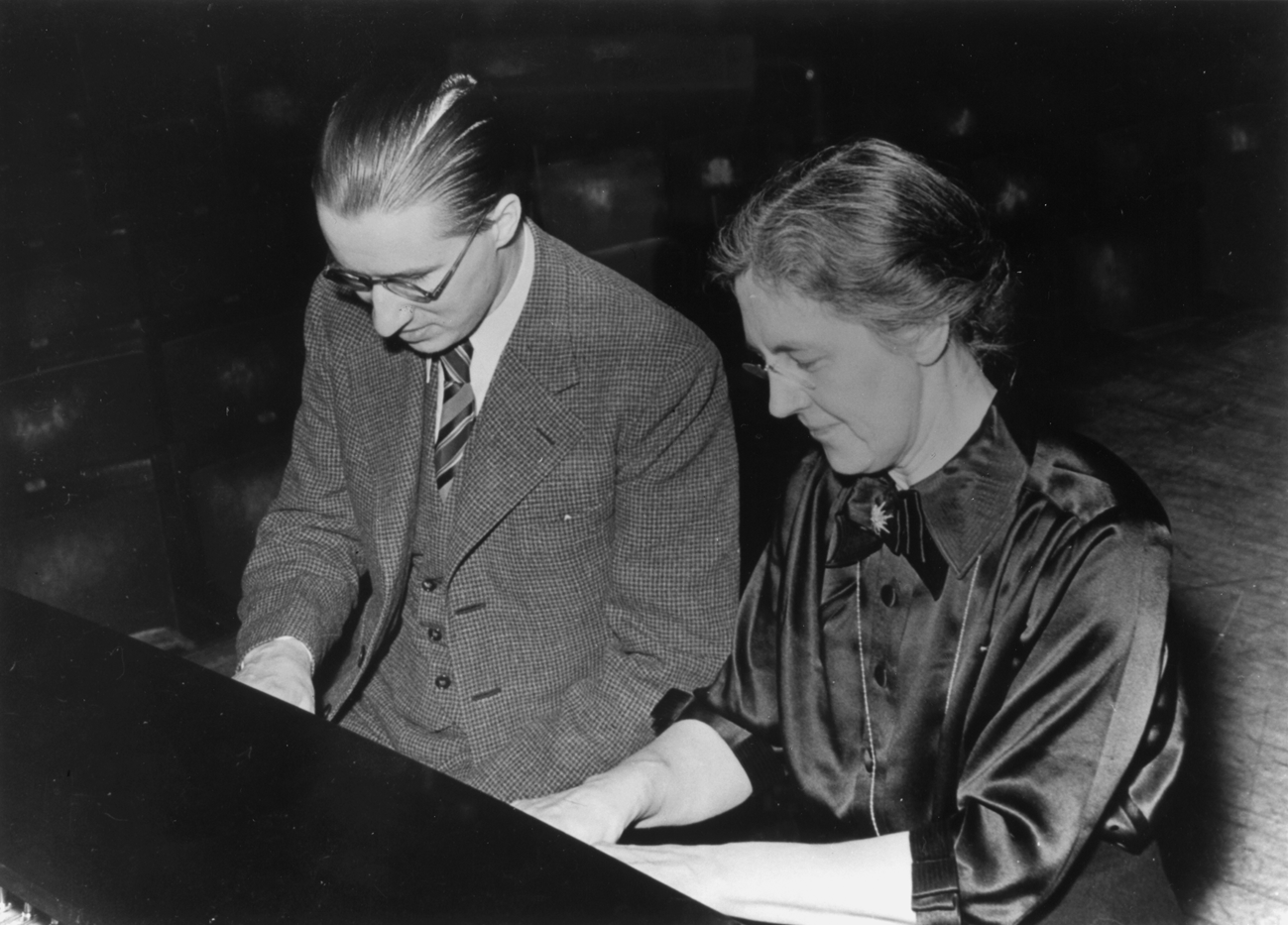
    PHOTO: Boulanger with one of her pupils, the composer Jean Françaix


  • Restoration Era Film Scores & Charles II

    Restoration Era Film Scores & Charles II

    by 

    in
    3 responses

    Get out the pancake makeup, and don’t skimp on the beauty marks. This week on “Picture Perfect,” the focus will be on Charles II and the Restoration.

    The film “Restoration” (1995) featured quite a cast, with a pre-“Iron Man” Robert Downey, Jr., as a young doctor torn between duty and debauchery. He succumbs to the latter at the court of Charles II, played by Sam Neill, before finding redemption as he battles the Great Plague and braves the Fire of London. The film also stars David Thewlis, Polly Walker, Meg Ryan, Ian McKellan and Hugh Grant.

    The main title of James Newtown Howard’s score takes its impetus from Henry Purcell’s “The Fairy Queen.” And indeed there are baroque inflections throughout.

    George Sanders plays Charles in “The King’s Thief” (1955). Edmund Purdom is a highwayman who pilfers an incriminating book from David Niven. An aristocratic schemer, Niven will stop at nothing to get it back. The swashbuckling score is by Miklós Rózsa.

    I don’t recall Charles making an appearance in “The Draughtsman’s Contract” (1982), Peter Greenaway’s saucy though strangely aloof Restoration opus. However, there is plenty of licentiousness and an abundance of outlandish wigs. And, it being a Greenaway film, it is certainly strange in more ways than one. Michael Nyman’s score puts a minimalist spin on baroque sources.

    Finally, “Forever Amber” (1947) is based on a then-scandalous novel by Kathleen Winsor, about an ambitious young woman’s rise through the bedchambers of the Royal Court. The film was directed by Otto Preminger. Linda Darnell is Amber. Once again, George Sanders plays Charles, eight years before reprising the role for “The King’s Thief.” Cornel Wilde, Richard Greene and Jessica Tandy are also in the cast. Philadelphia-born composer David Raksin, of “Laura” fame, plays fast and loose with music of the era.

    Bwoo-hoo-hoo-hoo! It’s so naughty! Join me for music from movies set during the Restoration, on “Picture Perfect,” this Friday evening at 6, on WWFM – The Classical Network and wwfm.org.


Tag Cloud

Aaron Copland (93) Beethoven (95) Composer (114) Film Music (144) Film Score (143) Film Scores (255) Halloween (94) John Williams (195) KWAX (229) Leonard Bernstein (104) Marlboro Music Festival (125) Movie Music (159) Mozart (91) Opera (213) Philadelphia Orchestra (89) Picture Perfect (174) Princeton Symphony Orchestra (109) Radio (88) Ross Amico (244) Roy's Tie-Dye Sci-Fi Corner (290) The Classical Network (101) The Lost Chord (269) Vaughan Williams (105) WPRB (397) WWFM (881)

DON’T MISS A BEAT

Receive a weekly digest every Sunday at noon by signing up here


RECENT POSTS