• Albert Dietrich & Friends Birthday Broadcast

    Albert Dietrich & Friends Birthday Broadcast

    by 

    in
    4 responses

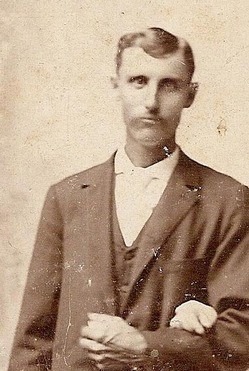
    Albert Dietrich (1829-1908) was a pupil of Robert Schumann, who was also a good friend of Johannes Brahms. In fact, the three artists sat down to compose a collaborative sonata, known as the “FAE” (“frei aber einsam,” “free but lonely”) for their mutual friend, the violinist Joseph Joachim. A virtually forgotten figure, Dietrich was born on this date.

    Join me this afternoon to enjoy some of his worthwhile music, alongside contributions of Karl Böhm, Ivor Gurney, Istvan Kertesz, John Shirley-Quirk, and Richard Tucker, whose birthday anniversaries we’ll also celebrate, between 4 and 7 p.m. EDT, on WWFM – The Classical Network and wwfm.org.


    PHOTOS (clockwise from left): Albert Dietrich, Johannes Brahms, Robert Schumann and Joseph Joachim


  • Childhood Nostalgia in Classical Music

    Childhood Nostalgia in Classical Music

    by 

    in
    4 responses

    The limpid air and lambent, silvery light of late August imbue one with a sense of nostalgia swaddled in the gentle melancholy of another summer winding down. How I feel for the young ‘uns straining against the inescapable vortex of another school year.

    This Sunday night on “The Lost Chord,” we listen to music by four composers who engage in musical reminiscences of childhood.

    The American symphonist William Schuman based his “American Festival Overture” (1939) on a three-note call-to-play from his boyhood in New York City that was shouted on the syllables “Wee-Awk-Eee!”

    Haskell Small’s “Visions of Childhood” (2011) is a cycle of piano pieces in the Robert Schumann “Kinderszenen” mode, a grown artist looking back to his boyhood. The work falls into ten brief movements: “A Long Time Ago;” “Playing Rough;” “A Little Story;” “Feeling Lonely;” “School’s Out;” “Haunted House;” “Frolicking;” “Look at Me!;” “Roller Coaster;” and “Lullaby.”

    Charles Ives may have been a radical innovator, but his subject matter frequently looked back in nostalgia to the New England of his childhood. His Violin Sonata No. 4 (1906-1915, revised in 1942) bears the subtitle, “Children’s Day at the Camp Meeting,” a programmatic work that balances hymn tunes and rowdy boyhood high jinks.

    As he entered his 70s, George Crumb embarked on a remarkably productive Indian Summer, which resulted in no less than seven volumes of “American Songbooks,” the last completed in 2011, when the composer was 82 years-old. Each volume consists of deeply personal treatments of songs Crumb recollected from growing up in West Virginia. We’ll hear selections from “American Songbook III: The River of Life” (2008). By employing his characteristic shades and cross-hatchings through an assortment of ear-tickling percussion effects, the composer provides his own commentary on the time-worn source material, lending it both unsuspected depth and an aura of timelessness.

    It’s a far cry from “Kinderszenen.” Join me for “Nostalgia Isn’t What It Used to Be” – 20th and 21st century composers look back to childhood – this Sunday night at 10:00 EDT, on WWFM – The Classical Network and wwfm.org.


  • Callas Carmen Prêtre Hilarious Conductor

    Callas Carmen Prêtre Hilarious Conductor

    by 

    in
    4 responses

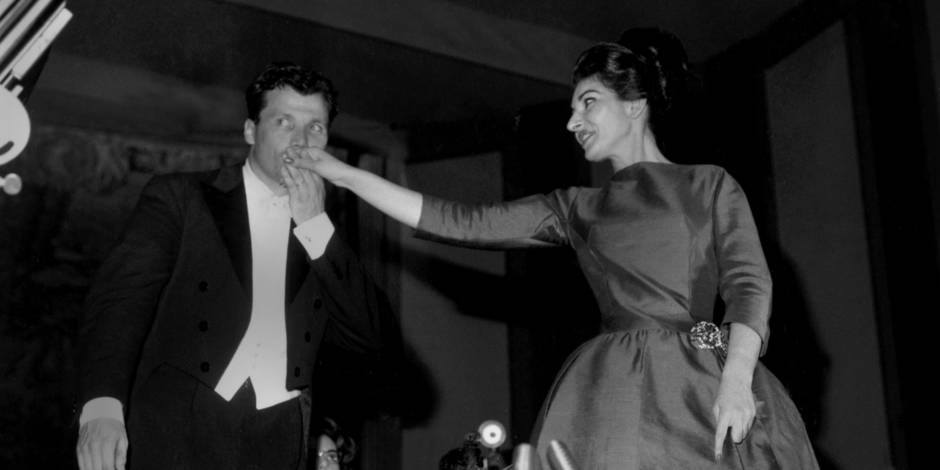
    I hope you find this as amusing as I did. Conductor Georges Prêtre, who died earlier this year at the age of 92, doesn’t waste a gesture, in this selection from Bizet’s “Carmen” (with Maria Callas).


  • It’s the End of the World Bernstein Birthday

    It’s the End of the World Bernstein Birthday

    by 

    in
    7 responses

    I’m pushing the envelope here and presupposing a familiarity with R.E.M.’s 1987 hit. Happy birthday, Leonard Bernstein!


  • Artist Biopics Great Art Great Music

    Artist Biopics Great Art Great Music

    by 

    in
    3 responses

    How to translate visual art to the big screen? Generally by focusing on the drama in the artists’ lives, that’s how.

    And what drama!

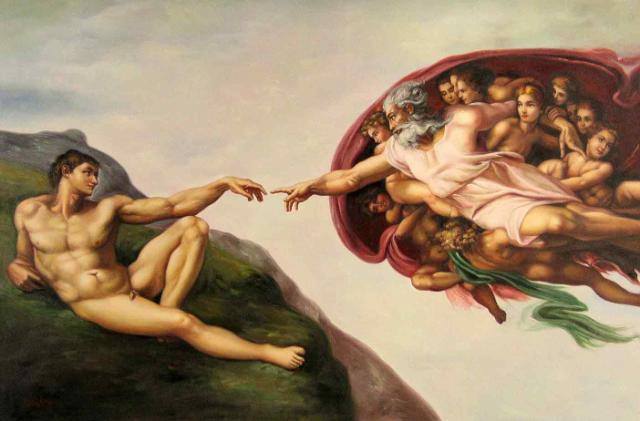
    This week on “Picture Perfect,” expand your palette with music from movies about the great artists. “The Agony and the Ecstasy,” based on the novel of Irving Stone, dramatizes the friction between Michelangelo (Charlton Heston) and his benefactor, Pope Julius II (Rex Harrison), over the painting of the ceiling of the Sistine Chapel. For his part, Michelangelo would have been perfectly content to stick to sculpture. Alex North’s score is an Early Music banquet, with allusions to – and sometimes outright quotations of – music of the Renaissance.

    Stone had another bestseller in “Lust for Life,” about the tormented Vincent van Gogh. This time Kirk Douglas plays one of his most sympathetic roles – and looks remarkably like the artist. Anthony Quinn turns up as his “frenemy,” the painter Paul Gaugin, and earns an Academy Award for Best Supporting Actor. The great Miklós Rózsa wrote the music, softening up the edges of his brawny Hungarian sound with the softer palette of the French Impressionists.

    John Huston brought Pierre La Mure’s novel about Henri de Toulouse-Lautrec to the big screen as “Moulin Rouge” (not to be confused with the more recent Baz Luhrmann spectacle starring Nicole Kidman and Ewan McGregor, which relegated the artist to a supporting role). José Ferrer dominates the earlier version, spending most of the film walking through off-camera trenches and shuffling along on his knees. Georges Auric, one of the composers of Les Six (which also included Francis Poulenc and Darius Milhaud), captures the spirit of the titular cabaret. The score became one of Auric’s best-known, thanks to the waltz becoming a popular hit, “Where is Your Heart.”

    “The Picasso Summer” is a departure from the usual formula of focusing on the artist himself. Instead, a young couple (played by Albert Finney and Yvette Mimieux), admirers of Picasso’s work, take off on a European adventure in an attempt to track him down. Originally Picasso himself had agreed to appear, but some off-screen drama involving a matador friend and Yul Brynner’s wife drove him off. The film was based on a short story by Ray Bradbury. Bradbury hated the adaptation, as did the studio, and “The Picasso Summer,” after being heavily cut and patched with new footage, was never released theatrically in the United States. The film is striking for its extended animation sequences inspired by Picasso’s paintings, and for its score by Michel Legrand.

    Join me for a brush with greatness – music from movies about the great artists – on “Picture Perfect,” this Friday evening at 6:00 EDT, on WWFM – The Classical Network and wwfm.org.

Tag Cloud

Aaron Copland (93) Beethoven (95) Composer (114) Film Music (145) Film Score (143) Film Scores (255) Halloween (94) John Williams (195) KWAX (229) Leonard Bernstein (104) Marlboro Music Festival (125) Movie Music (160) Mozart (91) Opera (213) Philadelphia Orchestra (89) Picture Perfect (174) Princeton Symphony Orchestra (109) Radio (88) Ross Amico (244) Roy's Tie-Dye Sci-Fi Corner (290) The Classical Network (101) The Lost Chord (269) Vaughan Williams (105) WPRB (397) WWFM (881)

DON’T MISS A BEAT

Receive a weekly digest every Sunday at noon by signing up here


RECENT POSTS