• Westminster Choir College Sale Hopeful But Uncertain

    Westminster Choir College Sale Hopeful But Uncertain

    by 

    in
    2 responses

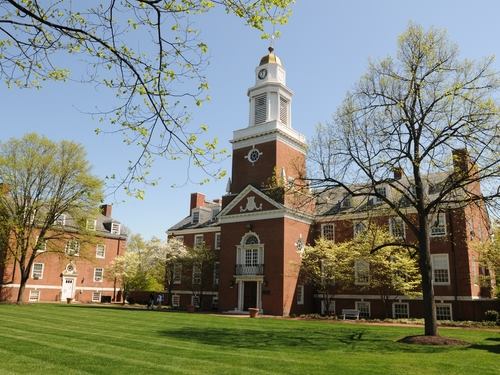
    This news broke late yesterday afternoon, but I am only just getting around to posting about it. In the same week that the American Boychoir stunned everyone with the announcement that the organization would be folding, effective immediately, after 79 years, cautious optimism is about the best I can muster for an unknown buyer of Westminster Choir College, particularly since contracts have yet to be signed. Let’s everyone keep our fingers crossed. Princeton can’t afford to lose another cultural institution, especially one of this magnitude.

    http://wwfm.org/post/rider-begin-negotiations-international-buyer-westminster-choir-college


  • John Williams’ Lost Western Film Scores

    John Williams’ Lost Western Film Scores

    by 

    in
    6 responses

    Looking back on the cinematic western, by the mid-1970s it was definitely time to water the horses. For much of the preceding decade, most of the important statements in the genre had gone elegiac, revisionist, spaghetti, or some combination of the three.

    With the release of “Star Wars” in 1977, elements of the western survived, but beyond a handful of exceptions, the western, like the swashbuckler, had moved to outer space.

    Though John Williams became inextricably linked with the intergalactic spectacle, it is little known that he, like most of his contemporaries, scored a number of actual, old school westerns. This week on “Picture Perfect,” we’ll listen to music from four of them.

    Westerns don’t get much more primal than where revenge is concerned. Mark Rydell’s “The Cowboys” (1972), one of the better of John Wayne’s later films, draws blood when Bruce Dern commits an unspeakable crime against the American West. If you’re a collector of Boston Pops records, you may be familiar with the rousing overture Williams assembled from his score.

    Before his career devolved into an excuse to bring together his celebrity friends to goof off in front of the camera and then cash the paycheck, Burt Reynolds made a number of effective dramatic films. In “The Man Who Loved Cat Dancing” (1973), Reynolds plays a laconic train robber haunted by something in his past, who finds a second chance with Sarah Miles, the wife of one of his pursuers, who rides along with his gang. Williams provided a really groovy opening number for this one.

    Despite the how-could-it-possibly-miss teaming of Marlon Brando and Jack Nicholson – with “Bonnie and Clyde” director Arthur Penn at the helm – “The Missouri Breaks” (1976) bombed with both critics and audiences. (If you ever wanted to see Brando in drag, then this is the film for you.) Williams took a different approach with this one, providing a more intimate, if off-kilter score, tinged with jazz and pop elements, and featuring guitar, banjo, harmonica, honky tonk piano, electric harpsichord, etc.

    “The Rare Breed” (1966), on the other hand, is straight-down-the-middle, with James Stewart and Maureen O’Hara introducing Hereford cattle to the American west. Brian Keith, as Stewart’s rival, sports a red beard and a Scottish burr, for some reason. Williams, however, is wholly himself, providing an uplifting, wide-open main theme. Would that film composers still wrote like this…

    Join me for an hour of Williams Westerns this week, on “Picture Perfect,” this Friday evening at 6 EDT, on WWFM – The Classical Network and wwfm.org.


    PHOTOS: (clockwise from left) Reynolds loves Cat Dancing; Brando in touch with his feminine side; the Duke; and an unrecognizable Brian Keith

  • British Light Music A Sweet Morning on WPRB

    British Light Music A Sweet Morning on WPRB

    by 

    in
    One response

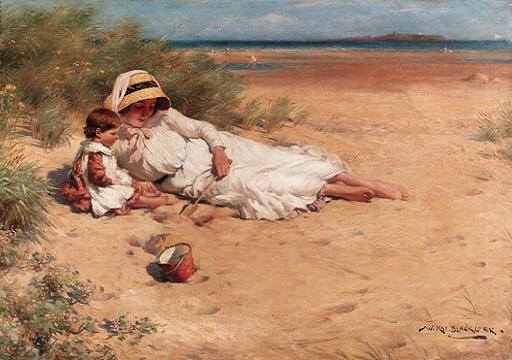
    Drowse by a sleepy lagoon with Eric Coates. Luxuriate to bells across the meadows with Albert Ketèlbey. Cherish the roses of Picardy with Haydn Wood.

    We’ll attempt to lighten your load this morning on WPRB with a program of unpretentious, unapologetically melodic music, drawn from the genre known as British Light Music. Living relics of a bygone era, British Light Music enjoyed its heyday in the age of palm court orchestras and during the formative years of radio. Its antecedents reach back to sentimental music of the 19th century and works like those of Sir Arthur Sullivan and Edward German, and its influence continues to make itself felt in the lighter music of John Rutter and Philip Lane.

    To allow me to catch my breath and actually enter the playlist online (at wprb.com), we’ll also hear a symphony by Robert Farnon, a piano concerto by Haydn Wood, and a cello concerto by Sir Arthur Sullivan, lost in a fire in 1964, but resurrected through a remarkable feat of memory by conductor Sir Charles Mackerras.

    This kind of music may not be for everyone, but it’s definitely for me. It will make for a very sugary breakfast, that’s for certain, this Thursday morning from 6 to 11 EDT, on WPRB 103.3 FM and wprb.com. Trip the light fantastic, on Classic Ross Amico.


  • Sleepy Lagoon British Light Music WPRB

    Sleepy Lagoon British Light Music WPRB

    by 

    in
    4 responses

    Join me by the sleepy lagoon. It’s British Light Music until 11 a.m. EDT on WPRB 103.3 FM and wprb.com.


  • French Music at Marlboro Festival WWFM

    French Music at Marlboro Festival WWFM

    by 

    in
    4 responses

    On this week’s “Music from Marlboro,” it’s an all-French affair.

    Charles Gounod’s classically proportioned and wholly delightful “Petite symphonie” will be performed by Marlboro wind players, including “the Heifetz of the flute” (Gramophone) Marina Piccinini, principal oboist of the Metropolitan Opera Nathan Hughes, principal oboist of the Minnesota Orchestra Joseph Peters, principal clarinetist of the New York Philharmonic Anthony McGill, New York-based freelance clarinetist Alicia Lee (Orpheus Chamber Orchestra, The Knights, NOVUS and ACME), principal bassoonist of the Princeton Symphony Orchestra Brad Balliett, San Francisco Symphony bassoonist Steven Dibner, newly appointed principal hornist of the Berlin Philharmonic David Cooper, and former principal horn of the Berlin Radio Symphony Orchestra (and now concert soloist) Radovan Vlatković, from a concert given in 2013.

    Then veteran pianist Gilbert Kalish will be joined by violinist Catherine Cho (Juilliard School faculty), violist Melissa Reardon (Enso String Quartet), and cellist Raman Ramakrishnan (Horszowski Trio, formerly of the Daedalus Quartet) to perform Gabriel Fauré’s passionate and personal Piano Quartet No. 2 in G minor, Op. 45, from a concert given in 2001.

    I hope you’ll join me for more great music-making from the archives of the legendary Marlboro Music Festival, this Wednesday at 6 p.m. EDT, on WWFM – The Classical Network and wwfm.org.

    Marlboro School of Music and Festival: Official Page


Tag Cloud

Aaron Copland (93) Beethoven (95) Composer (114) Film Music (144) Film Score (143) Film Scores (255) Halloween (94) John Williams (195) KWAX (229) Leonard Bernstein (104) Marlboro Music Festival (125) Movie Music (159) Mozart (91) Opera (213) Philadelphia Orchestra (89) Picture Perfect (174) Princeton Symphony Orchestra (109) Radio (88) Ross Amico (244) Roy's Tie-Dye Sci-Fi Corner (290) The Classical Network (101) The Lost Chord (269) Vaughan Williams (105) WPRB (397) WWFM (881)

DON’T MISS A BEAT

Receive a weekly digest every Sunday at noon by signing up here


RECENT POSTS