• Marlboro Music Festival: Tradition and Camaraderie

    Marlboro Music Festival: Tradition and Camaraderie

    by 

    in
    5 responses

    Continuity and tradition run deep at Marlboro.

    Above and beyond the love of chamber music, a shared sense of relaxed camaraderie lure musicians and audiences back to this idyllic summer festival year after year.

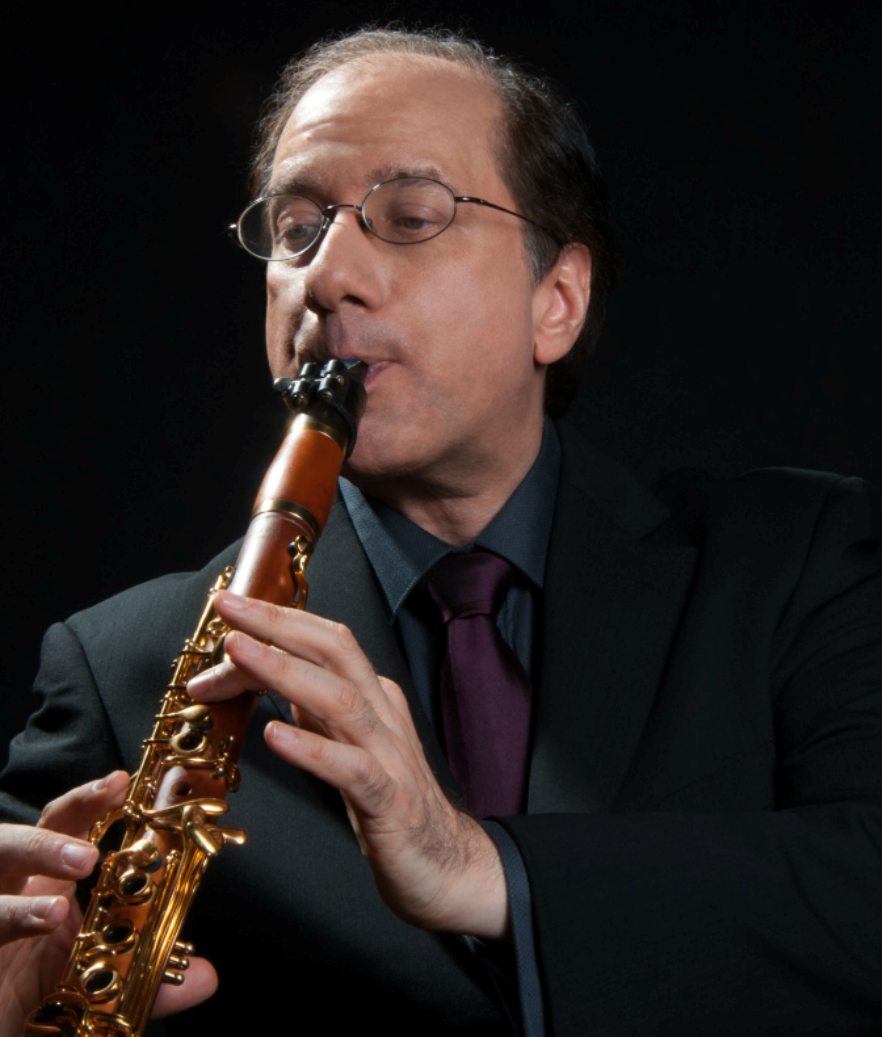
    Take clarinetist Charles Neidich and pianist Cynthia Raim. Both have been active at the Marlboro Music Festival for decades. Last weekend, Neidich performed music of Elliot Carter and one of his own compositions in the Marlboro College Dining Hall. Raim will perform Claude Debussy’s “En blanc et noir” for two pianos, with Xiaohui Yang, at the college’s Persons Auditorium this Saturday at 8 p.m.

    Both musicians will be featured on our next “Music from Marlboro,” on The Classical Network, in selections drawn from extensive Malboro Music archive. Raim will perform Johannes Brahms’ “Variations on a Theme by Joseph Haydn,” with pianist Stephanie Brown, from a concert given in 1976. Neidich will appear in George Rochberg’s Trio for Clarinet, Horn and Piano, with hornist José Vicente Castelló and pianist Igor Levit, from 2007. The program will also include Franz Joseph Haydn’s String Quartet in B-flat major, Op. 33, No. 4.

    This year’s Marlboro Music Festival will run through August 13. For more information, look online at marlboromusic.org.

    I hope you’ll join me for more inspired music-making from Marlboro Music, on “Music from Marlboro,” this Wednesday evening at 6 EDT, on WWFM – The Classical Network and wwfm.org.


    Marlboro School of Music and Festival: Official Page

    PHOTOS: Charles Neidich and Cynthia Raim


  • Classic Ross Amico’s August Surf & Sand Special

    Classic Ross Amico’s August Surf & Sand Special

    by 

    in
    6 responses

    Classic Ross Amico doesn’t take vacations. Nor does he much care for the beach. That said, for this first week of August, it seems like as good a time as any to celebrate surf and sand.

    Join me this Thursday morning to hear Mikalojus Ciurlionis’ “The Sea,” Ernest Chausson’s “Poème de l’amour et de la mer,” Cyril Scott’s “Neptune,” Howard Hanson’s “Bold Island Suite,” and Elie Siegmeister’s cycle of piano pieces “Sunday in Brooklyn” (with its concluding movement, “Coney Island”). In addition, there is bound to be a sea shanty or two.

    Brace yourself for plenty of salt air and bandshells, this Thursday morning from 6 to 11 EDT, on WPRB 103.3 FM and wprb.com. Sea you real soon, on Classic Ross Amico.


    Great composers hit the beach: (counter-clockwise from top): George Gershwin, Claude Debussy, Giacomo Puccini, and Benjamin Britten


  • Hans Rott: Mahler’s Lost Symphony Pioneer

    Hans Rott: Mahler’s Lost Symphony Pioneer

    by 

    in
    4 responses

    He was a brilliant improviser on the organ, Anton Bruckner’s favorite student. Gustav Mahler, his roommate, declared him “the founder of a new symphony.”

    It must have seemed very new at the time. When he submitted the first movement to a composition contest, the jury (with the exception of Bruckner) was beyond dismissive, even condescending, in its remarks. When he showed Johannes Brahms the manuscript, Brahms told him he had no talent and that he should give up composing.

    Hans Rott (1858-1884) lacked Mahler’s resolve, and his productivity was further hampered by encroaching mental illness. In 1880, while traveling, Rott pulled a revolver on a fellow passenger, convinced that Brahms had filled his train with dynamite. He was diagnosed with hallucinatory insanity and persecution mania. He died in an asylum, of tuberculosis, at the age of 25.

    Had fate dealt him a different hand, it’s entirely possible Rott would have developed into a composer as well-known as his contemporaries. It’s obvious from his only symphony, which dates from the final year of his studies, 1878, that Mahler was greatly influenced by his classmate. In fact, it’s startling to find so many “Mahlerian” characteristics already in evidence in this work that predated Mahler’s 1st.

    Hear it this afternoon, on Hans Rott’s birthday. Rott’s symphony will be among my featured works, from noon to 4 p.m. EDT. We’ll also observe the anniversary of the births of composers Benedetto Marcello and Jerome Moross, and conductor William Steinberg, on WWFM – The Classical Network and wwfm.org.


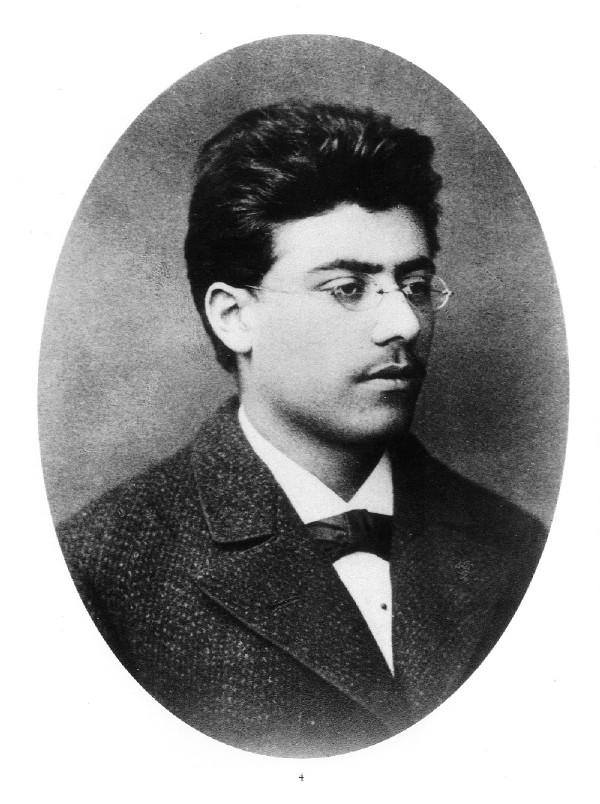
    PHOTOS: Future master of the fin-de-siècle symphony, Gustav Mahler (left), and his roommate, who showed him the way


  • English Conductors on WWFM

    English Conductors on WWFM

    by 

    in
    6 responses

    Britannia rules the waves – the airwaves, that is. July 31 marks the anniversaries of the births of English conductors Norman Del Mar and Steuart Bedford. Join me as we celebrate with an abundance of English music today, from 4 to 7 p.m. EDT, on WWFM – The Classical Network and wwfm.org.


  • Scarlatti Tributes on The Lost Chord

    Scarlatti Tributes on The Lost Chord

    by 

    in
    5 responses

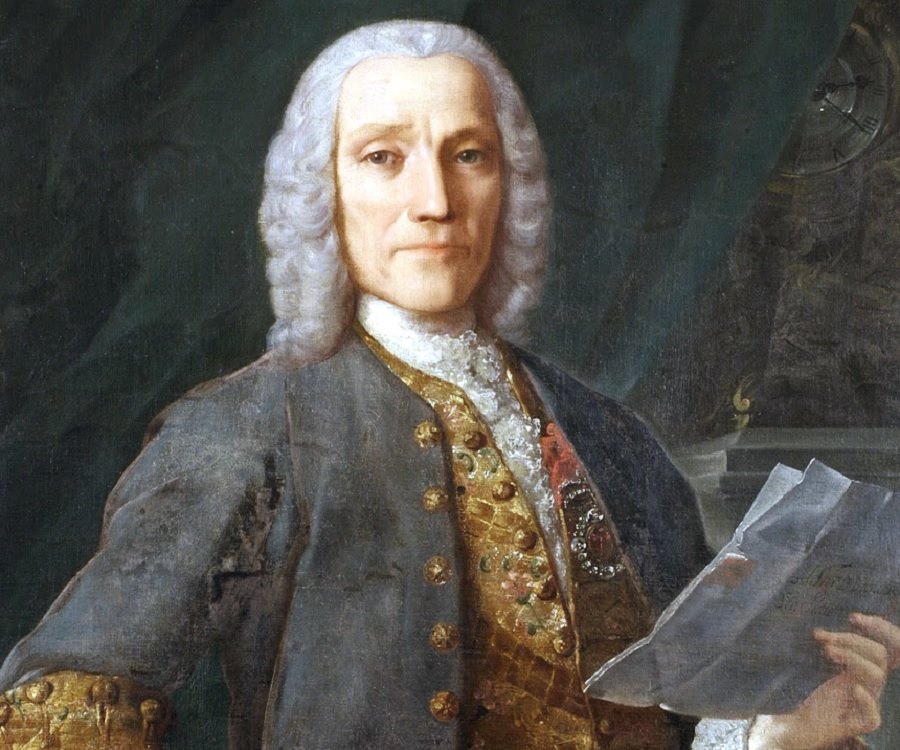
    It seems that any Baroque musician of worth couldn’t help but become embroiled in a musical duel of some sort. In the case of Domenico Scarlatti, he was challenged by none other than George Frideric Handel, in Rome. Handel was deemed superior to his rival on the organ, but on the harpsichord Scarlatti was unsurpassed. In fact, Scarlatti’s unusual facility has had artists “keyed up” for centuries.

    Scarlatti was born in Naples in 1685, the same year as Handel and Bach. He spent much of his career in the service of the Portuguese and Spanish royal families, composing some 555 keyboard sonatas. His works have been admired by composer-performers from Frederic Chopin to Marc-André Hamelin. This Sunday night on “The Lost Chord,” we’ll enjoy four pieces inspired by the Baroque master.

    The English composer Charles Avison, whose life overlapped Scarlatti’s own (he was born in 1709, when Scarlatti would have been 23 years-old) arranged a number of the older composers keyboard works into a set of 12 concerti grossi. We’ll sample one of those, Avison’s Concerto No. 10 in D.

    Then we’ll turn to a tribute by American composer Norman Dello Joio. Dello Joio was the recipient of the Pulitzer Prize for Music in 1957 for his “Meditations on Ecclesiastes.” From 1979, we’ll hear his four movement piano work, “Salute to Scarlatti.”

    Dmitri Shostakovich arranged two of Scarlatti’s keyboard sonatas for small wind ensemble and percussion. We’ll enjoy performances by members of the former USSR Ministry of Culture Symphony Orchestra conducted by Gennady Rozhdestvensky.

    Finally we’ll turn to a work from 1926 by Alfredo Casella – a seven movement suite for piano and orchestra titled “Scarlattiana,” a high-spirited piece that is unabashedly reminiscent of Stravinsky’s “Pulcinella.”

    I hope you’ll join me for “Italian Dressing” – musical tributes to Domenico Scarlatti – this Sunday night at 10:00 EDT, on WWFM – The Classical Network and wwfm.org.


Tag Cloud

Aaron Copland (93) Beethoven (95) Composer (114) Film Music (144) Film Score (143) Film Scores (255) Halloween (94) John Williams (195) KWAX (229) Leonard Bernstein (104) Marlboro Music Festival (125) Movie Music (159) Mozart (91) Opera (213) Philadelphia Orchestra (89) Picture Perfect (174) Princeton Symphony Orchestra (109) Radio (88) Ross Amico (244) Roy's Tie-Dye Sci-Fi Corner (290) The Classical Network (101) The Lost Chord (269) Vaughan Williams (105) WPRB (397) WWFM (881)

DON’T MISS A BEAT

Receive a weekly digest every Sunday at noon by signing up here


RECENT POSTS