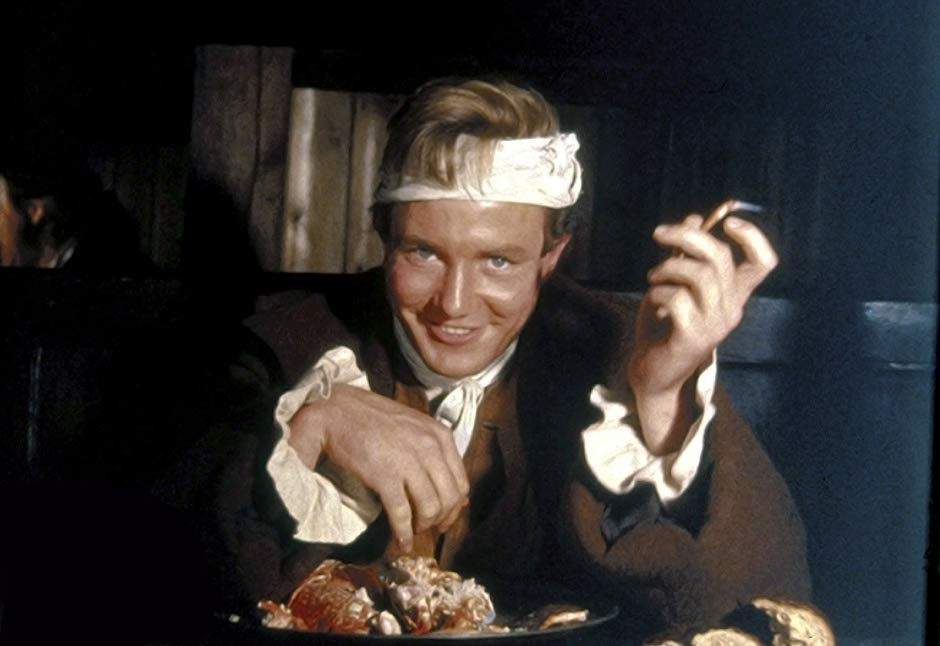
Calling all rapscallions and scapegraces! This week on “Picture Perfect,” get ready to revel in some freewheeling lack of judgment, with an hour of films based on picaresque novels.
For those of you who weren’t English majors, the picaresque novel is a literary genre often characterized by the presence of rogues or anti-heroes as protagonists, episodic, wayward structures, and, not infrequently, low humor.
We’ll hear music from “The Reivers,” after William Faulkner’s Pulitzer Prize-winning novel, a coming-of-age story about a boy swept into automobile theft and illicit horseracing in the American South. Mark Rydell directed the 1969 film, which stars Steve McQueen as the rakish Boon Hogganbeck and features narration by Burgess Meredith. John Williams wrote the breezy Americana score.
Mark Twain’s “The Adventures of Huckleberry Finn” is frequently categorized as an American picaresque. It’s certainly one of the funniest of “serious” books. A middling film adaptation was made in 1960, directed by Michael Curtiz, with Tony Randall given top billing, shifting the focus of the story to the con artistry of the King and the Duke. It features an evocative score by Jerome Moross.
If Hervey Allen’s “Anthony Adverse” had any humor to begin with, it was definitely lost in translation. (Too bad the novel was written in English.) However, the 1936 screen adaptation certainly does sprawl. One could say it’s picaresque in the worst way. It just doesn’t go anywhere. It does, however, feature a top-notch cast (Frederic March, Olivia De Havilland, Claude Rains, etc.) and an Academy Award-winning score by Erich Wolfgang Korngold.
While the modern picaresque novel has its roots in the Renaissance, the genre really seemed to hit its stride in the 18th century, with comic novelists such as Henry Fielding. Fielding’s “Tom Jones,” perhaps the quintessential picaresque, was made into a film in 1963. It went on to win Academy Awards for Best Picture, Best Director (Tony Richardson), Best Adapted Screenplay (John Osborne), and Best Original Score (John Addison). Addison’s music suits Richardson’s quirky virtuosity like an off-kilter powdered wig.
We’re up to no good, with an hour of picaresque adventures, on “Picture Perfect,” music for the movies, now in syndication on KWAX Classical Oregon!
———
Clip and save the start times for all three of my recorded shows:
PICTURE PERFECT, the movie music show – Friday at 8:00 PM EDT/5:00 PM PDT
SWEETNESS AND LIGHT, the light music program – Saturday at 11:00 AM EDT/8:00 AM PDT
THE LOST CHORD, unusual and neglected rep – Saturday at 7:00 PM EDT/4:00 PM PDT
Stream them, wherever you are, at the link!
https://kwax.uoregon.edu
Category: Picture Perfect
-
Picaresque Adventures on “Picture Perfect”
-
250 Years of Independence, and All I Got Was “Picture Perfect”
Tomorrow is Independence Day, so it seems appropriate this week on “Picture Perfect” to treat the subject of music from movies related to the birth of our nation.
We’ll hear selections from the 2000 Mel Gibson film, “The Patriot,” in which slow-burning pacifist Mel is pushed too far by ruthless British officer Jason Isaacs and reverts to his bloody French and Indian War ways. By the end of the film, he is literally waving the flag to John Williams’ triumphant score.
Then we’ll hear a suite from the 1942 Jack Benny-Ann Sheridan fixer-up comedy, “George Washington Slept Here,” based on the play by Moss Hart and George S. Kaufman – not really about the Revolution, beyond the fact that the ramshackle Pennsylvania farm house purchased by a transplanted New York couple is alleged to have been a resting place for the Continental Army’s most famous general. The music is by Adolph Deutsch.
The 1985 film, “Revolution,” seemed to have everything going for it. The director was Hugh Hudson, whose “Chariots of Fire” was the big winner at the 1981 Academy Awards; its star was Al Pacino; and its composer was John Corigliano, who went on to win the Pulitzer Prize for Music for his Symphony No. 2 and an Academy Award for “The Red Violin.” Yet “Revolution” bombed horribly – so horribly that Pacino gave up making movies for the next four years. James Galway plays the flute and pennywhistle on the film’s soundtrack.
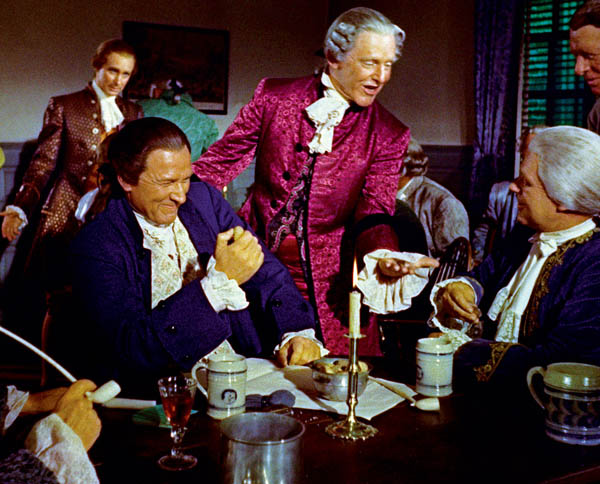
Finally, we’ll hear music from the longest continuously-shown film in cinematic history, “Williamsburg: The Story of a Patriot,” created exclusively for the tourist attraction of Colonial Williamsburg. The film features future “Hawaii Five-O” star Jack Lord, and the score is by none other than Bernard Herrmann. Peppered with recognizable patriotic tunes from the Revolutionary era, the charming suite includes quotations from “Yankee Doodle” and the William Billings hymn “Chester.”
Stick a feather in your hat and call it macaroni. Then join me for “Picture Perfect,” music for the movies, now in syndication on KWAX!
——-
Clip and save the start times for all three of my recorded shows:
PICTURE PERFECT, the movie music show – Friday at 8:00 PM EDT/5:00 PM PDT
SWEETNESS AND LIGHT, the light music program – Saturday at 11:00 AM EDT/8:00 AM PDT
THE LOST CHORD, unusual and neglected rep – Saturday at 7:00 PM EDT/4:00 PM PDT
Stream them, wherever you are, at the link!
https://kwax.uoregon.edu
——-
PHOTO: George Washington wagers he can crack a walnut with his bare hand in “Williamsburg: The Story of a Patriot” -
Movies Adapted from the Writings of Robert E. Howard on “Picture Perfect”
I prefer to keep my barbarians fictional, thank you. But with the nation’s 250th birthday approaching, I expect there will be plenty of instances in which truth will exceed credibility. It’s the world we live in, folks. Robert E. Howard, take me away!
This week on “Picture Perfect,” it’s an hour of music from movies inspired by Howard’s imaginative writings. Howard is best recognized for having created Conan the Cimmerian, a heroic warrior of the Hyborian Age. The character became the center of a series of lucrative stories first published in “Weird Tales” magazine, beginning in 1932.
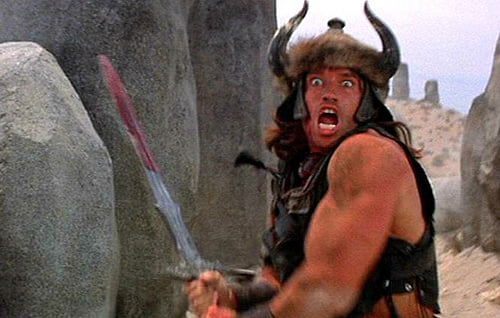
It would be a half century before Conan made the leap to the big screen, under the direction of John Milius. “Conan the Barbarian” (1982) propelled Arnold Schwarzenegger, already a legend in the field of bodybuilding, to international superstardom. Okay, “Conan” isn’t exactly “Citizen Kane,” but it does have its pleasures. The intensity of the violence can be a little disturbing, but the ponderous tone is a blast. “Conan” is a film that takes itself just seriously enough to make it occasionally hilarious.
Another thing “Conan” has going for it is the fact that it was made on a blockbuster budget. The first-rate production values extend to the music by Basil Poledouris, who employs a full symphony orchestra to impressive ends. In fact, the “Conan” score was one of the strongest of the decade. It’s amazing that anyone would find so much inspiration in such a mediocre film, but Poledouris’ music intersperses Borodin-style Central Asia lyricism with brawny, thrilling action music.
Sadly, the sequel, “Conan the Destroyer,” betrays signs of penny-pinching, so that it often winds up feeling like a direct-to-video effort. Poledouris was forced to make do with a smaller orchestra, which sounds a bit too much like a television ensemble. Still, he gave it his all, and there’s something to be said for the fact that it is an original score, rather than a mere retread of the original.
Of perhaps related interest: it looks like a long-anticipated third Schwarzenegger Conan movie will finally be happening. “King Conan” is expected to begin filming next year, with Christopher McQuarrie writing and directing!
Let’s hope it fares better than an adaptation inspired by another one of Howard’s pulp creations, Kull of Atlantis, who was given the big screen treatment in “Kull the Conqueror” (1997). Kevin Sorbo, TV’s Hercules, plays the title role. The composer, Joel Goldsmith (son of Jerry), was asked to incorporate heavy metal riffs into his orchestral underscore. I haven’t actually seen this one, but for some reason I don’t feel like I’m missing anything.
The astoundingly prolific Ennio Morricone – with more than 500 motion picture and television scores to his name – had an uncanny knack for spinning garbage into gold. His music for “Red Sonja” (1985) lends the film an aura of ‘80s cheese ball fun, perhaps more so than it deserves. This is the film that introduced Brigitte Nielsen as the chain-mailed barbarian beauty. Schwarzenegger appears in the supporting role of Lord Kalidor.
There are those who would deny themselves the guilty pleasures of viewing these silly, cheesy, violent films. In “Conan the Destroyer,” when our hero is presented with the statement, “I suppose nothing hurts you,” he responds, “… Only pain.”
Make the music loud, Crom! Drive my enemies before me and drown the lamentations of their women! Saddle up with Conan the Barbarian on “Picture Perfect” – music for movies inspired by the writings of Robert E. Howard – now in syndication on KWAX Classical Oregon!
——-
Clip and save the start times for all three of my recorded shows:
PICTURE PERFECT, the movie music show – Friday at 8:00 PM EDT/5:00 PM PDT
SWEETNESS AND LIGHT, the light music program – Saturday at 11:00 AM EDT/8:00 AM PDT
THE LOST CHORD, unusual and neglected rep – Saturday at 7:00 PM EDT/4:00 PM PDT
Stream them, wherever you are, at the link!
https://kwax.uoregon.edu -

“Disclosure Day” Disclosed on “Picture Perfect”
This week on “Picture Perfect” we disclose John Williams’ latest.
“Disclosure Day” will be at the heart of the program, which will feature music from all four of Steven Spielberg’s cinematic musings on intelligent life from other worlds. Has there been another director so fixated on extraterrestrials? Regardless of what one may think of the latest film – for a movie pushing unity, reactions have been unusually polarized – new music by John Williams is always cause for celebration.
We’ll hear 18 minutes from this, his 30th score for Spielberg (composed at the age of 93 & 94!), alongside musical selections from the director’s other otherworldly films, “Close Encounters of the Third Kind,” “War of the Worlds,” and “E.T. The Extra-Terrestrial.”
“Disclosure Day” proves you can’t go home – unless, of course, you’re E.T. – but the music can still be out of this world on “Picture Perfect,” now in syndication on KWAX Classical Oregon!
——-
Clip and save the start times for all three of my recorded shows:
PICTURE PERFECT, the movie music show – Friday at 8:00 PM EDT/5:00 PM PDT
SWEETNESS AND LIGHT, the light music program – Saturday at 11:00 AM EDT/8:00 AM PDT
THE LOST CHORD, unusual and neglected rep – Saturday at 7:00 PM EDT/4:00 PM PDT
Stream them, wherever you are, at the link!
https://kwax.uoregon.edu
——-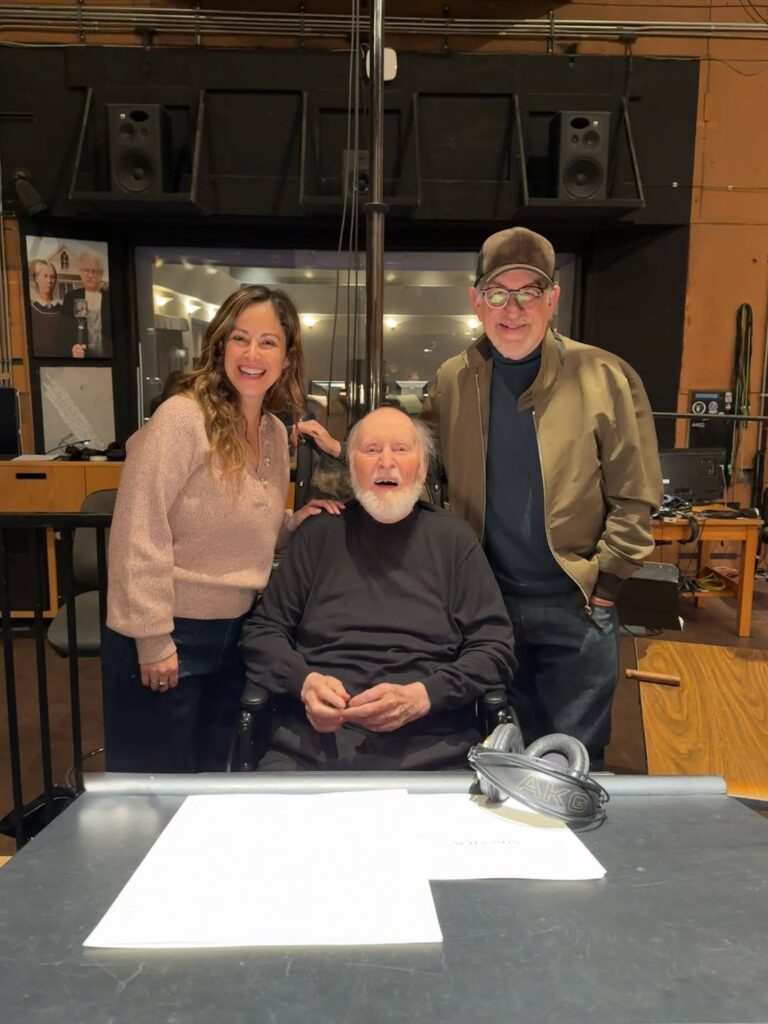
PHOTO: Williams and Spielberg with soprano Holly Sedillos
-
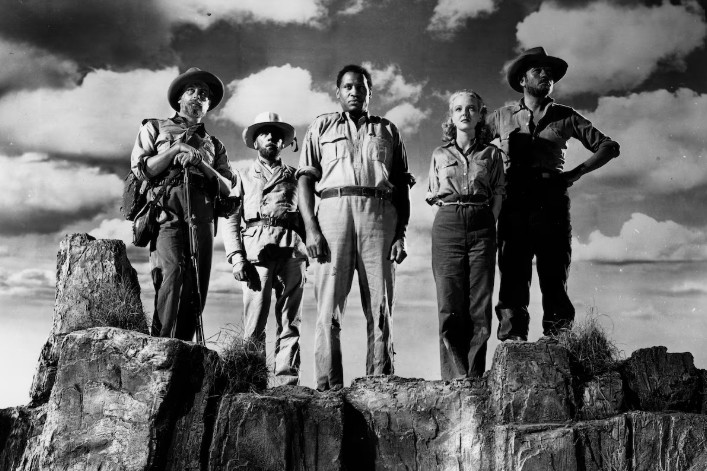
Get Lost on “Picture Perfect”
This week on “Picture Perfect,” I invite you to get lost! It’s all music from movies about lost worlds and forgotten civilizations.
While the concept of the “Lost World” dates at least as far back as Plato’s Atlantis, it wasn’t until the Victorian Era that the idea really blossomed in the public consciousness. At the time, of course, lost civilizations were genuinely being discovered – which might help explain, in part, the incredible success of “King Solomon’s Mines.” The author, H. Rider Haggard, wrote the book on a bet that he could churn out an adventure story half as good as Robert Louis Stevenson’s “Treasure Island,” which had been published two years earlier.
“King Solomon’s Mines” became the literary sensation of 1885. Its protagonist, Allan Quatermain, is a direct ancestor of Indiana Jones. The book inspired reams of sequels and at least five film adaptations.
The two best known starred Stewart Granger, in 1950, and Paul Robeson, in 1937. Robeson, who played Umbopa, a king in disguise, received top billing. The score was by Mischa Spoliansky.
Haggard achieved another “Lost World” hit with “She,” first issued in book form in 1887 – another adventure about Europeans in Africa, who meet a seemingly immortal white queen known as the all-powerful She, or She-Who-Must-Be-Obeyed.
“She” has been adapted to film six times. The 1965 version starred Ursula Andress, Peter Cushing, and Christopher Lee. The music was by Hammer Studios house composer, James Bernard. It’s nice to hear Bernard, who mostly wrote horror scores for the likes of Dracula and Frankenstein, provide something a little more nuanced for a change.
Rudyard Kipling’s “The Man Who Would Be King,” published in 1888, was clearly influenced by the writings of Haggard. In this case, two British adventurers in India strike out for a remote corner of Afghanistan to set themselves up as kings. The story was made into one of the great adventure films of the 1970s, directed by John Huston, and starring Sean Connery and Michael Caine. That Christopher Plummer appears as Kipling himself is only icing on the cake. Maurice Jarre wrote the rousing score.
Finally, James Hilton’s “Lost Horizon,” published in 1933, imagines Shangri-La, a Utopian society nestled in a sheltered valley somewhere in the mountains of Tibet. A British diplomat is one of a handful of passengers who survives a plane crash to be taken into the lamasery.
“Lost Horizon” was made into a film twice. The less said about the 1973 version, a musical with songs by Burt Bacharach, the better. Frank Capra directed the classic 1937 version, which starred Ronald Colman, Jane Wyatt, and outstanding character actors of the day, people like Edward Everett Horton, Thomas Mitchell, Sam Jaffe, and H.B. Warner.
The score, Dimitri Tiomkin’s first major contribution, was also one of his most ambitious. Seldom was it so obvious that he had studied at the St. Petersburg Conservatory under Alexander Glazunov.
I hope you’ll lose yourself in music for lost civilizations this week, on “Picture Perfect,” music for the movies, now in syndication on KWAX Classical Oregon!
——-
Clip and save the start times for all three of my recorded shows:
PICTURE PERFECT, the movie music show – Friday at 8:00 PM EDT/5:00 PM PDT
SWEETNESS AND LIGHT, the light music program – Saturday at 11:00 AM EDT/8:00 AM PDT
THE LOST CHORD, unusual and neglected rep – Saturday at 7:00 PM EDT/4:00 PM PDT
Stream them, wherever you are, at the link!
https://kwax.uoregon.edu
——-
PHOTO: Paul Robeson headlines “King Solomon’s Mines”
Tag Cloud
Aaron Copland (94) Beethoven (95) Composer (114) Film Music (148) Film Score (143) Film Scores (255) Halloween (97) John Williams (196) KWAX (232) Leonard Bernstein (105) Marlboro Music Festival (125) Movie Music (163) Mozart (91) Opera (215) Philadelphia Orchestra (90) Picture Perfect (174) Princeton Symphony Orchestra (110) Radio (90) Ross Amico (244) Roy's Tie-Dye Sci-Fi Corner (290) The Classical Network (101) The Lost Chord (269) Vaughan Williams (107) WPRB (397) WWFM (881)