Category: Picture Perfect
-

Poetry in Motion on “Picture Perfect”
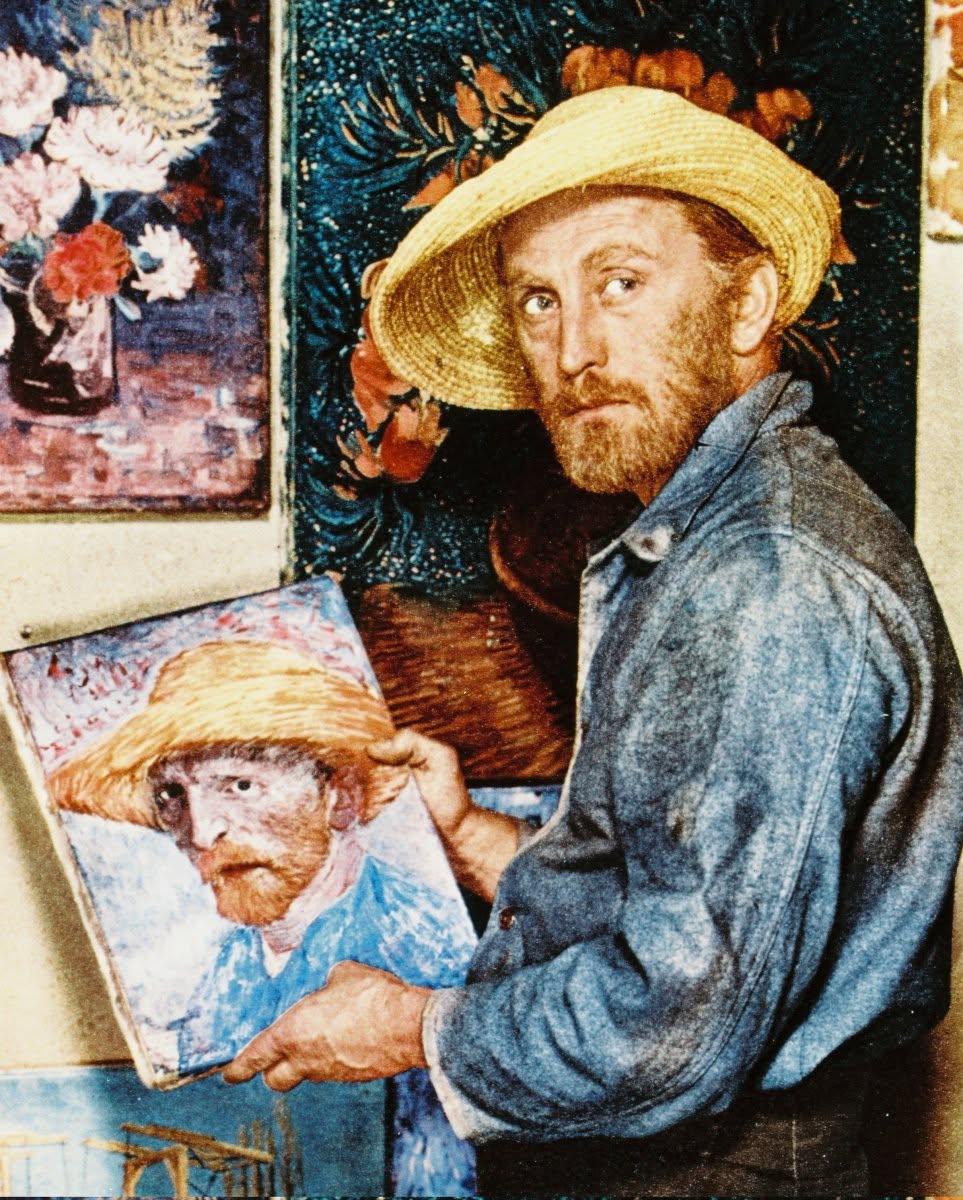
Time to sharpen your quill and replenish your laudanum. April is National Poetry Month. This week on “Picture Perfect,” the focus will be on poets at the movies.
We’ll hear music from “Dead Poets Society” (1989), Peter Weir’s beautiful-but-vacuous take on the transformative power of poetry, its “Goodbye, Mr. Chips” story arc made all the more poignant (and less cheap) by the passing of its beloved star, Robin Williams. Maurice Jarre, a long, long way from his Oscar-winning work on “Lawrence of Arabia,” wrote the music, which blends dulcimer and bagpipes (!) with electronics.
At least “Dead Poets Society” found a place in the hearts of the public. “Lady Caroline Lamb” (1973) did not. Sarah Miles plays Byron’s jilted lover, the wife of future prime minister William Lamb. Despite an impressive cast, which includes Jon Finch, Laurence Olivier, Ralph Richardson, and Richard Chamberlain (as Lord Byron, no less), and direction by venerable playwright and screenwriter Robert Bolt (“A Man for All Seasons”), the film received mixed reviews and tanked at the box office. The always fine Richard Rodney Bennett provided the atmospheric score.
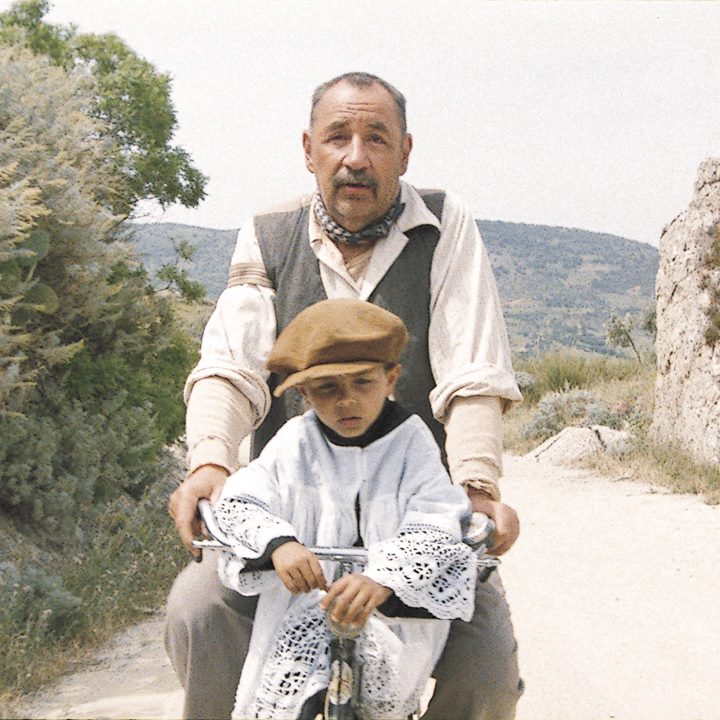
“Il Postino” (1994) tells the story of a simple postman whose prosaic life is transformed through the power of metaphor. His model is the exiled Chilean poet Pablo Neruda, played by Philippe Noiret. The film’s writer and star, Massimo Troisi, died of a heart attack twelve hours after shooting was completed, having postponed surgery until he finished work. He was 41 years-old. Argentinian-Italian composer Luis Bacalov’s bandoneon-tinged score was honored with an Academy Award for Best Music.
Finally, we put a point on things with the rapier wit of “Cyrano de Bergerac” (1950). José Ferrer struts his stuff as the warrior-poet with the prominent proboscis, who never wants for words, save in the presence of his beautiful cousin Roxane. Ferrer elocuted – and fenced – his way to an Academy Award for Best Actor. The score is one of Dimitri Tiomkin’s finest, and we’ll hear a recording taken from the film’s original elements, under the crisp direction of the composer.
It could be verse. Poetry warms the soul this week. It’s poetry in motion, on “Picture Perfect,” music for the movies, now in syndication on KWAX Classical Oregon!
——–
Clip and save the start times for all three of my recorded shows:
PICTURE PERFECT, the movie music show – Friday at 8:00 PM EDT/5:00 PM PDT
SWEETNESS AND LIGHT, the light music program – Saturday at 11:00 AM EDT/8:00 AM PDT
THE LOST CHORD, unusual and neglected rep – Saturday at 7:00 PM EDT/4:00 PM PDT
Stream them, wherever you are, at the link!
https://kwax.uoregon.edu -

Holy Men and Missions on “Picture Perfect”
This week on “Picture Perfect,” in this season of wall-to-wall Biblical epics, I thought we’d enjoy a bit of counterprogramming in the form of music from films about faith, conscience, and the church.
Otto Preminger’s “The Cardinal” was released in 1963. Based on the novel by Henry Morton Robinson, the story follows a fictional Boston Irish Catholic priest from his ordination in 1917 to his appointment as cardinal on the eve of World War II. Tom Tryon played the lead. Tryon would later become a best-selling author himself (as Thomas Tryon), with books like “The Other” and “Harvest Home.”
An interesting factoid: The Vatican’s liaison officer for the production was Joseph Ratzinger, the future Pope Benedict XVI.
As always, Moross’ score is irrepressibly lyrical, even buoyant. The man never seemed to run out of good tunes.
We’ll also have music from “The Shoes of the Fisherman,” from 1968, another film based on a best-selling novel, this time by Morris L. West.
Anthony Quinn plays Kiril Pavlovich Lakota, an archbishop who serves 20 years in a Siberian labor camp. He is released and sent to Rome where is promoted to the cardinalate. When the Pope dies, suddenly, Lakota, a dark horse candidate, is elected as a replacement. The story balances Lakota’s internal struggles and personal torments with mounting global turmoil.
The music is by Alex North, who sets the melancholy lyricism of Russian folksong against the steely grandeur of his music for the Vatican.
The remainder of the program will be devoted to movies about missionaries. Georges Delerue provided a noble, austere score for the 1991 Bruce Beresford film “Black Robe,” based on a novel by the Irish Canadian writer Brian Moore, in which a Jesuit priest treks through 1500 miles of Canadian wilderness on a mission to convert the native tribes of the Huron and the Algonquin.
Ennio Morricone’s moving music for Roland Joffé’s 1986 film “The Mission,” which features Jeremy Irons as a Jesuit priest and Robert DeNiro as a reformed slave hunter in the South American jungle, has received a great deal of exposure over the years, both through its use in television commercials and by figure skaters, who made “Gabriel’s Oboe” a recognizable hit. It has become one of Morricone’s best-loved scores.
I hope you’ll join me for “Holy Men and Missions” this week, on “Picture Perfect,” music for the movies, now in syndication on KWAX Classical Oregon!
——–
Clip and save the start times for all three of my recorded shows:
PICTURE PERFECT, the movie music show – Friday at 8:00 PM EDT/5:00 PM PDT
SWEETNESS AND LIGHT, the light music program – Saturday at 11:00 AM EDT/8:00 AM PDT
THE LOST CHORD, unusual and neglected rep – Saturday at 7:00 PM EDT/4:00 PM PDT
Stream them, wherever you are, at the link!
https://kwax.uoregon.edu -

“The Ten Commandments” on “Picture Perfect”
This week on “Picture Perfect,” for the 70th anniversary of the release of Cecil B. DeMille’s “The Ten Commandments – and just in time for Passover – we’ll hear selections from Elmer Bernstein’s classic score.
From a 6-CD set on the Intrada label – that includes the complete 2 ½ hour score, three commercial soundtrack releases, and bonus material intriguing enough to curl Charlton Heston’s beard – we’ll hear lovingly remastered highlights from the 1960 Dot and 1966 United Artists soundtrack re-recordings, the Pillar of Fire and parting of the Red Sea sequence from the original score, as heard in the film, and rare demos, prepared for Mr. DeMille by the composer, who announces his themes as he plays them, from the piano.
So let it be written, so let it be done!
It’s the collector’s equivalent of stone tablets handed down from Mount Sinai. Join me for the definitive “The Ten Commandments,” on “Picture Perfect,” music for the movies, now in syndication on KWAX Classical Oregon!
——–
Clip and save the start times for all three of my recorded shows:
PICTURE PERFECT, the movie music show – Friday at 8:00 PM EDT/5:00 PM PDT
SWEETNESS AND LIGHT, the light music program – Saturday at 11:00 AM EDT/8:00 AM PDT
THE LOST CHORD, unusual and neglected rep – Saturday at 7:00 PM EDT/4:00 PM PDT
Stream them, wherever you are, at the link!
https://kwax.uoregon.edu -

Spring Into Documentary Music from England’s Green and Pleasant Land
This week on “Picture Perfect,” with the arrival of spring, we travel to “England’s green and pleasant land” for an hour of documentary music. The playlist will include scores by some of the country’s most respected composers.
We’ll hear selections by Ralph Vaughan Williams, from “The People’s Land” (1941), Benjamin Britten, from “The King’s Stamp” (1935), William Alwyn, from “The Green Girdle” (1941), and Master of the Queen’s Music, Sir Arthur Bliss, from “The Royal Palaces of Britain” (1966). All four films are patriotic utterances on distinctly English themes.
Historically, in the United States, writing music for the movies has often been regarded as “hack work,” but overseas it has been accepted as just another aspect of what it means to be a working artist. There is no disgrace in a composer earning a living, and some of the nation’s greatest musicians – including those in the employ of the Royal Family – have contributed finely-crafted scores to its body of cinema.
You may not have seen any of these shorts, but the music sure is beautiful. I hope you’ll join me for music from English documentaries, on “The Lost Chord,” now in syndication on KWAX Classical Oregon!
——–
Clip and save the start times for all three of my recorded shows:
PICTURE PERFECT, the movie music show – Friday at 8:00 PM EDT/5:00 PM PDT
SWEETNESS AND LIGHT, the light music program – Saturday at 11:00 AM EDT/8:00 AM PDT
THE LOST CHORD, unusual and neglected rep – Saturday at 7:00 PM EDT/4:00 PM PDT
Stream them, wherever you are, at the link!
https://kwax.uoregon.edu
——–
In the meantime, if you’re having a slow day, why not get a taste of the films themselves?
“The People’s Land,” score by Vaughan Williams:
https://film.britishcouncil.org/resources/film-archive/the-peoples-land
“The King’s Stamp,” score by Benjamin Britten:
https://www.dailymotion.com/video/x21r04k
“The Green Girdle,” score by William Alwyn:
https://www.youtube.com/watch?v=YOlnnshTsvQ -

A Hollywood Bowl Super-concert on “Picture Perfect”
Regardless of how you feel about the current state of the industry or the awards ceremony itself, you have to concede, there’s quite a rich history of impressive music written for film. And the Academy Awards is always the perfect excuse to look back.
This week on “Picture Perfect,” I’ll be leaning heavily into the nostalgia, as virtually every major composer from the golden age of Hollywood comes together at the Hollywood Bowl for a concert of now-classic film scores, originally broadcast on CBS Television in 1963. The event is often referred to as “the greatest film music concert in history.”Participants included, among others, Alfred Newman (“How the West Was Won”), David Raksin (“Laura”), Alex North (“Cleopatra”), Johnny Green (“Raintree County”), Franz Waxman (“A Place in the Sun”), Bernard Herrmann (“North by Northwest”), Dimitri Tiomkin (“High Noon”), and Miklós Rózsa (“Ben-Hur”). They were joined by Mahalia Jackson, Andy Williams, and Jack Benny!
An album was released on LP, but understandably the three-hour concert was severely truncated. This was somewhat remedied on a CD-reissue on the Columbia Legacy label in 1995 that included 70 minutes of music. Among the casualties, however, was Elmer Bernstein conducting the theme to “The Magnificent Seven.” I will perform a service to film music by restoring that cut from another source.
Based on my reading and the fact that I’m finding other selections in my personal library that were recorded at the venue on the same date, there’s still much that remains to be compiled. Put out whatever you’re holding back on a double-disc, please, Sony Classical!
Hollywood couldn’t assemble this much musical talent today if it tried. Fortunately, recordings like this one endure. I hope you’ll join me for “Once Upon a Time in Hollywood” on “Picture Perfect,” music for the movies, now in syndication on KWAX Classical Oregon!
——–
Clip and save the start times for all three of my recorded shows:
PICTURE PERFECT, the movie music show – Friday at 8:00 PM EDT/5:00 PM PDT
SWEETNESS AND LIGHT, the light music program – Saturday at 11:00 AM EDT/8:00 AM PDT
THE LOST CHORD, unusual and neglected rep – Saturday at 7:00 PM EDT/4:00 PM PDT
Stream them, wherever you are, at the link!
https://kwax.uoregon.edu
Tag Cloud
Aaron Copland (92) Beethoven (95) Composer (114) Film Music (123) Film Score (143) Film Scores (255) Halloween (94) John Williams (187) KWAX (229) Leonard Bernstein (101) Marlboro Music Festival (125) Movie Music (138) Opera (202) Philadelphia Orchestra (89) Picture Perfect (174) Princeton Symphony Orchestra (106) Radio (87) Ralph Vaughan Williams (85) Ross Amico (244) Roy's Tie-Dye Sci-Fi Corner (290) The Classical Network (101) The Lost Chord (268) Vaughan Williams (103) WPRB (396) WWFM (881)