Tag: Alfred Hitchcock

  • Herrmann’s Hitchcock Untold Scores

    Herrmann’s Hitchcock Untold Scores

    In the mid-1950s, composer Bernard Herrmann and Alfred Hitchcock came together for a string of commercial, critical and artistic successes, including, most notably, “Vertigo,” “North by Northwest” and “Psycho.” But the two collaborated on no less than nine films, if we count “The Birds,” on which Herrmann acted as sound consultant.

    This week, on “Picture Perfect,” we’ll have selections from the other five – among them, “Marnie,” “The Trouble with Harry” and “The Wrong Man.”

    Herrmann’s reworking of Arthur Benjamin’s “The Storm Clouds Cantata” was used at the climax of the 1956 version of “The Man Who Knew Too Much,” as a frantic James Stewart attempts to thwart an assassination plot at Royal Alert Hall. (In the film, Herrmann himself appears on the podium.)

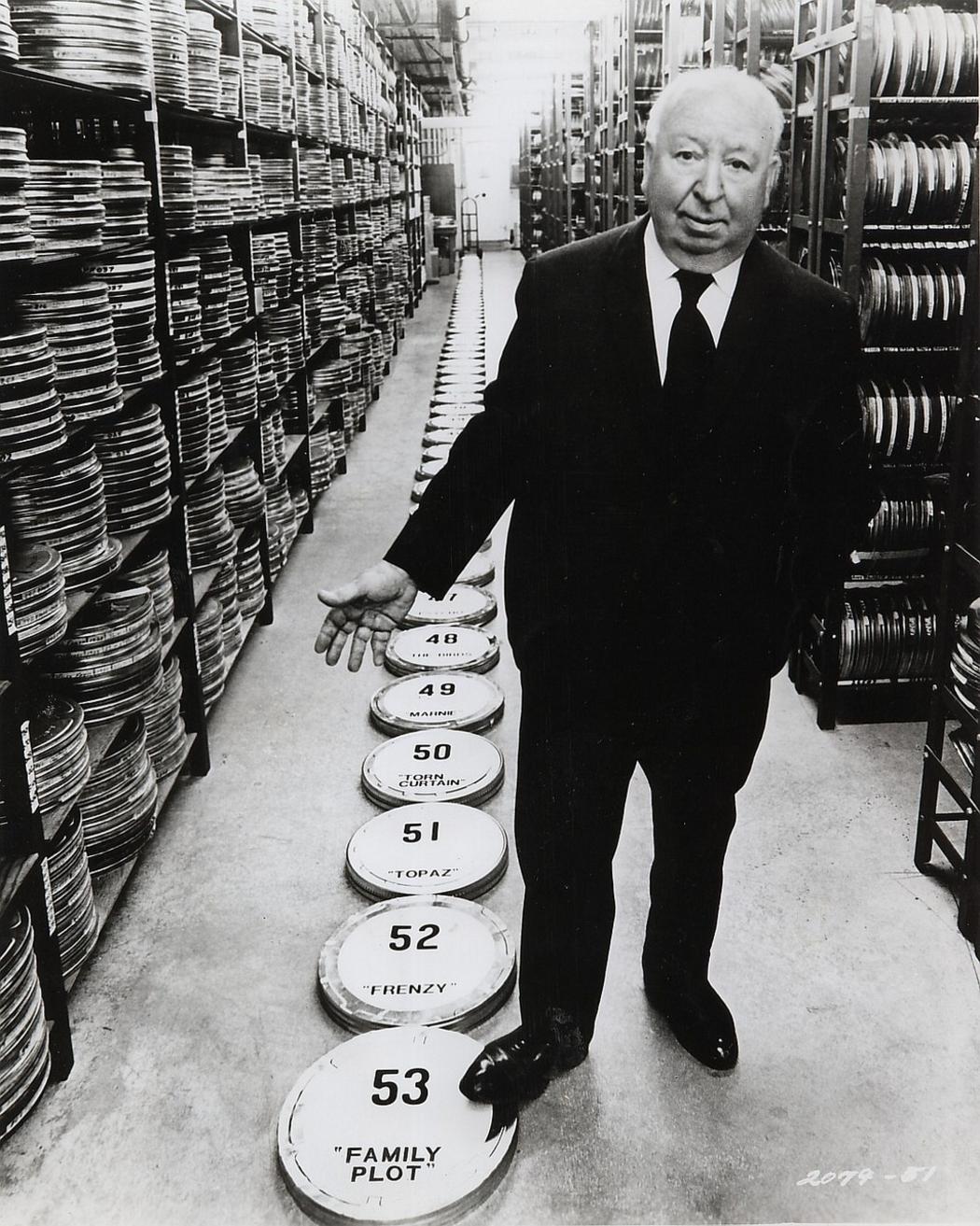
    We’ll also hear a portion of the rejected score for “Torn Curtain,” the project that ended the Herrmann-Hitchcock association. Hitchcock fired Herrmann, when the composer ignored his instructions to write something light and popular, under studio pressure. John Addison was hired as his replacement, and the film was a failure at the box office.

    In recent years, Herrmann admirers have had several opportunities to sample the composer’s original thoughts. Quentin Tarantino is obviously a fan. Some of Herrmann’s “Torn Curtain” music turns up in “Once Upon a Time in Hollywood.”

    Hitch yourself to Bernard Herrmann. It’s lesser-heard Herrmann-Hitchcock, this Friday evening at 6:00 EST, on WWFM – The Classical Network and wwfm.org.

  • De Palma’s Thrillers Music from Hitchcock’s Heir

    De Palma’s Thrillers Music from Hitchcock’s Heir

    Brian De Palma is an extraordinarily adept filmmaker, who has been criticized for his adherence to “genre trash.” He has always been attracted to suspense and crime thrillers, usually of an especially violent nature, many of them tinged with horror.

    This week on “Picture Perfect,” with Hallowe’en right around the corner, we’ll hear music from four of De Palma’s films.

    It’s hardly surprising that such an admirer of Alfred Hitchcock would also hire Hitch’s signature composer. Bernard Herrmann scored two films for De Palma – “Sisters,” in 1973, and “Obsession,” in 1976.

    “Obsession” is a spin on Hitchcock’s “Vertigo.” A botched rescue attempt results in the death of a businessman’s kidnapped wife. Years later, he encounters someone who could be her doppelganger. The film stars Genevieve Bujold, John Lithgow, and a very tan Cliff Robertson.

    “The Fury,” from 1978, is a supernatural thriller based on a novel by John Farris. Two teenagers, endowed with powers of telekinesis and extra-sensory perception, are targeted by researchers who plan to harness them for their own nefarious ends. For a time, Kirk Douglas has fun as a former CIA agent, and John Cassavetes is a particularly slimy villain. Cassavetes’ comeuppance makes for one of the most memorable movie endings of its era – and we’ll leave it at that!

    Critic Pauline Kael praised the music, which is by none other than John Williams – hot off his third Academy Award, for “Star Wars” – characterizing it as “as elegant and delicately varied a score as any horror film has ever had.”

    Of course, “The Fury” was not the first De Palma film to deal with telekinesis. His adaptation of Stephen King’s “Carrie,” from 1976, became one the decade’s landmark horror films. It broadened King’s popularity and propelled De Palma into the A-list of Hollywood directors. It also essentially launched the careers of Amy Irving, John Travolta, and Nancy Allen, among others. Sissy Spacek was nominated for an Academy Award for her performance in the title role, as was Piper Laurie as Carrie’s overbearing, fundamentalist mother.

    The music was by Pino Donaggio. The director had wanted to continue his collaboration with Herrmann, but the composer died before the film could be completed. Donaggio, though classically trained, made his fortune writing popular songs. His biggest hit was “You Don’t Have to Say You Love Me,” which was recorded by Dusty Springfield and treated to a well-known cover by Elvis Presley. Donnagio went on to become a regular De Palma collaborator, providing the music for seven of his films.

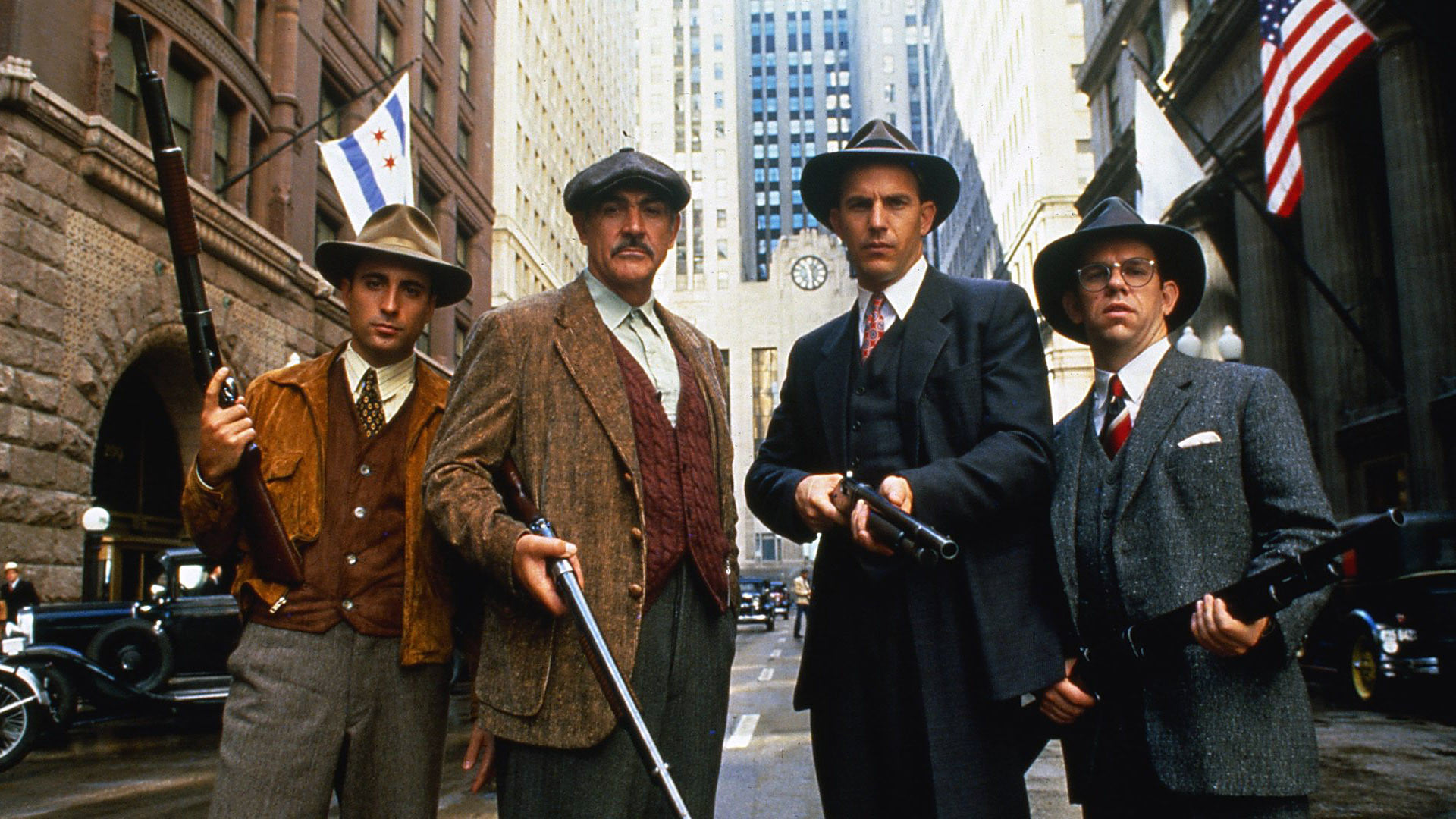
    Finally, we’ll turn our back on horror, to listen to music from a successful period crime thriller, loosely based on the real-life exploits of Eliot Ness and his fellow prohibition agents – “The Untouchables,” from 1987. Kevin Costner plays the by-the-book federal agent who is given a valuable lesson in street smarts by an Irish beat cop played by an Academy Award winning Sean Connery. (“He pulls a knife, you pull a gun. He sends one of yours to the hospital, you send one of his to the morgue. That’s the Chicago way, and that’s how you get Capone.”) Capone is played, incidentally, by a baseball bat wielding Robert De Niro.

    The score is by Ennio Morricone. Morricone, of course, was propelled to fame through his work on Sergio Leone’s spaghetti westerns. He applies some of that same mythmaking skill to this big screen adaptation, which had previously been published as a memoir and developed into a popular television series starring Robert Stack. The high point of the film must be the director’s nail-biting homage to Sergei Eisenstein, a slow motion shoot-out around a baby carriage as it teeters down the stairs of Chicago Union Station.

    Start your weekend with a step in the right direction, with music from the films of Brian De Palma, on “Picture Perfect,” this Friday evening at 6:00 EDT, on WWFM – The Classical Network and wwfm.org.
  • Susie’s Fella A Hitchcock Throwback

    Susie’s Fella A Hitchcock Throwback

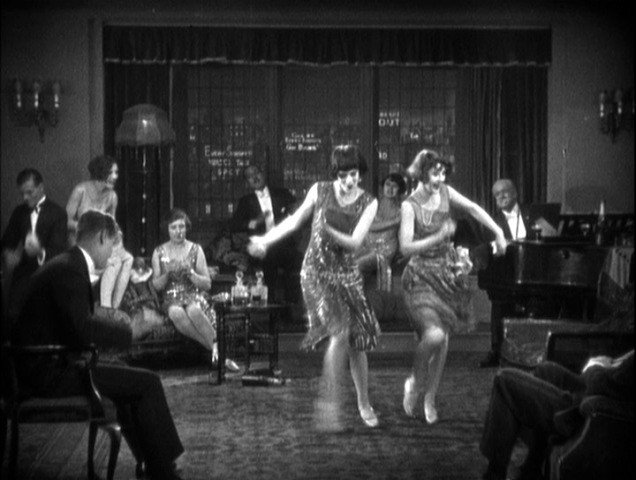
    Throwback Thursday: I just want to be known as Susie’s fella!

    https://www.youtube.com/watch?v=8cbCh_CMWOk

    IMAGE: Alfred Hitchcock’s “The Ring” (1927)

  • Trains in the Movies: Drama on Rails

    Trains in the Movies: Drama on Rails

    Trains have always been very good for drama. They are symbols of departures and arrivals. They are conveyors of prisoners and vehicles of escape. They are objects of romance and objects to “hobo around” on. They are harbingers of civilization, and they are transports be robbed. You can fight on top of them. You can make out with Eva Marie Saint, or you can protect Marie Windsor so that she can testify against the mob. You can shuffle off to Buffalo.

    From the beginning, trains have provided good escapist fun at the movies. This week on “Picture Perfect,” we’ve got an hour of music from four memorable films in which trains play an important role.

    In “Strangers on a Train” (1951), arguably Alfred Hitchcock’s most underrated film of the 1950s, Farley Granger plays a tennis pro who unwittingly becomes involved in a double-murder plot (criss-cross!) through a chance encounter on a passenger train with a psychopath named Bruno (probably Robert Walker’s finest performance). The music is by Dimitri Tiomkin, who scored four films for Hitch – including “Shadow of a Doubt,” “I Confess,” and “Dial M for Murder.”

    Burt Lancaster stars in a film titled, simply, “The Train” (1964), as a reluctant railroad inspector who is persuaded to join the French Underground’s efforts to delay the transport of masterpieces looted from the museums of Paris by the Nazis, since Allied liberation of France is imminent. Paul Scofield plays the art-loving German officer determined to move the art at all costs. Real trains were destroyed in the making of the film, real dynamite was employed, and Lancaster, as was often the case, did all his own stunts. The score is by Maurice Jarre.

    “Murder on the Orient Express” (1974) is based on one of the best-known Agatha Christie vehicles involving her recurring character, celebrated detective Hercule Poirot. The late Albert Finney portrays Poirot most memorably in this, the first and best of the all-star Christie thrillers, set on a long-distance passenger train connecting Paris to Istanbul. The list of suspects includes Lauren Bacall, Martin Balsam, Ingrid Bergman, Sean Connery, John Gielgud, Anthony Perkins, Richard Widmark, and Michael York. The unforgettable score is by Richard Rodney Bennett (whose birthday it is today).

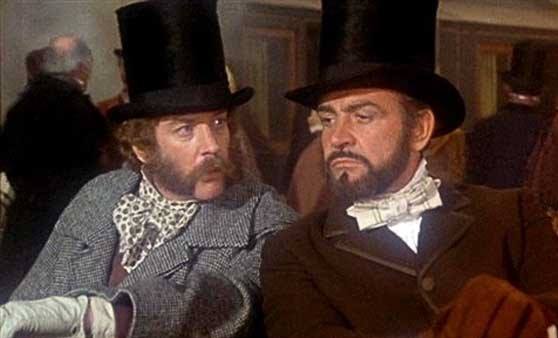
    Finally, we turn to the lighthearted caper “The Great Train Robbery” (1979), starring Sean Connery, Donald Sutherland, and Leslie-Anne Down. Michael Crichton wrote the screenplay, after his own novel, which in turn was based on an actual historical incident – an 1855 heist, in which an unbelievable amount of gold disappeared from a moving train. Crichton also directed the film. The music is by the great Jerry Goldsmith.

    All aboard! We’ll be taking the train today, on “Picture Perfect,” music for the movies, this Friday evening at 6:00 EDT, on WWFM – The Classical Network and wwfm.org.

    (Top) Sutherland and Connery; (bottom, left to right) Farley Granger and Alfred Hitchcock pass in the night; Finney as Hercule Poirot; Lancaster means business

  • Bernard Herrmann: Greatest Film Composer?

    Bernard Herrmann: Greatest Film Composer?

    Was Bernard Herrmann the greatest film composer who ever lived? If such a claim could be supported, I’d say it’s quite possibly so. He’s not the first composer I turn to for purely musical enjoyment – I’m more of a Korngold/Rózsa/John Williams kind of guy – but has anyone more consistently found the perfect sound to support an on-screen image?

    And Herrmann was never one to go for the low-hanging fruit. Take his score for “The Day the Earth Stood Still” (1951). Herrmann’s concept of extra-terrestrial music incorporates violin, cello, electric bass, two theremins, two Hammond organs, a large studio electric organ, three vibraphones, two glockenspiels, two pianos, two harps, three trumpets, three trombones and four tubas. Overdubbing and tape-reversal techniques were also employed. Now this guy was a composer!

    His music for Alfred Hitchcock’s “Pyscho” (1960) was all strings; the brawny score to the mythological “Jason and the Argonauts” (1963) eschewed them. He could be wry (“The Devil and Daniel Webster”), romantic (“The Ghost and Mrs. Muir”), downbeat (“Taxi Driver”), or any combination of the three (“Citizen Kane”).

    Unfortunately, my weekly film music show, “Picture Perfect,” will be preempted today since we still haven’t hit our goal of $70,000 for the end of our fiscal year, which will arrive, whether we like it or not, at midnight the morning of July 1. However, I am scheduled to be on the air earlier in the day today, albeit in the capacity of “wingman,” from 11 a.m. to 2 p.m. I won’t be the one doing the programming, but you can be sure I will insinuate some Bernard Herrmann into the playlist on his birthday.

    JUST IN: I’ll also be around in the 6:00 hour this evening, so you’ll hear a little more Herrmann then.

    Please support us. There aren’t very many radio stations on which you’ll hear Bernard Herrmann’s music with regularity. Call now at 1-888-232-1212 or make a contribution online at wwfm.org. I wish I could bring you a full hour of Herrmann, but we need to make this goal! “Picture Perfect” will return next Friday at 6 p.m. In the meantime, thank you for supporting WWFM – The Classical Network.


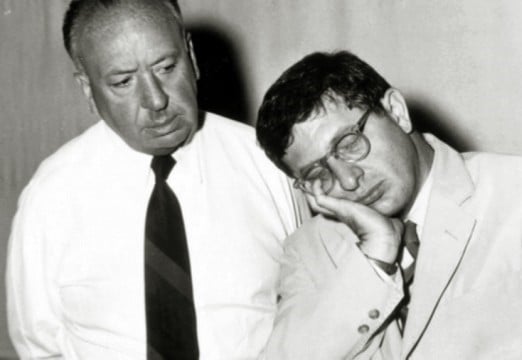
    Herrmann with Orson Welles (left) and Alfred Hitchcock

Tag Cloud

Aaron Copland (92) Beethoven (95) Composer (114) Film Music (119) Film Score (143) Film Scores (255) Halloween (94) John Williams (185) KWAX (229) Leonard Bernstein (99) Marlboro Music Festival (125) Movie Music (134) Opera (198) Philadelphia Orchestra (86) Picture Perfect (174) Princeton Symphony Orchestra (106) Radio (87) Ralph Vaughan Williams (85) Ross Amico (244) Roy's Tie-Dye Sci-Fi Corner (290) The Classical Network (101) The Lost Chord (268) Vaughan Williams (102) WPRB (396) WWFM (881)

DON’T MISS A BEAT

Receive a weekly digest every Sunday at noon by signing up here


RECENT POSTS