Tag: Alfred Hitchcock

  • Hitchcock Cameos A Composer Too?

    Hitchcock Cameos A Composer Too?

    Apparently Alfred Hitchcock was not the only one to make a cameo in his films.

    I share this observation in conjunction with my upcoming salute to English composer Richard Arnell, which will take place this Thursday morning, from 6 to 11 EDT, on WPRB 103.3 FM and wprb.com. Arnell (1917-2009) was born 100 years ago this Friday.

    Patrick Jonathan, who grew close to the composer over the last 20 years of his life, and who provides the liner notes for a compact disc release of Arnell’s Symphonies Nos. 4 & 5 featuring Warren Cohen and the MusicaNova Orchestra, on the Con Brio Recordings label, has been quite generous with personal anecdotes, documents and photographs.

    I found this story particularly fascinating, since I must have seen the film in question eight or ten times, and of course I am an enormous Bernard Herrmann fan:

    “Here’s an anecdote that gives some idea of how being Tony’s friend was always exciting and fun. I’ve enclosed a photo, even though I know your tribute is a radio show, just for context.

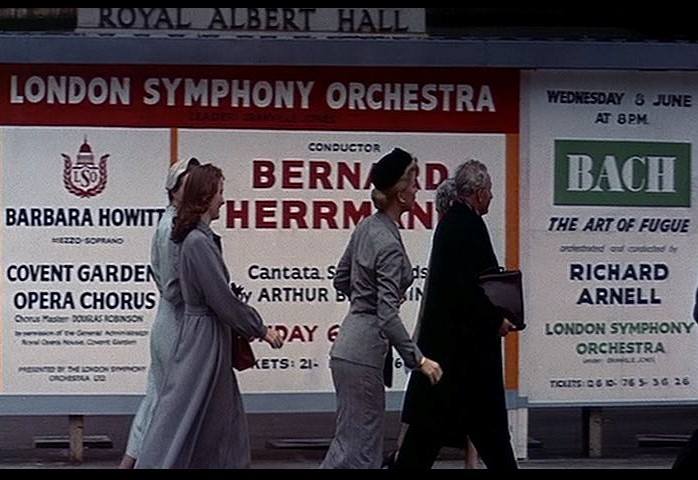
    “One evening in the mid-1980s I got a call from him to ask whether I was watching TV. He asked me if I wouldn’t mind turning on the channel that was showing Hitchcock’s ‘The Man Who Knew Too Much’ which was already more than halfway through its broadcast. He asked me to concentrate on the scene towards the climax when James Stewart gets out of a taxi at the Albert Hall (the denouement was to feature an assassination attempt timed to coincide with a cymbal clash during a symphonic performance). I wasn’t to concentrate on the actors but on the posters in the background. To my amazement I saw his name featured prominently there!

    “I spoke to him after the film had finished and he explained that he had been a close friend of Bernard Herrmann, who composed the score for the film. One of the reasons why Herrmann composed such exceptional scores (‘Psycho’, ‘Citizen Kane’, etc.) was because he didn’t get involved at the edit stage just to work from cues, but immersed himself in the production process, regularly sitting in on the film set and getting a feel for the project as it progressed. He had asked Arnell to come along with him on his visits so often that Hitchcock pulled him aside and asked who this young man was. Herrmann explained that he was maybe England’s most gifted contemporary symphonist at which point Hitchcock, who loved to insert in-jokes into his movie decided that the two composers’ names be printed on posters by the prop department so they could feature in the movie. That’s how Arnell, somehow, got himself a ‘featured role’ in a Hitchcock classic!”

  • Hitchcock & Herrmann: The Torn Curtain Fall

    Hitchcock & Herrmann: The Torn Curtain Fall

    Composer Bernard Herrmann produced three indisputable masterpieces with Alfred Hitchcock: “Vertigo,” “North by Northwest,” and “Psycho” (the biggest success of them all).

    However, Hitchcock became increasingly insecure as things began to change within the studio system. The emphasis shifted more and more to the bottom line, and the pressure exerted extended to every aspect of his subsequent films.

    Following “The Birds” and “Marnie,” Hitchcock became desperate for another hit. It was the studio’s thinking that its music scores should forthwith be attuned to a younger sensibility. In particular, they were interested in a hit single which would help promote their films. Herrmann’s reliance on a symphony orchestra was deemed old fashioned.

    By the time Hitchcock and Herrmann began work on “Torn Curtain,” in 1966, the tension between director and composer was at a breaking point. When Herrmann didn’t produce what Hitchcock requested, the composer was fired halfway through the first day’s recording sessions.

    Herrmann’s replacement was John Addison, who was a hot commodity, having won the Academy Award in 1963 for his music for Tony Richardson’s freewheeling adaptation of “Tom Jones.” Ironically, instead of going “popular,” as the studio wanted, save for one incongruous, Mancini-esque song at the end, Addison did what all of Hitch’s subsequent composers did – he emulated Herrmann. “Torn Curtain” failed to gain traction with younger audiences, and the film was not a success.

    Herrmann and Hitchcock would never work together again. The “Torn Curtain” debacle spelled the end of one of the greatest artistic partnerships in all of cinema.

    Join me for selections from Herrmann’s original, rejected score, alongside jettisoned music for “2001: A Space Odyssey” (by Alex North), “Edge of Darkness” (John Corigliano) and “The Battle of Britain” (Sir William Walton), this Friday evening at 6:00 EDT. It’s an hour of rejected scores on “Picture Perfect,” music for the movies, on WWFM – The Classical Network and wwfm.org.


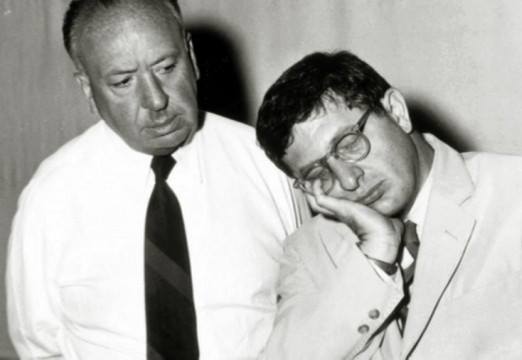
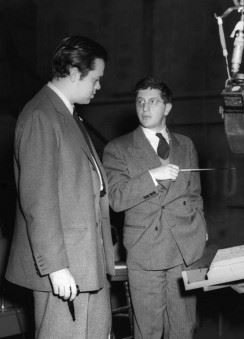
    PHOTO: Hitch and Herrmann – who’d have predicted anything could have gone wrong?

  • Trains in Movies Music from Hitchcock and More

    Trains in Movies Music from Hitchcock and More

    Traditionally, trains have been very good for drama. They are symbols of departures and arrivals. They are conveyors of prisoners and vehicles of escape. They are objects of romance and objects to “hobo around” on. They are the harbingers of civilization, and they are transports be robbed. You can fight on top of them. You can make out with Eva Marie Saint, or you can protect Marie Windsor so that she can testify against the mob. You can shuffle off to Buffalo.

    For decades, trains have provided good escapist fun at the movies. This week on “Picture Perfect,” we’ve got an hour of music from four memorable films in which trains play an important role.

    In “Strangers on a Train” (1951), arguably Alfred Hitchcock’s most underrated film of the 1950s, Farley Granger plays a tennis pro who unwittingly becomes involved in a double-murder plot through a chance encounter on a passenger train with a psychopath named Bruno (probably Robert Walker’s finest performance). The music is by Dimitri Tiomkin, who scored four films for Hitch – including “Shadow of a Doubt,” “I Confess,” and “Dial M for Murder.”

    Burt Lancaster stars in a film titled, simply, “The Train” (1964), as a reluctant railroad inspector who is persuaded to join the French Underground’s efforts to delay the transport of masterpieces looted from the museums of Paris by the Nazis, since Allied liberation of France is imminent. Paul Scofield plays the art-loving German officer determined to move the art at all costs. Real trains were destroyed in the making of the film, real dynamite was used, and Lancaster, as was often the case, did all his own stunts. The score is by Maurice Jarre.

    “Murder on the Orient Express” (1974) is based on one of the best-known Agatha Christie vehicles conceived for her recurring character, the celebrated detective Hercule Poirot. Albert Finney plays Poirot most memorably in this, the first and best of the all-star Christie thrillers, set on a long-distance passenger train connecting Paris to Istanbul. He’s joined by Lauren Bacall, Martin Balsam, Ingrid Bergman, Sean Connery, John Gielgud, Anthony Perkins, Richard Widmark, and Michael York. The unforgettable score is by Richard Rodney Bennett.

    Finally, we turn to the lighthearted caper film “The Great Train Robbery” (1979), starring Sean Connery, Donald Sutherland, and Leslie-Anne Down. Michael Crichton wrote the screenplay, after his own novel, which in turn was based on an actual historical incident – an 1855 heist, in which an unbelievable amount of gold disappeared from a moving train. Crichton also directed the film. The music is by Jerry Goldsmith.

    We’ll be taking the train today, on “Picture Perfect,” this Friday evening at 6:00 EST, on WWFM – The Classical Network.


    Since today happens to be Jerry Goldsmith’s birthday, join me a little early, as I’ll be cueing up a medley of some of his greatest film themes, to help get you in the mood, starting around 5:30.

  • Hitchcock Williams & Murderous Movie Music

    Hitchcock Williams & Murderous Movie Music

    When trying to convey the tone he was looking for with his latest motion picture, director Alfred Hitchcock stated drolly to the film’s composer, “Mr. Williams, murder can be fun.”

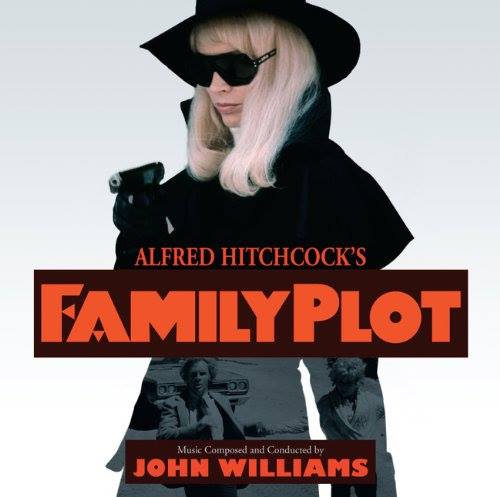
    John Williams was hired to score Hitchcock’s final film, “Family Plot,” in 1976. At the time, he was poised between his breakout success with “Jaws” and “Star Wars,” which would make him a household name. He would be honored for both with Academy Awards for Best Original Score.

    To satisfy Hitch’s hunger for ham on wry, Williams turned to the harpsichord, an instrument that had taken on a certain mischievous quality when applied to mysteries and thrillers.

    This week on “Picture Perfect,” we’ll hear selections from this neglected score from the dawn of Williams’ widespread popularity, alongside Ron Goodwin’s music for “Murder She Said” (the first of Margaret Rutherford’s Miss Marple films), John Addison’s for “Sleuth” (Sir Laurence Olivier and Michael Caine engage in a battle of wits with potentially deadly consequences), and André Previn’s for “Dead Ringer” (a post-“Whatever Happened to Baby Jane” Bette Davis plays contentious twins whose relationship, naturally, leads to murder).

    Join me for an hour of wicked fun with arch harpsichords this week, on “Picture Perfect,” music for the movies, this Friday evening at 6:00 EST, on WWFM – The Classical Network and at wwfm.org.

  • Memorial Day Remembrance Herrmann’s Fallen

    Memorial Day Remembrance Herrmann’s Fallen

    It’s Memorial Day. Before you start in with the burgers and the quoits and the three legged-race and the gumboot toss and all that, remember how lucky we are, and those who laid down their lives believing they were doing something for the greater good.

    Bernard Herrmann is most celebrated for his film scores, in particular those he wrote for Alfred Hitchcock, though he did much brilliant besides. Here’s a concert piece he wrote in 1943, called “For the Fallen,” in a fascinating historical document with the composer conducting the New York Philharmonic:

    Here it is again in a modern performance, with more up-to-date sound:

    Listen to both if you can. Happy Memorial Day.

Tag Cloud

Aaron Copland (92) Beethoven (95) Composer (114) Film Music (119) Film Score (143) Film Scores (255) Halloween (94) John Williams (185) KWAX (229) Leonard Bernstein (99) Marlboro Music Festival (125) Movie Music (134) Opera (198) Philadelphia Orchestra (86) Picture Perfect (174) Princeton Symphony Orchestra (106) Radio (87) Ralph Vaughan Williams (85) Ross Amico (244) Roy's Tie-Dye Sci-Fi Corner (290) The Classical Network (101) The Lost Chord (268) Vaughan Williams (102) WPRB (396) WWFM (881)

DON’T MISS A BEAT

Receive a weekly digest every Sunday at noon by signing up here


RECENT POSTS