Tag: Alfred Schnittke

  • Russian Literature Movie Music for Winter Nights

    Russian Literature Movie Music for Winter Nights

    Long winter’s nights are made for reading.

    This week on “Picture Perfect,” you’ll find plenty of inspiration in music from movies adapted from Russian literature.

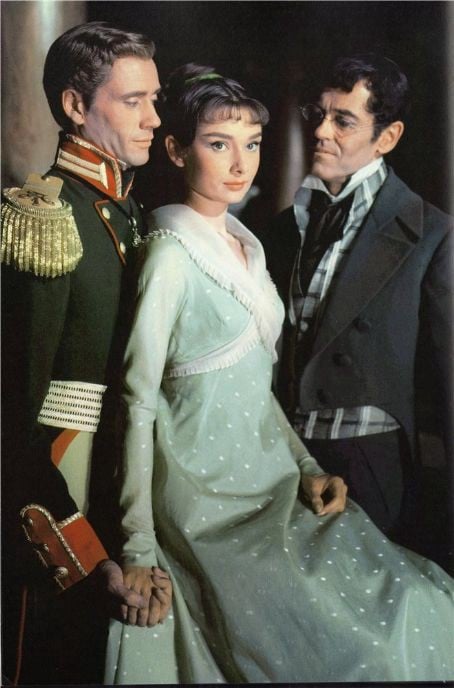
    Tolstoy’s “War and Peace,” one of the most revered novels of the 19th century, has been filmed at least twice. A seven-hour Soviet adaptation, begun in 1965, is generally regarded as the superior of the two. The other, released in 1956, was a big-budget Italian-American venture, supervised by Dino di Laurentiis, with an all-star, international cast, including Henry Fonda, Audrey Hepburn, Mel Ferrer, Vittorio Gassman, Herbert Lom, and Anita Ekberg. It was directed by King Vidor, the cinematography was by Jack Cardiff, and the music was by Nino Rota.

    Tolstoy’s “Anna Karenina” has also been adapted several times. A 1948 British production stars Vivian Leigh, Ralph Richardson, and Kieron Moore. The score is by Constant Lambert, also well-respected for his concert music, though perhaps even better recognized as conductor of the Vic-Wells (later the Sadler-Wells) Ballet.

    Even more highly-regarded was Arthur Honegger, who wrote five symphonies, nine ballets, and a number of large-scale choral and theatrical works. His best-known piece is probably the symphonic movement “Pacific 231,” which famously emulates the sound of a steam locomotive.

    Perhaps the most “serious” of the composers that made up the group known as Les Six, Honegger nonetheless enjoyed a sideline working in film over a period of three decades. His scores include those for Abel Gance’s “Napoléon” and a 1934 French version of “Les Misérables.” He was also a mentor to Miklós Rózsa, the Hungarian émigré he met in Paris, who went on to great success writing film music, first for the Korda brothers in England, then in Hollywood.

    Honegger’s score for a 1935 version of Dostoyevsky’s “Crime and Punishment” includes a part for the ondes martenot, an electronic keyboard instrument with an uncanny, otherworldly timbre.

    Finally, we’ll turn to what some regard as the greatest Russian novel of the past century, “The Master and Margarita.” Mikhail Bulgakov began his book in 1928, but destroyed it in despair over the state of things as he saw them in the Soviet Union. He restarted it in 1931, and the manuscript went through multiple drafts until his death in 1940. It’s only since the late ‘60s that uncensored editions of the novel found their way into print. The first complete version was published in 1973, with an even more authoritative edition following in 1989.

    In one particularly meta episode in this multi-layered tale, the author burns his own manuscript! Faustian imagery abounds: Satan figures prominently, the Master’s love is named Margarita, and there are elements of intellectual curiosity and redemption.

    A film version, released in 1994, attracted one of the biggest names in, by then, post-Soviet music, Alfred Schnittke, a composer noted for his “polystylism.” In one particularly grotesque passage, he alludes to Ravel’s “Bolero.”

    Pull a chair up to the fire and say “Da” to Russian literary classics on “Picture Perfect,” music for the movies, this Saturday evening at 6:00 EST, on WWFM – The Classical Network and wwfm.org.

  • Soviet Cinema’s Musical Masterpieces

    Soviet Cinema’s Musical Masterpieces

    This week on “Picture Perfect,” peek behind the Curtain for music by notable composers for Soviet cinema.

    Alfred Schnittke, a name usually associated with the avant-garde, actually composed over 60 film scores. One of these was for “Agony” (1974), about Rasputin, his influence over the Tsar, and the conspiracy to murder him.

    Georgy Sviridov, a pupil of Shostakovich, wrote the music for “Time, Forward!” (1962), based on the novel of Valentin Kataev. Set in the 1930s, the film describes a day of construction work at the Magnitogorsk Iron and Steel Works. Some of the music was used during the opening ceremonies of the 2014 Winter Olympics in Sochi.

    Dmitri Shostakovich, of course, is celebrated for his symphonies and string quartets, which are regarded as some of the most important of the 20th century. He also happened to write some 30 film scores, beginning all the way back in the silent era. Far and away his greatest hit composed for film, at least in the West, is the Romance from “The Gadfly” (1955), based on the novel of Ethel Lillian Voynich. The music gained broader exposure as the theme to “Reilly, Ace of Spies.”

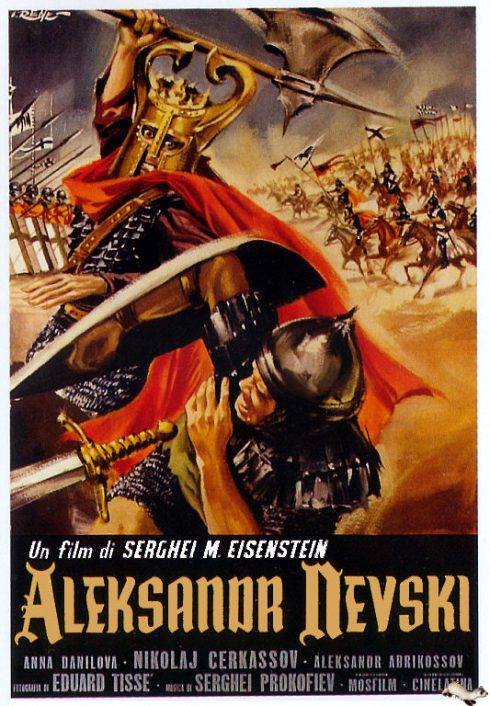
    Sergei Eisenstein’s “Alexander Nevsky” (1938) invariably turns up on lists of the greatest films ever made. Nevsky, the 13th century Russian prince, military leader, and saint, thwarts the attempted invasion of Novgorod by Teutonic Knights of the Holy Roman Empire.

    Sergei Prokofiev arranged his masterful score into a concert piece, a cantata. However, these days, orchestras seem to be performing it more and more often as it was originally heard, with the film. The synthesis of music and visuals for the climactic Battle on the Ice is one of its indelible highlights.

    Say “da” to classic music for Soviet cinema, on “Picture Perfect,” music for the movies, this Saturday evening at 6:00 EST, on WWFM – The Classical Network and wwfm.org.
  • Midsummer Bonfires: Music for St. John’s Eve

    Midsummer Bonfires: Music for St. John’s Eve

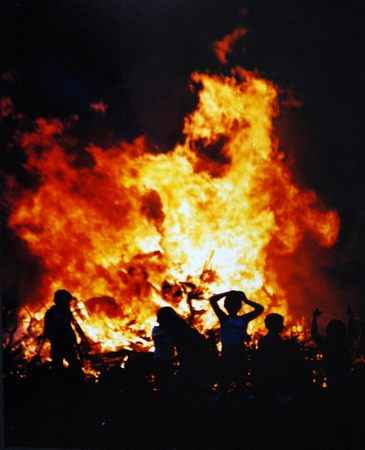
    Why is it whenever man feels the urge to celebrate, his first impulse is to set things on fire? We see it today in the hot-dogging conflagrations that follow on the heels of championship sports victories. In the ancient world, bonfires were already a mainstay of any festive occasion.

    This Sunday night on “The Lost Chord,” we listen to music for St. John’s Eve. The Feast Day of St. John holds a place on the Christian calendar akin to that of Christmas, in that it coincides with solstice time. Midsummer was originally a pagan festival, which was absorbed by the Church for the observance of John the Baptist’s birth, which St. Luke implies took place six months before that of Jesus.

    Though the actual summer solstice may occur anytime between June 21 and June 25, it was designated that June 24 would be the Feast Day of St. John.

    St. John’s Eve is a time for the harvesting of St. John’s Wort, with its miraculous healing powers. It’s a time to seek the fern flower, which can bring good fortune, wealth, and the ability to understand animal speech. It’s a time for the lighting of bonfires against evil spirits, and even dragons, which roam the earth, as the sun again pursues a southerly course. And it’s a time when witches are believed to rendezvous with powerful forces, such as the demon Chernobog, who emerges from the Bald Mountain on St. John’s Eve at the climax of Disney’s “Fantasia.”

    Leaping over a bonfire was seen as a surety of prosperity and good luck. Not to light a bonfire was seen as offering up one’s own house for destruction by fire. The bigger the fire, the further at bay were kept evil spirits. The further the evil spirits, the better the guarantee of a good harvest.

    We’ll have music inspired by some of these Midsummer customs, as we listen to Modest Mussorgsky’s “St. John’s Night,” an earlier, less-familiar incarnation of his popular musical picture “A Night on Bald Mountain,” as heard in his opera, “Sorochinsky Fair.”

    Also featured will be Alfred Schnittke’s impish rondo, “(K)ein Sommernachtstraum.” The root of the title is German for “A Midsummer Night’s Dream,” but the postmodern inclusion of the “K” in parentheses modifies the meaning to “NOT a Midsummer Night’s Dream.” Indeed! Schnittke sets up the listener with a soothing notturno in the style of Mozart or Schubert, but very soon the atmosphere begins to shift.

    Finally, we’ll hear selections from the ballet, “St. John’s Eve,” by the Swedish composer Gunnar de Frumerie. Not surprisingly, after a long, hard winter, the Scandinavian countries are crazy for Midsummer. The allegorical ballet features appearances by John the Baptist, Salome, the Seven Deadly Sins, Angels, and the Devil, all tied up in Swedish Midsummer traditions.

    I hope you’ll join me for “Midsummer Night’s Fiends,” this Sunday night at 10:00 EDT, on WWFM – The Classical Network and wwfm.org.


    PHOTO: St. John’s Eve celebration in Northern Ireland

  • Soviet Cinema Scores A Winter Escape

    Soviet Cinema Scores A Winter Escape

    In the wake of yesterday’s “bomb cyclone,” we turn our thoughts to someplace you really don’t want to be in the winter – Russia.

    This week on “Picture Perfect,” we’ll have an hour of music from classic Soviet cinema. Alfred Schnittke, a name usually associated with the avant-garde, actually composed over 60 film scores. One of these was for “Agony” (1974) about Rasputin, his influence over the Tsar, and the conspiracy to murder him.

    Georgy Sviridov, a pupil of Shostakovich, wrote the music for “Time, Forward!” (1962), based on the novel of Valentin Kataev. Set in the 1930s, the film describes a day in the construction work of Magnitogorsk Iron and Steel Works. Some of the music was used during the opening ceremonies of the 2014 Winter Olympics in Sochi.

    Shostakovich, of course, is celebrated for his symphonies and string quartets, which are regarded as some of the most important of the 20th century. He also happened to write some 30 film scores, beginning all the way back in the silent era. Far and away his “greatest hit” composed for film, at least in the West, is the romance from “The Gadfly” (1955), based on the novel of Ethel Lillian Voynich.

    Sergei Eisenstein’s “Alexander Nevsky” (1938) invariably turns up on lists of the greatest films ever made. Nevsky, the 13th century Russian prince, military leader and saint, thwarts the attempted invasion of Novgorod by Teutonic Knights of the Holy Roman Empire.

    Sergei Prokofiev arranged his masterful score into a concert piece, a cantata. However, these days, orchestras seem to be performing it more and more as it was originally heard, with the film. It’s a powerful piece of work. The marriage of music and visuals for the famous Battle on the Ice is one of the film’s great highlights.

    If you think we’ve got it bad, try facing down a patriotic Nevsky on a frozen lake! I hope you’ll join me for music from these classics of Soviet cinema, this Friday evening at 6:00 EST, on WWFM – The Classical Network and wwfm.org.

Tag Cloud

Aaron Copland (92) Beethoven (95) Composer (114) Film Music (123) Film Score (143) Film Scores (255) Halloween (94) John Williams (187) KWAX (229) Leonard Bernstein (101) Marlboro Music Festival (125) Movie Music (138) Opera (202) Philadelphia Orchestra (89) Picture Perfect (174) Princeton Symphony Orchestra (106) Radio (87) Ralph Vaughan Williams (85) Ross Amico (244) Roy's Tie-Dye Sci-Fi Corner (290) The Classical Network (101) The Lost Chord (268) Vaughan Williams (103) WPRB (396) WWFM (881)

DON’T MISS A BEAT

Receive a weekly digest every Sunday at noon by signing up here


RECENT POSTS