Tag: American Symphony Orchestra

  • Strauss’ “Love of Danae” Rare Opera Online

    Strauss’ “Love of Danae” Rare Opera Online

    On Richard Strauss’ birthday, enjoy this production of the rarely-heard opera “Die Liebe der Danae” (“The Love of Danae”), a comedy after Hugo von Hofmannsthal (libretto by Joseph Gregor), steeped in Greek mythology.

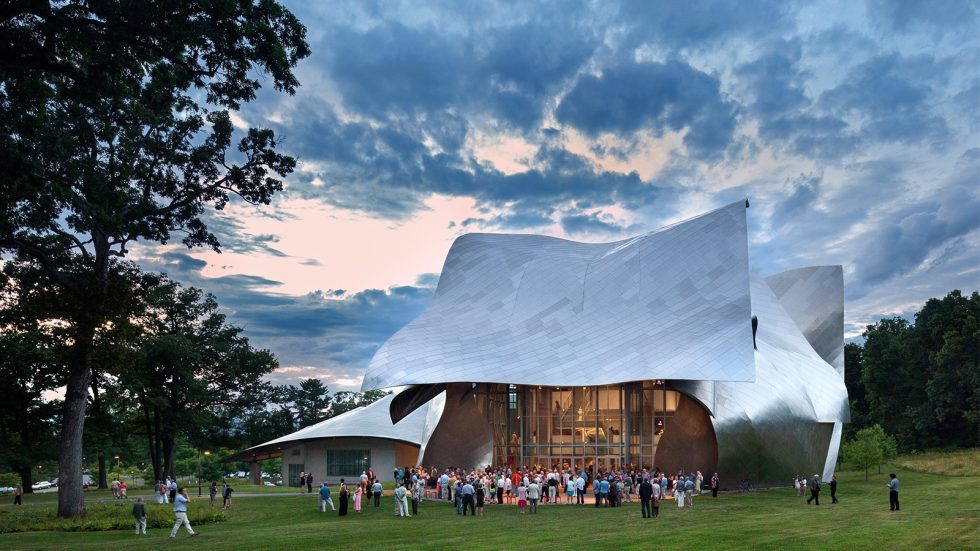
    The powerful god Jupiter and the lowly donkey driver Midas compete for the love of the beautiful Danae. According to the promotional material, “The story is a Mozartean blend of comedy, romance, and drama on the themes of transformation and the acceptance of life’s changes, all brilliantly illuminated by Strauss’s orchestral mastery.” The production is a collaboration of stage director Kevin Newbury and architect Rafael Viñoly.

    True to the mission of Bard SummerScape, this is the first time the opera has ever been staged in New York. The performance took place at Bard College in 2011. The American Symphony Orchestra is conducted by Leon Botstein:

    Some background and a brief synopsis of the opera:

    https://en.wikipedia.org/wiki/Die_Liebe_der_Danae

    Unfortunately, because of the COVID-19 pandemic, this year’s Bard Music Festival, which was to have focused on Nadia Boulanger and her world, has been postponed until the summer of 2021.

    You’ll find more information at the website of Fisher Center at Bard, https://fishercenter.bard.edu/summerscape/.

  • Bard Music Festival Discovering Neglected Gems

    Bard Music Festival Discovering Neglected Gems

    Eureka!

    I feel like a classical music prospector who’s struck the motherlode of unusual and neglected repertoire!

    The Bard Music Festival, held each summer at Bard College in sylvan upstate New York, is the crown jewel of Bard SummerScape, a broader celebration of the arts. The festival’s primary focus is on a specific composer and his or her world. So even if the star attraction is, say, Rimsky-Korsakov, Sibelius, or Carlos Chávez, a significant amount of the programming is devoted to that composer’s contemporaries, influences, and successors.

    No word yet on whether or not the Bard Music Festival will decide to move ahead with this summer’s projected celebration of Nadia Boulanger. But judging from the facts that just about every other music festival in North America has already cancelled, and that Bard College is located just two hours north of New York City, I’m not holding my breath (except around other people, especially at the grocery store).

    In the meantime, Bard is finding ways to connect with audiences beyond its idyllic campus, and I am pumped to have tapped into this treasure trove of past Bard performances, especially of the operas (read on).

    Traditionally, musicians of the American Symphony Orchestra have formed the core of the Bard Festival Orchestra (Leon Botstein, the president of Bard College, serves as artistic director of both), though in recent years, a number of the concerts have also been performed by Bard’s resident orchestra, The Orchestra NOW.

    Some of ASO’s contributions, Bard-related and otherwise, can now be streamed from the orchestra’s website:

    ASO Online

    In addition, every week, the Fisher Center at Bard is sharing a page of content based on the outstanding work the festival has done in reviving the neglected output of a number of deserving composers. This week, the focus is on Sergei Taneyev:

    https://fishercenter.bard.edu/upstreaming/

    Nadia Boulanger is the first woman to be selected as the focal point of Bard proper (though Grazyna Bacewicz was the subject of a satellite festival in San Francisco, Bard Music West, last year, and works by women composers – including Nadia’s sister, Lili – have been included as a matter of course in regular Bard programming). Boulanger’s influence, as one of the great pedagogues of the 20th century, was enormous. She was particularly influential in the artistic development of innumerable American composers. So when the festival does come to pass, the repertoire should be notably diverse and, as always, fascinating.

    For more information, visit https://fishercenter.bard.edu/bmf/

  • Ives’ Symphony No. 4: Stokowski’s 1965 Premiere

    Ives’ Symphony No. 4: Stokowski’s 1965 Premiere

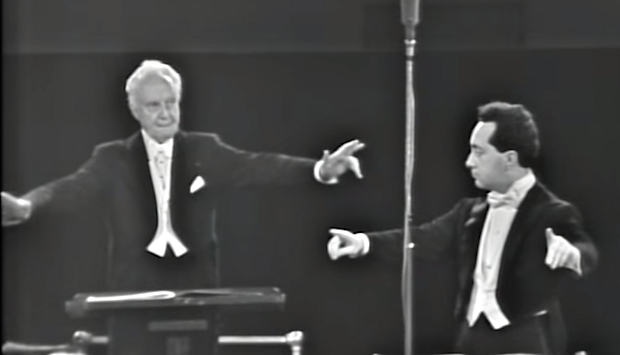
    It was on this date in 1965 that Leopold Stokowski gave the world premiere of Charles Ives’ Symphony No. 4. The performance took place at Carnegie Hall with the American Symphony Orchestra and the Schola Cantorum of New York. At the time, the work’s complex, kaleidoscopic tempos and layered, shifting meters required multiple conductors, and Stokowski enlisted the aid of David Katz and a young Jose Serebrier (pictured).

    The piece was composed between 1910 and the mid-1920s. Given the source, it’s hardly surprising that the music was decades ahead of its time. The first two movements had been performed by members of the New York Philharmonic under the direction of Eugene Goossens in 1927. This was the only occasion on which Ives would hear any of the music from the Fourth Symphony performed live by an orchestra. The composer died in 1954.

    Bernard Herrmann conducted an arrangement of the lovely third movement, the simplest and most conservative of the four (why, then, the need for an arrangement?), in 1933. The music as Ives wrote it was not heard until the complete performance in 1965.

    The composer’s biographer, Jan Swafford, describes the work as “Ives’ climactic masterpiece.”

    Stokowski recorded the symphony a few days after the premiere and led a televised studio performance, which can be seen here:

    Stokey kicks off twenty minutes of spoken introductory material (including commentary from producer John McClure) at the 4:30 mark. The symphony proper begins 25 minutes in.

    When’s the last time you saw anything like this on television?

  • Stokowski Two Sides of a Conducting Legend

    Stokowski Two Sides of a Conducting Legend

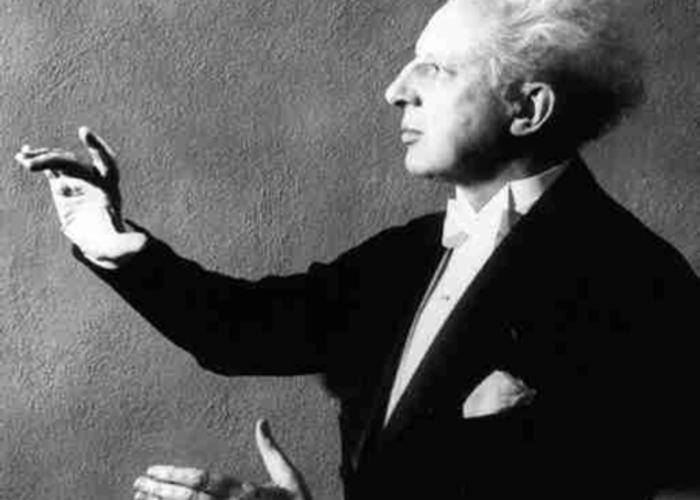
    Two faces of Leopold Stokowski:

    First, from the 1947 potboiler “Carnegie Hall,” which contrives to string together appearances by some of the greatest classical music talent of the day (including Jascha Heiftez, Gregor Piatigorsky, Arthur Rubinstein, Rise Stevens, Ezio Pinza, Bruno Walter and Fritz Reiner) using the flimsiest and hokiest of plots (renegade young pianist scandalizes – and ultimately makes good – with his new jazz concerto).

    Stokowski provides the musical high point of the picture, with the director, low budget maestro Edgar G. Ulmer – who was a set designer on “Metropolis” and “M” – indulging in Expressionist tricks (low-angle camera set-ups and stark lighting) to accentuate Stoky’s majesty, to say nothing of his hair.

    Second, Stokowski rehearsing the American Symphony Orchestra in 1968, at the age of 85. He still had ten years of conducting ahead of him. His talent, temperament – and hair – remain undiminished.

    Happy birthday, Leopold Stokowski (1882-1977).

  • Hindemith’s Long Christmas Dinner Review

    Hindemith’s Long Christmas Dinner Review

    For anyone who’s ever felt like they’ve been stuck on an interminable holiday visit, composer Paul Hindemith has got you licked.

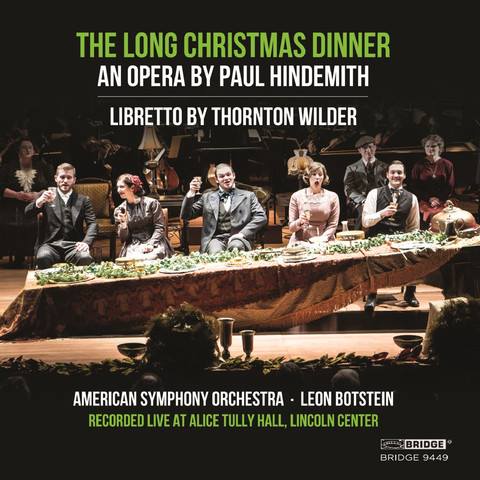
    His one-act opera, “The Long Christmas Dinner,” spans 90 years and offers musical snapshots of several generations of the Bayard family as they convene for their annual Yuletide ritual.

    The libretto is by Thornton Wilder, based on one his own plays, and shares some of the same concerns as his Pulitzer Prize-winning “Our Town.” Especially characteristic is the passage of time and the human tendency not to savor every precious moment.

    Two doors flank the stage, one representative of Birth and the other Death. Family members come and go; historical, political and economic factors impinge on familial relations and the fortunes of the family unit; the specter of war rears its head – all in a 50-minute span.

    The work is not without humor, irony, and certainly poignancy. However, it’s all presented in Hindemith’s clean, neoclassical, unsentimental syntax. The opening is a setting of “God Rest Ye Merry, Gentlemen” that suggests anything but unalloyed merriment, sounding somewhat haunted, as if conceived by the Ghost of Christmas Past.

    Bridge Records has issued the first English-language recording of the work, captured last year in live performance at Alice Tully Hall at Lincoln Center in New York, and it is satisfying in every way. Of course, seeing the piece live would greatly benefit being able to tell certain characters apart, since some of the singers assume different roles down the generations. Innovatively, it was presented on the second half of the program, preceded by an actual performance of the play.

    The conductor, Leon Botstein, has built a career on looking at music through fresh perspectives. Botstein is founder and co-artistic director of the Bard Music Festival. He has been president of Bard College since 1975. He has been music director of the American Symphony Orchestra, heard on this recording, since 1992.

    Because of his love of the piece, Maestro Botstein very generously consented to a last-minute phone interview, granted only hours before he had to be on a plane to Budapest. I’ve edited his remarks down to a five-minute spoken introduction. Check back here tonight to hear a more complete version of our conversation, which I will be posting concurrently with the broadcast of the show.

    I hope you’ll join me when “Dinner Is Served,” tonight at 10 ET, with a second helping this Wednesday evening at 6; or that you’ll listen to it later as a webcast, at wwfm.org.

Tag Cloud

Aaron Copland (92) Beethoven (95) Composer (114) Film Music (123) Film Score (143) Film Scores (255) Halloween (94) John Williams (187) KWAX (229) Leonard Bernstein (101) Marlboro Music Festival (125) Movie Music (138) Opera (202) Philadelphia Orchestra (89) Picture Perfect (174) Princeton Symphony Orchestra (106) Radio (87) Ralph Vaughan Williams (85) Ross Amico (244) Roy's Tie-Dye Sci-Fi Corner (290) The Classical Network (101) The Lost Chord (268) Vaughan Williams (103) WPRB (396) WWFM (881)

DON’T MISS A BEAT

Receive a weekly digest every Sunday at noon by signing up here


RECENT POSTS