Tag: Beethoven

  • Historical YouTube Classical Music Wishlist

    Historical YouTube Classical Music Wishlist

    One of this page’s followers, Jim Barclay Jr, has introduced to me the idea of Historical YouTube. This magical – though unfortunately wholly fictional – website would allow one to watch videos captured during any era of music history.

    The concept was introduced in the comments section under last week’s Carl Ditters von Dittersdorf birthday post, where Jim remarked it would be near the top of his personal list to be able to witness an actual performance by the string quartet made up of Dittersdorf, Joseph Haydn, Mozart, and Jan Křtitel Vaňhal. He then added a piano recital by Chopin or Liszt.

    I too would be eager to hear Liszt. I expanded the roster to include the premiere of “The Rite of Spring,” notorious for having sparked one of classical music’s greatest riots.

    Simon Mauer offered the legendary December 1808 marathon that introduced not only Beethoven’s 5th & 6th Symphonies, but also the 4th Piano Concerto, the Choral Fantasy, selections from the Mass in C, and more – an endurance test that left teeth chattering over a span of over four hours.

    It was not long after that Jim added a Schubertiade, one of those informal literary-musical salons at which a number of Schubert’s works were first heard. This was eagerly seconded by Simon.

    It was then suggested this might be a good idea for an expanded post – a contest, of sorts. So now I’m throwing it open to all of you. What storied classical music events would you most want to see on Historical YouTube™?

  • Beethoven’s Yom Kippur Connection?

    Beethoven’s Yom Kippur Connection?

    Beethoven for Yom Kippur?

    Somehow, in my 40-plus-year passion for classical music, I have never before stumbled across this theory. But now that I know, it’s definitely out there. A Google search turns up plenty.

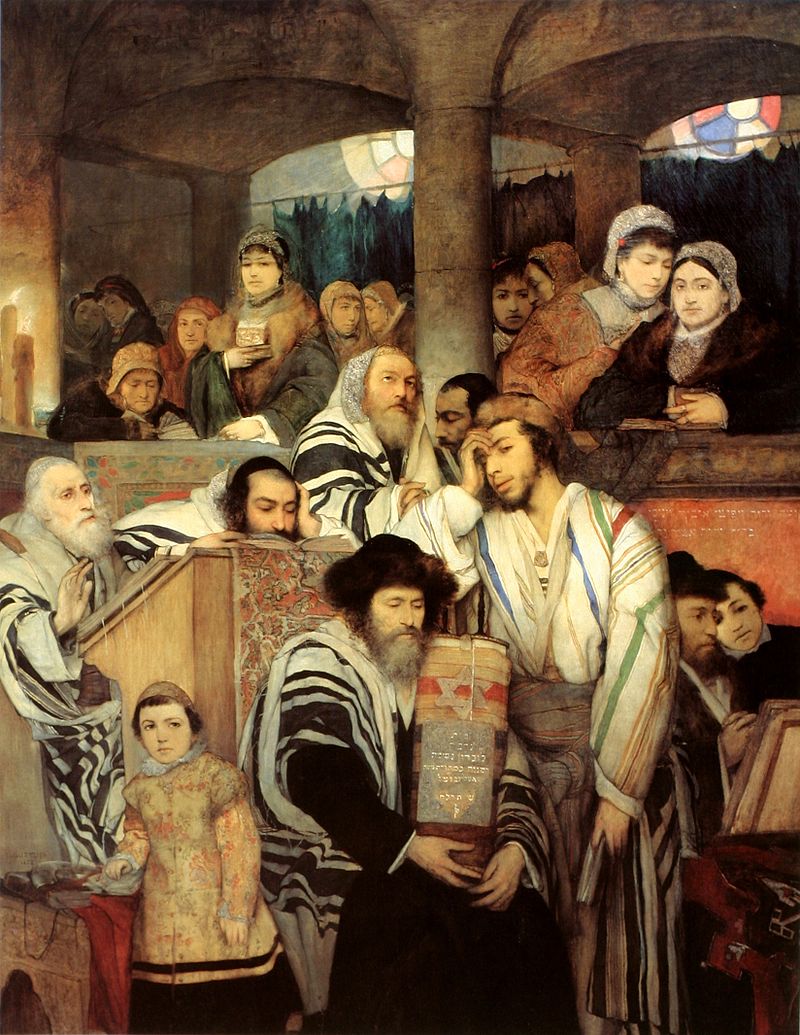
    There are those who speculate that Beethoven’s String Quartet No. 14 in C-sharp Minor, Op. 131, contains a quotation from the Yom Kippur melody “Kol Nidre.” It’s certainly possible.

    When the first Reform synagogue opened in Vienna in 1825, the theory posits, Beethoven was approached to supply a cantata. He never committed, though it appears he did devote some time to the study of Jewish music. However, by 1825, he was already stone deaf.

    It’s also been speculated that, as a younger man, in Bonn, he happened to be sweet on Rachel Levin, the daughter of a wealthy jeweler, who traveled in artistic circles. The two met in Teplitz at a gathering of poets, musicians, and intellectuals. Levin’s parents were opposed to Beethoven pursuing a relationship. Levin would distinguish herself as a radical thinker, gaining notoriety for her rejection of bourgeois values. Ironically, she later converted to Christianity to marry the biographer Karl August Varnhagen von Ense. Was Beethoven looking back, perhaps still carrying the torch?

    The melody of “Kol Nidre” was first written down in Berlin in the 18th century, but its origins reach back deep into the Middle Ages, perhaps earlier. Legend has it that the tune has remained unchanged since Moses climbed down from Sinai.

    The alleged quotation appears in the sixth movement of Beethoven’s quartet. I’m not sure I’m entirely convinced. If it is indeed true, which would be very cool, I wish that the composer would have gone for broke, à la Max Bruch, rather than simply feinting at the melody.

    Yom Kippur begins at sundown. The Day of Atonement marks the culmination of the Jewish High Holy Days, ten days of awe and repentance. Observed with fasting and prayer, it is the holiest day on the Jewish calendar.


    Beethoven, String Quartet No. 14, Movt. VI: Adagio quasi un poco andante (1826)

    Max Bruch, “Kol Nidrei” (1880)

    Jacob Weinberg, String Quartet No. 2, Movt. II: “Yom Kippur” (1950)

    Emil Nikolaus von Reznicek, “Symphonic Variations on Kol Nidre” (1929)

    Part I https://www.youtube.com/watch?v=jKA30FrX4jU
    Part II https://www.youtube.com/watch?v=bF_B66dAS04

    Arnold Schoenberg, “Kol Nidre” (1938)

  • Solomon The Poet Pianist’s Untold Story

    Solomon The Poet Pianist’s Untold Story

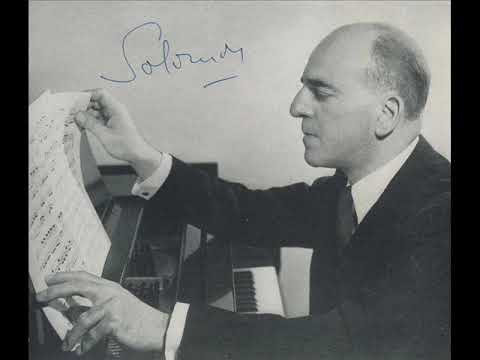
    While no doubt wise, this is really Solomon the poet. Solomon of the Song of Songs.

    Solomon Cutner was one of those rare classical musicians to be recognized by a single name. A child prodigy who studied with Mathilde Verne, herself a pupil of Clara Schumann, Solomon made his London debut at the age of eight. Verne pushed him hard – perhaps too hard – so that at nine, he was playing Beethoven’s Piano Concerto No. 3 and Liszt’s “Hungarian Fantasy.” At twelve, he appeared on no less than six Prom concerts, as soloist in concertos by, among others, Grieg and Tchaikovsky. The concertos of Schumann and Brahms followed.

    Eventually, Verne’s motives were called into question. As the head of her own piano school, she stood to profit from the boy’s preternatural success. However, the relentless pace drove Solomon to exhaustion, anxiety, and a nervous breakdown. Once his five-year contract with her expired, he refused to have any contact with her ever again. In his 70s, he would reflect on how miserable his childhood had been.

    Simon Rumschinsky, a pupil of Theodor Leschetizky, helped Solomon to rebuild his technique – and his confidence – so that he was able to pursue further studies in Paris and relaunch his adult career. Solomon’s acclaimed recitals took him far from his native London, to the United States, Australia, South Africa, South America, and Japan. Perhaps he never totally shook the specter of Verne, since he continued to practice for eight or nine hours a day.

    Solomon gave the world premiere of Sir Arthur Bliss’ Piano Concerto at Carnegie Hall in 1939 (on the same program that introduced Vaughan Williams’ “Five Variants of Dives and Lazarus” and Sir Arnold Bax’s Symphony No. 7). The concert was presented in conjunction with “British Week” at the New York World’s Fair. He also entertained British troops throughout World War II, in such far-flung locations as North Africa, Palestine, India, Singapore, and Bangkok.

    As an interpreter, he was particularly renowned for his Beethoven. Sadly, while in the midst of recording a complete cycle of the sonatas, in 1956, he suffered a stroke that deprived him of the use of his right arm. Though he lived another 32 years, Solomon never recorded or performed in public again. For a pianist who died as recently as 1988, it’s sobering to reflect, little of his repertoire was documented in stereo.

    Broadly speaking, Solomon’s was a non-interventionist approach. It was his desire not to place himself too much between the composer and the audience. Therefore, his interpretations can sometimes come across as having more polish than personality. But at his best, he was a great poet of the keyboard.

    Here, Solomon performs possibly my favorite Beethoven piano sonata, and an appropriate one, I think, for a late-summer afternoon. I’ve always been particularly fond of the exquisite third movement.

  • Beethoven’s 250th vs. 175 Years Ago

    Beethoven’s 250th vs. 175 Years Ago

    Remember when 2020 was supposed to be the big Beethoven year? Beethoven Beethoven Beethoven everywhere, the world wallowing in his music for the 250th anniversary of his birth – gorging itself to such a degree that no one could possibly stand to hear another note, until “Beethoven 300.”

    So how did all that work out?

    Before I cause any more tears, let’s look back to 1845 and “Beethoven 75.” The Master had been in the grave only 18 years, when a monument was unveiled in his hometown of Bonn, Germany, 175 years ago today. But it must have seemed like an eternity to the organizers.

    Although the idea had been circulated since 1828, the year after Beethoven’s death, getting anyone to actually do anything about it was like herding cats. A “Bonn Association for the Beethoven Monument” was formed, but without money, the entire enterprise was largely a symbolic gesture. Luigi Cherubini promised to conduct a benefit concert in Paris, but then backed out of it. Ignaz Moscheles succeeded in organizing one in London, but, despite the inclusion on the program of Beethoven’s “Ode to Joy,” it was poorly attended.

    In fact, there would have been no statue at all, if not for the efforts of Franz Liszt. When the total amount raised in France came to no more than 425 francs, Liszt donated 10,000 francs from his own pocket. Though only in his 30s at the time, Liszt had already retired from the concert stage, having amassed a considerable fortune and now ready to devote himself to other matters – conducting, teaching, and especially composing. But whenever there was a crisis or a disaster, Liszt could be counted on to emerge from seclusion to play in the largest hall he could find, and people would turn out to basically throw money. One of those concerts marked the last public appearance of Frederic Chopin, who shared the stage with Liszt in a recital of music for piano duo.

    In all, Liszt went to heroic lengths – more than any other figure – to see to it that Beethoven would be immortalized in bronze. His sole condition: that the sculptor be Lorenzo Bartolini. In 1840, Bartolini had created a marble bust of Liszt, of which Liszt must have particularly fond. But the committee overruled the proposal, preferring that the commission go to a German. It was Ernst Julius Hähnel who would ultimately receive the endorsement.

    As usual, Liszt took the disappointment well. A month before the unveiling, when it finally occurred to someone that there was no suitable venue to house the projected 30,000 attendees, guess who put up the money to build one? That’s right, Liszt financed what would become Beethoven Hall. The structure was erected, with contractors laboring around the clock, in just two weeks.

    Of course, Liszt was equally committed to the festivities themselves. He composed a new work, the “Festival Cantata for the Inauguration of the Beethoven Monument in Bonn,” which was heard twice. He also performed Beethoven’s “Emperor” Concerto and conducted the Fifth Symphony.

    He was in attendance at Bonn Cathedral when, on the eve of the monument’s unveiling, Louis Spohr conducted Beethoven’s “Missa Solemnis” and the Ninth Symphony, and the next morning, when the “Mass in C” was performed.

    At the ceremony was Hector Berlioz, Giacomo Meyerbeer, Ignaz Moscheles, Jenny Lind, Pauline Viardot, and other prominent musicians; also Queen Victoria and Prince Albert, King Frederick William IV of Prussia, and Archduke Friedrich of Austria.

    That afternoon, Liszt performed Beethoven, and Spohr conducted the “Coriolan Overture” and selections from “Christ on the Mount of Olives” and “Fidelio.” The day was capped with a glorious fireworks display.

    On Day 3, Liszt’s “Festival Cantata” was performed. Also, Beethoven’s “Egmont Overture,” a piano concerto by Carl Maria von Weber, arias by Beethoven and Mendelssohn, and Beethoven’s song “Adeleide.”

    Rounding out the festivities was a lavish banquet. Unfortunately, Lola Montez started dancing on a table and flirting with Liszt, which had the effect of generating an enormous scandal. The blame all came to roost on the festival’s greatest benefactor. 25 years later, for the Beethoven centennial celebrations in 1870, Liszt was not invited back.

    What have you done for us lately?

  • Beethoven’s Dedication Disaster

    Beethoven’s Dedication Disaster

    How to spoil your shot at a dedication!

    Ludwig van Beethoven had recently completed his Symphony No. 3 under the giddy influence of an idealized Napoleon Bonaparte. As a statesman and military leader who was well on his way to conquering (or as Beethoven may have seen it, liberating) most of Europe, Napoleon was deemed by the composer to be on equal footing with the greatest consuls of Ancient Rome.

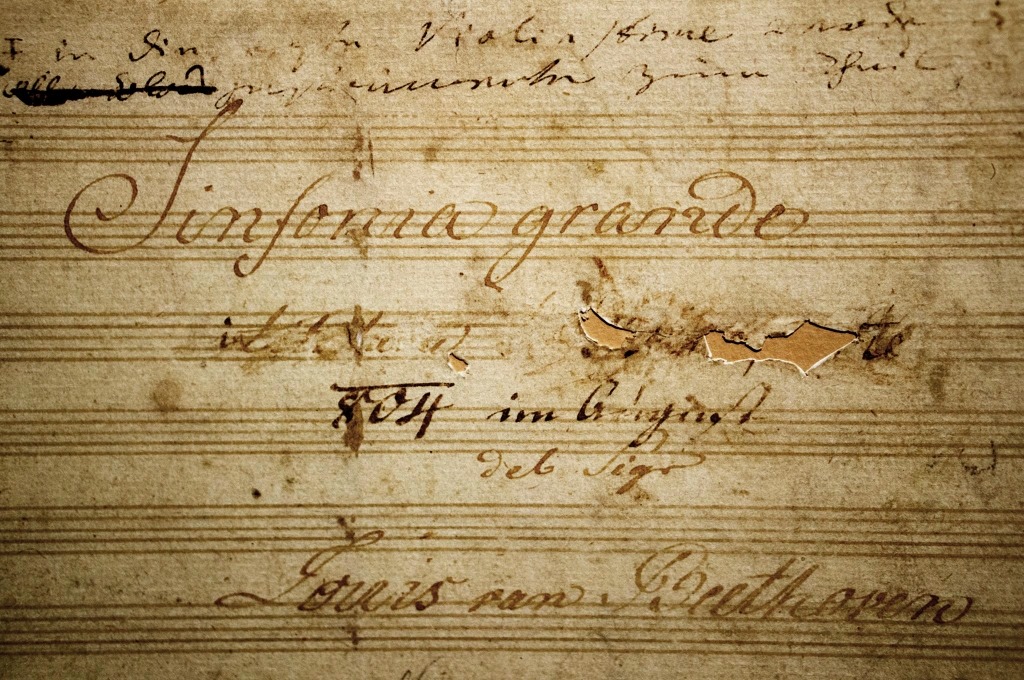
    The egalitarian-minded Beethoven may have been blinded by his revolutionary fervor, but once he learned that Napoleon had been proclaimed Emperor on this date in 1804, the scales dropped from his eyes and his affection curdled. He is alleged to have said, “So he is no more than a common mortal! Now, too, he will tread under foot all the rights of Man, indulge only his ambition; now he will think himself superior to all men, become a tyrant!” In a fury, he scratched out the symphony’s original dedication.

    Later, once he had cooled, Beethoven confided to his publisher that the proper title of the symphony should be “Bonaparte.” Instead, it was released under the name “Sinfonia Eroica” – “Heroic Symphony.” The revised dedication reads, “Composed to celebrate the memory of a great man.”

    Beethoven’s “Eroica” Symphony is regarded as one of the most significant works of the early 19th century. With its structural breadth and emotional scope, the work exploded the boundaries of symphonic form as it was recognized at the time. In his way, Beethoven managed to win as much new ground as Napoleon. Unlike Napoleon, however, he was able to keep it. And he holds it still.

Tag Cloud

Aaron Copland (92) Beethoven (95) Composer (114) Film Music (123) Film Score (143) Film Scores (255) Halloween (94) John Williams (187) KWAX (229) Leonard Bernstein (101) Marlboro Music Festival (125) Movie Music (138) Opera (202) Philadelphia Orchestra (89) Picture Perfect (174) Princeton Symphony Orchestra (106) Radio (87) Ralph Vaughan Williams (85) Ross Amico (244) Roy's Tie-Dye Sci-Fi Corner (290) The Classical Network (101) The Lost Chord (268) Vaughan Williams (103) WPRB (396) WWFM (881)

DON’T MISS A BEAT

Receive a weekly digest every Sunday at noon by signing up here


RECENT POSTS