Tag: Beethoven

  • Anton Reicha Beethoven’s Forgotten Friend

    Anton Reicha Beethoven’s Forgotten Friend

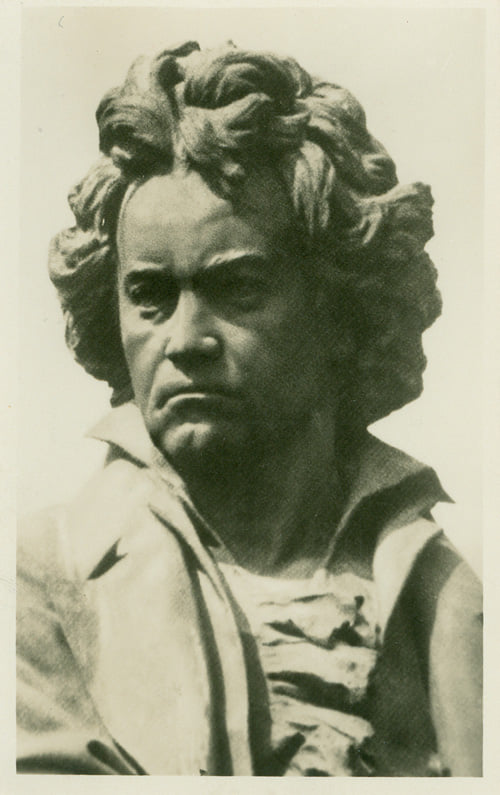
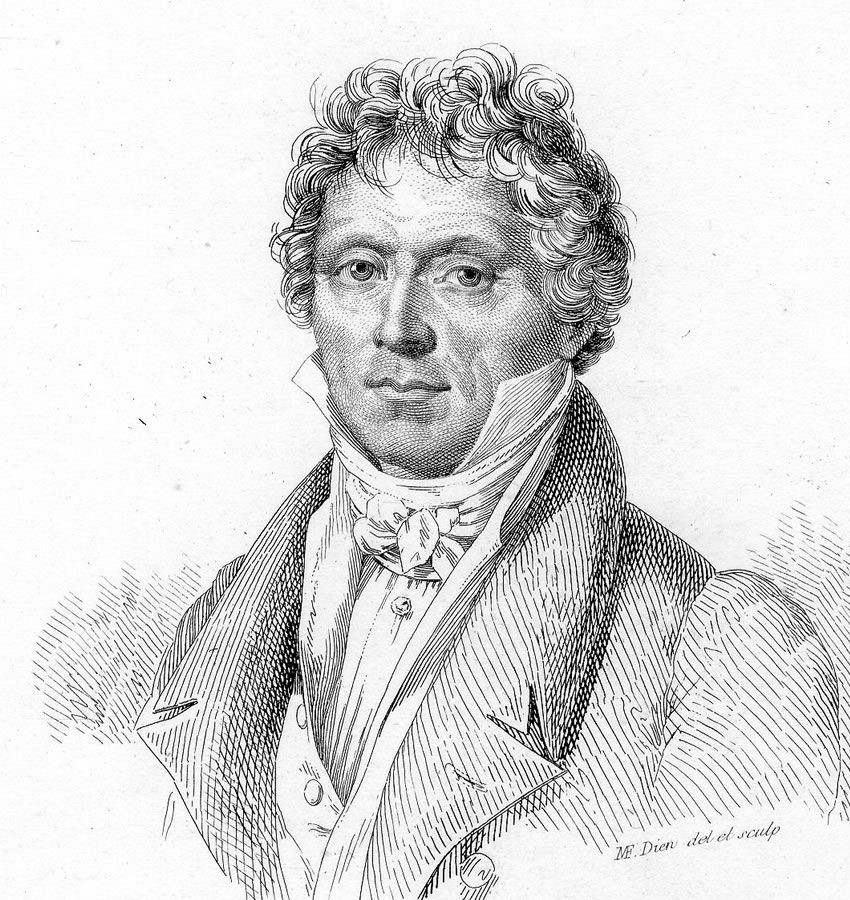
    He was a lifelong friend of Beethoven. They shared the same teachers and exchanged musical ideas. He taught Liszt, Berlioz, Franck, and Gounod. But, unless you happen to be a wind player, how many people really know the music of Anton Reicha? Perhaps a shade more than realize that today is his 250th birthday.

    Though he composed music in all genres – symphonies, concertos, operas, string quartets, choral music, vocal and instrumental works – Reicha is principally remembered, if at all, for his 25 wind quintets. Written in Paris between 1811 and 1820, the quintets came at a time when there was a dearth of good material for this particular configuration, so they were very successful. They also happen to comprise some of Reicha’s most traditional music.

    Earlier, during his years in Vienna – a time when he was closest to Beethoven – he espoused some pretty radical ideas, including polyrthyms, polytonality, and even microtones. These were innovations that would not make serious inroads in the world of classical music for over a hundred years.

    As the composer noted in his memoirs, “The number of works I finished in Vienna is astonishing. Once started, my verve and imagination were indefatigable. Ideas came to me so rapidly it was often difficult to set them down without losing some of them. I always had a great penchant for doing the unusual in composition. When writing in an original vein, my creative faculties and spirit seemed keener than when following the precepts of my predecessors.”

    Reicha was a prolific composer, whose music is full of novel ideas. His forward-looking string quartets influenced Beethoven – with whom, naturally, he shared many musical discussions – and Franz Schubert.

    Yet for some reason, he was often reluctant to publish. This led to the slapdash organization of his output, following his death, and lots of confusion, as pieces were lost, opus numbers were assigned willy-nilly, and some works were even counted more than once.

    So here we are, today, on Reicha’s 250th birthday, and the world is Beethoven-mad. I think his music deserves at least an occasional hearing. But you know how it is. Beethoven sells more tickets.

    It reminds me of the famous anecdote, related by Franz Liszt, in which he puckishly swapped trios by Beethoven and Johann Peter Pixis, presenting them opposite to the order in which they were advertised in the concert program. The audience reaction to the Pixis was stormy and enthusiastic, but when he came to perform the Beethoven, the response was tepid at best. It annoyed many in the hall when Liszt revealed the ruse.

    Reicha’s music is closer to Beethoven’s than is Pixis’. Get people in the chairs, and they will enjoy it.

    In the meantime, I’ll be sharing something by Reicha this afternoon, as I’ll also be observing the birthdays today of composers Richard Wetz and Frank Bridge, conductor Witold Rowicki, pianist Lazar Berman, and soprano Emma Kirkby.

    It will be music by Mozart and Schubert on tonight’s “Music from Marlboro,” at 6. That ought to sell some tickets. I hope you’ll join me from 4 to 7 p.m. EST, on WWFM – The Classical Network and wwfm.org.

  • Beethoven’s Birthday on The Classical Network

    Beethoven’s Birthday on The Classical Network

    BEETHOVEN BIRTHDAY BASH

    The climax of WWFM – The Classical Network’s symphony marathon is upon us!

    NOW PLAYING: Beethoven – Symphony No. 9 “Choral” (Leontyne Price, soprano; Maureen Forrester, contralto; David Poleri, tenor; Giorgio Tozzi, bass; Boston Symphony Orchestra; New England Conservatory Chorus/Charles Munch)

    Mighty, urgent, thrilling and beautiful, this 1958 performance is a fitting capstone to our day-long celebration of Beethoven. If you have been stirred in any way by the music you’ve enjoyed in honor of music’s greatest master, we hope that you will consider supporting it.

    We have come your way with limited interruptions, presenting all the music complete, both out of respect for the composer and out of respect for you, the listener. Let us know you appreciate it, by making future no-pain fundraisers like this one possible.

    Call us at 1-888-232-1212, or make a donation online at wwfm.org.

    Remember, the celebration will continue with David Dubal and Jed Distler, and two hours of Beethoven’s piano music, tonight at 8:00 EST.

    Thank you for this wonderful day of music, and thank you for supporting The Classical Network!

  • Beethoven Liszt Symphony 8 Piano

    Beethoven Liszt Symphony 8 Piano

    BEETHOVEN BIRTHDAY BASH

    Curve ball!

    As an exercise in deferred gratification and an addendum to that period instrument performance of the Symphony No. 8, by Frans Brüggen and the Orchestra of the 18th Century, we’ll hear Franz Liszt’s transcription of the 8th for solo keyboard.

    NOW PLAYING: Beethoven/Liszt – Symphony No. 8 in F major (Cyprian Katsaris, piano)

    From authenticity to audacity!

    Stick around, our concluding Beethoven symphony, the Symphony No. 9 – the beloved “Choral” Symphony – is on its way, in a powerhouse performance that’s bound to make an impression.

    We want to impress upon you that you’re the one who helps make it happen, when you call us with your contribution at 1-888-232-1212 or donate online at wwfm.org.

    Beethoven’s on our Liszt, on WWFM – The Classical Network and wwfm.org.

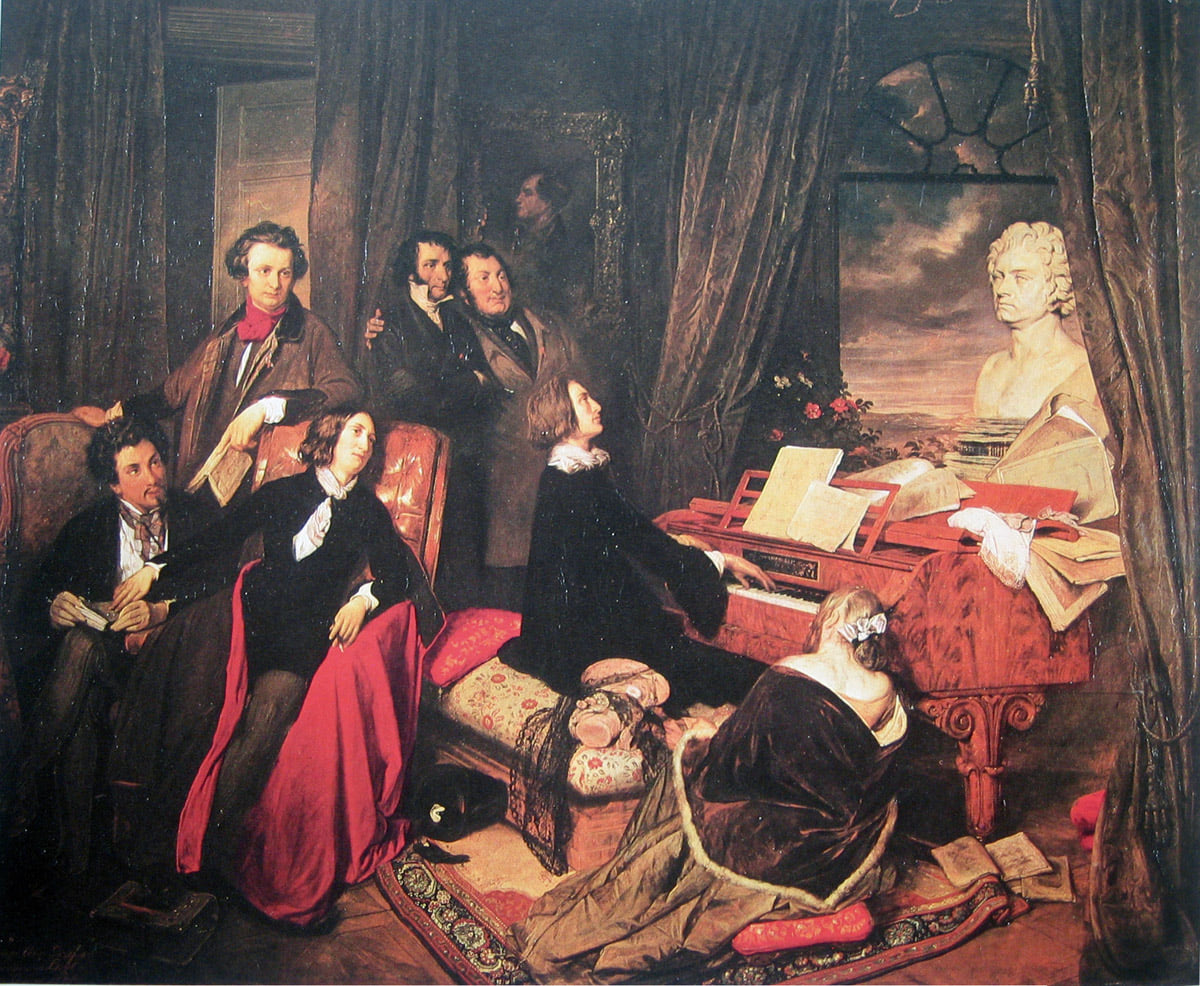
    “Franz Liszt Fantasizing at the Piano” (1840), Josef Danhauser

    Standing: Hector Berlioz, Niccolò Paganini, Gioachino Rossini

    Seated: Alexandre Dumas, George Sand, Liszt, Marie d’Agoult

    Bust: Beethoven

  • Beethoven’s 8th Symphony Subversive Masterpiece

    Beethoven’s 8th Symphony Subversive Masterpiece

    BEETHOVEN BIRTHDAY BASH

    WWFM – The Classical Network’s symphony marathon continues!

    NOW PLAYING: Symphony No. 8 in F major (Orchestra of the 18th Century/Frans Brüggen)

    Like the 4th Symphony, Beethoven’s 8th tends to be swallowed up in the long shadows cast by its neighbors. But this work, frequently dismissed as Haydnesque, is actually quite subversive. The composer deconstructs many of the practices of standard classical symphonic form, with most of the weight thrown onto the shoulders of the last movement, as opposed to the first, no real slow movement, and the return of the minuet, which Beethoven handily dispensed with in earlier symphonies through the inclusion of more volatile scherzos.

    Was Beethoven secretly the Stravinsky of his day?

    Show this sphinx some love. Consider supporting it by calling us at 1-888-232-1212, or by donating online at wwfm.org.

    Thank you for your generous contribution!


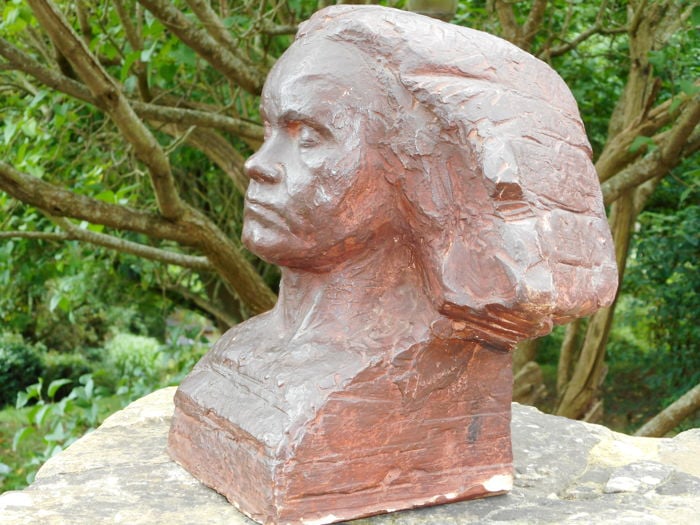
    “Beethoven in Sphinx,” Jules Jourdain (1873-1957)

  • Beethoven’s Birthday Bash WWFM Symphony Marathon

    Beethoven’s Birthday Bash WWFM Symphony Marathon

    BEETHOVEN BIRTHDAY BASH

    WWFM – The Classical Network’s symphony marathon continues!

    NOW PLAYING: Symphony No. 7 in A major (Marlboro Festival Orchestra/Pablo Casals)

    Richard Wagner described Beethoven’s 7th Symphony as “the apotheosis of the dance” – and we all know what a great dancer Wagner was!

    Dance on over to your phones, why don’t you, and support it by calling us at 1-888-232-1212, or by donating online at wwfm.org.

    Thank you for your generous contribution!

Tag Cloud

Aaron Copland (92) Beethoven (95) Composer (114) Film Music (123) Film Score (143) Film Scores (255) Halloween (94) John Williams (187) KWAX (229) Leonard Bernstein (101) Marlboro Music Festival (125) Movie Music (138) Opera (202) Philadelphia Orchestra (89) Picture Perfect (174) Princeton Symphony Orchestra (106) Radio (87) Ralph Vaughan Williams (85) Ross Amico (244) Roy's Tie-Dye Sci-Fi Corner (290) The Classical Network (101) The Lost Chord (268) Vaughan Williams (103) WPRB (396) WWFM (881)

DON’T MISS A BEAT

Receive a weekly digest every Sunday at noon by signing up here


RECENT POSTS