Tag: Beethoven

  • Beethoven’s 2nd Symphony on WWFM

    Beethoven’s 2nd Symphony on WWFM

    BEETHOVEN BIRTHDAY BASH

    WWFM – The Classical Network’s symphony marathon continues!

    NOW PLAYING: Symphony No. 2 in D major (Vienna Philharmonic/Claudio Abbado)

    Beethoven’s 2nd Symphony is distinguished by an energetic scherzo (replacing the standard minuet) and a finale full of musical jokes that ruffled the feathers of a good number of his contemporaries. One critic described it as “a hideously writhing, wounded dragon that refuses to die… writhing in its last agonies and, in the fourth movement, bleeding to death.”

    Please support it by calling 1-888-232-1212, or by donating online at wwfm.org.

    Thank you for your generous contribution!


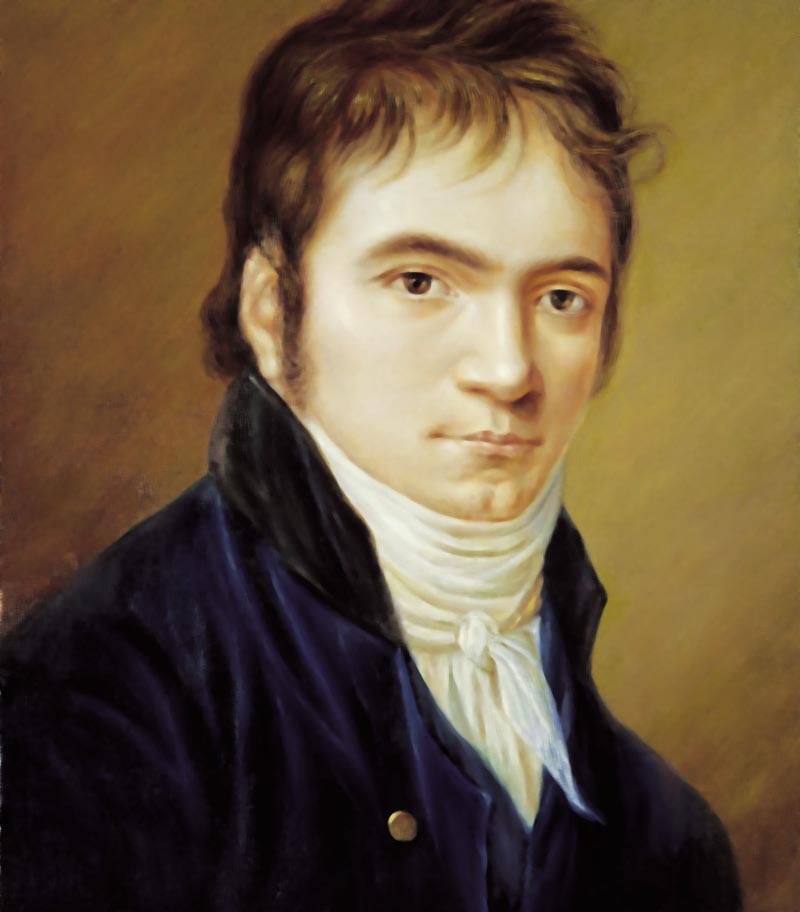
    Portrait (1803), Christian Horneman

  • Beethoven Birthday Bash WWFM Marathon

    Beethoven Birthday Bash WWFM Marathon

    BEETHOVEN BIRTHDAY BASH

    WWFM – The Classical Network’s symphony marathon is underway!

    NOW PLAYING: Symphony No. 1 in C major (London Classical Players/Sir Roger Norrington)

    Beethoven’s 1st springs high off a platform elevated by Haydn and Mozart. But, the composer being who he is, he can’t help but execute a few hotdogging somersaults and twists.

    Take the plunge! Support great music by calling 1-888-232-1212, or by donating online at wwfm.org.

    Thank you for your generous contribution!


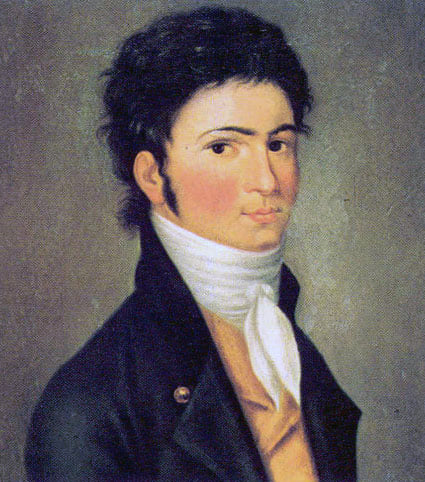
    Portrait (1801), Carl Traugott Riedel

  • Happy Birthday Beethoven Celebrate on WWFM

    Happy Birthday Beethoven Celebrate on WWFM

    HAPPY BIRTHDAY. BEETHOVEN!

    On this date in 1770, Ludwig van Beethoven was born. More than any other composer, Beethoven reimagined and reinvented music of the late 18th century. He bent and even broke rules thought to have been unbreakable. By the time he reached the late string quartets – works that still have the power to surprise – his contemporaries struggled to wrap their heads around what Louis Spohr described as “indecipherable, uncorrected horrors.”

    This was music for himself, and music for the future. It’s because Beethoven was so true to his inner voice that his music remains so vital. It’s also a pretty good reflection of the man – open-hearted, full of profound feeling, startlingly explosive, and always striving to achieve the highest pinnacle.

    I hope you’ll join us today on The Classical Network, as we trace the unprecedented artistic journey of the boy from Bonn, who raised himself up, through the power of imagination and sheer will, to become King of Composers. What’s more, Beethoven had the foresight and the generosity to take the rest of us with him.

    We’ll be presenting the Master’s complete symphonies in exceptional recordings, lovingly curated by WWFM hosts. The celebration will begin at 9:00 EST with Alice Weiss and David Osenberg, who will introduce the Symphonies Nos. 1, 2, 3 & 4.

    After a break for “Bach at 1,” Michael Wisnosky will present the Symphonies Nos. 5 & 6.

    Then I’ll be along at 4:00 to storm the gates of Heaven with the Symphonies Nos. 7, 8 & 9.

    As if all that weren’t enough, as an added bonus, David Dubal and Jed Distler will lend their expertise and reflections to two hours of Beethoven’s piano music, beginning tonight at 8.

    Traditionally, Beethoven’s birthday has been a big fundraiser for the station. This year, our Beethoven birthday bash will come your way with limited interruptions. No breaking in between movements or playing highlights from the major works. We’re going to give you everything as the composer intended – pure, unadulterated Beethoven.

    Of course, we do hope that you will be moved to support it. We will remind you of our telephone number, 1-888-232-1212, in between symphonies, hoping to take your calls. Also, you can support us anytime by visiting our website and making a donation at wwfm.org. Help yourself to one of our attractive thank you gifts as a token of our sincere gratitude.

    It would be a sin not to support these symphonies. Help preserve the legacy of great music on WWFM – The Classical Network and wwfm.org. Thank you for your steadfast support!

  • Beethoven’s Incidental Stage Music

    Beethoven’s Incidental Stage Music

    Can anything about Beethoven truly be described as incidental?

    Beethoven’s music for the stage is one of the more neglected aspects of his output. This Sunday night on “The Lost Chord,” we’ll set aside the symphonies and concertos, for the time being, for a revelatory evening at the theater with the Master from Bonn.

    In 1807, Beethoven composed a curtain-raiser for the play “Coriolan,” by Heinrich Joseph Collin. Two years later came a commission from the Vienna Court Theatre for music for a new production of Goethe’s “Egmont.” The commission resulted in an overture and six separate numbers, altogether a fairly substantial work.

    Then in 1811, Beethoven was approached to write music for two plays by August von Kotzebue, “The Ruins of Athens” and “King Stephen.” Of the two, “King Stephen” is the less well-known. Stephen I, the 11th century sainted national hero of Hungary, was instrumental in converting the Hungarian people and neighboring tribes to Christianity. We’ll hear Beethoven’s incidental music, shorn of its frequently-performed overture.

    Four years later, he provided music for “Leonore Prohaska,” a play by Johann Friedrich Duncker. Duncker was cabinet secretary to the King of Prussia. Leonore Prohaska is a warrior maiden who disguises herself as a man to fight in a war of liberation. As it turned out, the play was cancelled, and the music was never performed in the context for which it was intended. In fact, it wasn’t even published until 1888. Beethoven’s efforts were not for nothing, however, as Duncker later persuaded the King to underwrite the “Missa solemnis.”

    We’ll hear the funeral march from “Leonore Prohaska,” which Beethoven arranged from the slow movement of his Piano Sonata No. 12 in A-flat Major.

    In 1822, Beethoven was enlisted to compose music for the reopening of the Theater in der Josefstadt. The director recalled the success of the Beethoven-Kotzebue double-bill in Pest, and requested a revival of “The Ruins of Athens.” Beethoven offered to revise the existing numbers of his 1811 score and compose new ones to suit the director. A new text was provided by Carl Meisl, about whose talents Beethoven was less than enthusiastic.

    Meisl’s occasional poem describes an exchange between the actor Thespis and the god Apollo and contrasts Greece under the Ottoman Turks to the freedom of Vienna. A chorus celebrates dance, altars are decorated for the entry of the Muses, and the work ends with the obligatory chorus, “Heil unserm Kaiser.” Beethoven wrote a new overture for the piece, which is performed fairly frequently, but this evening it will be omitted to allow time for some of the lesser-heard numbers.

    Don’t forget, December 16 is Beethoven’s birthday. Tomorrow morning, we’ll return to the Beethoven symphonies with a vengeance, presenting a marathon of the composer’s most popular and revered works, in recordings lovingly curated by WWFM hosts. The celebration begins at 9 a.m. I’ll be along at 4 p.m. to present Symphonies Nos. 7, 8 & 9, in performances that have meant a lot to me personally.

    At 8 p.m., David Dubal and Jed Distler will lend cinnamon to the strudel, with two hours of Beethoven’s piano music and some personal reflections on the composer.

    For tonight, Beethoven treads the boards. I hope you’ll join me for “Beethoven, Incidentally” – incidental music by Ludwig van Beethoven – this Sunday at 10 p.m. EST, on WWFM – The Classical Network and wwfm.org.
  • Beethoven Week on The Classical Network

    Beethoven Week on The Classical Network

    When Inon Barnatan joins the Princeton Symphony Orchestra tonight at 8:00, for a special radio broadcast of Beethoven’s Piano Concertos Nos. 3 & 5, it will commence The Classical Network’s annual celebration of this King of Composers.

    December 16 marks the anniversary of Beethoven’s birth, in 1770. So as not to leave any concertos on the vine, Carl Hemmingsen and I will do what we can tomorrow, from about 3 to 6 p.m., to work through most of the remaining works for solo instrument(s) and orchestra.

    Then on Monday, Beethoven’s actual natal day, we will hear all of the symphonies, in sequence, including a knockout performance of the Symphony No. 9.

    All this will come your way with limited interruptions this year. No breaking in between movements or playing highlights from the major works – pure, unadulterated Beethoven, as the composer intended.

    Of course, we hope that you will be moved to support it. We’ll be reminding you of our phone number in between the symphonies on Monday, hoping to take your calls. But you can also support us anytime by donating at our website, wwfm.org. You’ll find a nice array of incentives there when you head over to contribute.

    In this season of giving, make a gift for “Ludwig van.” Beethoven is the beating heart of WWFM – The Classical Network and wwfm.org. Thank you for your help in keeping great music on the air!

Tag Cloud

Aaron Copland (92) Beethoven (95) Composer (114) Film Music (123) Film Score (143) Film Scores (255) Halloween (94) John Williams (187) KWAX (229) Leonard Bernstein (101) Marlboro Music Festival (125) Movie Music (138) Opera (202) Philadelphia Orchestra (89) Picture Perfect (174) Princeton Symphony Orchestra (106) Radio (87) Ralph Vaughan Williams (85) Ross Amico (244) Roy's Tie-Dye Sci-Fi Corner (290) The Classical Network (101) The Lost Chord (268) Vaughan Williams (103) WPRB (396) WWFM (881)

DON’T MISS A BEAT

Receive a weekly digest every Sunday at noon by signing up here


RECENT POSTS