Tag: Beethoven

  • Tax Day Treasures Classical Music for April 15th

    Tax Day Treasures Classical Music for April 15th

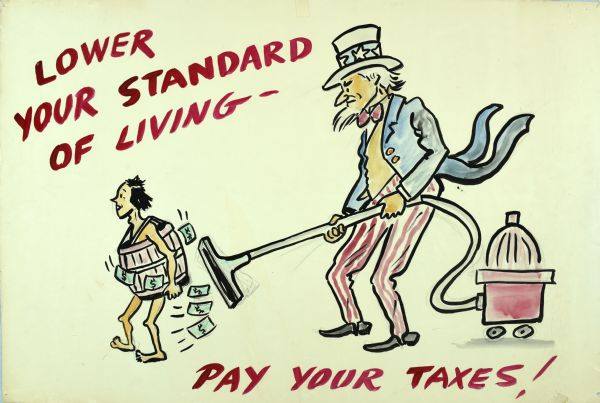
    April 15th. Hopefully you aren’t feeling too overtaxed.

    Whether you are daydreaming about a fat return or speculating about which ledge you should leap from, I hope you’ll join me this afternoon on The Classical Network for music about found and lost money, precious metals, careless spending, currency and coins, treasures sought, penury, and good old fashioned tax protest.

    Lady Godiva rode naked through the streets of Coventry in protest of exorbitant taxation. On the other side of the coin, when told that her subjects had no bread, Marie-Antoinette is alleged to have responded, “Let them eat cake!” Both will be represented musically, in works by Vítězslav Novák and Franz Joseph Haydn.

    We’ll seek treasure with Franz Schreker. We’ll look with sardonic befuddlement upon “The Age of Gold” with Dmitri Shostakovich. Antonio Salieri will show us what it is like to be rich for a day. Beethoven will rage over a lost penny. Franz Lehár will shower us with gold and silver. And we’ll gaze with envy upon Kurt Atterberg’s “Dollar” Symphony.

    Of course, there will be music from “The Threepenny Opera,” by Kurt Weill. We’ll also hear Weill sing “Very, Very, Very,” from “One Touch of Venus,” which begins, “One way to be very wealthy is to be very, very, very rich…” You can’t argue with that.

    Feeling a little depleted? Great music is always a sound investment, from 4 to 7 p.m. EDT, on WWFM – The Classical Network and wwfm.org.

  • Marlboro Music Winds & Composer Birthdays

    This week on “Music from Marlboro,” we’re gone with the winds – woodwind instruments, that is. Tune in at 6 p.m. EDT for the Bassoon Quartet, Op. 40, No. 3, by Franz Danzi and the Quintet for Piano and Winds by Beethoven.

    For the remainder of the late afternoon, we’ll celebrate the birthdays today of composers Elisabetta Brusa, Mario Castelnuovo-Tedesco, Reginald De Koven, and Grigoras Dinicu, conductor Sixten Ehrling, and pianist Garrick Ohlsson.

    Hang on tight, from 4 to 7 p.m. EDT, on WWFM – The Classical Network and wwfm.org.

  • Winds of Marlboro Music Danzi & Beethoven

    Winds of Marlboro Music Danzi & Beethoven

    It’s a high wind alert on the next “Music from Marlboro.” Tune in for an hour of chamber music colored by winds.

    Like many of his contemporaries, Franz Danzi had decidedly mixed feelings about the music of Beethoven. Beethoven may have only been six years Danzi’s junior, but he was a volatile force that felt no compunction about blowing over the fence posts of tradition.

    Danzi, on the other hand, was a devout classicist. As a young musician in the famed Mannheim Orchestra, he was deeply impressed by a visit from Mozart, whose own music remained his ideal.

    In addition to being a composer himself, Danzi was also a fine cellist (his father was the principal at Mannheim) and a reliable conductor. Danzi composed steadily, producing concertos, chamber music, and no less than 17 works for the stage. Much of his output has fallen into comparative neglect, with the notable exception of his woodwind quintets.

    Be that as it may, it is Danzi’s Bassoon Quartet in B-flat major, Op. 40, No. 3, that we’ll hear. It was performed at the 1975 Marlboro Music Festival by bassoonist Milan Turkovic, violinist Young Uck Kim, violist Philipp Naegele, and cellist Alain Meunier.

    Danzi’s reservations about him aside, it’s clear from Beethoven’s Quintet for Piano and Winds, Op. 16, that he too was an admirer of Mozart. The work is evidently modeled on Mozart’s earlier piece for the same instrumental combination. It’s even written in the same key (E-flat). In fact, I venture to guess, there’s little in the quintet, written when Beethoven was in his mid-20s, that would have made even Danzi squeamish.

    We’ll hear it performed by pianist – and Marlboro cofounder – Rudolf Serkin, oboist Rudolf Vrbsky, clarinetist Richard Stoltzman, hornist Robert Routch, and bassoonist Alexander Heller, in a recording made in 1974.

    Everyone knows it’s windy. Catch your breath for the next “Music from Marlboro,” this Wednesday evening at 6:00 EDT, on WWFM – The Classical Network and wwfm.org.

    Marlboro School of Music and Festival: Official Page

  • Toscanini’s Furious & Fiery Eroica Symphony

    Toscanini’s Furious & Fiery Eroica Symphony

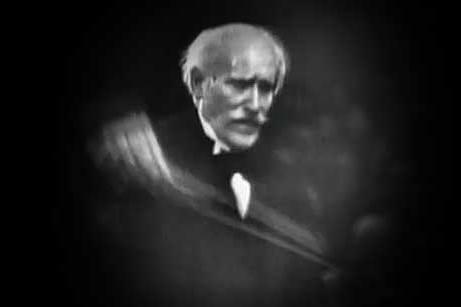
    For Arturo Toscanini, apparently, it was all about that bass:

    https://www.youtube.com/watch?v=i-1KtSOwLXE

    Toscanini was as notorious for his rafter-rattling temper tantrums as he was for his alleged fidelity to the score. The man was driven by demons in his quest for perfection. His evident frustration with the inability of his players to deliver existed in parallel with an over-stated humility in the face of his own limitations. Here was a perfectionist living in an imperfect world, and Toscanini spared no one, not even himself. His intensity was electric. There were times when conductor and orchestra seemed to skirt, on two wheels, the very mouth of the Abyss.

    It would be unrealistic to expect to capture lightning in a bottle every single time. But it happened with Toscanini surprisingly often. Join me today on The Classical Network for the most hair-raising recording of Beethoven’s “Eroica” Symphony you will ever hear. Toscanini flays the NBC Symphony Orchestra to the limits of endurance in this legendary performance, given on October 28, 1939. This is not an “Eroica” for every day, and it is certainly not an “Eroica” for the weak of heart. Those with pre-existing medical conditions are advised to turn off their radios following my salute to Haydn Wood.

    Everyone else, hang on tight, as we celebrate the birthday of Arturo Toscanini – and Béla Bartók, for that matter – from 4 to 7 p.m. EDT, on WWFM – The Classical Network and wwfm.org.

  • Sibelius Beethoven & Starry Inspiration

    Sibelius Beethoven & Starry Inspiration

    It’s easy to be seduced by a platitude of one’s own creation, especially when it also happens to double as a bon mot. Cassius must have been rather puffed up at his own cleverness when he observed, “The fault, dear Brutus, is not in our stars, but in ourselves.” Yet just because something sounds good or has the ring of truth doesn’t necessarily mean that it’s so.

    When you join me for today’s Noontime Concert on The Classical Network, you will learn that the impetus for the creation of both Jean Sibelius’ Sonatina for Violin and Piano, Op. 80, and Beethoven’s “Razumovsky” Quartet, Op. 59, No. 2, lay at least in part in their composers’ fascination with the heavens.

    Though Sibelius was enthralled by the violin from an early age – he even entertained thoughts for a time of becoming a concert virtuoso – he was 50 years-old by the time he composed his sonatina in 1915. According to an entry in his diary, his nights were filled with dreams of his childhood and his youthful ambitions to become a world-class violinist. He notes that these childhood memories were very much tied up with “the sky of my childhood and stars… lots of stars.”

    If we’re to believe Beethoven pupil Carl Czerny, stars are also at the heart of Beethoven’s quartet of 1806. Allegedly, the composer was inspired to write the slow movement while contemplating the heavens.

    If stars had any influence over neglected Czech composer Zdenek Fibich, it was in the form of star-crossed love, at least for a time. Fibich’s wife died in childbirth when he was in his early 20s. He then married her sister, and though the union lasted for 20 years, he ultimately found true happiness only with a former student, who became the inspiration for many of his mature works. Fibich’s Piano Quintet in D major, Op. 42, of 1893 actually dates from the waning years of his second marriage.

    Fibich was also star-crossed in that he failed to embrace the Czech nationalism of his older contemporaries, especially Antonin Dvořák, and it is probably for this reason more than any other that his music tends not to be remembered. I think you’ll be very pleased to make the acquaintance of Fibich’s quintet. The work exists in two versions: the more frequently encountered instrumentation for piano and strings, and the version we’ll hear this afternoon for the striking combination of piano, violin, clarinet, horn, and cello.

    The heavenly performances will be by superstars of the Lenape Chamber Ensemble: violinists Cyrus Beroukhim and Emily Daggett Smith, violist Catherine Beeson, cellist Arash Amini, clarinetist Alan R. Kay, hornist David Jolley, and pianist Marcantonio Barone. To learn more about this Bucks County-based institution (established by Mary Pitcairn in 1975), visit Lenape’s website, at lenapechamberensemble.org.

    There will be plenty of time – and of course space – for more stellar music following today’s Noontime Concert broadcast. We’ll probe a galaxy of cosmic selections, from 12 to 4 p.m. EST, on WWFM – The Classical Network and wwfm.org.


    IMAGE: Brutus sees stars
Tag Cloud

Aaron Copland (92) Beethoven (95) Composer (114) Film Music (123) Film Score (143) Film Scores (255) Halloween (94) John Williams (187) KWAX (229) Leonard Bernstein (101) Marlboro Music Festival (125) Movie Music (138) Opera (202) Philadelphia Orchestra (89) Picture Perfect (174) Princeton Symphony Orchestra (106) Radio (87) Ralph Vaughan Williams (85) Ross Amico (244) Roy's Tie-Dye Sci-Fi Corner (290) The Classical Network (101) The Lost Chord (268) Vaughan Williams (103) WPRB (396) WWFM (881)

DON’T MISS A BEAT

Receive a weekly digest every Sunday at noon by signing up here


RECENT POSTS