Tag: Biography

  • Ravel A Life Book Review Breezy & Entertaining

    Ravel A Life Book Review Breezy & Entertaining

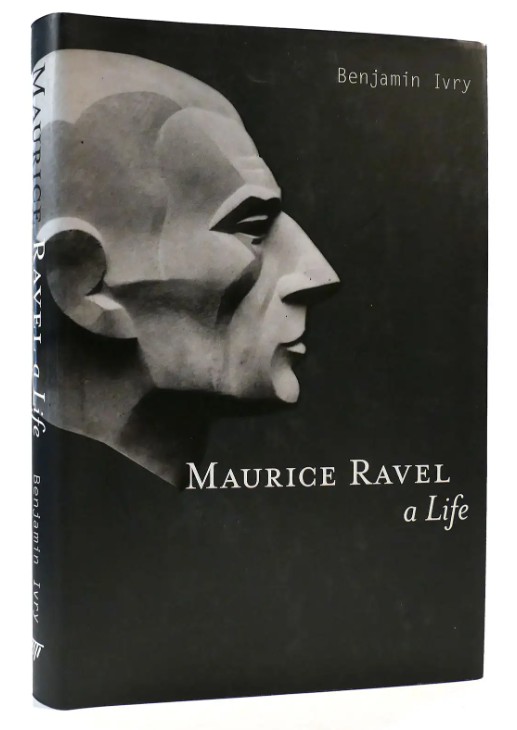
    Last week, I finished reading the first of my recent acquisitions from this year’s Bryn Mawr-Wellesley Book Sale. You may recall the photos I posted of a veritable music book motherlode. As I was about to head out for a train to New York, I was looking for something to keep me entertained for the commute. It being the composer’s sesquicentennial, I reached for “Maurice Ravel: A Life,” by Benjamin Ivry.

    I’ll start off by saying, it’s a breezy read. It’s not an academic bio, although of course the more you know about the era and the artists who peopled it, the more you’ll get out of it. Also, the writer doesn’t get bogged down in musical analysis. He writes about each piece, even the songs, but the minor works yield only a few lines. The major works are mostly tied in to related anecdotes.

    The book is a bit lackadaisically edited. There is at least one sentence that includes a repeated word, in which one of the uses was clearly meant to be deleted. Sometimes, when a person is introduced, it is as if he or she is being mentioned for the first time, when he or she has already appeared in another episode earlier in the book. Frankly, this isn’t necessarily a bad thing. If you’re like me, by the time you get to the bottom of a newspaper article, you’re always looking back to the earlier paragraphs to try to straighten out who’s who. That will never happen in “Ravel: A Life.”

    At the start, I was wondering if I would have to make allowances in reading a book by a writer who isn’t conversant with musical terminology or syntax, as there are several “tells” in the early pages that make it seem as if it’s written by a dilettante. Not that there’s anything wrong with that. Dilettantes can still write well and entertain and offer helpful personal insights. But I wasn’t very far in before I wondered if that too wasn’t the result of a heavy editorial hand, because there’s nothing glaring in that regard for the rest of the book. It’s as if all the editorial effort went into the opening pages and then the interloper got bored, fired, or called to another project. If that is indeed the case, I can certainly relate, having had plenty of articles marred by interventionist editors with little understanding of whatever it is I’m writing about.

    There are really only two other criticisms I could level, and they’re not really criticisms. One is the author’s fascination – fixation really – on who’s gay. If I remember correctly one of the objectives in writing the book was getting to the bottom of Ravel’s elusive sexuality; but if that sounds off-putting to you, don’t let it be, because it’s the merest leitmotif that recurs unobtrusively at certain points in the narrative. But it is amusing to find certain artists being introduced as “the gay writer” or “the gay composer” at times when it has no bearing on the anecdote in question.

    More to the point, in his determination to solve the Ravel “mystery,” the author is always hoping to convince us through circumstantial evidence. Ravel was a meticulous dresser. He was an artist who hung out in artistic circles that included a lot of artistic gay people. He liked cats and was unusually close to his mother. So surely he must be… (it’s at this point, I guess, that we’re supposed to clap our hands over our mouths in feigned shock).

    Granted, I suppose there is some value if anyone can prove conclusively what Ravel’s sexual preferences were (the accepted narrative has been that he was asexual), but only to the extent that it casts illumination on the man and perhaps the artist. Whether or not it informs the creation of his music or how we receive it is open to debate.

    My other “criticism” is that nothing is footnoted, so at times it’s unclear from what source the author is drawing his information. Relatedly, whenever he tends toward speculation, especially in terms of psychological insight, I leave it to you whether or not you should take it with a grain of salt.

    None of this should be interpreted as that I am trashing the book and that I think it is of no value. I found it very entertaining and a few times I actually laughed out loud. But I’m one of those sick fellows who tends to find inappropriate behavior hilarious. Political correctness was not a thing in the 1920s, and artists can be so bitchy. And I will never forget the image of Ravel getting into an indoor sponge fight with a friend’s child, leaving splotches of water all over the walls.

    There’s plenty here for anyone interested to learn more about the composer, and I think the author is successful in supplying enough material that you can really get a sense of his personality.

    Ivry is a poet who has also written biographies of Arthur Rimbaud and Francis Poulenc. “Maurice Ravel: A Life” is brisk and enjoyable. At 229 pages (38 of them devoted to bibliography and index), it’s a book I could knock out comfortably in four days. Not the last word on the composer, by any means, but worthwhile for both the novice and the specialist.

    At any rate, it was published in 2000, so anything I have to say on the matter can only help, rather than hinder, sales!

    Here’s a link to my post about the Bryn Mawr book sale, complete with mouthwatering photos:

  • Samuel Barber Combed for Absorbing New Biography

    Samuel Barber Combed for Absorbing New Biography

    I do much of my reading in bed, in the hour or two before lights-out, frequently beneath drooping eyelids and interrupted by intervals of nodding; so it can take me a while sometimes to get through a book. In this case, it took me five or six weeks, probably, but they were unquestionably pleasurable ones, passed in the company of one of America’s greatest composers.

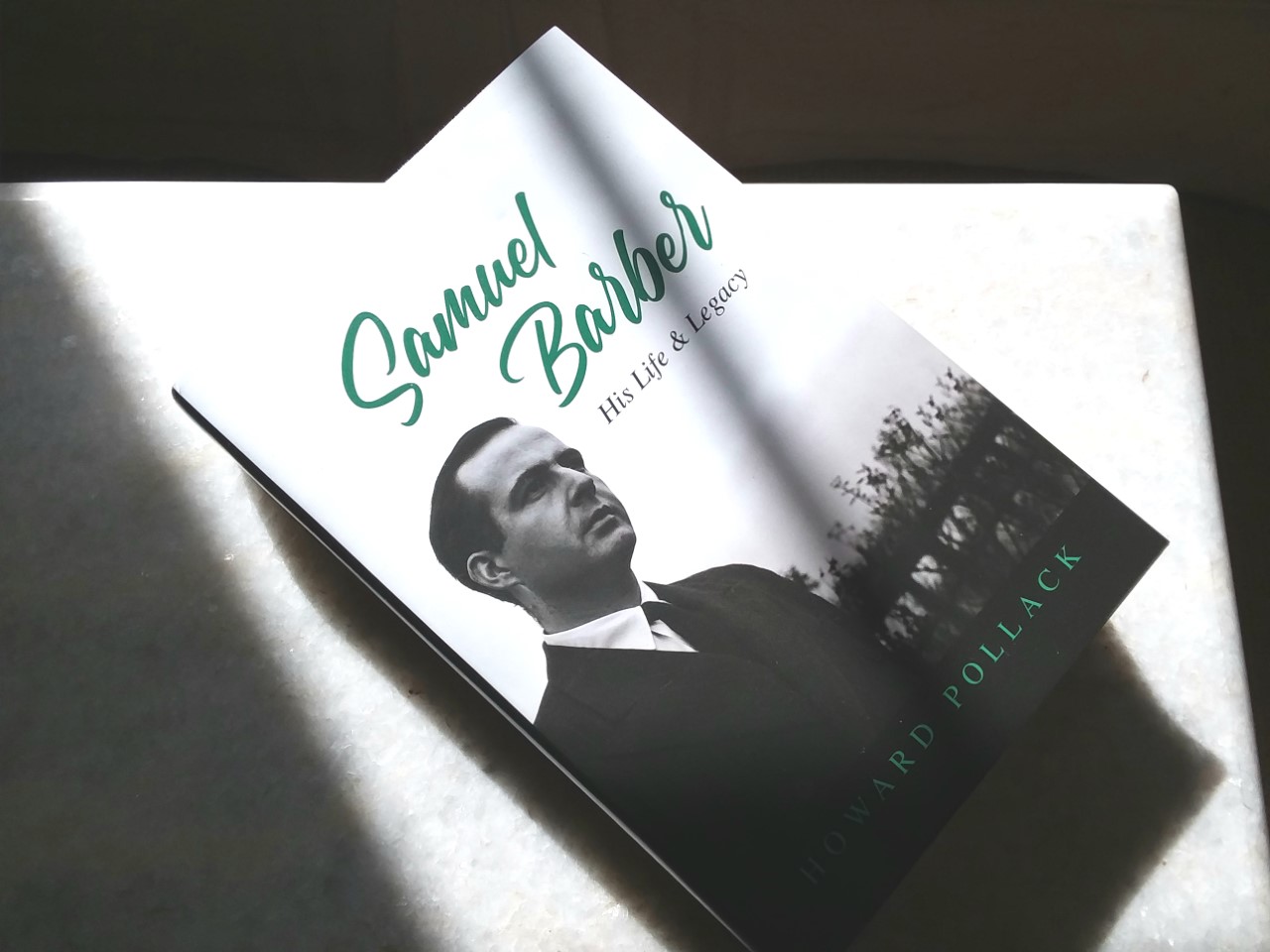
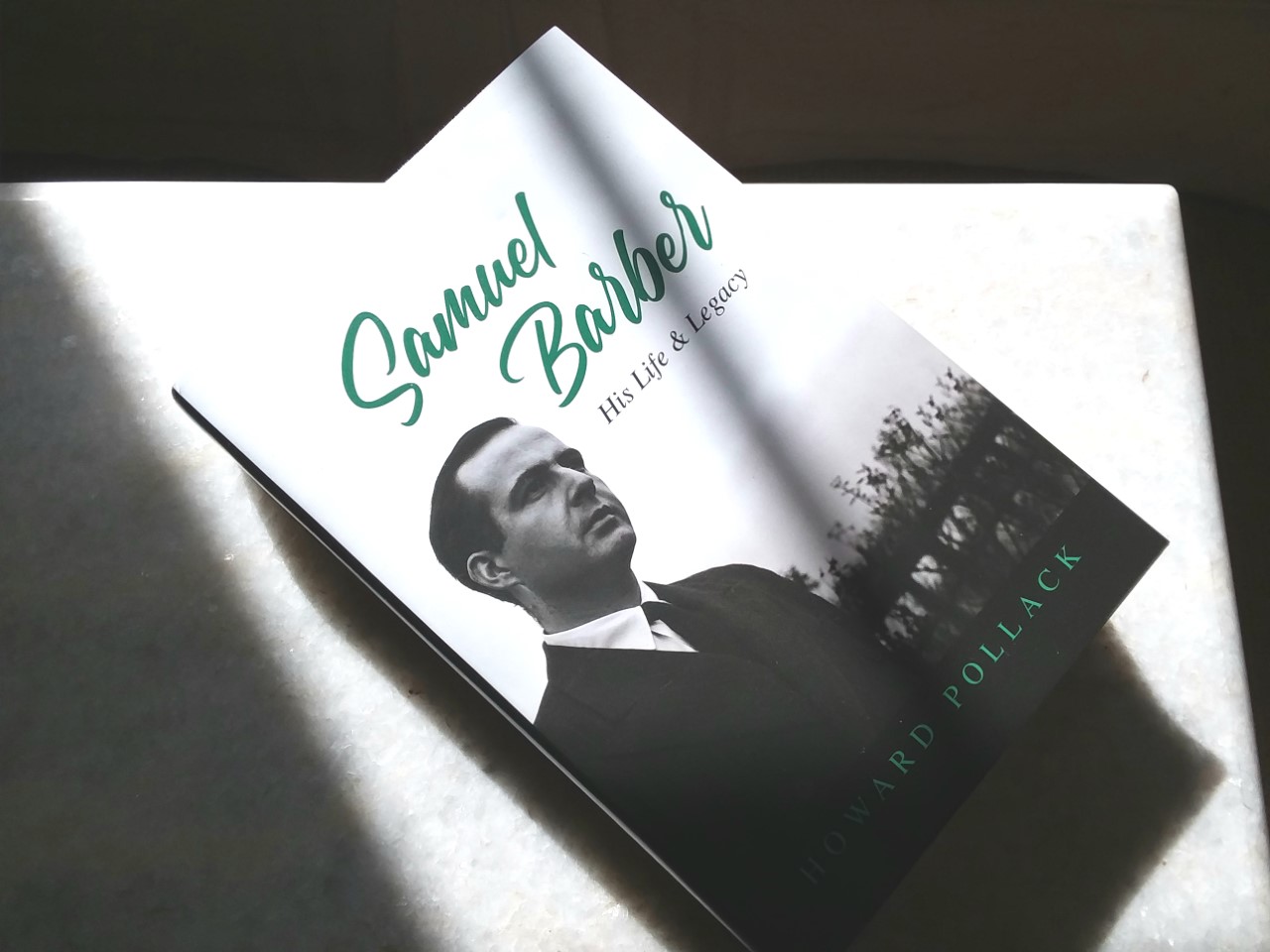
    If you’re at all interested in American art music of the mid-20th century, I’m confident you too will enjoy Howard Pollack’s exhaustive biography “Samuel Barber: His Life & Legacy,” issued last month by University of Illinois Press.

    The book has to be the culmination of years of research – of the 686 numbered pages, 118 are devoted to footnotes and index – yet the content is often astonishingly up-to-date, with references to performances, recordings, and even YouTube content so recent, it would seem as if it couldn’t possibly have been included by the time the book went to press.

    It’s also pleasant to find people I’ve known or worked with drifting in and out of the narrative. For instance, I had no idea that Karl Haas, longtime host of the radio series “Adventures in Good Music,” was responsible for commissioning Barber’s “Summer Music.” Nor did I realize the series began in 1959!

    Another radio personality, David Dubal, now host of “The Piano Matters,” but then music director of New York’s WNCN, preempted the station’s regularly-scheduled programming to broadcast an hour of Barber’s music in the afternoons during the composer’s final days, and Barber listened.

    And H. Paul Moon, who I have interviewed on the air a couple of times about his film projects, and now count among my concertgoing companions and friends, is acknowledged for his lovely, award-winning documentary, “Samuel Barber: Absolute Beauty.” Paul also receives credit for assisting the author in compiling the book’s photographs.

    Of course, Barber had many important connections to the Philadelphia area, having attended and taught at the Curtis Institute of Music and had many of his works, including a few premieres, played by the Philadelphia Orchestra. He also exhibited a lifelong affection for his birthplace of West Chester, PA – which, as a small-town Pennsylvania boy myself, I find relatable and touching.

    Barber was buried in West Chester in 1981, next to a gravesite held vacant for Gian Carlo Menotti, his friend, frequent collaborator, and romantic partner of decades. The two met during their student days at Curtis. Menotti would be buried in Scotland, but the West Chester would-be grave is marked by a headstone that reads, as per Barber’s request, “To the Memory of Two Friends.”

    Pollack’s biography is successful not only in expanding the reader’s knowledge of the composer’s sizeable and varied output – more varied than one might suspect on the evidence of his most frequently played works – but also in conveying a real sense of the man, who could be patrician and impeccably turned out, often aloof in public, with a waspish sense of humor, but also warm and supportive to his friends. And even, on occasion, unexpectedly whimsical. He once remarked that because of his fondness for soup, his coffin should be pelted with croutons. At his burial service, his friends took him up on it.

    There is also a charming anecdote earlier in the book, about how once Barber was attempting to get something straightened out with a utility company. In an unorthodox method of identity confirmation, the phone representative asked the composer to sing a few bars of his “Sure on This Shining Night.” Barber later remarked, “I’m afraid I sounded nervous. I had never sung for the telephone company before.”

    Pollack’s writing is everything it should be: lucid, informative, and engrossing. There’s nothing to jerk a reader out of the narrative (save perhaps the frequent use of “tellingly,” which after a while becomes endearing). One doesn’t have to be a specialist to get something out of the book, and it is frequently an enjoyable read, though I grant that some chapters will be more compelling than others, depending on the depth of one’s devotion to Barber’s music. The chapters of purely biographical and historical interest are especially absorbing. One will learn a lot, unquestionably, as even I have.

    With so many interviews and so much information to assimilate, I really don’t know how Pollack does it. I only just finally got around to reading his Copland bio, “Aaron Copland: The Life and Work of an Uncommon Man,” this past November, and the book, which was released over twenty years ago, is equally praiseworthy. And he’s done similar service for Marc Blitzstein, John Alden Carpenter, George Gershwin, Walter Piston, and lyricist John LaTouche. This guy deserves every award he’s ever received.

    You’ll find more about Pollack’s latest here:

    https://www.press.uillinois.edu/books/?id=c044908&fbclid=IwAR0SmvR30-NX6u9uOQ3pLmGMGmj-5VdJfCmN4vacoghLqEpZrRl1FSg_-IY


    80 years ago today, Barber’s “Commando March,” written while he was serving in the U.S. Army Air Force, received its first performance in Atlantic City, with the Army Air Force Technical Training Command Band under the direction of the composer. Hear it performed at the link by “The President’s Own” U.S. Marine Band:

    Barber’s final work, and one of his loveliest – the trunk of an oboe concerto he was too ill to complete – the “Canzonetta,” first performed posthumously in 1981:

    “Sure on This Shining Night,” frequently heard in an arrangement for choir, here sung by a baritone, as it would have been by Barber himself to the telephone company:

    “Summer Music,” commissioned on the recommendation of Karl Haas:

    “Samuel Barber: Absolute Beauty”

    https://samuelbarberfilm.com/

  • Samuel Barber: A Composer’s Humorous Side

    Samuel Barber: A Composer’s Humorous Side

    I’ve been reading Howard Pollack’s absorbing biography, “Samuel Barber: His Life and Legacy,” in advance of its release on Tuesday by University of Illinois Press.

    Barber is one of our great American composers. You’ll probably recognize his “Adagio for Strings,” at the very least, from its use in so many movies (“Platoon,” “The Elephant Man,” “Lorenzo’s Oil,” “Amélie”) and on occasions of national mourning (such as the deaths of presidents and the terrorist attacks of 9-11).

    I must say, Pollack is doing a fabulous job of shedding light on the composer’s multifaceted character. Barber’s manner could be reserved – some would say aloof – and his patrician demeanor and assumed mid-Atlantic accent, rooted in an upper-middle-class upbringing in West Chester, Pennsylvania, and his close identification with his New England forebears, may now seem like affectations from a bygone world.

    But he also had a sense of humor, offering the occasional sardonic, or even barbed observation. Once in while, he even teetered over into the downright zany. From the passage below, you’ll see he was a very capable practical joker. I thought it only appropriate to share it with you for this April Fool’s Day.


    Barber had moreover what his cousin Katharine Homer Fryer called, in reference to the Beatty side of the family, a “Beatty sense of humor,” meaning, explained Barbara Heyman, “a love of the ridiculous.” As an example, one might cite Barber’s remark to [Nathan] Broder, apropos for his fondness for soups, “I would like to be buried with a sprinkling of croutons over my coffin.” Barber showed a proclivity for childish stunts and mischievous pranks, whether in his student years interrupting a tedious concert by noisily spilling coins on a dare from [Gian Carlo] Menotti, or in later years pretending to topple down a flight of stairs spewing manuscript pages to the amusement of his sister and her children. Planning a visit home while at the American Academy in Rome in the mid-1930s, he hatched a particularly elaborate ruse, telling his parents that he was sending them a portrait of himself and arranging for Menotti, then in New York, to bring a life-size frame to West Chester. “So I brought this empty frame to West Chester,” recalled Menotti, “and I said [to Barber’s parents], ‘Now you all get out of the room because I want to unveil it.’ So then Sam sneaked into the house and he sat inside the frame and then I unveiled the thing and there was Sam who said ‘Hello.’ Poor Mrs. Barber almost fainted!”


    “Samuel Barber: His Life & Legacy” is scheduled for release on April 4. I haven’t finished it yet, but if you think it’s the kind of thing that might interest you, it’s a great read. I’ll have a more complete report by the end of the book. In the meantime, you’ll find more about it here:

    https://www.press.uillinois.edu/books/?id=c044908

  • Samuel Barber New Biography Arriving Soon

    Samuel Barber New Biography Arriving Soon

    Received this baby from University of Illinois Press the other day. I’m very much looking forward to reading it. If it’s anything like Howard Pollack’s Copland biography, it should be superb. Pollack has also written acclaimed books about American composers John Alden Carpenter, George Gershwin, and Marc Blitzstein, among others. “Samuel Barber: His Life & Legacy” is scheduled for release on April 4.

    https://www.press.uillinois.edu/books/?id=c044908

    In the meantime, a very happy birthday to Samuel Barber!

  • Terry Teachout Arts Critic Dies at 65

    Terry Teachout Arts Critic Dies at 65

    I am shocked to learn the critic Terry Teachout has died. Teachout was an essayist, a biographer (of Balanchine, Armstrong, Ellington, and H.L. Mencken), a playwright, and a widely-published journalist, who wrote an awful lot about the performing arts.

    He began his career at the Kansas City Star, in his native Missouri, writing about classical music and jazz. Later, in New York, he was an editor for Harper’s Magazine, an editorial writer for the New York Daily News, and eventually the Daily News’ classical music and dance writer. More recently, he served as critic and columnist at The Wall Street Journal.

    Teachout also worked as a librettist on Paul Moravec’s operas “The Letter,” after the classic Bette Davis film, “Danse Russe,” about backstage drama during the creation of “The Rite of Spring,” and “The King’s Man,” about Benjamin Franklin in London and Philadelphia.

    Seemingly, he could write well about anything, and he wrote a lot of it. Teachout was 65 years-old.

Tag Cloud

Aaron Copland (92) Beethoven (95) Composer (114) Film Music (123) Film Score (143) Film Scores (255) Halloween (94) John Williams (187) KWAX (229) Leonard Bernstein (101) Marlboro Music Festival (125) Movie Music (138) Opera (202) Philadelphia Orchestra (89) Picture Perfect (174) Princeton Symphony Orchestra (106) Radio (87) Ralph Vaughan Williams (85) Ross Amico (244) Roy's Tie-Dye Sci-Fi Corner (290) The Classical Network (101) The Lost Chord (268) Vaughan Williams (103) WPRB (396) WWFM (881)

DON’T MISS A BEAT

Receive a weekly digest every Sunday at noon by signing up here


RECENT POSTS