Tag: Busoni

  • Rachmaninoff Busoni and Marlboro’s Serkin & Goode

    Rachmaninoff Busoni and Marlboro’s Serkin & Goode

    Today is one of those remarkable days, on which two masters of the same instrument happened to be born. (Another is February 2, which gave us both violinists Fritz Kreisler and Jascha Heifetz.) In addition to it being the anniversary of the birth of pianist-composer Sergei Rachmaninoff (in 1873), it is also the birthday of Ferruccio Dante Michelangelo Benvenuto Busoni (in 1866). Clearly, Ferruccio Busoni’s parents had great expectations for their boy!

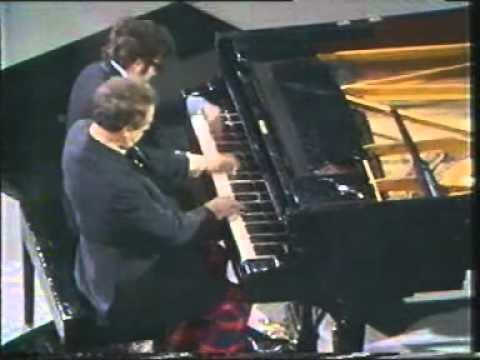
    “Music from Marlboro” is on hiatus from WWFM – The Classical Network for the duration of the COVID-19 lockdown. However, it’s still possible to enjoy great Marlboro performances on recordings. Here’s a jawdropping performance of Busoni’s “Fantasia contrappuntistica,” a vertiginous knucklebuster played with elan by 16 year-old Peter Serkin and 20 year-old Richard Goode.

    Marlboro School of Music and Festival: Official Page

  • Remembering Peter Serkin Rebel Pianist

    Remembering Peter Serkin Rebel Pianist

    I am stunned to learn of the death of Peter Serkin. As the confluence of two dizzyingly talented musical tributaries (his father was Rudolf Serkin, and his mother was the daughter of Adolf Busch), it couldn’t have been easy to make his own way.

    Yet he proved himself early, both as a graduate of the Curtis Institute of Music and as a brilliant participant in the Marlboro Music Festival. I recently broadcast a jaw-dropping recording he made at age of 16 of Busoni’s “Fantasia contrappuntistica.” By then, he had already been performing in public for four years. At 19, he was recognized with a special Grammy Award.

    But it was the ‘60s, so Serkin decided he didn’t want to play anymore. He dropped out, traveled to India, and moved to Mexico. He always did follow his own path. It was when he overheard music of Bach being played on a neighbor’s radio, one Sunday morning, that he finally came to grips with who he was.

    When he returned to the concert stage, not only could he play Bach and Beethoven with the best of them, he also pushed deep into contemporary territory. He was a champion of the works of Stefan Wolpe, and Toru Takemitsu, Charles Wuorinen, and Peter Lieberson all wrote pieces for him. He also became one of the founders of the new music ensemble Tashi.

    Over a career that spanned six decades, Serkin didn’t just emerge from the shadows of his father and grandfather, he established himself as a formidable artist in his own right, one with a distinctive and inimitable profile.

    R.I.P. Peter Serkin. To me, you’ll always be the Easy Rider of classical pianists.

    https://www.nytimes.com/2020/02/01/arts/music/peter-serkin-dead.html


    Serkins fils and père play Schubert:
    https://www.youtube.com/watch?v=wlD9haP7g0g

    Serkin, 16, and Richard Goode, 20, play Busoni:

    Serkin plays Leon Kirchner:

    Tashi, from Messiaen’s “Quartet for the End of Time”:

    Serkin plays the “Goldberg Variations”:

  • Busoni, Strauss, and Queen Christina on the Radio

    Busoni, Strauss, and Queen Christina on the Radio

    When his parents named him Ferruccio Dante Michelangelo Benvenuto Busoni, clearly they had high expectations for their boy. These expectations were more than fulfilled, when he went on to become one of the outstanding pianists of his day, a brilliant intellectual, and an influential teacher. He also composed what may be the most grandiose piano concerto of all time.

    Join me this afternoon on The Classical Network to hear Busoni’s magnum opus. The five-movement concerto, written in 1904, when the composer was 38, spans over 70 minutes and concludes with a male chorus. Chamber music it is not!

    The apotheosis is a setting of a lofty text lifted from the verse drama “Aladdin,” by the Danish playwright Adam Oehlenschläger. By contrast, there are passages in the fourth movement, of much earthier stuff, that barely skirt self-parody, conjuring the specter of Chico Marx.

    There was no way I would have been able to present this piece yesterday, Busoni’s birthday, during afternoon drive time, and reasonably expect to fit much else; but a Tuesday mid-afternoon is ideal for such an epic journey. The pianist will be Garrick Ohlsson, whose birthday it is tomorrow. Expect the concerto to commence around 2 p.m. EDT.

    We’ll follow that with one of Richard Strauss’ lesser-heard works, the ambitious symphonic fantasy “Aus Italien” (“From Italy”), from 1886. When Strauss, at 22 years-old, employed what he believed to be a traditional Italian melody in the fantasy’s finale, he suddenly found himself the target of a lawsuit. The Neapolitan song “Funiculì, Funiculà” had been composed in celebration of a funicular cable car that was used to convey passengers up and down Mount Vesuvius – before it was predictably destroyed in an eruption in 1944. The song was composed in 1880 by Luigi Denza (music) and Peppino Turco (lyrics). It became a huge international hit and sold over a million copies. Poor Strauss. He wound up having to pay a royalty fee every time “Aus Italien” was performed.

    We’ll begin our sojourn with today’s Noontime Concert, which will feature The Dryden Ensemble in a program titled “Queen Christina Goes to Rome.” The musical selections were chosen to mirror the unorthodox Swedish queen’s journey from Stockholm via Innsbruck to Italy, with excursions to Paris and Hamburg. Composers will include Dietrich Buxtehude, Louis Couperin, Arcangelo Corelli, Alessandro Scarlatti, and Johann Heinrich Schmelzer, among others.

    The free-spirited queen scandalized her contemporaries by dressing as a man and refusing to marry. Equally confounding was her abdication at the age of 28, trading her throne for a life of music, art, and religion in Rome. The concert will feature actors Roberta Maxwell as Christina and Paul Hecht as the narrator, in dramatic readings from the letters and diaries of the queen and other historical figures. The program and script were assembled by Dryden artistic director Jane McKinley.

    The Dryden Ensemble’s next set of concerts will take place this weekend. “Musica Stravagante” will include works for oboe and strings by German and Italian masters, including Tomaso Albinoni, Johann Sebastian Bach, Heinrich Ignaz Franz von Biber, and Antonio Vivaldi, again among others. The program will be presented twice, on Saturday at 7:30 p.m., at Trinity Episcopal Church in Solebury (outside New Hope, PA), and on Sunday at 3 p.m., at Princeton Theological Seminary’s Miller Chapel. For more information, visit drydenensemble.org.

    I hope you’ll join me today in getting a “kick” out of music from the Apennine Peninsula, from 12 to 4 p.m. EDT, on WWFM – The Classical Network and wwfm.org.


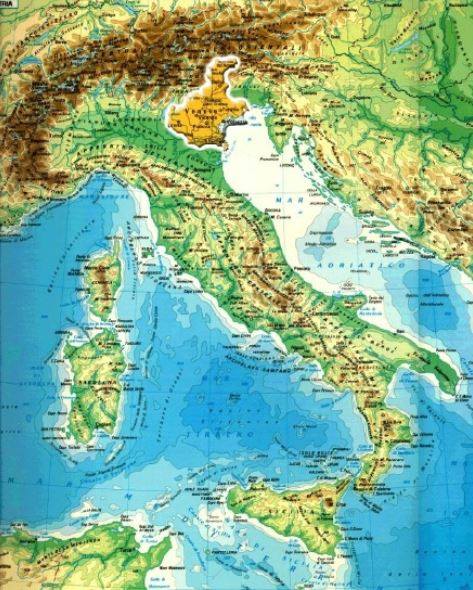
    Clockwise from left: The Apennine “boot;” Garbo as Queen Christina; a Vesuvian funicular car; Ferruccio Busoni enjoying a cigar

  • April Fool’s Day Piano Greats & a Hilarious Hoax

    April Fool’s Day Piano Greats & a Hilarious Hoax

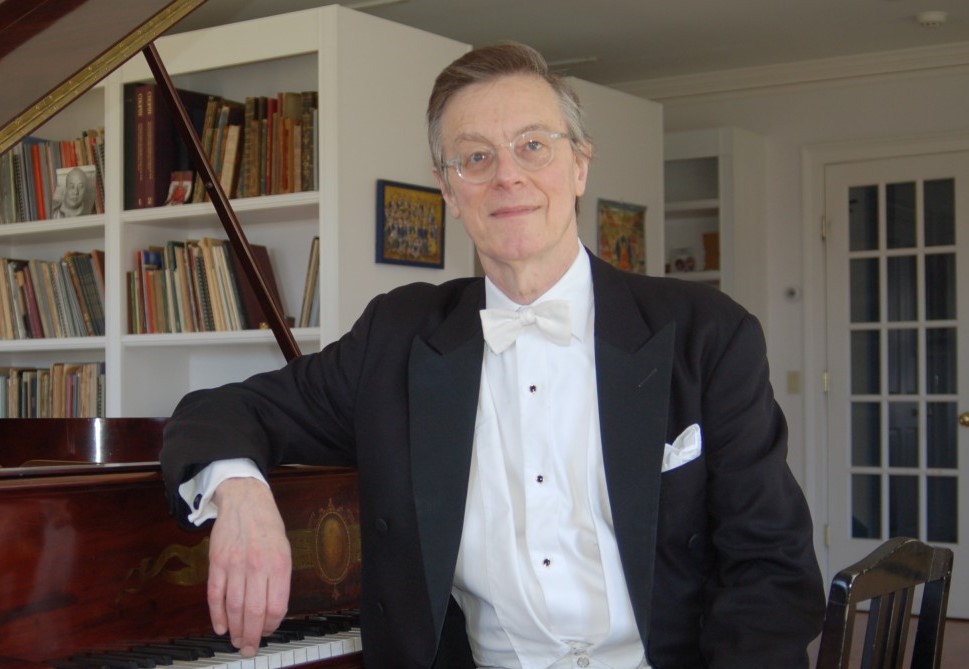
    April Fool’s Day. A great day for pianists: born of this date were Ferruccio Busoni (1866), Sergei Rachmaninoff (1873), and Dinu Lipatti (1917). But would any of them have played this?

Tag Cloud

Aaron Copland (92) Beethoven (95) Composer (114) Film Music (123) Film Score (143) Film Scores (255) Halloween (94) John Williams (187) KWAX (229) Leonard Bernstein (101) Marlboro Music Festival (125) Movie Music (138) Opera (202) Philadelphia Orchestra (89) Picture Perfect (174) Princeton Symphony Orchestra (106) Radio (87) Ralph Vaughan Williams (85) Ross Amico (244) Roy's Tie-Dye Sci-Fi Corner (290) The Classical Network (101) The Lost Chord (268) Vaughan Williams (103) WPRB (396) WWFM (881)

DON’T MISS A BEAT

Receive a weekly digest every Sunday at noon by signing up here


RECENT POSTS