It’s Christmas Eve! Let the last-minute insanity begin!
From the sound of it, Matthew Curtis’ “Christmas Rush” must be a pun – “rush” as in “hurry,” but also “rush” as in “euphoria.”
What strikes me about this piece is that even though Curtis was born in 1959, the music clearly pays homage to the golden age of British Light Music, with composers like Eric Coates and Roger Quilter being clear influences.
Don’t be like me – as you navigate the close aisles, frenetic parking lots, and long check-out lines, hang on to your good cheer!
Only ten days into the month of December, and you’re already played-out on all the tinsel and consumerism? Reinvigorate your Christmas spirit with Nikolai Rimsky-Korsakov and Władysław Starewicz!
Rimsky-Korsakov’s “Christmas Eve” was given its first performance at St. Petersburg’s Mariinsky Theater on this date in 1895. The opera, based on a story from Nikolai Gogol’s collection “Evenings on a Farm Near Dikanka,” is part fairy tale and part farce. Gogol’s source material is steeped in Ukrainian folklore.
In Ukraine, Christmas Eve is a solemn occasion, marked by fasts and sacred services. Meatless dishes are served for Holy Night supper. But there are also carols. And the caroling is no simple singing of Christmas songs! Similar to the mumming traditions of the British Isles, there is also a fair amount of play involved, with ritualistic dancing and even the participation of a live goat. As in the West, pre-Christian symbols and rituals are embraced in the celebration of Christmas, to lend cheer to the shortest days and hope for a fertile spring.
With this in mind, is it any surprise that Gogol’s story tells of the theft of the moon by the Devil, amorous peasants secreting themselves in burlap sacks, and a ride through the air, on the Devil’s back, to collect the Tsarina’s slippers?
My preferred recording of Rimsky-Korsakov’s “Christmas Eve” is still the one from 1948, conducted by Nikolai Golovanov:
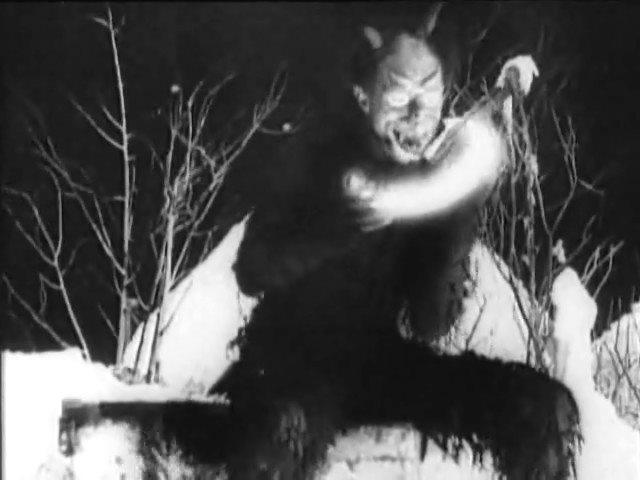
In 1912, Starewicz, Polish-born Russian pioneer of stop-motion animation, directed a live-action adaptation of the tale, called “The Night Before Christmas.” Here it’s silent, so you’ll have to provide your own soundtrack. At least the intertitles are translated:
More wondrous still is Starewicz’s animated classic, “The Insects’ Christmas,” from 1911. It’s not Christmas until beetles skate to Tchaikovsky’s “The Seasons.” Watch it now and be astonished!
Starewicz directed a number of films on subjects that were also made into operas, by Rimsky, Tchaikovsky, Mussorgsky, and Glinka, including adaptations of “Russlan and Ludmilla” (1913), “The Snow Maiden” (1914), “The Sorotchninsk Fair” (1918), and “May Night” (1918).
With the holidays awash in silver and gold, I’ll be soaking in horilka for Christmas.
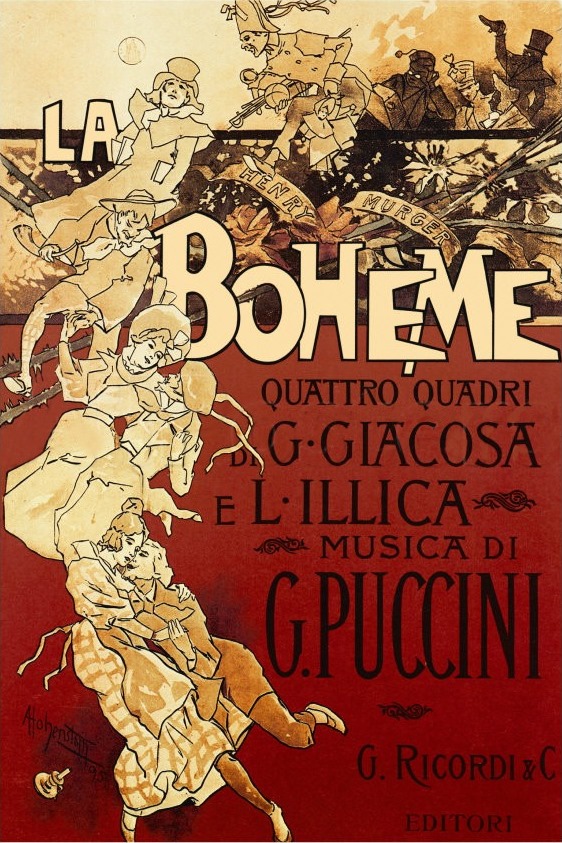
Giacomo Puccini’s opera “La bohème” opens in an artist’s garret on Christmas Eve. After Mimi and Rodolfo meet cute (she knocks on his door looking for a match for her candle), they join their friends on the boisterous streets of Paris for a good old-fashioned Latin Quarter Christmas. This effectively knocks out the first two acts.
By Act III, their love is on the rocks. On a snowy night, Rodolfo confides to the painter Marcello that Mimi is slowly dying of consumption (tuberculosis). He loves her still, but he doesn’t have the money to take care of her, so he is feigning jealousy in an attempt to drive her into the arms of another. Mimi overhears, and apparently agrees to the split, but then the lovers decide it’s too horrible to part in winter. We know it’s just an excuse, though, so that they can stay together until spring.
In Act IV, we have no idea what month it is, but it’s sometime later. Mimi shows up at the garret, and she is not well. The circle of bohemians offer comfort, each in their own way. Earrings are sold for a muff, and an overcoat is hocked for medicine. Left to themselves, Mimi and Rodolfo relive their past happiness, but the reunion is agonizingly brief. Their friends return, only just in time for everyone to dissolve into tears.
Merry Christmas.
On Puccini’s birthday, here’s a recording of André Kostelanetz (also born on this date) conducting a purely orchestral suite of highlights from “La bohème”:
Mimi’s hands are cold, so Rodolfo goes to work. The old smoothie.
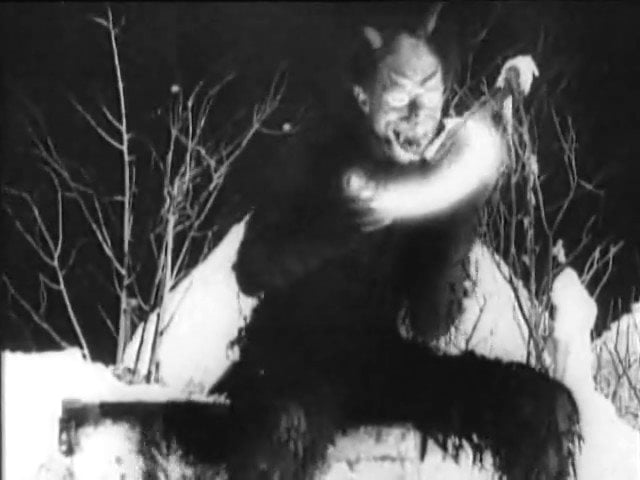
Definitely don’t go into it expecting Clement Moore’s jolly old elf!
Nikolai Rimsky-Korsakov’s “Christmas Eve” was given its first performance at St. Petersburg’s Mariinsky Theater on this date in 1895.
The opera is based on a story from Nikolai Gogol’s collection, “Evenings on a Farm Near Dikanka” (which I finally got around to reading this year). Part fairy tale and part farce, “Christmas Eve” is steeped in Ukrainian folk traditions.
In Ukraine, Christmas Eve is a solemn occasion, marked by fasts and sacred services. Meatless dishes are served for Holy Night supper. But there are also carols. And the caroling is no simple singing of Christmas songs! Similar to the mumming traditions of the British Isles, there is also some play involved, with ritualistic dancing and even the participation of a live goat. As in the West, pre-Christian symbols and rituals are embraced in the celebration of Christmas, to lend cheer to the shortest days and hope for a fertile spring.
With this in mind, is it any surprise that Gogol’s story features such incidentals as the theft of the moon by the Devil, amorous peasants secreting themselves in burlap sacks, and a ride through the air, on the Devil’s back, to collect the Tsarina’s slippers?
“Christmas Eve” was adapted musically by both Rimsky-Korsakov and Tchaikovsky. The two composers shared a complicated relationship. In public, each was supportive of the other, but in private both were tormented by suspicion and envy. Tchaikovsky felt sufficiently threatened that he demanded secrecy of his publisher over his use of the then newly-minted celesta. This was to supply the fairy-dust magic for his Sugar Plum Fairy in “The Nutcracker,” and he was full of anxiety that Rimsky might learn of the instrument and steal his thunder.
Equally wary of Tchaikovsky, Rimsky held off on adapting “Christmas Eve” until 1895. Tchaikovsky had set his own version of the story ten years before – a revision of an even earlier Tchaikovsky opera, “Vakula the Smith,” composed in 1871. By the time Rimsky’s version received its premiere, his rival had been safely in the grave for two years.
Z Rizdvom Khrystovym! Good triumphs over evil, but the devil gets his due!
Still my preferred recording of Rimsky-Korsakov’s “Christmas Eve,” from 1948, conducted by Nikolai Golovanov.
An animated version of Gogol’s tale, incorporating some of Rimsky’s music: