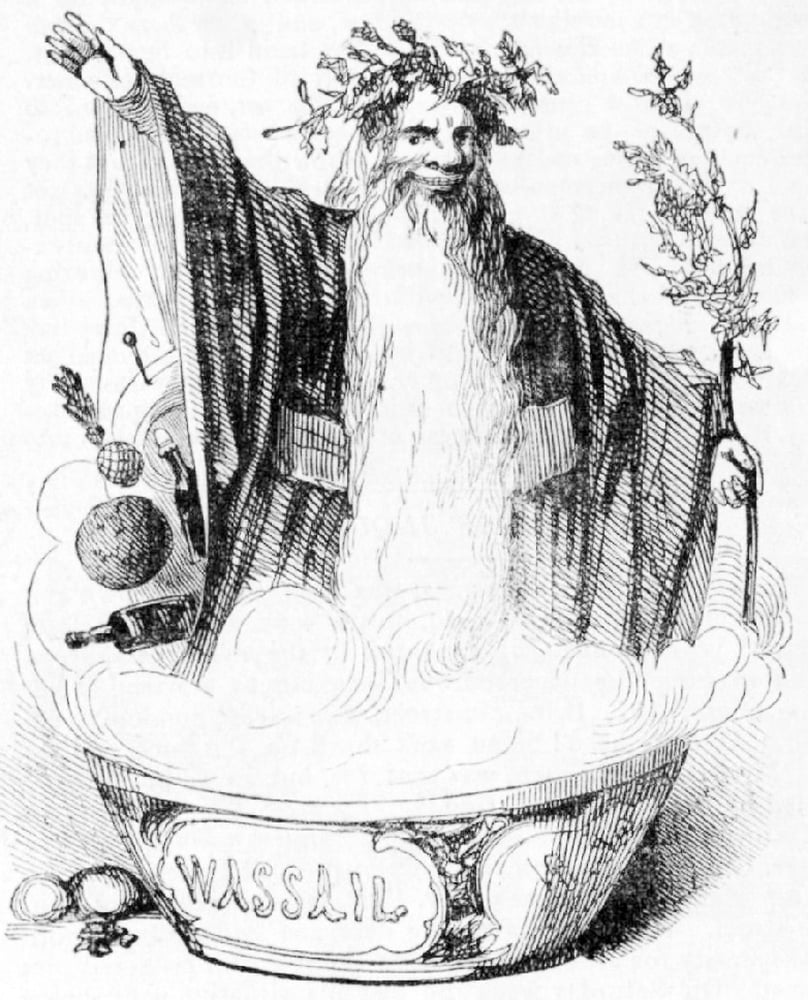
A little Christmas cure-all.
And to all a good night!
Here we go again! Just as we in the West conclude the Twelve Days of Christmas, adherents of the Eastern Orthodox Church today commence their celebrations of Orthodox Christmas. Chalk it up to the old Julian calendar.
Ukrainian Christmas Eve can be a solemn occasion, marked by fasts and sacred services. Meatless dishes are served for the Holy Night supper. But there are also carols. And the caroling is no simple singing of Christmas songs. Similar to mumming traditions of the British Isles, there is also a little play involved, with ritualistic dancing and the participation of a live goat. As in the West, pre-Christian symbols and rituals are embraced in the celebration of Christmas, to lend cheer to the shortest days and hope for a fertile spring.
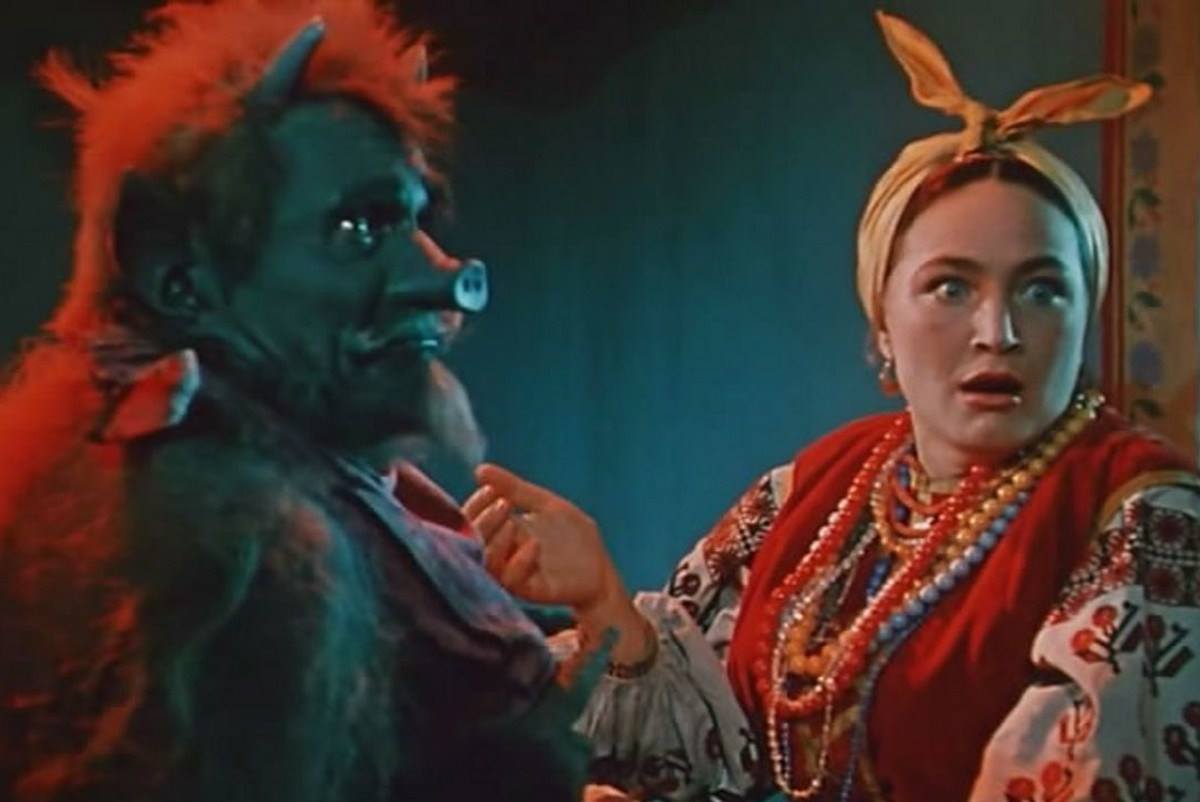
Nikolai Gogol’s “Christmas Eve,” from his collection of stories, “Evenings on a Farm Near Dikanka,” emerges from these folk traditions. Part fairy tale and part farce, Gogol’s story features such incidentals as the theft of the moon, amorous peasants secreting themselves in burlap sacks, and a ride through the air on the Devil’s back to collect the Tsarina’s slippers.
“Christmas Eve” drew musical responses from both Peter Ilych Tchaikovsky and Nikolai Rimsky-Korsakov. The two composers shared a complicated rivalry. In public, each was supportive of the other, while in private they were nagged by suspicion and envy. Tchaikovsky felt sufficiently threatened to swear his publisher to secrecy about his use of the then newly-minted celesta in “The Nutcracker,” lest Rimsky steal his thunder. Equally intimidated by Tchaikovsky, Rimsky held off on adapting “Christmas Eve” until 1895. Tchaikovsky had set his version ten years before, a revision of an even earlier opera, “Vakula the Smith,” written in 1871. By the time Rimsky’s “Christmas Eve” received its premiere, Tchaikovsky had been safely in the grave for two years.
We’ll hear selections from both composer’s operas today on The Classical Network, alongside observances of the birthdays of composers William Hurlstone, Ulysses Kay, and Francis Poulenc; conductors David Porcelijn and Gunter Wand; pianist Clara Haskil; violinist and conductor Iona Brown; and choral director Robert DeCormier.
Z Rizdvom Khrystovym! Good triumphs over evil, but the devil gets his due, from 4 to 7 p.m. EST, on WWFM – The Classical Network and wwfm.org.
An animated version of Gogol’s tale, incorporating some of Rimsky’s music:
https://www.wilderutopia.com/performance/literary/nikolai-gogol-witches-and-devils-on-christmas-eve/
A fun live-action version from 1961:
https://www.youtube.com/watch?v=9MFoyMwfnlc
A 1913 silent version (but you’ll have to provide your own soundtrack):
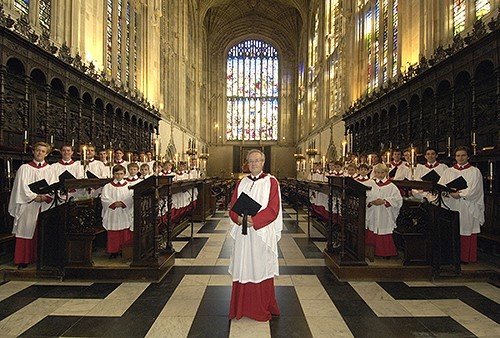
Every year for the past century, a unique spell has been woven by the purity of a solo treble voice floated across a cavernous, candlelit 15th century chapel. The boy chorister, always selected at the last moment from the ranks of his well-drilled peers, is joined in succession by full chorus, then congregation with organ. It is an inspiring moment, and for many an indelible part of the Christmas season.
“A Festival of Nine Lessons and Carols” from King’s College Chapel has been a Christmas Eve tradition since 1918. It has been enjoyed by millions of listeners around the world since its first radio broadcast in 1928. (This year’s audience is projected to be 30 million.) Readings of Biblical passages are punctuated by atmospheric musical selections for the season.
Since 1983, the program has also incorporated a newly-commissioned work, expanding the repertoire with contributions by some of the world’s foremost composers: Thomas Adès, Richard Rodney Bennett, Lennox Berkeley, Judith Bingham, Harrison Birtwistle, Brett Dean, Alexander Goehr, Robin Holloway, James MacMillan, Nicholas Maw, Peter Maxwell Davies, Thea Musgrave, Arvo Pärt, Stephen Paulus, John Rutter, John Tavener, Einojuhani Rautavaara, and Peter Sculthorpe are among those who have contributed. This year, the honor has fallen to Judith Weir, who currently holds the title of Master of the Queen’s Music. (She is the first woman to do so.)
This expansion of the Christmas choral repertoire was spearheaded by Stephen Cleobury. Cleobury has been director of music at King’s College, Cambridge, since 1982. He will retire from his position on September 30, 2019. Monday will be the final “Lessons and Carols” given under his direction.
The Classical Network will once again broadcast this beloved annual tradition live on Christmas Eve morning at 10:00 EST.
For additional insights, join Rachel Katz for an exclusive interview with Cleobury on “A Tempo.” Cleobury will talk about the history of the service, his experiences in leading it, and the role it has played in the broader world of choral music. Also on the program will be a conversation with James Jordan, who in 1992 launched Westminster Choir College’s own “Evening of Readings and Carols.”
“A Tempo” can be heard tonight at 7:00 EST, on WWFM – The Classical Network and wwfm.org.
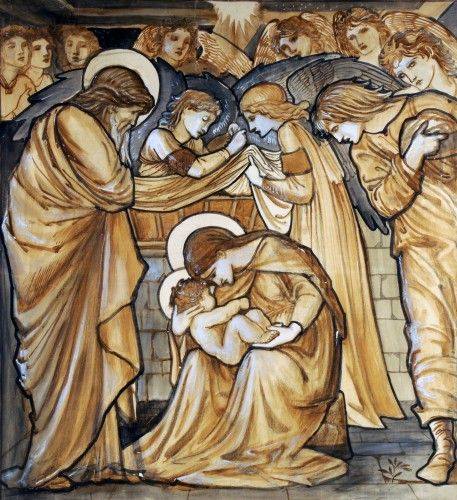
On Christmas Eve, with much gift wrapping and cooking yet to be done, we pause to remember the story of the first Christmas with music by a couple of English composers inspired by the Nativity.
Alongside Sir Charles Villiers Stanford and Sir Edward Elgar, Sir Hubert Parry was one of the key figures of the so-called “English Musical Renaissance.” He influenced a whole generation of much better known composers, including Ralph Vaughan Williams and Gustav Holst. We’ll hear his “Ode on the Nativity,” given its first performance on the same concert, at the Hereford Three Choirs Festival in 1912, as Vaughan Williams’ “Fantasia on Christmas Carols.”
Vaughan Williams, the great-nephew of Charles Darwin and an atheist in his youth, later softened into a kind of cheerful agnosticism. He dearly loved the King James Bible, and he especially enjoyed Christmas. Of course, he wrote much music on the subject. In fact, his very last composition was “The First Nowell.” He worked diligently at the piece, inspired by medieval pageants, during his final month, but died suddenly before its completion.
However, even at 85 years-old, RVW retained a remarkable concentration. He managed to pound out the whole thing in short score in only a few weeks. Furthermore, he had actually orchestrated the first two-thirds. The finishing touches were applied by his assistant, Roy Douglas – he of “Les Sylphides” fame.
If you like the “Fantasia on Christmas Carols,” I think you’ll really enjoy this. It’s pastoral music for a pastoral scene. Join me for “A Play in a Manger,” this Sunday night at 10:00 EST, on WWFM – The Classical Network and wwfm.org.
Let the Christmas Eve sprint commence!
I’ve got a phone interview for next week’s newspaper article at 10:00, believe it or not. Otherwise, everyone disappears until after New Year’s. My fault for letting the week slip away. Then it’s a full day of traffic, crowds and obligations.
Thank you all for reading this year, and for all your fun and appreciative contributions. I hope you have some lovely holidays. One of these days, I will be able to slow down enough to be able to enjoy them myself!
My soundtrack for December 24:
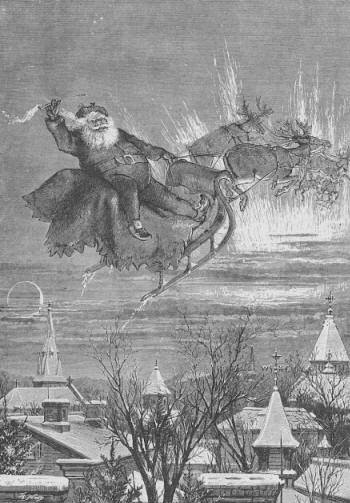
PHOTO: Ho Ho Ho
Aaron Copland (94) Beethoven (95) Composer (114) Film Music (149) Film Score (143) Film Scores (255) Halloween (97) John Williams (197) KWAX (232) Leonard Bernstein (105) Marlboro Music Festival (125) Movie Music (164) Mozart (91) Opera (215) Philadelphia Orchestra (90) Picture Perfect (174) Princeton Symphony Orchestra (110) Radio (90) Ross Amico (244) Roy's Tie-Dye Sci-Fi Corner (290) The Classical Network (101) The Lost Chord (269) Vaughan Williams (107) WPRB (397) WWFM (881)