Tag: Composer

  • Beethoven A King Among Composers?

    Beethoven A King Among Composers?

    Was Beethoven the King of Composers?

    If anything, Beethoven proved just how far someone could go with determination, a gift for fantasy, and plain old hard work. Beethoven may have lacked the natural facility of a Bach or a Mozart, yet through an uncompromising force of will he managed to achieve greatness. In fact, so powerful was his musical imagination that he managed to change music. And he knew his own worth, even to the point of not deferring to his “betters.”

    How much is Beethoven worth to you? As The Classical Network observes the Master’s birthday today (he was born on December 16, 1770) with a full day of his music, join us in celebrating the great Ludwig Van with your gift of support at 1-888-232-1212 or wwfm.org.

    Because of listeners just like you, we have been able to share 35 years of some of the greatest music ever written. All of us at WWFM – The Classical Network thank you for your generosity.

  • Support Classical Music on WWFM

    Support Classical Music on WWFM

    Raising money for public radio can sometimes seem like pulling teeth. Help us reach our goal of $46,000 by calling 1-888-232-1212, or making your tax-deductable contribution online at wwfm.org. Then stay tuned, between 4 and 7 p.m. EDT, for music by Sir William Walton, Peter Warlock, Ralph Vaughan Williams, Antonio Vivaldi, Giacomo Puccini, Camille Saint-Saëns, Jean-Philippe Rameau, Agustin Lara, Manuel Ponce and more. Four out of five dentists recommend WWFM – The Classical Network and wwfm.org.

  • Sorabji’s Anniversary & Epic Piano Music

    Sorabji’s Anniversary & Epic Piano Music

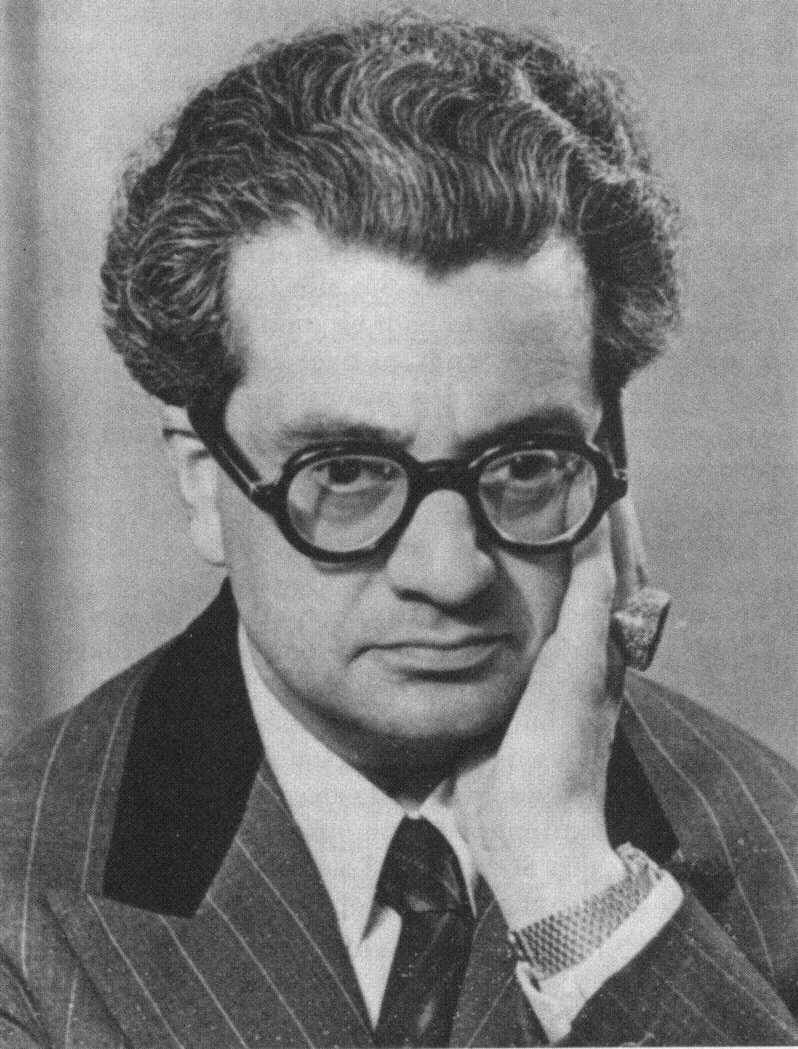
    Today is the anniversary of the birth of the pianist-composer known as Kaikhosru Shapurji Sorabji.

    Born Leon Dudley in 1892 to a civil engineer of Parsi parentage and an English mother, Sorabji’s most notorious pieces are even longer than his name. His “Opus clavicembalisticum” clocks in at around four hours in performance. The composer wrote, “The closing 4 pages are so cataclysmic and catastrophic as anything I’ve ever done – the harmony bites like nitric acid – the counterpoint grinds like the mills of God…” Even so, some of his later works make it seem like a mere bagatelle. His “Symphonic Variations for Piano” is roughly nine hours in length.

    As if that weren’t enough to place a seal on his obscurity, Sorabji put a ban on public performance of his music for 40 years. Sorabji had the means to live in seclusion, and in seclusion he lived. A complex and at times prickly individual, his scores nevertheless attracted some persistent champions who managed to coax him out of retirement for a final burst of creativity until failing eyesight and difficulty holding a pen caused him to give it up. Sorabji died in 1988, at the age of 96.

    Clearly, Sorabji marched to the beat of his own drum. Equally evident is that much of his music is inappropriate for drive time. But join me today, and we’ll sample some of his shorter pieces, among our featured works, to propel you on your afternoon commute, from 4 to 7 EDT, on WWFM – The Classical Network and wwfm.org.

  • Hans Gál Rediscovered Composer

    Hans Gál Rediscovered Composer

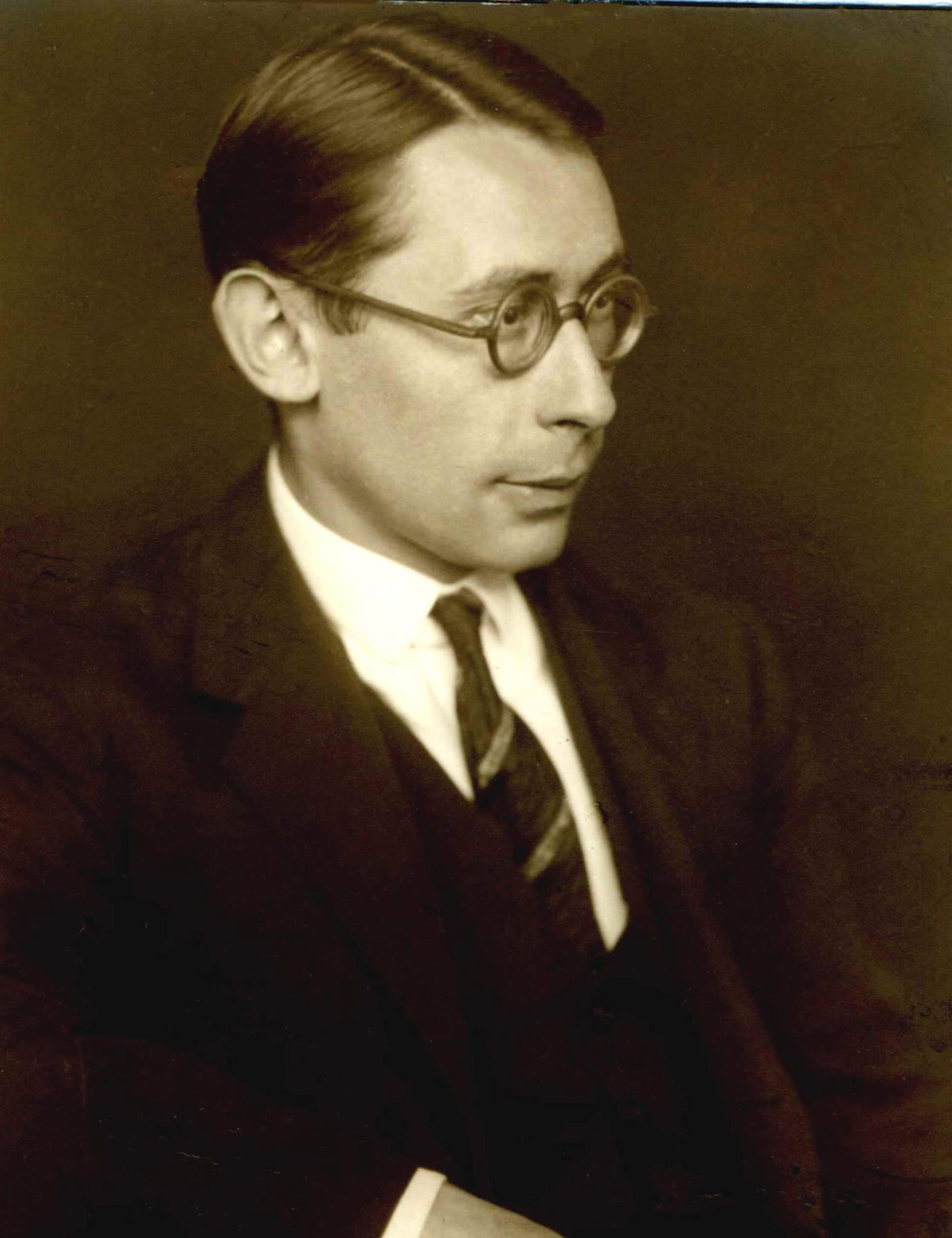
    Composer, pianist and teacher Hans Gál was born outside Vienna in 1890. He studied with, among others, Eusebius Mandyczewski, lifelong friend of Johannes Brahms and a key figure in Brahms’ circle. Gál himself became a serious Brahms scholar, co-editing the master’s complete works, in cooperation with Mandyczewski, in ten volumes. He edited other scholarly volumes on Brahms, as well.

    It was while Gál was director of the Mainz Conservatory of Music that the Nazis came to power. Forced out of his position, he returned to Austria. Then the Anschluss drove him to Great Britain.

    He was held in an internment camp during the war. However, before that, he had managed to make friends with the Scottish musicologist Donald Francis Tovey. And although Tovey suffered a fatal heart attack, Gál was at last able to find permanent employment at Endinburgh University. He died in 1987 at the age of 97.

    Gál composed in nearly every genre. He was an influential teacher in Great Britain, and was lauded by many of the greatest musicians of his day. Yet his music and reputation haven’t really pervaded the wider musical consciousness.

    This Sunday night on “The Lost Chord,” we’ll hear two works by this neglected composer, issued on the Avie label, which has done much to document Gál’s orchestral, chamber and instrumental music.

    First, we’ll have the Piano Sonata, Op. 28, from a complete, 3-CD set devoted to Gál’s output for the keyboard. Gál was about 37 years-old at the time of the sonata’s composition. It’s sobering to think he yet had 60 years of life ahead of him!

    Then we’ll hear Gál’s Cello Concerto, from 1944. Gál’s mother died in 1942. Shortly after that, his aunt and sister took their own lives to avoid deportation to Auschwitz. Unable to bear up under the strain, the composer’s youngest son also committed suicide at 18 years-old. The concerto is elegiac, lyrical and deeply personal. For all the personal turbulence and tragedy in Gál’s life, he managed to craft a rewarding and mellifluous work, which on occasion offers glimpses of his beloved Brahms.

    I hope you’ll join me for music by this remarkable figure, who weathered much to create works of lasting beauty. Gál went on to flourish in Great Britain. He was an influential teacher, a respected member of the faculty at Edinburgh University, where he remained for the rest of his very long life.

    I hope you’ll join me for “Gál’s Worthy,” worthwhile music of Hans Gál, this Sunday night at 10:00 EDT, on WWFM – The Classical Network and wwfm.org.


  • John Adams at 70 A Composer’s Legacy

    John Adams at 70 A Composer’s Legacy

    There’s something oddly appropriate about a composer named John Adams arriving between the birthdays of Lincoln and Washington.

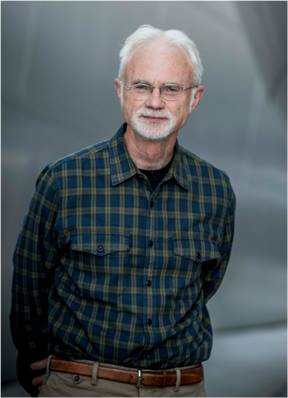
    Adams turns 70 today. Considered by some to be America’s foremost living composer, he emerged from the fog of minimalism to become the most versatile and substantial of those who have embraced the style.

    Personally I’ve always been divided on Adams’ music. Some of it I find fun (“Short Ride in a Fast Machine,” “Grand Pianola Music”), some of it I find to be quite good (“Shaker Loops,” “El Niño”), some of it I find to be boring, clumsy or downright embarrassing (“Harmonium,” for as much as I could stand of “Doctor Atomic”).

    I concede that my reactions are very subjective. There’s no arguing against Adams’ influence or his standing. Happy birthday, sir, and congratulations on your long-term success.

    Adams’ music will be featured today alongside that of fellow birthday celebrants Christopher Rouse, Georges Auric, Robert Fuchs and Michael Praetorius, when I take to the airwaves from 4 to 7 p.m. EST on WWFM – The Classical Network and at wwfm.org.

Tag Cloud

Aaron Copland (92) Beethoven (95) Composer (114) Film Music (123) Film Score (143) Film Scores (255) Halloween (94) John Williams (187) KWAX (229) Leonard Bernstein (101) Marlboro Music Festival (125) Movie Music (138) Opera (202) Philadelphia Orchestra (89) Picture Perfect (174) Princeton Symphony Orchestra (106) Radio (87) Ralph Vaughan Williams (85) Ross Amico (244) Roy's Tie-Dye Sci-Fi Corner (290) The Classical Network (101) The Lost Chord (268) Vaughan Williams (103) WPRB (396) WWFM (881)

DON’T MISS A BEAT

Receive a weekly digest every Sunday at noon by signing up here


RECENT POSTS