Tag: Composers

  • Bastille Day: Composers of the Revolution

    Bastille Day: Composers of the Revolution

    It’s Bastille Day. A French toast for breakfast, and a nod to two of France’s greatest composers of the Revolutionary Era.

    On top of the usual burden of trying to cobble together a living as working musicians, both Étienne-Nicolas Méhul (1763-1817) and Luigi Cherubini (1760-1842) bore the additional stress of having to navigate an incendiary political environment.

    When Méhul’s opera “Adrien” was banned, he quickly figured out which side his baguette was buttered on and began writing propaganda pieces and patriotic songs. Vive la France! He was rewarded by being the first composer named to the newly-established Institute de France in 1795. He was also installed as an inspector at the Paris Conservatory.

    Allegedly, he was one of the favorite composers of Napoleon, with whom he was on friendly terms. He became one of the first recipients of Napoleon’s Légion d’honneur. According to musicologist and Berlioz biographer David Cairns, Méhul was also the first composer to be classified as “Romantic.”

    Cherubini was born in Florence. He arrived in France in 1785. There, he was introduced to Marie Antoinette and, of necessity, as a musician, had many interactions with the aristocracy – which likely caused sweat to bead on his forehead in 1789.

    Following the Revolution, Cherubini (born Maria Luigi Carlo Zenobio Salvatore Cherubini) adopted the French version of his name (Marie-Louis-Charles-Zénobi-Salvador Cherubini). It was during this period that his music began to really take flight. His works became more adventurous, more dynamic, more heroic. It’s not for no reason that Beethoven claimed him as an influence. His rescue opera “Lodoiska” served as a model for Beethoven’s “Fidelio.” Beethoven is also said to have found inspiration in Cherubini for the writing of his Fifth Symphony.

    Following the Revolution, Cherubini took great care to play down his former aristocratic connections and cleave to the prevailing government. Every year for over a decade, he was mindful of composing at least one overtly patriotic work.

    While Napoleon is said to have disliked Cherubini’s music, finding it “too complex,” he did appoint him director of music in Vienna. Perhaps Cherubini’s best-known work, the comic opera “Les deux journée” (“The Two Days”), was written in an intentionally simplified style and became an enormous hit. Beethoven kept Cherubini’s score on his desk at the time he was engaged in the writing of “Fidelio.” The incident upon which the opera is based allegedly occurred during the time of the Revolution, but again, treading lightly, Cherubini and his librettist, Jean-Nicolas Bouilly, erred on the side of caution, setting the action in a safely remote 1647.

    Gradually, as Cherubini’s operas began to fall out of fashion, he transitioned to writing church music. His Requiem in C minor, again, was particularly admired by Beethoven (also Schumann and Brahms).

    In 1822, Cherubini became director of the Paris Conservatory. There he came into conflict with a young firebrand by the name of Hector Berlioz. Berlioz’s withering and amusing portrayal of Cherubini in his “Mémoires,” as a hidebound pedant, has colored the elder composer’s reputation to the present day, more indelibly than has any of Cherubini’s own music.

    However, during his lifetime, the composer enjoyed fame and fortune and was the recipient of France’s highest and most prestigious honors.

    Méhul, Symphony No. 3

    Méhul, “Le chant du départ”

    Cherubini, “Anacréon” Overture

    Cherubini, “Hymn du Panthéon”

    Berlioz’s arrangement of “La Marseillaise”


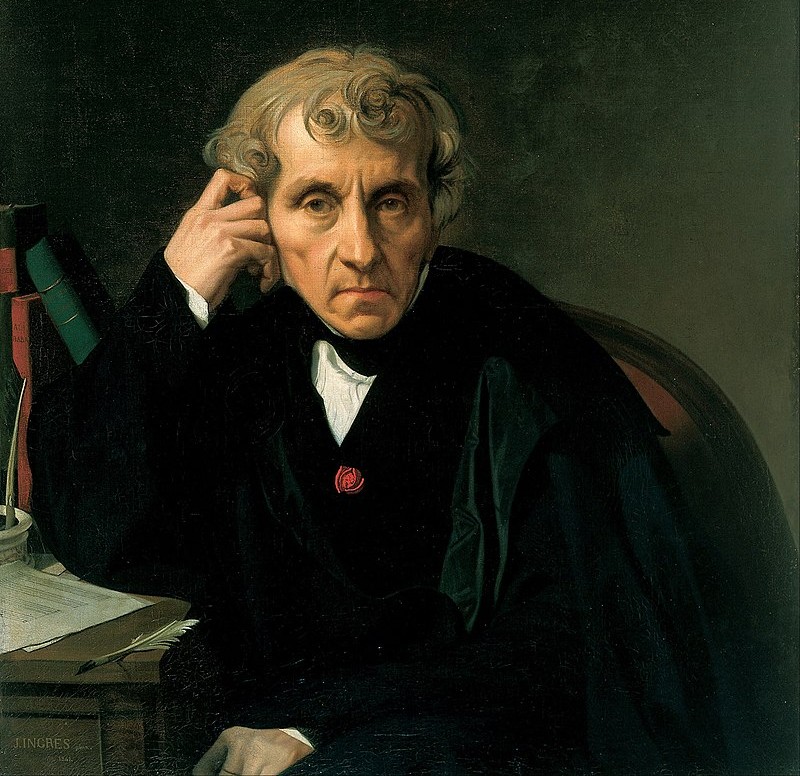
    They kept their heads: Luigi Cherubini (left) and Étienne-Nicolas Méhul

  • Winter Solstice Composers in Snowy Settings

    Winter Solstice Composers in Snowy Settings

    Yesterday morning marked the hibernal solstice in the Northern Hemisphere. On this first full day of winter, here a few photos of composers in wintry settings. Subjects identified when you click through the images.

  • Marlos Nobre Dies Brazilian Music Mourns

    Marlos Nobre Dies Brazilian Music Mourns

    The Brazilian composer Marlos Nobre died yesterday at the age of 85. This Cello Concerto was given its world premiere in 2019. The soloist is Antonio Meneses, who died of a brain tumor in August, two months after sharing his diagnosis and announcing his retirement. It’s been a hard year for Brazilian music.

    Meneses performs another work written for him, Nobre’s “Cantoria”

    Without Meneses, Nobre’s Percussion Concerto

    Nobre plays an improvisation on Antonio Carlos Jobim’s “Dindi”

  • St Cecilia Feast Day Playlist Classical Music

    St Cecilia Feast Day Playlist Classical Music

    A tip of the halo to St. Cecilia on her feast day! As you get started on your Thanksgiving preparations, enjoy this evergreen playlist of Cecilia inspirations. All hail, music’s patron saint!

    William Boyce, “Ode for St. Cecilia’s Day” (overture also published as Boyce’s Symphony No. 5)

    Benjamin Britten, “Hymn to St. Cecilia” (Britten was born on this date)

    Ernest Chausson, “La légende de Sainte Cécile”

    Norman Dello Joio, “To Saint Cecilia”

    Gerald Finzi, “For St. Cecilia”

    Charles Gounod, “St. Cecilia Mass”

    https://www.youtube.com/watch?v=gK5iVM2mT6c…

    George Frideric Handel, “Ode for St. Cecilia’s Day”

    Franz Joseph Haydn, “Missa Sanctae Caecilia”

    https://www.youtube.com/watch?v=QhA7LEd56ts

    Herbert Howells, “A Hymn for St. Cecilia” (text by Ursula Vaughan Williams)

    Franz Liszt, “Hymn to St. Cecilia”

    Arvo Pärt, “Cecilia, vergine romana”

    Henry Purcell, “Ode on St. Cecilia’s Day (Hail! Bright Cecilia)”

    Joaquin Rodrigo, “El Album de Cecilia” (written for the composer’s daughter; Rodrigo was born on this date)

    Alessandro Scarlatti, “St. Cecilia Mass”


    PAINTING: “Saint Cecilia” by Matteo Rosselli (1578–1650)

  • Gershwin & Schoenberg An Unlikely Friendship

    Gershwin & Schoenberg An Unlikely Friendship

    Who’d a thunk the High Priest of Dodecaphonic Music would be such an admirer of popular success George Gershwin? You know, the guy that gave us “Swanee,” “I Got Rhythm,” and “Embraceable You,” and also “Rhapsody in Blue,” “An American in Paris,” and “Porgy and Bess.” And that furthermore the admiration would be reciprocated?

    In this Arnold Schoenberg sesquicentennial year (he was born on September 13, 1874), we mark Gershwin’s birthday anniversary (born on this date in 1898) with a glimpse into classical music’s most unlikely mutual admiration society.

    Gershwin and Schoenberg were tennis partners, both very serious about the game; they were painters (although Schoenberg abandoned the art to devote himself to music); and of course Gershwin hoped to study with Schoenberg, arguably the most influential avant-garde master of the 20th century.

    Sadly, just months after Gershwin painted Schoenberg’s portrait, he died of a brain tumor at the age of 38. The next day, Schoenberg eulogized his friend for broadcast over the radio.

    Interestingly, Gershwin’s friend and champion, the pianist Oscar Levant, did study composition with Schoenberg. Schoenberg was sufficiently impressed that he offered Levant a job as his assistant, but Levant turned him down, feeling he wasn’t worthy. Levant is still considered one of Gershwin’s foremost interpreters. Of course, he also appeared in the film version of “An American in Paris” with Gene Kelly.

    George and Arnie were like the Frog and Toad of Beverly Hills. Remembering the multifaceted George Gershwin on his birthday.


    Gershwin the painter

    https://smtd.umich.edu/ami/gershwin/?p=870

    Schoenberg paintings and drawings

    https://www.schoenberg.at/index.php/en/schoenberg-2/bildnerischeswerk

    Home movies of Schoenberg, filmed by Gershwin, set to a recording of Schoenberg’s String Quartet No. 4 that Gershwin sponsored. The nattily turned-out Gershwin can be seen with pipe and five o’clock shadow, winding the camera. Also, Schoenberg eulogizes Gershwin. All in three minutes!

    More Gershwin home movies, including images of Schoenberg, courtesy of the Library of Congress.

    Levant in “An American in Paris.” He’s the whole show in Gershwin’s Concerto in F.


    PHOTO: Gershwin paints Schoenberg

Tag Cloud

Aaron Copland (92) Beethoven (95) Composer (114) Film Music (123) Film Score (143) Film Scores (255) Halloween (94) John Williams (187) KWAX (229) Leonard Bernstein (101) Marlboro Music Festival (125) Movie Music (138) Opera (202) Philadelphia Orchestra (89) Picture Perfect (174) Princeton Symphony Orchestra (106) Radio (87) Ralph Vaughan Williams (85) Ross Amico (244) Roy's Tie-Dye Sci-Fi Corner (290) The Classical Network (101) The Lost Chord (268) Vaughan Williams (103) WPRB (396) WWFM (881)

DON’T MISS A BEAT

Receive a weekly digest every Sunday at noon by signing up here


RECENT POSTS