Tag: Conductor

  • Fritz Reiner The Real Whiplash

    Fritz Reiner The Real Whiplash

    Before “Whiplash,” there was Fritz Reiner.

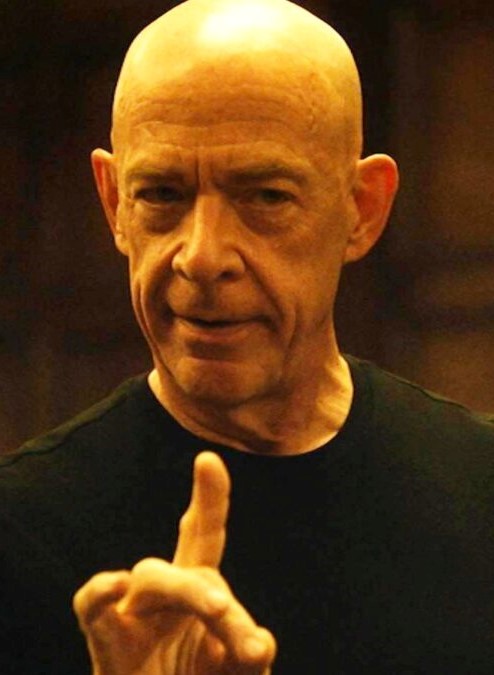
    J.K. Simmons earned an Oscar for his portrayal of ruthless bandmaster Terence Fletcher in Damien Chazelle’s breakout film. It’s no secret that Chazelle modeled Simmons’ sociopath on his real-life band instructor at Princeton High School.

    Classical music has had more than its share of Terence Fletchers, but few burned as ferociously as Fritz Reiner. From a musician’s standpoint, Reiner was one of the most dreaded conductors, in an era when tyrants of the podium still very much roamed the earth. With a glower that could make Bela Lugosi quake – and sporting quite the similar hairline – Reiner was forged in Hungary at the twilight of the Austro-Hungarian Empire. Hungary at the time had quite the reputation for churning out great conductors. George Szell, Eugene Ormandy, Antal Doráti, Ferenc Fricsay, Sir Georg Solti, and István Kertész all achieved considerable international success.

    Among Reiner’s own teachers was Béla Bartók, with whom he studied piano. Reiner would later repay the favor with what many consider to be the benchmark recording of Bartók’s “Concerto for Orchestra.” He also worked closely with Richard Strauss in Dresden, and his recordings of Strauss’ works are equally revered. All in all, the Chicago Symphony under Fritz Reiner was a surefire choice to give the ol’ hi-fi a good workout in the early days of stereo.

    In 1928, Reiner became a naturalized American citizen. He began to teach conducting at the Curtis Institute of Music in Philadelphia, where among his pupils was Leonard Bernstein. His first American post was as principal conductor of the Cincinnati Symphony. He took over the Pittsburgh Symphony for a decade, beginning in 1938. Then he spent several years at the Met. But it was as music director of the Chicago Symphony that he attained legendary status.

    For a master interpreter of some of the largest and most challenging works in the repertoire, his baton technique was notable for its precision and economy. Much of what he achieved, unfortunately, was through the brutality he exuded in rehearsals. Reiner emerged from an Old World steeped in aristocratic privilege. At the top of their profession, conductors then were regarded as gods-on-earth. When drive and ego were bolstered by absolute power, working conditions could become downright perilous. Before strong musicians’ unions, conductors exercised the authority to fire anyone on a whim. So when musicians played for Reiner, they played as if their lives depended on it – or at the very least their livelihoods.

    Did it make for better musicmaking? You can’t argue with the excellence of Reiner’s Chicago Symphony.

    Were you rushing or were you dragging?

    Fritz Reiner: A Marriage of Talent and Terror

    https://drgeraldstein.wordpress.com/2013/10/12/fritz-reiner-a-marriage-of-talent-and-terror/

    Reiner finally gets his “perfect concert”

    https://csosoundsandstories.org/125-moments-101-fritz-reiners-perfect-concert/?fbclid=IwAR27Vi_fsWhdExZqJPF5SRRmJqpp9jsoaNXDJ6tVbfAmjbo5ZNTEhPPfKkY

    I guess even autocrats have their cuddly moments. Happy birthday, Fritz Reiner.


    Reiner conducts Beethoven

    Big band Bach

    Benchmark Bartók

    Strauss’ “Salome”

    And, to keep it seasonal, “Waltz of the Flowers” from “The Nutcracker”

    https://www.youtube.com/watch?v=mgaS9CZ7KsQ

  • Eugene Ormandy Philadelphia’s Underrated Genius

    Eugene Ormandy Philadelphia’s Underrated Genius

    What’s the big deal about this guy, Jenő Blau? Well, you probably know him better by his adopted name, Eugene Ormandy.

    Ormandy, a Hungarian-born violinist who had studied with Jenő Hubay (for whom he was named), became a naturalized American citizen in 1927. He ultimately wound up directing The Philadelphia Orchestra for 44 years. In that capacity, he became one of the world’s most-recorded conductors.

    However, in some respects, he remains a vastly underrated one. Sure, he was a superb interpreter of 19th century and post-Romantic classics (his Columbia stereo recording of Tchaikovsky’s “Pathétique” was one of my go-to favorites as a teen, and he was an authoritative conductor of Rachmaninoff and Sibelius), but he also championed much contemporary music and new works written by his adopted countrymen. Also, if ever there was a more sensitive accompanist in the concerto repertoire, I don’t know of him.

    One of my favorite Ormandy records was also one of his later ones. Throughout his career Ormandy succeeded in selling Sibelius’ “Four Legends from the Kalevala,” a collection of tone poems inspired by the Finnish national epic the “Kalevala,” for the early masterpiece that it is.

    Here again is the final section, “Lemminkainen’s Homeward Journey,” even more thrilling, in 1940. Not on YouTube, for some reason, but I found it posted on archive.org. You may have to adjust the volume under the video.

    https://archive.org/details/Lemminkainens_Journey

    The legendary Philadelphia strings in Vaughan Williams’ “Fantasia on a Theme by Thomas Tallis”

    Hindemith, “Concert Music for Strings and Brass”

    Ivan Davis joins Ormandy and the Philadelphians for Liszt’s “Hungarian Fantasy,” slight abridged

    Bruckner “Te Deum” with Temple University Choir

    World premiere performance of Samuel Barber’s Violin Concerto

    Shostakovich Symphony No. 4

    Reinhold Glière’s “Russian Sailor’s Dance”

    Rachmaninoff Piano Concerto No. 2, with Eugene Istomin

    Ormandy conducts “Scheherazade” (complete). This is the Philly Orchestra I remember from my college years.

    Debussy, “Reverie”

    Saint-Saens’ Symphony No. 3 “Organ”

    Happy birthday, Eugene Ormandy (1899-1985)!

  • Happy 80th Birthday Daniel Barenboim

    Happy 80th Birthday Daniel Barenboim

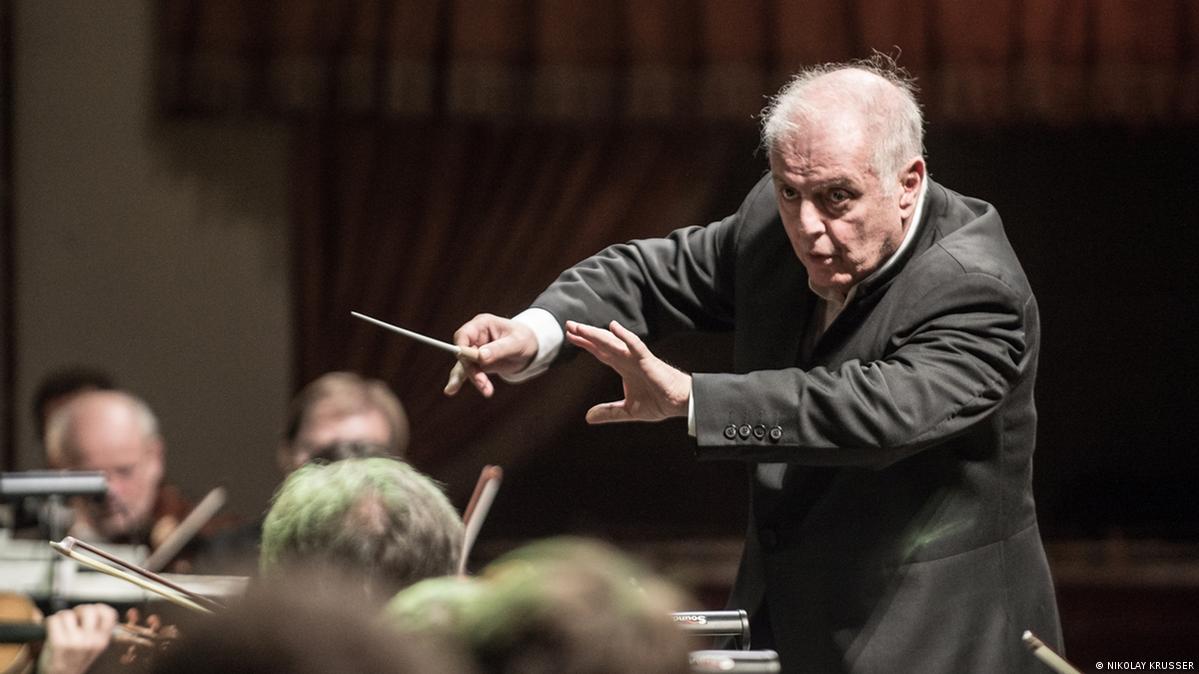
    Pianist, conductor, and humanitarian Daniel Barenboim is 80 today. Only within the past weeks did Barenboim announce that he would have to scale back on his concertizing, due to health reasons (citing a “serious neurological condition”). Let’s hope the hiatus is merely temporary.

    Happy birthday, Maestro. Get well soon, and many happy returns!


    Barenboim at 12 (playing Scarlatti, Chopin, and Kabalevsky)

    Superstar “Trout” Quintet, with Barenboim, Itzhak Perlman, Pinchas Zukerman, Jacqueline du Pré, and Zubin Mehta (on the double bass!)

    Playing Mendelssohn’s “Songs without Words,” complete

    With Jackie, off the cuff – and on the piano

    https://www.youtube.com/watch?v=ZOok22pCErM

    Barenboim plays Beethoven

    Barenboim conducts Bruckner

    “Tristan und Isolde,” complete

    https://www.youtube.com/watch?v=IdjFBW-S3z0

    Encores at Carnegie Hall, with the West-Eastern Divan Orchestra

    https://www.youtube.com/watch?v=L1uBLxEmes4

  • Libor Pešek Beloved Conductor Dies at 89

    Libor Pešek Beloved Conductor Dies at 89

    Genial, esteemed, self-effacing and beloved – the conductor Libor Pešek has died.

    Pešek was a regular presence on the podiums of his native land for some 70 years and did much to promote Czech music abroad.

    In particular, he was instrumental in raising the awareness of the works of Josef Suk outside the Czech Republic, especially the wounded, even morbid scores of the composer’s maturity.

    Suk, the pupil and son-in-law of Antonín Dvořák, lost both his mentor and his young wife, Otylie (Dvořák’s daughter), at the age of 30. Already, when Suk was a young man, Dvořák detected a melancholy strain in his music and set him the challenge of writing something sunny. The result was Suk’s Serenade for Strings, which became one of the composer’s most frequently performed works.

    Suk could do Czech nationalism with the best of them, but as he entered his prime, his works became as gloomily introspective as anything by Gustav Mahler, without the ecstatic peaks. Pešek’s recording of the “Asrael Symphony” (which takes its name from the Angel of Death) did much to increase the work’s international reputation. It was a piece he performed not only in Liverpool, where he was music director, but also took with him (much to the chagrin of tour agents) to Spain and the United States.

    Pešek, who studied with conductors Václav Smetáček and Karel Ančerl, began his professional career in the opera houses of Plzeň and Prague. He founded the Prague Chamber Harmony in 1958.

    As his stature grew, he assumed posts with the Slovak Philharmonic (1981-82), the Czech Philharmonic (1982-90), the Royal Liverpool Philharmonic (1987-98), and the Czech National Symphony Orchestra (2007-19).

    Pešek stepped down in Liverpool over budgetary difficulties, but continued to work with the orchestra in the capacity of laureate conductor for the next quarter century. Liverpool came to be regarded as “the best Czech orchestra this side of Prague.”

    Among his many honors, he was made Knight Commander of the British Empire by Queen Elizabeth II. He retired from the podium at the age of 85. Most of his recordings were issued on the Supraphon and Virgin Classics labels.

    Happily, he also appears to have been an amiable person, both professionally and personally, refreshingly lacking in ego and able to enjoy relaxed times with musicians, family, friends, and animals.

    At the time of his death, Pešek was 89 years-old. R.I.P.


    Pešek’s recording of Suk’s “Asrael Symphony” (with appropriately Halloweeny cover):

    And a score from Suk’s happier days, “Pohádka,” or “Fairy Tale.” He arranged it from music he composed for a play called “Radúz and Mahulena,” in which true love conquers all. The work took on special significance for the composer, since he happened to be secretly in love with his teacher’s daughter and feared the day of reckoning, when all would be revealed. He needn’t have worried. Dvořák was delighted. Sadly, Suk’s happiness was to be short-lived.

    Pešek also championed the music of Vítězslav Novák, another Dvořák pupil (and Suk’s classmate at the Prague Conservatory). See what you think of the “Slovak Suite.”

    Also, Novák’s tone poem “Toman and the Wood Nymph,” in which a youth is seduced by an alluring dryad on St. John’s Eve:

    Pešek certainly knew his way around the symphonies of Dvořák, if not always quite scaling the heights of the composer’s grandeur. I find he was often more satisfying in the “filler” material, as it were, and works like Dvořák’s lesser-known “American Suite.”

    You don’t often encounter Dvořák’s earlier symphonies (i.e. those before No. 7), either in the concert hall or on the radio. I’ve always been partial to Pešek’s recording of No. 3. Here, the movements are posted separately (probably with ads in between). If you like it, you can let the feed run directly into No. 4.

  • Lars Vogt, Pianist & Conductor, Dies at 51

    Lars Vogt, Pianist & Conductor, Dies at 51

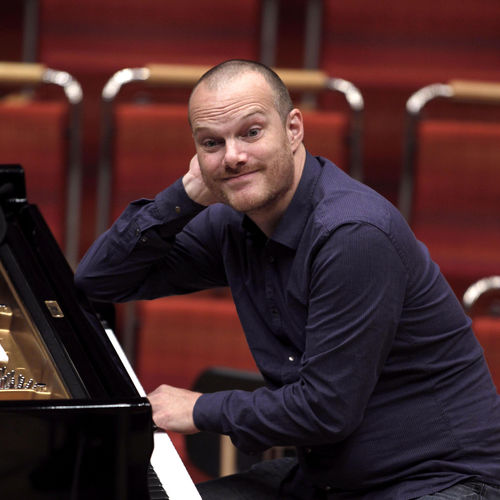
    Cancer has claimed the pianist Lars Vogt.

    At what should have been middle age, Vogt was also in the process of branching out into conducting. He served as music director of the Royal Northern Sinfonia from 2015. In 2020, he took up the directorship of the Paris Chamber Orchestra. In June, his contract there was extended through 2025.

    Vogt received his diagnosis in February 2021. Sad enough for such a talented musician to be cut down in the prime of life – he was only 51 years-old – but he also leaves behind a wife and three children.

    The courage and optimism he conveyed in interviews over the past 18 months is to be admired. R.I.P.


    Vogt plays Beethoven, beautifully

    With a poignant Brahms encore

    Vogt singles out the solace to be found in Brahms, following his diagnosis, here

    The Time Remaining

Tag Cloud

Aaron Copland (92) Beethoven (95) Composer (114) Film Music (123) Film Score (143) Film Scores (255) Halloween (94) John Williams (187) KWAX (229) Leonard Bernstein (101) Marlboro Music Festival (125) Movie Music (138) Opera (202) Philadelphia Orchestra (89) Picture Perfect (174) Princeton Symphony Orchestra (106) Radio (87) Ralph Vaughan Williams (85) Ross Amico (244) Roy's Tie-Dye Sci-Fi Corner (290) The Classical Network (101) The Lost Chord (268) Vaughan Williams (103) WPRB (396) WWFM (881)

DON’T MISS A BEAT

Receive a weekly digest every Sunday at noon by signing up here


RECENT POSTS