Tag: Czech Music

  • Martinu’s World at Bard Music Festival

    Martinu’s World at Bard Music Festival

    As a longtime attendee of the Bard Music Festival, I recognize that the schedule is not quite as brutal as it once was. There aren’t as many concerts (at one time, there were three in a day) and they now try to rein them in so that they clock at around two-and-a-half hours; but the rigors of travel, living off coffee and wraps and sleeping in a strange place, can still beat the tar out of you. Even so, I’m having a blast. I’ve said it before and I’ll say it again: Bohuslav Martinů is the sleeping giant of Czech music.

    Leon Botstein, co-artistic artistic and music director of “Martinů and His World,” asserts that the composer’s star is on the rise. I certainly hope so. But if it is the case, I have yet to see it. I was happy to note the New York Philharmonic programmed the Cello Concerto No. 1 not too long ago, and I heard Steven Isserlis play the Cello Sonata No. 1 in Philadelphia this past season. Also, the Philadelphia Orchestra performed the Rhapsody-Concerto for viola, which I heard the orchestra for the first time some 40 years ago – in the mid-‘80s, the first Martinů piece I ever heard, as a matter of fact. It was love at first encounter.

    Come to think of it, I guess that is a lot, compared to past seasons…

    But a comment during yesterday morning’s panel Q&A got me thinking how many of Martinů works I have ever actually heard in person. I tallied eight, prior to the festival. So already, I’ve more than doubled my intake. I’ve gotten to know a portion of the composer’s prolific output (more than 400 works) mostly through recordings. And what varied and magnificent stuff it is! But I’ll have to go into all that in another post. The first concert begins this morning at 11:00 – a late morning at Bard, but a man’s got to eat breakfast and pack up.

    This morning, I’m looking forward to hearing no less than four Martinů chamber works, along with a string quartet by his illicit sweetheart, Vítĕzslava Kaprálová. Later in the afternoon will be the jaunty suite from Martinů’s jazz ballet “La revue de cuisine,” the Piano Sonata No. 1, the Harpsichord Concerto (with Mahan Esfahani), and “Tre ricarcari,” in addition to Aaron Copland’s Sextet (a reduction of his then-deemed-to-be-unplayable “Short Symphony”) and Arthur Honegger’s neoclassical “Concerto da Camera.”

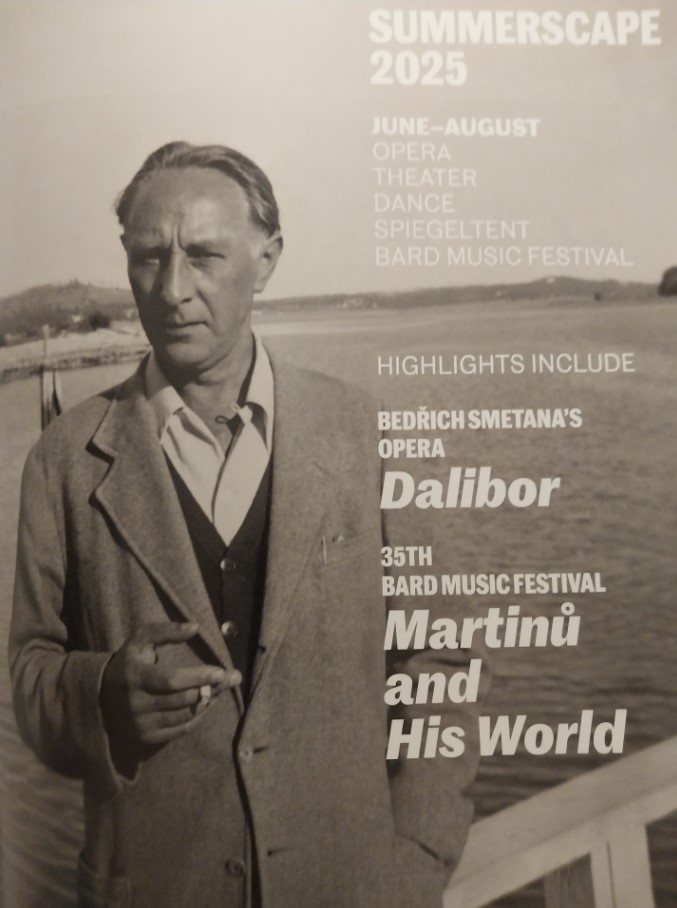
    The 35th Bard Music Festival, “Martinů and His World,” will continue next weekend at Bard College in Annandale-on-Hudson, NY. According to Bard co-artistic director Christopher H. Gibbs, the festival will cover no less than 33 works by the composer on concerts presented over seven days.

    Catch a rising star! For more information, visit

    Bard Music Festival

    Fisher Center at Bard

  • Martinů Awakens at Bard Music Festival

    Martinů Awakens at Bard Music Festival

    In less than a month, the sleeping giant of Czech music will awake!

    The 35th annual Bard Music Festival, “Martinů and His World,” will to be held largely on the campus of Bard College in Annandale-on-Hudson, NY, August 8-17.

    Why is Bohuslav Martinů not better known? Perhaps it’s because he wrote so damn much in so many difference styles. With a career that took him from Czechoslovakia to Paris to the United States and then back again to Europe, absorbing a multiplicity of stylistic influences along the way, Martinů is not the easiest guy to pin down.

    Some of his works have a strong Czech national flavor, revealing a spiritual descent from the line of Dvořák and Smetana. Others are evidently modernist, full of churning flywheels and motor rhythms, characteristic of a mechanized age. Others still flirt with popular styles, especially jazz. He’s a unique mash-up of Bohemian, French, and American influences. His “modernism,” such as it is, is seldom at the expense of broadening passages of great lyrical beauty.

    Over two weekends, the Bard Music Festival will do what it does best: immerse audiences in works from all periods of the composer’s creative life, setting them off against music of his role models, his contemporaries, and those in turn he inspired. The listening experience will be enhanced by panel discussions, pre-concert talks, and lobby chit-chat with fellow enthusiasts over coffee and sandwiches.

    Conductor and Bard president Leon Botstein will oversee orchestral, orchestral/choral, and opera performances, at the helm of the American Symphony Orchestra and Bard’s crackerjack graduate ensemble, The Orchestra Now. Evening concerts will take place at the Sosnoff Theater, the state-of-art concert hall housed in the Frank Gehry-designed Fisher Center for the Performing Arts.

    Daylight concerts and panels will be held across campus in the more intimate surroundings of the 300-seat Olin Hall. Performers will include superb musicians and ensembles from the faculty of the Bard Conservatory, guests, and visiting artists with long relationships with the festival.

    For the uninitiated, the prospect of getting one’s head around Martinů’s output can seem a little daunting. Yet the composer’s music is immediately appealing, generally easily digestible, and often a great deal of fun.

    Treat yourself to this preview featuring Bard co-artistic directors Leon Botstein and Christopher H. Gibbs. The music bed is from Martinů’s “Three Frescoes of Piero della Francesca” – not part of the festival, but performed on a previous concert by Botstein and The Orchestra Now.

    I’m especially looking forward to hearing Martinů’s Nonet, the Cello Sonata No. 3, the Flute Sonata, the jazz sextet “La revue de cuisine,” and a selection of his Etudes and Polkas for piano. Among the larger works will be the Symphonies Nos. 2 & 6, “The Epic of Gilgamesh,” the Violin Concerto No. 2, and a semi-staged performance of his opera “Julietta.”

    This being Bard, there will be plenty of fascinating rarities by other hands, including a string quartet by Martinů student (and mistress) Vítězslava Kaprálová and a piano concertino I didn’t even know existed by his friend and champion Rudolf Firkušný.

    Also featured will be works by Iva Bittová, Aaron Copland, David Diamond, Antonín Dvořák, Petr Eben, Karel Husa, Leoš Janáček, Jaroslav Ježek, Arthur Honegger, Kryštof Mařatka, Jan Novák, Maurice Ravel, Jaroslav Řídký, Erwin Schulhoff, Josef Suk, Alexandre Tansman, Joan Tower, and Frank Zappa!

    For more information about “Martinů and His World,” including a more complete schedule, visit

    Bard Music Festival

    The festival is the crown jewel in the diadem of Bard SummerScape, Bard’s annual celebration of the arts, now in progress. Fans of Czech music will also eagerly anticipate a fully-stage production of Bedřich Smetana’s “Dalibor,” that will precede the Martinů festival, July 25-August 3.

    Bard SummerScape

    Some of the events, including one of the performances of “Dalibor” will be available for livestreaming.

    The festival’s annual tie-in book of scholarly essays will be released on August 12, but there will likely already be copies available at the festival.

    https://press.uchicago.edu/ucp/books/book/chicago/M/bo258537662.html

    It’s past time that American concertgoers and programmers hold Martinů’s music in the same esteem as that of his better-known compatriots, Dvořák, Smetana, and Janáček. Here’s hoping that Bard lends traction to this giant’s seven-league boots.


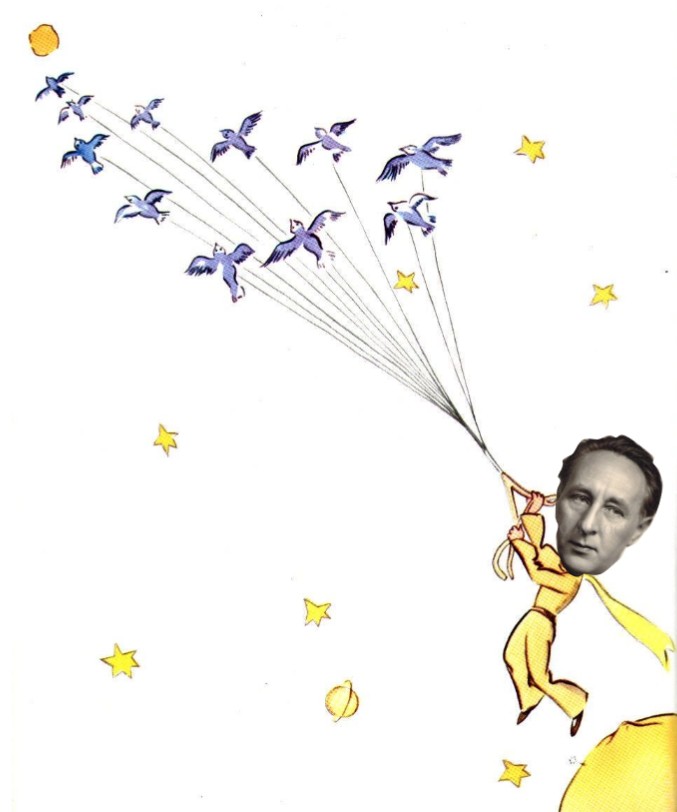
    NOTE: Giant artwork is mine; don’t blame Bard

    Fisher Center at Bard

  • Martinů Festival at Bard: A Sleeping Giant Awakens

    Martinů Festival at Bard: A Sleeping Giant Awakens

    The sleeping giant of Czech music gets his own festival!

    Why is Bohuslav Martinů not better known? It’s one of the questions, I’m sure, that will be explored at the 35th annual Bard Music Festival, “Martinů and His World,” to be held largely on the campus of Bard College in Annandale-on-Hudson, NY, August 8-17.

    Over two weekends, conductor and Bard president Leon Botstein will oversee orchestral, orchestral/choral, and opera performances, at the helm of the American Symphony Orchestra and presumably Bard’s own The Orchestra Now (TŌN). Evening concerts will take place at the Sosnoff Theater, the state-of-art concert hall housed in the Frank Gehry-designed Fisher Center for the Performing Arts.

    Daylight concerts and panels will be held across campus in the more intimate surroundings of the 300-seat Olin Hall. Performers will include superb musicians and ensembles from the faculty of the Bard Conservatory, guests, and visiting artists with long relationships with the festival.

    Part of the Martinů problem is surely that he was so prolific, it’s difficult to summarize his significance by ferreting out the important works. For the uninitiated, getting one’s head around the composer’s output can be disorienting and overwhelming. Yet Martinů’s music is immediately appealing, generally easily digestible, and often a great deal of fun.

    Some of the works have a strong Czech national flavor, revealing a spiritual descent from the line of Dvořák and Smetana; others are evidently modernist, full of churning flywheels and motor rhythms, characteristic of a mechanized age; others still flirt with popular styles, especially jazz. He’s a unique mash-up of Bohemian, French, and American influences. His “modernism,” such as it is, is seldom at the expense of broadening passages of great lyrical beauty.

    I’m happy to see a few of my favorites represented: the Nonet, the Cello Sonata No. 3, the Flute Sonata, and the jazz sextet “La revue de cuisine.” Among the larger works will be the Symphonies Nos. 2 & 6, “The Epic of Gilgamesh,” and a semi-staged performance of his opera “Julietta.”

    This being Bard, there will be plenty of fascinating rarities by other hands, including a string quartet by Martinů student (and mistress) Vítězslava Kaprálová and a piano concertino I didn’t even know existed by his friend and champion Rudolf Firkušný.

    Also featured will be works by Iva Bittová, Aaron Copland, David Diamond, Antonín Dvořák, Petr Eben, Karel Husa, Leoš Janáček, Jaroslav Ježek, Arthur Honegger, Kryštof Mařatka, Jan Novák, Maurice Ravel, Jaroslav Řídký, Erwin Schulhoff, Josef Suk, Alexandre Tansman, Joan Tower, and Frank Zappa.

    For more information about “Martinů and His World,” visit

    https://fishercenter.bard.edu/whats-on/programs/bard-music-festival/?utm_source=wordfly&utm_medium=email&utm_campaign=2025-02-11SU25Announcement&utm_content=version_A

    The festival is the crown jewel in the diadem of Bard SummerScape, Bard’s annual celebration of the arts, which will take place July 27- August 17. Fans of Czech music will also eagerly anticipate a fully-stage production of Bedřich Smetana’s “Dalibor,” that will precede the Martinů festival, July 25-Aug 3.

    https://fishercenter.bard.edu/whats-on/programs/summerscape/

    Some of the events, including one of the performances of “Dalibor” will be available for livestreaming.

    The sleeping giant stirs. Set your alarms for Martinů!

    Fisher Center at Bard

  • Beer Barrel Polka a Czech Oktoberfest Classic

    Beer Barrel Polka a Czech Oktoberfest Classic

    When lyrics were added to the best-known polka of Czech composer Jaromir Vejvoda, it also became perhaps the most famous Czech song.

    Originally conceived as the “Modřanská Polka” – or “Polka of Modřany” – with words it took on a new life as “Škoda lásky” (“Unrequited Love”). It was also a hit in Germany as “Rosamunde.” World-wide popularity followed, as soldiers adopted it as a drinking song during World War II and introduced it at home as the “Beer Barrel Polka.”

    This week on “Sweetness and Light,” in this season of the harvest and Oktoberfest, it will be one of our featured works as we roll out the barrels for a salute to BARLEY AND THE GRAPE.

    The hour will include the “Revelry Overture” by Montague Phillips and Leopold Godowsky’s “Symphonic Metamorphosis on ‘Wine, Women and Song’” after Johann Strauss II. We’ll raise our goblets to the god of wine with ballet music from Jules Massenet’s rarely-heard opera “Bacchus” and the “Procession of Bacchus” from Léo Delibes’ ballet “Sylvia.”

    We’ll also quaff to drinking songs by Reginald De Koven (“Brown October Ale” from the comic opera “Robin Hood”) and Henry Purcell (himself a casualty of one too many pub-crawls).

    We’ve a powerful thirst for BARLEY AND THE GRAPE on “Sweetness and Light.” The taps are open, this Saturday morning at 11:00 EDT/8:00 PDT, exclusively on KWAX, the radio station of the University of Oregon!

    Stream it wherever you are at the link:

    https://kwax.uoregon.edu/

  • Dvořák’s Quirky Passions Beyond Music

    Dvořák’s Quirky Passions Beyond Music

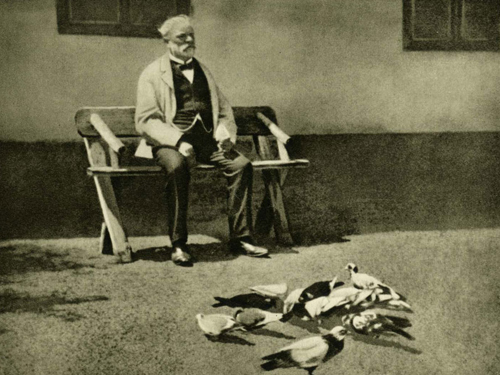
    This exhibition is past, but I found it interesting to read about a few of Dvořák’s “guilty pleasures,” beyond trainspotting and feeding pigeons.

    https://www.nm.cz/en/program/exhibitions/the-guilty-pleasures-of-antonin-dvorak

    More about Dvořák and pigeons in this Classic Ross Amico post from last year:

    https://www.facebook.com/photo?fbid=1165039271081801&set=a.883855802533484

    And another on Dvořák and trains from 2018:

    https://www.facebook.com/photo?fbid=1062790070554949&set=a.279006378933326

    Happy birthday, Antonin Dvořák, “guilty” as charged.

Tag Cloud

Aaron Copland (92) Beethoven (95) Composer (114) Film Music (119) Film Score (143) Film Scores (255) Halloween (94) John Williams (185) KWAX (229) Leonard Bernstein (99) Marlboro Music Festival (125) Movie Music (134) Opera (198) Philadelphia Orchestra (86) Picture Perfect (174) Princeton Symphony Orchestra (106) Radio (87) Ralph Vaughan Williams (85) Ross Amico (244) Roy's Tie-Dye Sci-Fi Corner (290) The Classical Network (101) The Lost Chord (268) Vaughan Williams (102) WPRB (396) WWFM (881)

DON’T MISS A BEAT

Receive a weekly digest every Sunday at noon by signing up here


RECENT POSTS