Tag: Czech Music

  • Smetana’s Heroic Life & Music on WWFM

    Smetana’s Heroic Life & Music on WWFM

    In the latter half of the 19th century, music became a focal point for nations struggling to assert their own identity following centuries of imperial control. Bedřich Smetana mined the history, landscape, and lore of the Czech people for the raw materials from which he would forge a distinctive national sound.

    Unfortunately, Smetana’s life was also marred by tragedy. Political upheavals, professional intrigue, and the deaths of three children and a wife all weighed heavily up him. A second marriage was unhappy. Syphilis robbed him of his hearing, his sanity, and eventually his life.

    Yet he completed some of his greatest works under what should have been cripplingly dispiriting circumstances. By the time he composed “Má vlast” – including the ubiquitous “Vltava” (or “The Moldau”) – he was stone deaf and living in domestic purgatory. (He believed that his second wife hated him, as she was always hounding him about money.) This period also yielded another of his most enduring works, the String Quartet No. 2 “From My Life.”

    Further vindication came when his opera “Libuše” received its belated premiere and was rapturously received. In all, Smetana composed eight operas, but of these only “The Bartered Bride” is still performed regularly outside the Czech Republic.

    Smetana is everlasting in the hearts of the Czech people. We’ll celebrate his independent spirit this afternoon on The Classical Network, on his birthday, alongside composers Marc Blitzstein, John Gardner, George Alexander Macfarren, and Robert Simpson, violinist and composer Eugène Ysaÿe, guitarist and composer Celedonio Romero, and conductor and composer Leif Segerstam.

    The music-making will be positively heroic, from 4 to 7 p.m. EST, on WWFM – The Classical Network and wwfm.org.


    To tide you over, here’s Smetana’s Sonata for Two Pianos, Eight Hands:


    The chicks dig Czech: “Bedřich Smetana and His Friends in 1865,” by Franz Dvořák (no relation to the composer)
  • Weinberger’s One-Hit Wonder Schwanda

    Weinberger’s One-Hit Wonder Schwanda

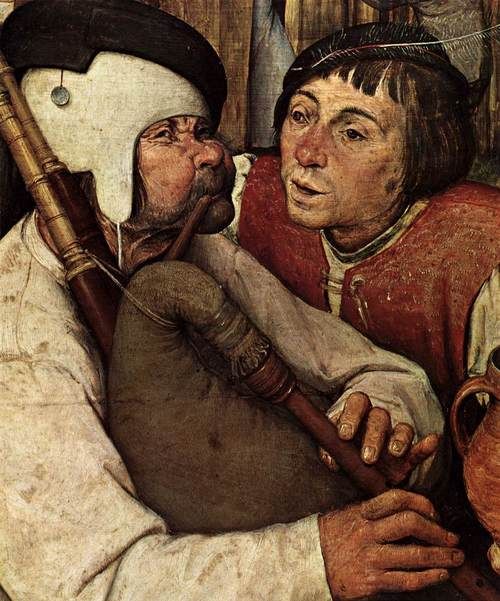
    Despite having composed over 100 works, Jaromir Weinberger remains a one-hit wonder. In 1927, his opera, “Schwanda the Bagpiper” became an international sensation. But beyond a couple of orchestral highlights – the polka and fugue – even that “one hit” isn’t terribly well known.

    This Sunday night on “The Lost Chord,” learn more about this rollicking farce, involving a love triangle, a card game with the devil, and the beguiling power of the bagpipes.

    There’s still plenty of bounce in this Czech. That’s “Czech in the Balance,” this Sunday night at 10:00 EST, on WWFM – The Classical Network and wwfm.org.

  • Marlboro Music’s Czech Gems & Dvořák Preview

    Marlboro Music’s Czech Gems & Dvořák Preview

    Each summer, the Marlboro Music School and Festival becomes a destination for chamber music performers and enthusiasts. But periodically, throughout the year, Marlboro also takes it show on the road.

    The next Marlboro tour will take place from March 17-24, with stops in Greenwich, CT, New York City (at Carnegie Hall’s Weill Recital Hall), Philadelphia (at the Kimmel Center for the Performing Arts’ Perleman Theater), Washington, DC, and Boston.

    Capping a program of music by Franz Joseph Haydn, Henry Purcell, and Benjamin Britten will be Antonin Dvořák’s String Quintet in A major, Op. 48. On this week’s “Music from Marlboro,” I’ll offer a preview of this attractive work, in the context of an all-Czech hour.

    Dvořák’s sextet was composed largely in May of 1878, making it contemporaneous with the “Slavonic Dances,” Op. 46. It’s hardly surprising, then, that the work betrays a similarly nationalist character. The sextet’s two inner movements, in fact, bear overtly Czech names: dumka and furiant.

    In music, dumka (literally, “thought”) signifies a kind of melancholy introspection. A furiant is a rapid and fiery Czech dance.

    The sextet holds an important place in Dvořák’s development. Thanks to a government subsidy, Dvořák was able to concentrate solely on composition, and he was determined to confirm his worth. The sextet proved to be the first of Dvořák’s works to receive its premiere outside of Bohemia. It was given its first public performance in Berlin, headed up by the famed violinist Joseph Joachim.

    We’ll hear it performed at the Marlboro Music Festival in 2017 by violinists Stephen Tavani and Scott St. John, violists Rosalind Ventris and Rebecca Albers, and cellists Alice Yoo and Judith Serkin. Serkin, the daughter of Marlboro co-founder Rudolf Serkin, will also appear on the Marlboro tour.

    By way of introduction, we’ll have a hell of bonus in the form of Leoš Janáček’s “Concertino,” a chamber concerto of sorts, composed in 1925. Amusingly, the composer added descriptive notes to the program of the piece, comparing the theme of the first movement to a “grumpy hedgehog,” the clarinet in the second movement to a “fidgety squirrel,” the atmosphere of the third movement to “a night owl and other night animals,” and the character of the fourth movement to a “scene from a fairy tale, where everybody is arguing.” It’s worth noting, perhaps, that Janáček had written his opera “The Cunning Little Vixen” between 1921 and 1923.

    We’ll hear a 1982 performance of the “Concertino,” with violinists Elena Barere and Mei-Chen Liao, violinist Steven Tenenbom, clarinetists Cheryl Hill (E-flat) and Steven Jackson (B-flat), bassoonist Stefanie Przybylska, and hornist Robin Graham.

    The pianist is none other than Rudolf Firkušný. Firkušný, born in Moravia in 1912, was a living link to the composer. He also studied with Josef Suk, the pupil and son-in-law of Dvořák, and with Alfred Cortot and Artur Schnabel. That’s quite a pedigree!

    You’re not going to want to miss this one. Czech it out, on the next “Music from Marlboro,” this Wednesday evening at 6:00 EDT, on WWFM – The Classical Network and wwfm.org.

    To learn more about the Marlboro Music School and Festival – its history, its tours, and its summer concerts – visit marlboromusic.org.

    Marlboro School of Music and Festival: Official Page


    PHOTOS (clockwise from left): Dvořák, Janáček, Firkušný, hedgehog

  • Czech Music from Marlboro Festival Schulhoff & Dvořák

    Czech Music from Marlboro Festival Schulhoff & Dvořák

    In a spirit of unusual generosity, I’ll be picking up the Czech for this week’s “Music from Marlboro.”

    That’s right, it’s an all-Czech hour.

    We’ll begin with music by Erwin Schulhoff, who was encouraged as a young man by Antonin Dvořák. A Jew, a communist, and a nose-thumbing Dadaist, Schulhoff must have been regarded as a triple threat by the Nazis. Who else but Schulhoff would set “The Communist Manifesto” to music? His promising career was cut short when he was arrested while fleeing to the Soviet Union. He died of tuberculosis in a concentration camp in 1942.

    We’ll hear Schulhoff’s cheeky “Divertissement for Wind Trio” from 1928. The 2002 performance will feature oboist Ariana Ghez, clarinetist Charles Neidich, and bassoonist Shinyee Na.

    Then kick back and enjoy Dvořák’s beloved Piano Quintet in A Major. Composed in 1887, Dvořák’s amply melodic and affirmatively gorgeous Quintet is the perfect antidote to any of your day’s cares. The 2008 performance will feature Marlboro Artistic Director Mitsuko Uchida as pianist, with Benjamin Beilman and David Bowlin, violins; Maiya Papach, viola; and Judith Serkin, cello.

    Only three weekends left to attend this year’s Marlboro Music Festival in Marlboro, VT. On Sunday at 2:30 p.m., Uchida will perform Mozart’s Piano Quartet No. 2 in E-flat, K. 493, on a program that will also include works by Schumann and Marlboro Resident Composer, Pulitzer Prize winner Shulamit Ran.

    Ran’s music will also feature on Saturday’s program, at 8 p.m., which will also include works by Beethoven and Alexander Zemlinsky. For more information or to plan your visit, look online at marlboromusic.org.

    Then join me this Wednesday evening at 6:00 EDT for an all-Czech hour, on the next “Music from Marlboro,” on WWFM – The Classical Network and wwfm.org.

    Marlboro School of Music and Festival: Official Page

  • Czech Music at Marlboro: Janáček & Dvořák

    Czech Music at Marlboro: Janáček & Dvořák

    Czech, please!

    On this week’s “Music from Marlboro,” it’s an all-Czech affair.

    Legendary pianist Rudolf Firkušný, born in Moravia in 1912, was a living link to composers Leoš Janáček and Josef Suk (the pupil and son-in-law of Antonin Dvořák). Firkušný studied with both and with pianists Alfred Cortot and Artur Schnabel. What a pedigree!

    Despite a very long and remarkable career, Firkušný was likely recognized by more Americans because of an unlikely venture – selling Nike sneakers alongside David Robinson of the San Antonio Spurs:

    Firkušný was 78 years-old at the time of his television “15 minutes-of-fame” in 1990. He was about to make his triumphant return to Czechoslovakia, which he had fled ahead of the Nazi occupation in 1939 and then shunned during Communist rule. Firkušný had not performed in his homeland since 1946. He has been described by author, radio personality, and noted pedagogue David Dubal as “the preeminent Czech pianist of the 20th century.”

    We’ll hear Firkušný at the 1982 Marlboro Music Festival, performing Janáček’s “Concertino,” a chamber concerto of sorts, written in 1925. He’ll be joined by violinists Elena Barere and Mei-Chen Liao, violist Steven Tenenbom, clarinetists Cheryl Hill (E-flat) and Steven Jackson (B-flat), bassoonist Stefanie Przybylska, and hornist Robin Graham.

    Then we’ll turn to Dvořák’s String Quintet No. 2 in G major, Op. 77. Dvořák’s quintet is unusual in several regards. First, rather than doubling the violas or cellos, as you’ll find in most quintets for strings, Dvořák adds a double bass. Second, the piece originally included five movements, two of them slow. The composer second-guessed its length and removed one of them, which he later reworked as his “Nocturne for Strings” in B major.

    Dvořák dedicated the quintet, a competition winner, “To my Nation.” It was originally composed in 1875, then slightly revised and published in 1888.

    We’ll hear it performed at the 1985 Marlboro Music Festival by violinists Isidore Cohen and Ralph de Souza, violist Benjamin Simon, cellist Astrid Schween, and double bassist Peter Lloyd.

    That’s music by Janáček and Dvořák on this week’s “Music from Marlboro.” Czech it out, this Wednesday evening at 6:00 EST, on WWFM The Classical Network and wwfm.org.

    Marlboro School of Music and Festival: Official Page


    Firkušný knows… Nike and Janáček

Tag Cloud

Aaron Copland (92) Beethoven (95) Composer (114) Film Music (119) Film Score (143) Film Scores (255) Halloween (94) John Williams (185) KWAX (229) Leonard Bernstein (99) Marlboro Music Festival (125) Movie Music (134) Opera (198) Philadelphia Orchestra (86) Picture Perfect (174) Princeton Symphony Orchestra (106) Radio (87) Ralph Vaughan Williams (85) Ross Amico (244) Roy's Tie-Dye Sci-Fi Corner (290) The Classical Network (101) The Lost Chord (268) Vaughan Williams (102) WPRB (396) WWFM (881)

DON’T MISS A BEAT

Receive a weekly digest every Sunday at noon by signing up here


RECENT POSTS