Tag: Czech Music

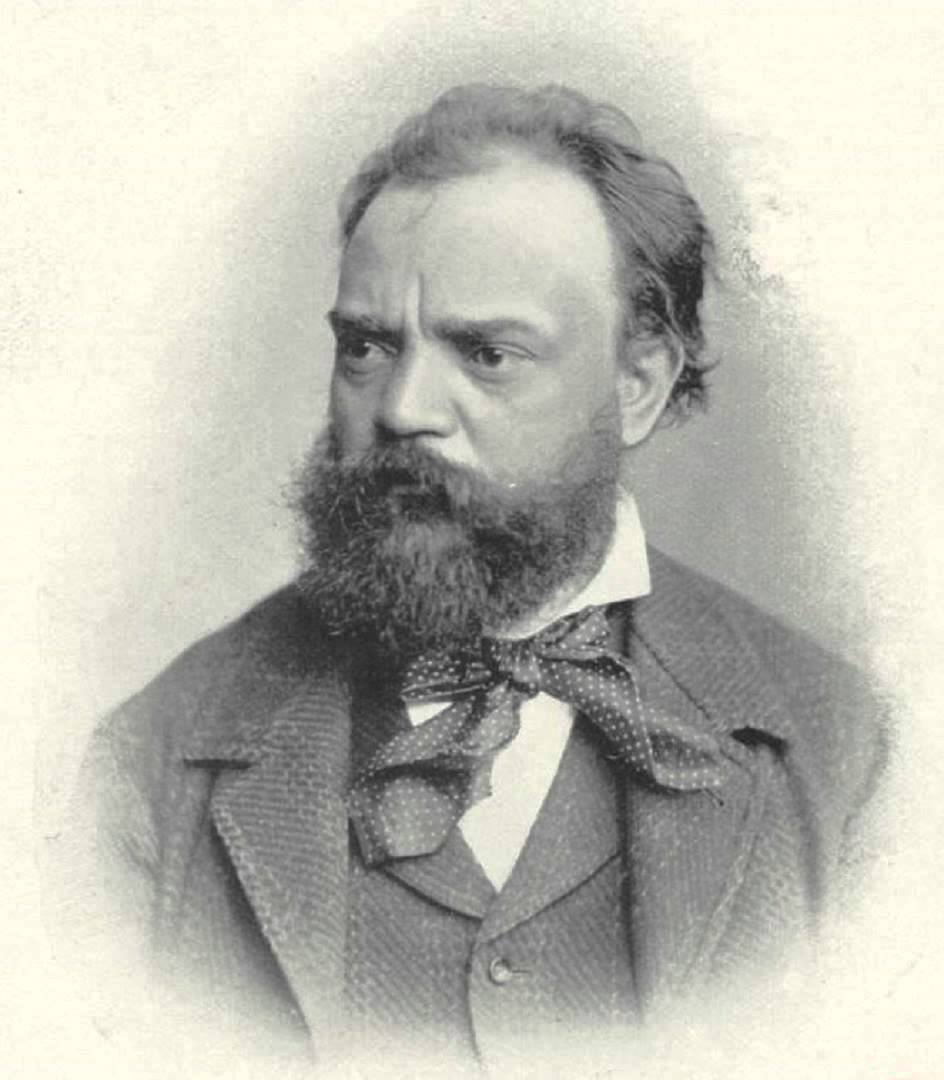
  • Happy Birthday Dvořák A Musical Appreciation

    Happy Birthday Dvořák A Musical Appreciation

    Oh Toni, how could I ignore the fact that today is your birthday anniversary? You, who never wrote a bad note?

    Having cut my teeth on the “New World” Symphony, I later discovered that yours is one of those peculiar cases where, looking back, I find that what attracted me to you in the first place is not necessarily what is most characteristic in your other music.

    However, having gotten to know your other works, I have to say, I may like them even better.

    Hard to believe that the composer of the Serenade for Strings and the sunny Symphony No. 8 could write those lurid potboilers based on Czech fairy tales, or that one could find so much depth and melancholy in simple children’s stories.

    Further, you virtually reinvented American music, directing young composers to forget about emulating Mendelssohn and Schumann and Brahms, since they could never hope to beat them at their own game, and focus on that which is distinctly America: Indian tunes and Negro spirituals (using the parlance of the day).

    Thanks for everything, Antonin Dvořák (1841-1904). Yours was a beautiful and generous soul.
    https://www.youtube.com/watch?v=tY79rR0k8Fc

  • Czech Neoclassical Music: Balanced & Uplifting

    Czech Neoclassical Music: Balanced & Uplifting

    Neoclassicism in music was a reaction against what was perceived as the garish effusiveness and gooey excess of late Romanticism. It was marked by the lucid working out of forms and processes of the 18th century, though viewed through a distinctly 20th century prism. Igor Stravinsky was arguably its greatest proponent, and he cast an enormous shadow that fell across the musical capitals of Europe.

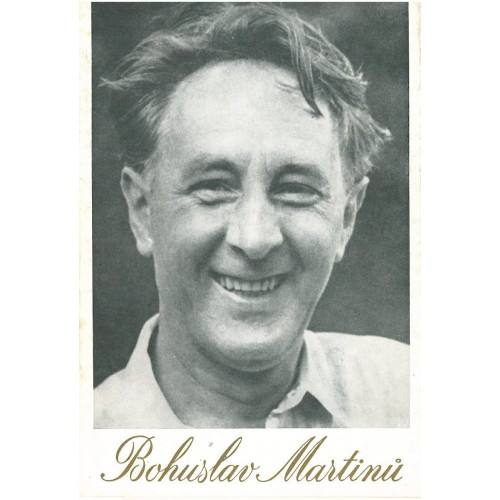
    This Sunday night on “The Lost Chord,” we’ll have cheery examples of Czech neoclassicism, with works by Ilja Hurnik (his “Sonata da Camera”), Iša Krejči (his “Serenade for Orchestra,” conducted by Karel Ančerl) and Bohuslav Martinu (his Concerto for Two Violins and Orchestra).

    These composers — well, Krejči and Martinu, anyway — manage to balance the clarity of the Enlightenment with an unmistakably Czech national sound. It’s baffling to me, in particular, that Martinu could remain the Sleeping Giant of 20th Century Music. The man was a Master.

    Hurnik’s work is perhaps the purest, in terms of looking back. The term “Sonata da Camera” recalls music of the baroque and classical eras, as does the clarity of its instrumentation, involving flute, oboe, cello and harpsichord. Each movement begins as if it had been ripped from the pages of history and then gradually gets squeezed like a lemon, leaving a tangy, contemporary aftertaste.

    All of the music is designed to lift your spirits. I hope you’ll join me for “Balanced Czechs,” this Sunday night at 10 ET, with a repeat Wednesday evening at 6; or that you’ll listen to it later as a webcast at wwfm.org.

    PHOTO: Czech it out!

Tag Cloud

Aaron Copland (92) Beethoven (95) Composer (114) Film Music (119) Film Score (143) Film Scores (255) Halloween (94) John Williams (185) KWAX (229) Leonard Bernstein (99) Marlboro Music Festival (125) Movie Music (134) Opera (198) Philadelphia Orchestra (86) Picture Perfect (174) Princeton Symphony Orchestra (106) Radio (87) Ralph Vaughan Williams (85) Ross Amico (244) Roy's Tie-Dye Sci-Fi Corner (290) The Classical Network (101) The Lost Chord (268) Vaughan Williams (102) WPRB (396) WWFM (881)

DON’T MISS A BEAT

Receive a weekly digest every Sunday at noon by signing up here


RECENT POSTS