Tag: Erich Wolfgang Korngold

  • Shakespeare’s Birthday A Midsummer Night’s Dream

    Shakespeare’s Birthday A Midsummer Night’s Dream

    Happy birthday – and lamentable death date – William Shakespeare!

    Here’s the enchanting fairies sequence from Warner Brothers’ 1935 film version of “A Midsummer Night’s Dream,” with a 15 year-old Mickey Rooney as Puck. Erich Wolfgang Korngold adapted the music of Felix Mendelssohn for the soundtrack. They just don’t make ‘em like this anymore.

    Join me for “Picture Perfect” Friday evening at 6 EDT (with a repeat next Saturday morning at 6) when we’ll sample from this fascinating hybrid of a film score on wwfm.org.

    #Shakespeare400

  • Korngold Rediscovered Vienna to Hollywood

    Korngold Rediscovered Vienna to Hollywood

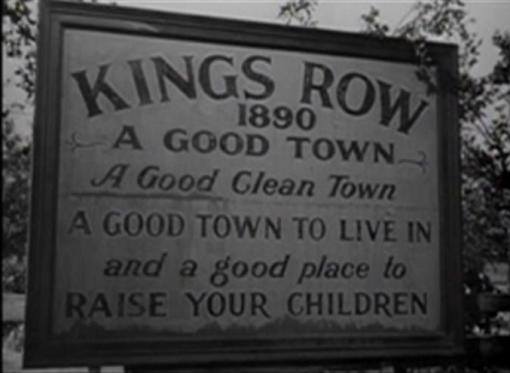
    For the first edition of “The Lost Chord” for 2016, we revisit the music of Erich Wolfgang Korngold. Korngold, of course, was one of the great film composers. A two-time Academy Award winner, he provided music for such classics as “Captain Blood,” “The Prince and the Pauper,” “The Adventures of Robin Hood,” “The Sea Hawk” and “Kings Row.”

    But before he settled in Hollywood, Korngold was the toast of Vienna, one of the most lauded of contemporary composers, and the city’s brightest hope for maintaining its fin de siècle supremacy in music.

    Korngold was a child prodigy who had amazed audiences with such works as the ballet-pantomime “Der Schneemann” (or “The Snowman”), composed at the tender age of 11 (first performed at the Vienna Court Opera in the presence of Emperor Franz Josef); his Piano Trio, composed at the age of 13 (given its premiere by Arthur Schnabel and members of the Vienna Philharmonic); and the “Sinfonietta,” a symphony-in-all-but-name, composed at the age of 15 (first conducted by Felix Weingartner, Korngold sharing a box at that performance with an admiring Richard Strauss).

    With the premiere of his opera “Die tote Stadt,” in 1920, at age 23, Korngold’s reputation seemed assured. He wrote a piano concerto for Paul Wittgenstein, undertook a revival of the operettas of Johann Strauss II, and was publicly honored by the president of Austria.

    However, the trajectory of his career took an unexpected turn with the rise of Hitler. To escape the creep of fascism, Korngold embarked on a second career, settling in Hollywood to write film scores for Warner Brothers.

    The first of these was composed at the invitation of famed impresario Max Reinhardt, with whom Korngold had collaborated on the Strauss revivals. Reinhardt was in the process of adapting Shakespeare’s “A Midsummer Night’s Dream” for the big screen, and he enlisted Korngold to rework Felix Mendelssohn’s famous incidental music.

    In true Korngoldian fashion, the composer went well beyond what was expected, weaving in passages from Mendelssohn’s symphonies and “Songs Without Words,” writing his own connective material, and sprinkling the whole with fairy dust.

    Korngold’s work on “A Midsummer Night’s Dream” led to an exclusive contract at Warner’s, where the composer revolutionized the language of film music, applying the kind of opulence, pageantry and romance characteristic of his operas to silver screen historical dramas and swashbucklers.

    The result was kind of a pop cultural immortality, but to the detriment of his reputation as a serious composer. The center of European musical culture was off-limits, indeed severely limited by Nazi strictures, and the language of musical modernism, as exemplified by the output of his contemporary and compatriot Arnold Schoenberg, made Korngold seem positively old-fashioned. It would be decades before his reputation would recover, and unfortunately by then he was long dead.

    From the same year as his greatest triumph, “Die tote Stadt,” 1920, comes an earlier foray into Shakespeare, written for a stage production of “Much Ado About Nothing.” “Much Ado” contains some of Korngold’s most charming music. A concert suite of some 20 minutes has been in circulation for decades.

    However, what we have for you this evening is the first COMPLETE recording of the score, with spoken dialogue. A 2013 release, on the Toccata Classics label, it features actors and musicians of the University of North Carolina School of the Arts, conducted by John Mauceri.

    I hope you’ll join me for “Much Ado About Korngold,” tonight at 10 ET, with a repeat Wednesday evening at 6; or that you’ll listen to it later as a webcast at wwfm.org.

  • Writers on Film Behind the Screen

    Writers on Film Behind the Screen

    Words on the printed page captivate us so completely that it’s natural to assume that the lives of writers must be very rich, full of incident, and dramatic indeed. Surely that is sometimes the case. Who among us could keep up with a Byron or a Pushkin or a Poe?

    Yet even with the most outlandish writers, Hollywood, for some reason, often feels the need to fabricate. How else to explain “Devotion” (1943), Warner Brothers’ salute to the Brontës? Then again, the temptation must be strong to characterize the sisters who penned “Jane Eyre” and “Wuthering Heights” as tortured Romantics.

    Ida Lupino plays Emily, the creator of Cathy and Heathcliff, and Olivia de Havilland, Charlotte, who conceived Jane and Rochester. Nancy Coleman is their sister Anne, who wrote “The Tenant of Wildfell Hall,” and Arthur Kennedy, their dissolute brother Branwell. The film also features Sidney Greenstreet, as William Makepeace Thackeray, Paul Henreid as an Irish priest, and – well, you get the idea. The casting, at times, strains credibility.

    However, the music by Erich Wolfgang Korngold is up to the composer’s usual high standard. Korngold himself became so enamored of one of its themes that he recycled it for use in the first movement of his Violin Concerto.

    The behind-the-scenes drama on “Devotion” is nearly as colorful as anything that made it to the screen. De Havilland had originally been cast to play Emily, and her real-life sister, Joan Fontaine, was to play Charlotte. De Havilland and Fontaine had an uneasy relationship, at best, their entire lives. At times they competed for the same men (Howard Hughes) and the same roles (Melanie in “Gone With the Wind” and the “second Mrs. De Winter” in Alfred Hitchcock’s “Rebecca”). In 1942, they were both in contention for the Academy Award for Best Actress. Fontaine won. De Havilland wouldn’t win her first Oscar until 1946. To say that the two were competitive is putting it mildly.

    Fortunately for everyone on the set, an offer had come through for Fontaine to play Charlotte Brontë’s most famous creation, Jane Eyre, opposite Orson Welles’ Rochester, over at 20th Century Fox. So De Havilland assumed the part vacated by Fontaine.

    After shooting wrapped, “Devotion” actually sat on the shelf for three years, as De Havilland successfully sued Warner Brothers to terminate her contract without her having to make up the six months she had been kept on “suspension.” Until then, actors under contract to the major studios had been considered “suspended” between jobs, thereby extending their obligation to their employers, so that, for instance, a seven year contract was spread out over a much longer period, fulfilled only during the time an actor was actually working. The legal victory became informally known as the De Havilland Law.

    In addition to Korngold’s take on the Brontës, we’ll have music from movies inspired by Iris Murdoch (“Iris,” with music by James Horner), the Bard of Avon (“Shakespeare in Love,” with an Academy Award-winning score by Stephen Warbeck), and Samuel Clemens (“The Adventures of Mark Twain,” by Max Steiner).

    I hope you’ll join me for real-life writers who appeared as characters in the movies, on “Picture Perfect,” this evening at 6 ET, with a repeat tomorrow morning at 6; or that you’ll listen to it later as a webcast at wwfm.org.

  • Left-Handed Piano Music From WPRB

    Left-Handed Piano Music From WPRB

    “I’d give my right arm to be ambidextrous” – one of the many quotes attributed to the late Yogi Berra, master of the malaprop, emperor of the oxymoron, and crown prince of the paradox.

    Tune in this morning to enjoy left-handed rarities composed for Paul Wittgenstein, the remarkable Austrian pianist who lost his right arm in the First World War. Yet to come: music by Erich Wolfgang Korngold, Sergei Bortkiewicz, and a work by Paul Hindemith that was locked away in a trunk, unheard, for 80 years.

    We’ll also hear Siegfried Rapp, another pianist who was maimed during the war, performing music of Bohuslav Martinu, originally written for Otakar Hollmann, who was shot in the right hand, and a concerto by Ned Rorem composed for Gary Graffman, whose two-handed career was curtailed by focal dystonia.

    These pianists who met with misfortune brought us lots of glorious music, commissioned from some of the great composers of their day. It’s all piano music for the left hand until 11 ET on WPRB 103.3 FM and online at wprb.com.

  • Tyrannical Sea Captains Movie Music

    Tyrannical Sea Captains Movie Music

    This week on “Picture Perfect,” take the lash and prepare to be keelhauled. We’ll have music from movies featuring tyrannical sea captains.

    Tyranny and sadism are common ingredients in nautical adventure films, where hard-bitten sea captains find it better to reign in hell, than serve in heaven.

    At least that’s the mantra of Wolf Larsen, who does his best to uphold the philosophy of Milton’s Satan, in Jack London’s “The Sea Wolf.” Larsen is a tough Norwegian sea captain who presides over his ship, the Ghost, through strength and brutality.

    Edward G. Robinson plays Larsen in the 1941 film version. John Garfield is the working class seaman who opposes him. And Ida Lupino is the castaway with a past, with whom he falls in love in spite of himself. The score is by Erich Wolfgang Korngold, who provided the music for some of the memorable seafaring adventures of Errol Flynn.

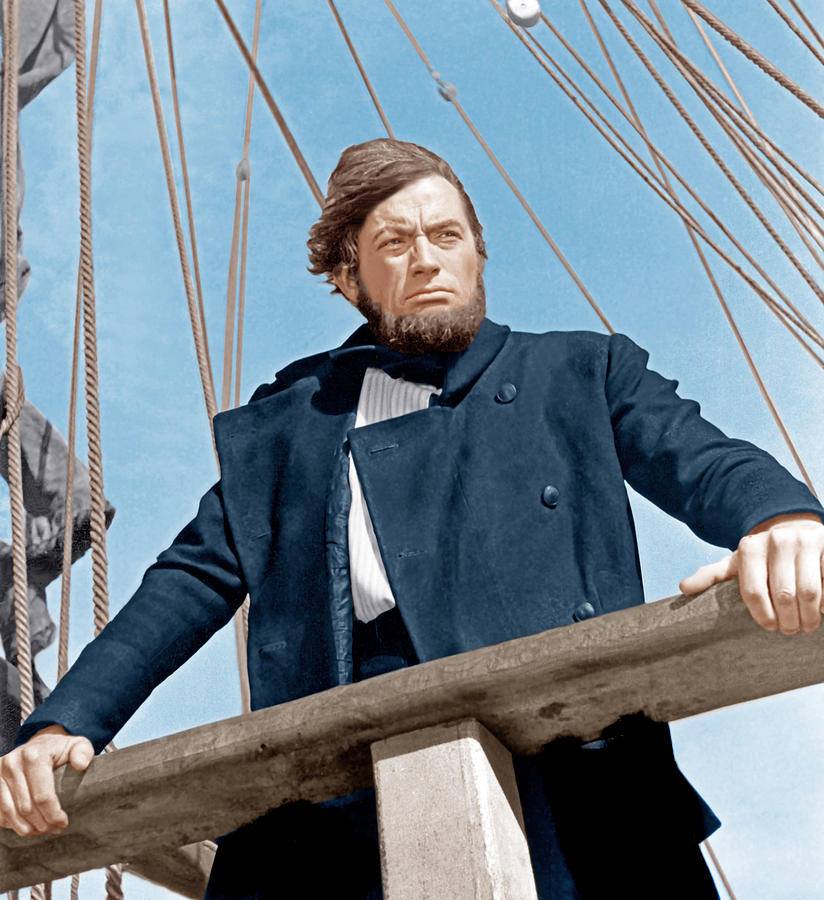
    Captain Ahab is a familiar enough figure that he requires little introduction. Everyone knows about his ivory leg and his obsessive quest for the White Whale. Gregory Peck played Ahab in a 1956 film adaptation (with a screenplay by Ray Bradbury) of Herman Melville’s “Moby Dick,” which was directed by John Huston. The score was by English composer Philip Sainton.

    Humphrey Bogart was nominated for an Academy Award for his performance as Lieutenant Commander Phillip Francis Queeg, in the big screen adaptation of Herman Wouk’s “The Caine Mutiny,” in 1954. Queeg, in charge of a U.S. Navy destroyer-minesweeper, is pushed over the edge by his obsession for strawberries pilfered from the officers’ mess. Max Steiner’s upbeat, patriotic theme provides a nice counterpoint to the interpersonal turmoil aboard the Caine.

    Finally, the most iconic of tyrannical sea captains, Captain Bligh, will be represented with “Mutiny on the Bounty.” Historical novelists Charles Nordhoff and James Norman Hall make hay from the 1789 insurrection aboard the HMS Bounty.

    The classic film version from 1935 starred Charles Laughton as Bligh and Clark Gable as Fletcher Christian. The 1962 remake featured Trevor Howard as Bligh, with Marlon Brando envisioning Christian as a kind of high seas dandy.

    It’s said that Brando essentially directed all his own scenes himself. The film was colossal failure, earning back only $13 million of its $19 million budget. Nonetheless, it managed to inspire Bronislau Kaper to compose one of his most monumental scores.

    Take a bucket of salt water with your stripes, you dog! It’s tyrannical sea captains on “Picture Perfect,” music for the movies – this Friday evening at 6, with a repeat Saturday morning at 6; or listen to it later as a webcast at wwfm.org.

Tag Cloud

Aaron Copland (92) Beethoven (95) Composer (114) Film Music (123) Film Score (143) Film Scores (255) Halloween (94) John Williams (187) KWAX (229) Leonard Bernstein (101) Marlboro Music Festival (125) Movie Music (138) Opera (202) Philadelphia Orchestra (89) Picture Perfect (174) Princeton Symphony Orchestra (106) Radio (87) Ralph Vaughan Williams (85) Ross Amico (244) Roy's Tie-Dye Sci-Fi Corner (290) The Classical Network (101) The Lost Chord (268) Vaughan Williams (103) WPRB (396) WWFM (881)

DON’T MISS A BEAT

Receive a weekly digest every Sunday at noon by signing up here


RECENT POSTS