Tag: Erich Wolfgang Korngold

  • Doppelganger Movie Music for Disoriented Times

    Doppelganger Movie Music for Disoriented Times

    Do the holidays already have you feeling a little disoriented? This week, on “Picture Perfect,” we’re literally seeing double.

    James Stewart plays Scottie Ferguson, a traumatized police detective who becomes obsessed with the woman he loves – and loses – in Alfred Hitchcock’s “Vertigo” (1958). Kim Novak portrays both the enigmatic beauty and her spitting image, who Ferguson, rather creepily, attempts to mold. Bernard Herrmann wrote the hypnotic score. Not too long ago, the love theme was recycled in the Academy Award winning film, “The Artist.”

    Krzysztof Kieślowski’s “La double vie de Véronique”/“The Double Life of Véronique” (1991) features parallel characters living in Poland and France who are mysteriously linked, both of them played by Irène Jacob. The performance earned Jacob an award for Best Actress at the Cannes Film Festival. The music, which plays a significant role in the actual plot, is by Zbigniew Preisner. (Again, thanks to Bill Zeltman for sending me a copy of the soundtrack!)

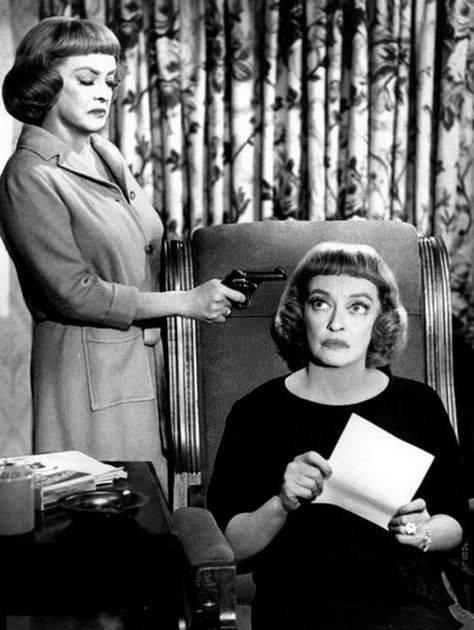
    For the second time in her career, Bette Davis gets a chance to play an evil twin in “Dead Ringer” (1964). The first was in the 1946 good twin-bad twin melodrama, “A Stolen Life.” When asked what the difference was between the two performances, Davis quipped, “About 20 years.” “Dead Ringer” was directed by her longtime friend and “Now, Voyager” co-star Paul Henreid. The music is by André Previn, whose score employs a stock-in-trade sinister harpsichord, yet when he comes to write the love theme, he manages to whip up one hell of a tribute to Erich Wolfgang Korngold.

    Korngold scored a number of Davis’ films in the 1940s, though he is principally remembered for his work on the swashbucklers of Errol Flynn. To capitalize on Flynn’s star-making performance in “Captain Blood,” Warner Brothers produced a big screen adaptation of Mark Twain’s Tudor switcheroo, “The Prince and the Pauper” (1937). Flynn steals the show as Miles Hendon, the devil-may-care guardian of Prince Edward and Tom Canty, Edward’s mirror image, played by real-life twins Bobby and Billy Mauch. If you’re a Korngold fan, or an enthusiast of violin concertos, you may recognize some of the music. Korngold recycled the theme for use in the last movement of his Violin Concerto in D, championed by Heifetz and others. (By coincidence, today is Twain’s birthday!)

    Double your pleasure with music from movies about doppelgangers, twins, and dual identities, on “Picture Perfect,” this Friday evening at 6:00 EST, on WWFM – The Classical Network and wwfm.org.
  • Korngold Errol Flynn and Hollywood’s Golden Age

    Korngold Errol Flynn and Hollywood’s Golden Age

    With the necessary emphasis on fundraising this week, I happened to miss the birthday anniversary of one of my favorite composers. Erich Wolfgang Korngold was born on May 29, 1897. Thanks to a steady diet of Errol Flynn films, his music will forever be a part of the soundtrack of my life.

    Korngold went from being one of Europe’s great musical prodigies, his works admired by Mahler, Strauss and Puccini – and championed by Schnabel, Weingartner and Klemperer – to becoming one of Hollywood’s transformative film composers. He is a link from Old World opulence to New World fantasy, his music gracing a number of Warner Brothers’ classic historical adventures.

    The best ones starred Flynn, and we’ll hear music from “The Sea Hawk” (1940) and “The Adventures of Robin Hood” (1938), as well as the mostly forgotten “Another Dawn” (1937). Flynn stars alongside Kay Francis and Ian Hunter (who would go on to play Richard the Lionheart in “Robin Hood”) in this love triangle involving pilots in a British desert colony.

    The film may be an obscurity to all save classic movie buffs, but Korngold thought enough of his music that he salvaged the main title as the opening theme to his Violin Concerto, premiered by Heifetz in 1947.

    It was an invitation from theatrical impresario Max Reinhardt that brought Korngold to Hollywood in the first place, for a cinematic adaptation of “A Midsummer Night’s Dream” (1935). The film stars James Cagney, Dick Powell and Olivia de Havilland, in her big screen debut, with Mickey Rooney an irrepressible Puck.

    For the project, Korngold adapted the famous incidental music of Felix Mendelssohn, interweaving material from Mendelssohn’s symphonies and orchestrating some of the “Songs without Words.” Even so, the music bears the composer’s unmistakable stamp, as you’ll hear in the opening number, lifted from the “Scottish Symphony,” which is marked by plenty of Korngoldian swagger.

    Set sail with Erich Wolfgang Korngold this week, on “Picture Perfect,” music for the movies. Enjoy it this Friday evening at 6:00 EDT, immediately following today’s classical music countdown. Please sustain our programming on WWFM – The Classical Network by calling 1-888-232-1212 or making your contribution at wwfm.org. Thank you for your continued support!


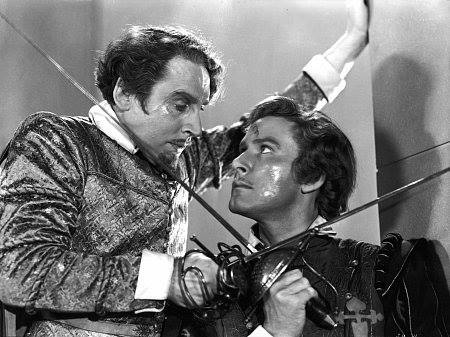
    PHOTO: The music was actually on my “personal favorites” playlist – Henry Daniell and Errol Flynn in “The Sea Hawk”

  • Golden Age of Film Scores on WPRB This Sunday

    Golden Age of Film Scores on WPRB This Sunday

    Holy cow! One of my favorite movies is 80 years-old this year? Then again, that is SO me.

    Join me this Sunday morning on WPRB, as we look back on Oscar history – WAY back.

    We’ll hear a rare 1938 recording of selections from “The Adventures of Robin Hood,” by Erich Wolfgang Korngold, with Sir Guy of Gisborne himself, Basil Rathbone, the narrator, and Korngold conducting.

    Sir Thomas Beecham will direct the Royal Philharmonic Orchestra in music by Brian Easdale, written for the 1948 Powell-Pressburger classic, “The Red Shoes.”

    And virtually every major composer in Hollywood will come together at the Hollywood Bowl for a concert of now-classic film scores that was originally broadcast on CBS Television in 1963. The event is now looked back upon as “the greatest film music concert in history.” Participants included, among others, Alfred Newman (“How the West Was Won”), David Raksin (“Laura”), Alex North (“Cleopatra”), Johnny Green (“Raintree County”), Franz Waxman (“A Place in the Sun”), Bernard Herrmann (“North by Northwest”), Dimitri Tiomkin (“High Noon”), and Miklos Rozsa (“Ben-Hur”).

    An album was released on LP, but understandably the three-hour concert was severely truncated. This was somewhat remedied on a CD-reissue, that included 70 minutes of music. Among the casualties, however, was Elmer Bernstein conducting the theme to “The Magnificent Seven.” We’ll restore that cut when we hear the concert this morning.

    Also in the audience was Max Steiner, whose music for “A Summer Place” and “Gone with the Wind” were on the program. “Gone with the Wind” didn’t make the album, but we will more than remedy the exclusion with an extended suite conducted by Steiner himself.

    Collectively, these composers earned over sixty Academy Awards and over 300 Oscar nominations.

    I hope you’ll travel back with me to a time when Oscar really was gold, this Sunday morning from 7 to 10 EST, on WPRB 103.3 FM and wprb.com. Scores will be settled, on Classic Ross Amico.


    More about the legendary “Music in Hollywood” concert here:

    http://www.filmmusicsociety.org/news_events/features/2013/092313.html

  • Korngold’s Hollywood Composers

    Korngold’s Hollywood Composers

    Errol Flynn writes a ballet? Charles Boyer composes a tone poem? Claude Rains writes a cello concerto!

    This week on “Picture Perfect,” we’ve got three examples from Hollywood’s Golden Age of movies about fictional composers. These, of course, required music allegedly written by the characters, and this was provided by two-time Academy Award-winner Erich Wolfgang Korngold.

    Korngold is probably best known to movie buffs as the composer for Flynn swashbucklers such as “The Adventures of Robin Hood” and “The Sea Hawk,” but his filmography is more varied than one might at first suspect. No matter what the subject, Korngold could be counted on to bring that opulent fin de siècle gloss, developed in a Vienna steeped in Mahler and Strauss.

    We’ll hear music from “Escape Me Never” (1947), a slightly preposterous melodrama about two composer brothers who become rivals in love; “The Constant Nymph” (1943), about a would-be romantic bond between a composer struggling to find his true voice and an admiring girl on the verge of womanhood who develops deeper feelings for him; and “Deception” (1946), about a cellist reunited with his former love, who had believed him killed during the war, and the vindictive composer who attempts to shatter his psyche through grueling rehearsals of his latest concerto.

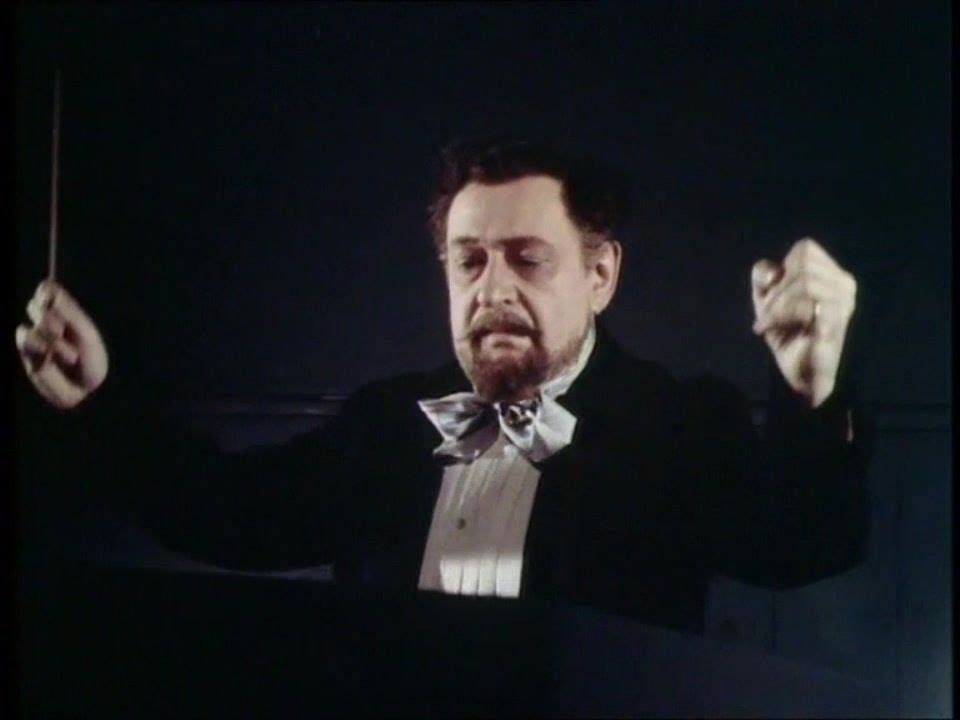
    “Deception” was Korngold’s last, wholly original score, though he was lured back to Hollywood for one final project, “Magic Fire” (1955), a biopic of the composer Richard Wagner, for which he adapted selections from Wagner’s operas. Furthermore, Korngold makes an appearance onscreen (!) as conductor Hans Richter. The film was subject to heavy cuts prior to its U.S. release and was not a success.

    Hollywood seldom gets it right when it comes to portraying the process of the composer, but Korngold, true to his name, did his best to spin gold from corn, producing some appropriately grand utterances, albeit condensed to only a few minutes of screen time. Quite a task for this figure who made his greatest mark in opera.

    Join me for these examples of Korngold as ghostwriter, on “Picture Perfect,” this Friday evening at 6:00 EST, on WWFM – The Classical Network and wwfm.org.
    Follow the link to hear Korngold improvise on themes from “The Flying Dutchman” (with entertaining stills):

    https://www.youtube.com/watch?v=h4bNEw1nu3I


    MAGIC FIRE: When the actor who was hired to play Hans Richter failed to show, Korngold was rushed into make-up (hence, the fake beard). This is the only existing footage of Korngold conducting.

  • Support Classical Music Radio WWFM

    Support Classical Music Radio WWFM

    What kind of a price tag do you put on something of intangible worth? It’s the age-old conundrum of the value of art.

    Without getting into whether or not art is “good” for you or for your community (like spinach), consider for a moment what having classical music on WWFM has meant for the quality of your life. If you seriously feel it has done much to enrich your days and to give you solace or inspiration at all hours, then why not follow your heart – within the restraints of your budget, of course?

    Public radio isn’t here to break the bank. Ideally, if everyone who enjoys the service – an endangered one in an increasingly commercial, talk, and news-driven market – then there would be no danger of having this invaluable asset lost or compromised. We’ve already had to make some hard decisions in recent years in order to survive within our budget.

    If you’ve already given recently, thank you so much for your support – but if it’s been a year or more, how about it? Can you spare $20, $50, $120 for the station you love? $120 is just ten dollars a month. It may not seem like it would amount to much, but if even a few dozen people were to contribute, that’s quite a considerable chunk of change. If our entire listenership could be moved to be so generous, The Classical Network would one of the most well-off public radio stations in existence. But the reality is only a very small percentage of listeners give.

    Regardless of what attracts you to the station – Who’s your favorite composer or performer? What’s your preferred era or genre? Who’s your favorite host or what’s your favorite specialty show? – we like to think we offer something for everyone who cares about classical music.

    As you consider what you are able to do in order to help support our future, enjoy a day of wall-to-wall Mozart, as Alice Weiss (9 to noon), David Osenberg (10 to 2), Carl Hemmingsen (1 to 4), Michael Kownacky (2 to 6) and yours truly (4 to 6) share some of our favorites, in advance of the master’s 262nd birthday. (The actual anniversary is tomorrow.)

    Then stick around for “Picture Perfect,” music for the movies, coming your way at 6 p.m. I’ve selected four recordings of scores by another one of classical music’s great musical prodigies, Erich Wolfgang Korngold. I’ll post a little more about that in just a bit.

    “Picture Perfect” kicks off a Friday evening of unique specialty shows and live concert material. Bill McGlaughlin brings you another edition of “Exploring Music” (and more Mozart) at 7; Carl Hemmingsen hosts a concert of the Princeton Symphony Orchestra, with music by Respighi, Schulhoff, and Mendelssohn, at 8; Allan Kelly presents “Distant Mirror” at 10; and Lewis Baratz hosts “Well-Tempered Baroque” at 11.

    The Mozart celebration is already underway on WWFM – The Classical Network. Please show your support by calling 1-888-232-1212 or by contributing online at wwfm.org. We wouldn’t be here without your generosity. Thank you for your support!

Tag Cloud

Aaron Copland (94) Beethoven (95) Composer (114) Film Music (148) Film Score (143) Film Scores (255) Halloween (97) John Williams (196) KWAX (232) Leonard Bernstein (105) Marlboro Music Festival (125) Movie Music (163) Mozart (91) Opera (215) Philadelphia Orchestra (90) Picture Perfect (174) Princeton Symphony Orchestra (110) Radio (90) Ross Amico (244) Roy's Tie-Dye Sci-Fi Corner (290) The Classical Network (101) The Lost Chord (269) Vaughan Williams (107) WPRB (397) WWFM (881)

DON’T MISS A BEAT

Receive a weekly digest every Sunday at noon by signing up here


RECENT POSTS