Tag: Erich Wolfgang Korngold

  • Princeton NJ Orchestras Explore Hollywood Sound

    Princeton NJ Orchestras Explore Hollywood Sound

    The curtain rods come in for a fair amount of abuse as I write about Erich Wolfgang Korngold and John Williams for this week’s edition of Princeton U.S. 1.

    The Capital Philharmonic Orchestra of New Jersey will present an all-Williams concert at Trenton’s Patriots Theater at the War Memorial, this Saturday at 7:30 p.m. Saxophonist Jonathan Wintringham will be the soloist in “Escapades,” a concerto on themes from the Steven Spielberg film “Catch Me If You Can.” CPNJ music director Daniel Spalding will conduct.

    Then the Princeton Symphony Orchestra will present Korngold’s Violin Concerto on a program that will also include Gabriela Lena Frank’s “Elegía Andina” (“Andean Elegy”) and Felix Mendelssohn “Scottish Symphony,” at Princeton University’s Richardson Auditorium on May 7 & 8. Stefan Jackiw will be the soloist in a work that lifts its thematic material from classic film scores of the 1930s and ‘40s. PSO music director Rossen Milanov will conduct.

    Catch me if you can, as I outline a film music continuum, and along the way reveal the source of my lifelong passions for swashbuckling swordfights and symphony orchestras, in this week’s U.S. 1 newspaper, out today.

    https://www.communitynews.org/princetoninfo/artsandentertainment/regional-orchestras-go-for-hollywood-sound/article_1058f9a6-c01b-11ec-9a2d-5f75837c82c9.html


    Princeton Symphony Orchestra
    New Jersey Capital Philharmonic Orchestra
    Patriots Theater at the War Memorial
    Stefan Jackiw
    Jonathan Wintringham
    Community News
    U.S. 1 Newspaper – PrincetonInfo

  • Hollywood Writers Music on Film

    Hollywood Writers Music on Film

    Words on the printed page captivate us so completely that it’s natural to assume that the lives of writers must be rich, full of incident, and very dramatic indeed. Surely that is sometimes the case. Who among us could keep up with a Byron or a Pushkin or a Poe?

    Yet, with even the most outlandish writers, Hollywood for some reason often feels the need to fabricate. How else to explain “Devotion” (1943), Warner Brothers’ salute to the Brontës? Then again, the temptation must be strong to characterize the sisters who penned “Jane Eyre” and “Wuthering Heights” as tortured Romantics.

    Ida Lupino plays Emily, the creator of Cathy and Heathcliff, and Olivia de Havilland, Charlotte, who conceived Jane and Rochester. Nancy Coleman is their sister Anne, who wrote “The Tenant of Wildfell Hall,” and Arthur Kennedy, their dissolute brother Branwell. The film also features Sidney Greenstreet as William Makepeace Thackeray, Paul Henreid as an Irish priest, and – well, you get the idea. The casting, at times, strains credulity.

    However, the music by Erich Wolfgang Korngold is up to the composer’s usual high standard. Korngold himself became so enamored of one of its themes that he recycled it for use in the first movement of his Violin Concerto. This week on “Picture Perfect,” we’ll have chance to sample some of it.

    We’ll also hear selections from movies about Iris Murdoch (“Iris,” with music by James Horner), the Bard of Avon (“Shakespeare in Love,” with an Academy Award-winning score by Stephen Warbeck), and Samuel Clemens (“The Adventures of Mark Twain,” by Max Steiner).

    Writers are such characters, especially when they’re depicted on the big screen. Everything’s writ large, on “Picture Perfect,” music for the movies, this Saturday evening at 6:00 EDT, on WWFM – The Classical Network and wwfm.org.

  • Korngold Errol Flynn Hollywood Composer

    Korngold Errol Flynn Hollywood Composer

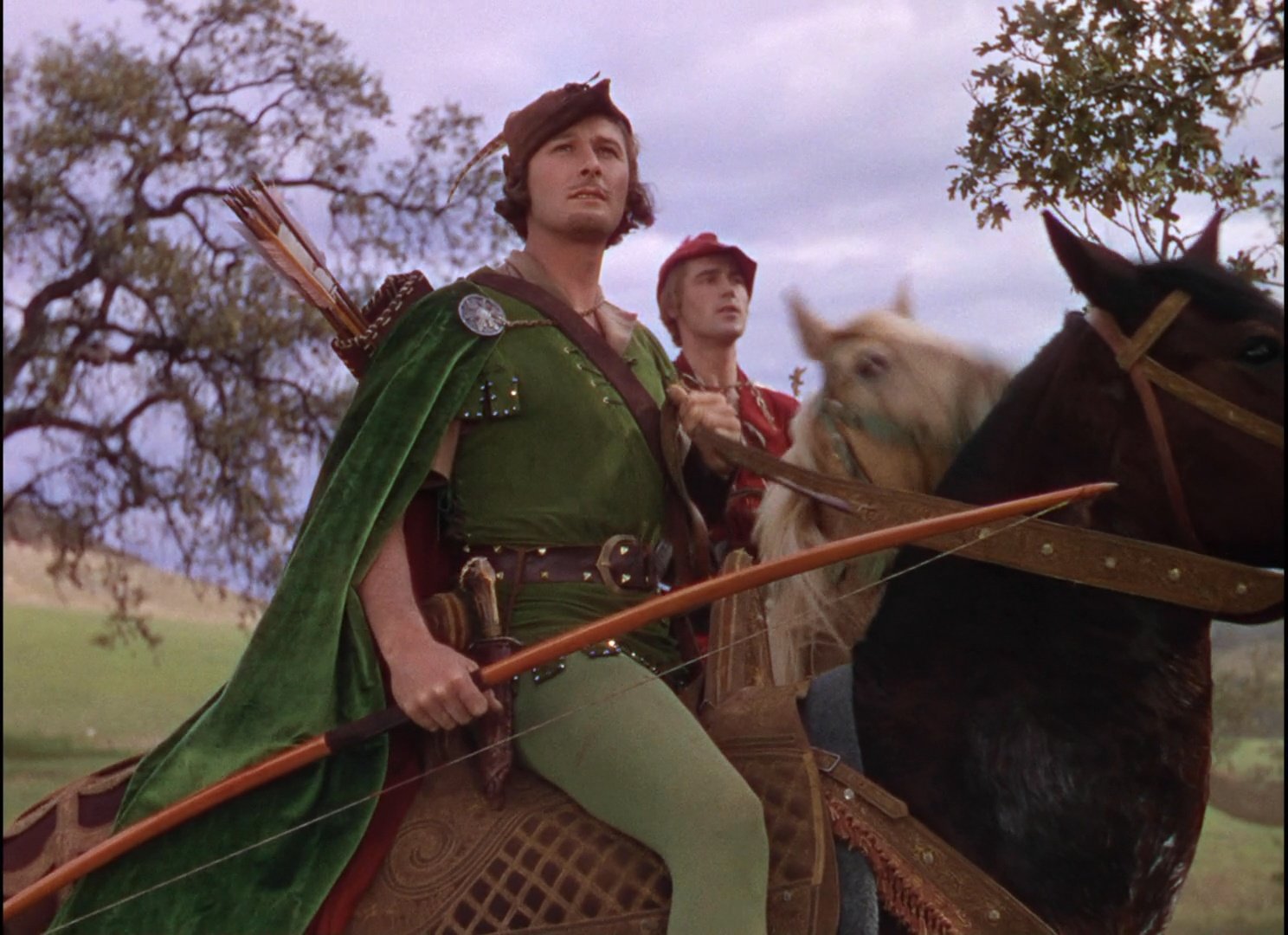
    May 29 marks the birthday of one of my favorite composers: Erich Wolfgang Korngold (1897-1957). Thanks to a steady diet of Errol Flynn films, Korngold will forever be a part of the soundtrack to my life.

    Korngold went from being one of Europe’s most astounding musical prodigies – his works admired by Mahler, Strauss and Puccini, and championed by Schnabel, Weingartner and Klemperer – to becoming one of Hollywood’s transformative film composers. He is a link from Old World opulence to New World fantasy, his music gracing a number of Warner Brothers’ classic historical adventures.

    The best ones starred Flynn, and this week on “Picture Perfect,” we’ll hear music from “The Sea Hawk” (1940) and “The Adventures of Robin Hood” (1938), as well as the mostly forgotten “Another Dawn” (1937). Flynn stars alongside Kay Francis and Ian Hunter (who would go on to play Richard the Lionheart in “Robin Hood”) in this love triangle involving pilots in a British desert colony.

    The film may be an obscurity to all save classic movie buffs, but Korngold thought enough of his music that he salvaged the main title as the opening theme of his Violin Concerto, premiered by Heifetz in 1947.

    It was an invitation from theatrical impresario Max Reinhardt that brought Korngold to Hollywood in the first place, for a cinematic adaptation of “A Midsummer Night’s Dream” (1935). The film stars James Cagney, Dick Powell and Olivia de Havilland, in her big screen debut, with Mickey Rooney an irrepressible Puck.

    For the project, Korngold adapted the famous incidental music of Felix Mendelssohn, interweaving material from Mendelssohn’s symphonies and orchestrating some of the “Songs without Words.” Even so, the music bears the composer’s unmistakable stamp, as you’ll hear in the opening number, lifted from the “Scottish Symphony,” but infused with plenty of Korngoldian swagger.

    I hope you’ll join me, as the playlist is all-Korngold this week, on “Picture Perfect,” music for the movies, this Saturday evening at 6:00 EDT, on WWFM – The Classical Network and wwfm.org.

    Happy birthday, EWK!

  • Korngold From Vienna to Hollywood

    Korngold From Vienna to Hollywood

    One of classical music’s most astonishing composer prodigies – springing fully formed from the head of Zeus, as it were – Erich Wolfgang Korngold became the toast of Vienna. His opera “Die tote Stadt” was probably his greatest success, receiving double-premieres in Hamburg and Cologne. It became one of the most popular operas by a living composer during the 1920s.

    With the rise of the Nazis, Korngold and his family found refuge in Hollywood, where he wrote film scores for Warner Brothers, including those for some of my personal favorites: “The Adventures of Robin Hood,” (1938) “The Private Lives of Elizabeth and Essex” (1939), “The Sea Hawk” (1940), and “Kings Row” (1942).

    Also during this period, he composed a “Passover Psalm,” on a commission from Rabbi Jacob Sonderling, founder of Fairfax Temple in Los Angeles. While ethnically Jewish, Korngold was not a particularly religious man. His only other sacred work, “Prayer,” was also composed for Sonderling.

    Korngold swore he would produce no new concert music until Hitler was removed from power. He made those two exceptions for Fairfax Temple. Here is Korngold’s “Passover Psalm” (1941):

    https://www.youtube.com/watch?v=5cpvsi4TFto

    Chag aviv sameach!


    By coincidence, Korngold is also the subject of today’s “Composer’s Datebook.” Listen here:

    https://www.yourclassical.org/programs/composers-datebook/episodes/2021/03/28

  • Maugham’s Hollywood: Music from His Film Adaptations

    Maugham’s Hollywood: Music from His Film Adaptations

    W. Somerset Maugham is said to have been the highest paid writer of the 1930s.

    This week on “Picture Perfect,” we’ll have music from four Maugham adaptations, including the 1946 version of “Of Human Bondage” (with music by Erich Wolfgang Korngold), the 1946 version of “The Razor’s Edge” (with music by Alfred Newman), and two versions of “The Painted Veil – one from 2006 (with music by Alexandre Desplat) and one from 1957 (released as “The Seventh Sin,” with music by Miklós Rózsa).

    As a former medical student who experienced World War I, first as an ambulance driver and then in the British Secret Intelligence Service, Maugham was involved with adventures all over Europe and Asia, which he then turned to the service of his fiction.

    In 1938, he remarked, “Fact and fiction are so intermingled in my work that now, looking back on it, I can hardly distinguish one from the other.”

    Maugham also worked in Hollywood for a time, writing scripts and making a pretty penny from film adaptations of his books.

    Maugham’s the word this week, on “Picture Perfect,” music for the movies, this Saturday evening at 6:00 EST, on WWFM – The Classical Network and wwfm.org.


    PHOTO: Tyrone Power sees the light in “The Razor’s Edge”

Tag Cloud

Aaron Copland (92) Beethoven (95) Composer (114) Film Music (123) Film Score (143) Film Scores (255) Halloween (94) John Williams (187) KWAX (229) Leonard Bernstein (101) Marlboro Music Festival (125) Movie Music (138) Opera (202) Philadelphia Orchestra (89) Picture Perfect (174) Princeton Symphony Orchestra (106) Radio (87) Ralph Vaughan Williams (85) Ross Amico (244) Roy's Tie-Dye Sci-Fi Corner (290) The Classical Network (101) The Lost Chord (268) Vaughan Williams (103) WPRB (396) WWFM (881)

DON’T MISS A BEAT

Receive a weekly digest every Sunday at noon by signing up here


RECENT POSTS