Tag: Erich Wolfgang Korngold

  • Stream Classical Music During Inclement Weather

    Stream Classical Music During Inclement Weather

    Inclement weather got you down? As long as the power holds, there’s no reason to be glum.

    In recent days, my inbox has been a logjam of press releases for streamed concerts. It’s still a big, wide, wonderful world of music out there, and there’s something for just about every taste.

    My pick for the weekend – and I realize it may not be everyone’s cup of cocoa – is a FREE stream of Erich Wolfgang Korngold’s most opulent opera, “Das Wunder der Heliane” (“The Miracle of Heliane”). Korngold was a celebrated child prodigy and an opera composer well before he came to Hollywood to write music for Errol Flynn and Bette Davis. “Heliane” is a heady blend of eroticism, pathos, and redemption. I can’t speak for the production, but the music is guaranteed to be transporting. The opera is being offered on-demand, from Deutsche Oper Berlin, now through Sunday at 9 am EST (assuming the times on the website are German). Visit https://www.deutscheoperberlin.de/de_DE/das-wunder-der-heliane-als-video-on-demand?fbclid=IwAR0gsLk8oT5GFsq5q_73iwq6K9IVVBhOc9e7W5jYxn8ZwOvuKXvcKqbmx14

    Closer to home, the Princeton Symphony Orchestra has posted the first of a four-part series devoted to Johann Sebastian Bach’s “The Musical Offering.” The installments, which include illuminating commentary by PSO assistant conductor Nell Flanders, will be released weekly over the coming month and can be viewed FREE. Part One is posted now at https://princetonsymphony.org/

    Whether because of the political zeitgeist, for Black History Month, or the natural result of cumulative exposure to the repertoire, there has been a really nice representation of music by Black composers recently. And the development is a welcome one. This weekend, The Philadelphia Orchestra will present Florence Price’s Piano Concerto, alongside works by Rossini and Schubert. The on-demand concert will be available starting tonight at 8 pm and will stream through next Thursday at 11 pm EST. Tickets available at https://philorch.org/

    Pianists Danny Driver and Piers Lane will offer an elegant recital of French classics by Franck, Fauré, Saint-Saëns, and Lili Boulanger, courtesy of the Fisher Center at Bard. On-demand access will be available from Friday at 10 am through next Thursday at 5 pm EST. For tickets, visit https://fishercenter.bard.edu/events/driver-lane?utm_source=wordfly&utm_medium=email&utm_campaign=2021-02-17-Driver-Lane-TON-AFAIG-Dev&utm_content=version_A

    If new music is more your thing, Bang on a Can will present a marathon of 16 world premieres by living composers, including avant-garde icon Alvin Lucier and Princeton’s own Bora Yoon. Streaming of the four-hour event will begin this Sunday at 1 pm EST. The marathon is FREE and can be viewed at https://live.bangonacan.org/

    As always, free may be free, but donations are welcome – indeed encouraged – and help support the performers and organizations.

    Snowbound? ‘S no problem! There’s still plenty to munch on. Classical music is like grilled cheese for the soul, and it’s a lot easier on the arteries.

  • Korngold’s Die Kathrin on WWFM Sunday Opera

    Korngold’s Die Kathrin on WWFM Sunday Opera

    If you’re a fan of Erich Wolfgang Korngold, as I most definitely am, you might want to consider tuning in for “Die Kathrin” on today’s WWFM Sunday Opera.

    Korngold’s final work for the stage, it is also the one closest to the language of his film scores. He had already been to Hollywood to supply the music for “Captain Blood,” among others, and the opening of his opera, set outside a cinema, sounds all the world like a dry run for “The Adventures of Robin Hood.” Equally, the work draws on the legacy of Viennese operetta. Melodic, melancholy, and hopelessly romantic, “Die Kathrin” is a delightful confection for anyone with a musical sweet tooth, and a nice extension of the sentimental spirit of so many of the Strauss waltzes imbibed on New Year’s.

    Unfortunately, Korngold’s opera had been scheduled for a 1938 premiere. With the Anschluss, the occasion had to be postponed until five years after Germany’s defeat, by which time much of Vienna was a post-war ruin, and the work’s brand of ingratiating Old World naiveté had passed into irrelevance. A pity, since it is a most agreeable piece. This treacly tale of love postponed may not scale the same heights as Korngold’s “Die tote Stadt” (his most successful piece) or “Das Wunder der Heliane” (his most ambitious), but for the dreamers among us, it definitely has its rewards.

    Michael Kownacky is your host for the Sunday Opera. Following the performance, enjoy more Korngold, including the precocious ballet-pantomime “Der Schneemann,” or “The Snowman” (written at the tender age of 11), and the Symphonic Serenade.

    “Die Kathrin” begins at 3:00 pm EST, on WWFM – The Classical Network and wwfm.org.
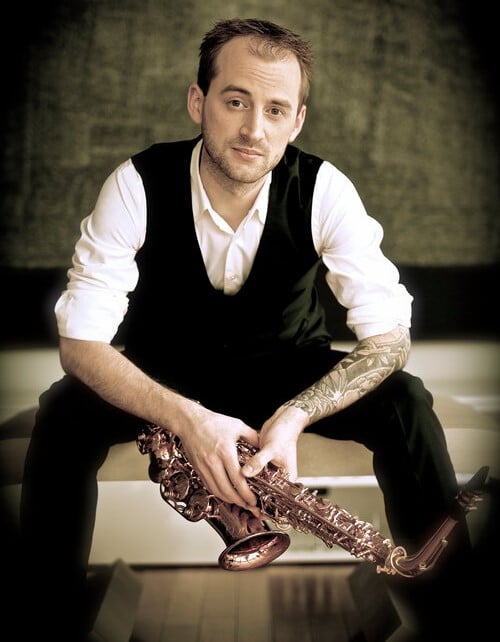

    An interview with Korngold from 1937, the year he completed work on his opera:

    http://thompsonian.info/korngold-etude-Jan-1937.html

  • Korngold’s “Die Tote Stadt” Lives Again

    Korngold’s “Die Tote Stadt” Lives Again

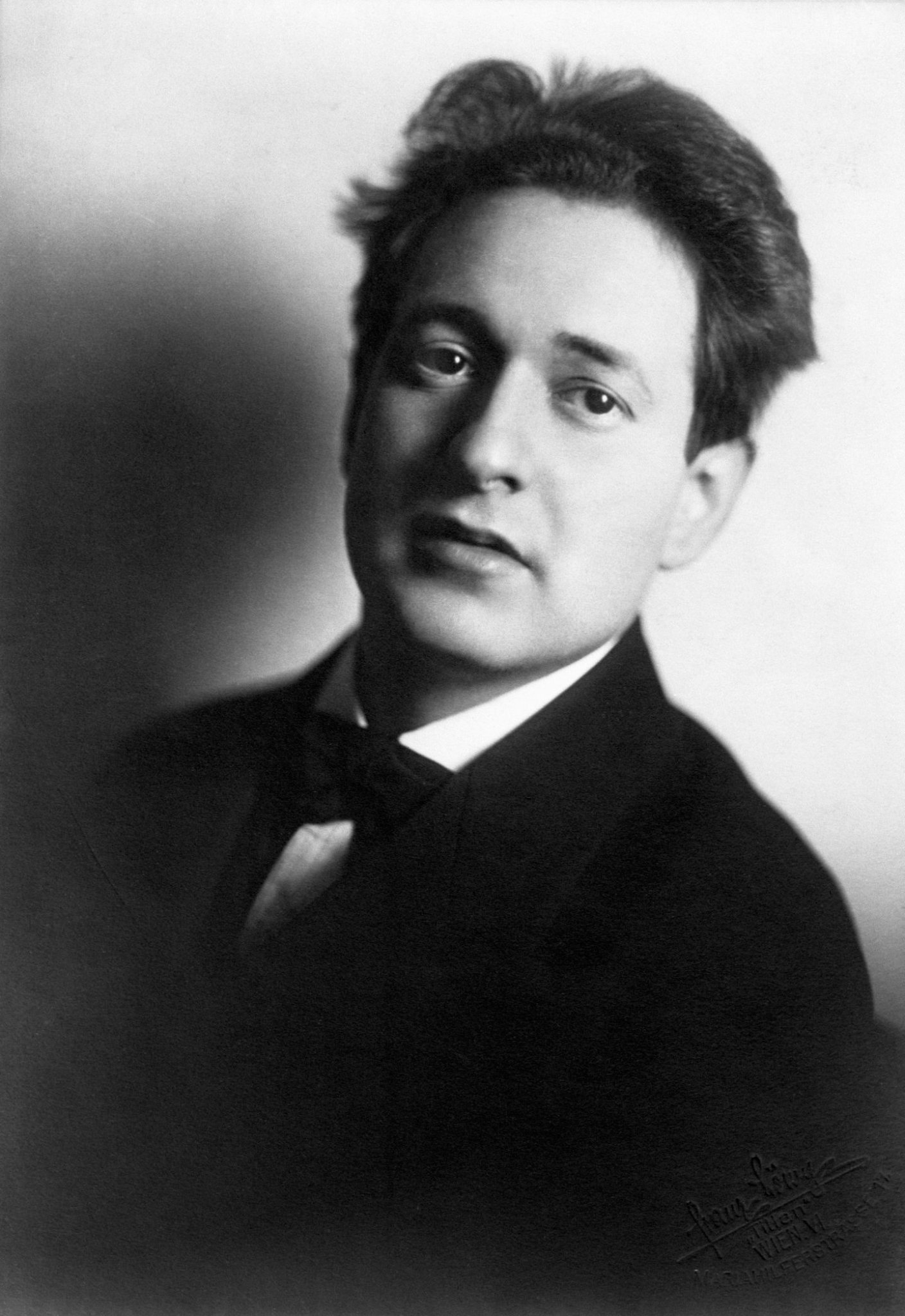
    One hundred years ago today, Erich Wolfgang Korngold achieved his greatest operatic success at the age of 23, with the double-premiere, in Cologne and Hamburg, of “Die tote Stadt” (“The Dead City”). One of music’s most astounding child prodigies, Korngold had been the talk of Vienna since the age of 11, when his ballet-pantomime “Der Schneemann” (“The Snowman”) was first performed at the Vienna Court Opera. By then, Gustav Mahler had already declared him a genius. Richard Strauss would express terror at the boy’s frightening precocity.

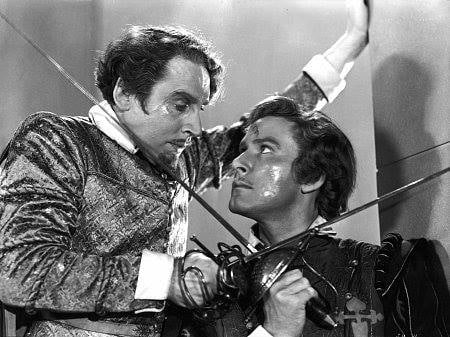
    Undoubtedly, Korngold is much better known to movie-lovers for his contributions to the Golden Age of Hollywood, including his classic scores for the swashbucklers of Errol Flynn (“Captain Blood,” “The Adventures of Robin Hood,” and “The Sea Hawk,” among them). Sadly, fascism and war gutted the Vienna of Korngold’s youth, and avant-garde arbiters and ideologues ensured that his brand of tonal, melodic music would be pushed out of the concert halls for decades

    Interestingly, the opera’s scenario bears a striking resemblance to that of Alfred Hitchcock’s “Vertigo,” with an overwrought protagonist falling for a free spirit, who happens to be the spitting image of his dead wife. The dysfunctional relationship quickly spirals out of control.

    For 18 years after its debut, “Die tote Stadt” was the most frequently performed opera in Vienna. Then for half a century, it fell virtually silent. Performances were rare, but in recent decades, once more, it’s begun to pick up steam. “The Dead City” lives again, in the affections of opera companies and their audiences, though too many modern productions clash with the essentially Romantic nature of its music. There are psychological depths to be plumbed, for sure, but the imagery should never be aesthetically unpleasant.

    I’ve been privileged to see “Die tote Stadt” twice on stage, but of course I’ve listened to it many more times on recordings. It is a melancholy masterpiece by one of my favorite composers. It’s only a pity he didn’t live to enjoy the fruits of its belatedly revived fortunes.


    Carol Neblett and René Kollo perform the opera’s famous duet, “Glück, das mir verblieb” (“Joy, that near to me remained”), commonly presented in recital as “Marietta’s Lute Song” (actually just the first five minutes of this video):

    https://www.youtube.com/watch?v=wRrLvKVF2ME

    Joyce DiDonato coaches baritone Germán Enrique Alcántara in “Mein Sehnen, mein Wähnen,” Pierrot’s aria, the opera’s second best-known number:

  • Korngold Hollywoods Golden Age Composer

    Korngold Hollywoods Golden Age Composer

    Happy birthday, Erich Wolfgang Korngold!

    This week on “Picture Perfect,” we’ll celebrate one of the most influential composers of Hollywood’s Golden Age, by way of two of his most popular scores, both of them for film adaptations of the novels of Rafael Sabatini.

    Though Sabatini’s own popularity has faded somewhat with the passage of time, in his day the Italian-English writer might have been regarded as heir apparent to Alexandre Dumas. His bestselling novels are full of romance and derring-do. However, I’m not sure if any of them have really endured in the consciousness of the wider public.

    Sabatini’s incident-filled pages seem ready-made for the silver screen. Film adaptations of “Scaramouche,” “The Sea Hawk” and “Captain Blood” were made during the silent era. A long-lost John Gilbert classic, adapted from Sabatini’s “Bardelys the Magnificent,” has only recently been rediscovered. Several of these, of course, were remade, more or less, to great success during the era of talking pictures.

    We’ll hear Korngold’s music for the Errol Flynn classics “Captain Blood” (1935) and “The Sea Hawk” (1940). The former provided Flynn with his breakout role; the latter actually has nothing at all to do with Sabatini’s original plot, despite the writer’s prominent onscreen credit.

    We’ll also enjoy Alfred Newman’s rollicking main title music for the pirate opus “The Black Swan” (1942), which starred Tyrone Power, and one of Victor Young’s most rousing and melodically inventive scores, for “Scaramouche” (1952), which featured Stewart Granger in probably the best swashbuckler of the 1950s.

    Polish up those seven-league boots and don your gaudiest plumage. Then join me, as we set sail with Erich Wolfgang Korngold and friends, and the novels of Rafael Sabatini, on “Picture Perfect,” music for the movies, this Friday evening at 6:00 EDT, on WWFM – The Classical Network and wwfm.org.
  • Korngold’s Symphony on The Classical Network

    Korngold’s Symphony on The Classical Network

    The Tuesday noon concert is on hiatus for the remainder of the summer. So I’ll have a blank slate this afternoon, on The Classical Network.

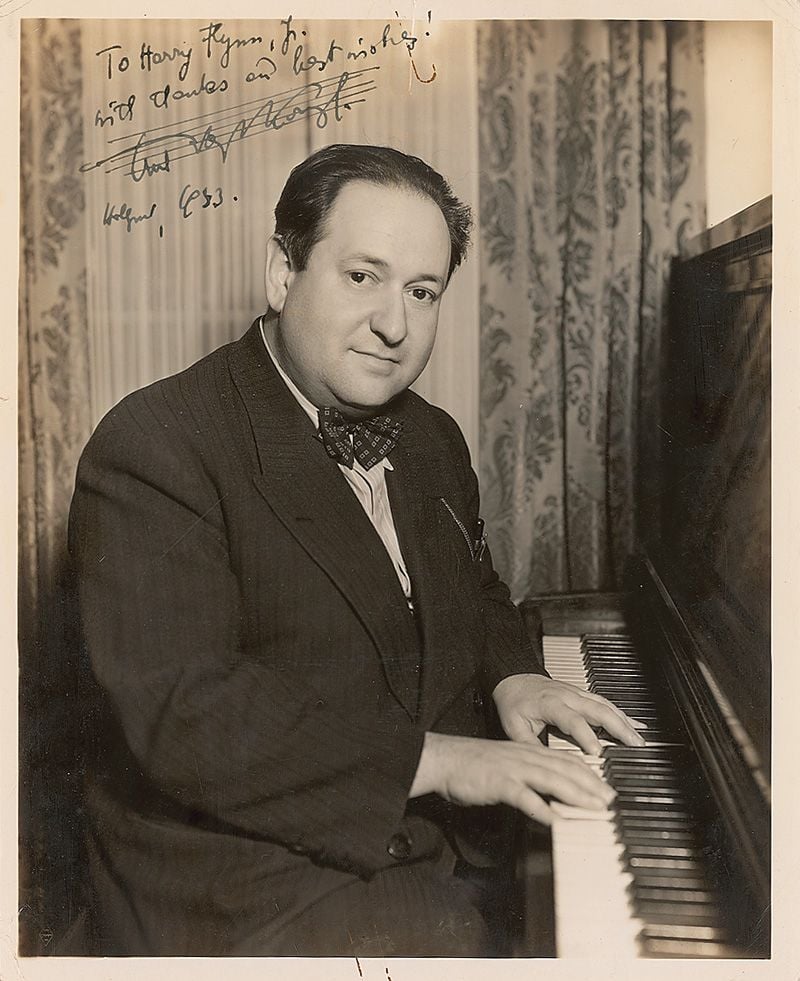
    With another stormpocalypse bearing down on the Trenton-Princeton area (maybe), I’ll present, among my featured highlights, Erich Wolfgang Korngold’s Symphony in F-sharp, the composer’s emotional and artistic reaction to war-torn Vienna.

    As a Jew, Korngold lived as an exile in Hollywood following the Anschluss, earning fame and fortune through his film scores for Errol Flynn. In fact, he once quipped that Robin Hood had saved his life. Korngold may have survived the war, but by 1945 the world he had known was gone forever. When he attempted to reestablish his career back home, he found himself regarded as an uncomfortable reminder of shame, guilt, and destruction, and the late Romantic syntax of his music had come to seem like the product of a bygone era. To lend perspective, John Cage unveiled his 4’33” in 1952, the same year that Korngold completed his symphony.

    The Symphony in F-sharp is not by any means “film music,” though it does allude to some of the scores he wrote for Warner Brothers – “Juarez,” “The Private Lives of Elizabeth and Essex,” “Captain Blood,” and “Kings Row.” The work includes an obligatory Korngoldian happy ending, but the overall mood is one of loss and ruination. It was performed only thrice during the composer’s lifetime. The first performance was so under-rehearsed that the composer tried (unsuccessfully) to put a halt to it.

    Over a decade after Korngold’s death, the score was rediscovered by conductor Rudolf Kempe in the library of the Munich Philharmonic. Kempe set down the world-premiere recording for RCA in 1972. Alongside RCA’s Classic Film Scores Series and a new recording of “Die Tote Stadt,” it set the ball rolling, slowly but inexorably, toward a reassessment of Korngold’s music, which gradually picked up pace in the 1990s, as musicians and record companies began to look further afield with the realization that everyone had already replaced their LPs of the standard repertoire on compact disc.

    The conductor Dmitri Mitropoulos once wrote of Korngold’s symphony, “All my life I have searched for the perfect modern work. In this symphony I have found it.” Unfortunately, Mitropoulos died before he could realize his plan to perform it.

    Korngold was a good man – he shared the wealth of his success in Hollywood to help family and displaced friends in need – but he was not a religious man. Nor was he very much tied up in his heritage. He commented that he and his family had always thought of themselves as Viennese; it was Hitler who made them Jewish. Korngold dedicated his symphony to the memory of Franklin Delano Roosevelt, president of the country that had become his second home. Korngold died in Los Angeles in 1957.

    Tune in this afternoon to hear Korngold’s Symphony in F-sharp, among my featured works, between 12 and 4 p.m. EDT, on WWFM – The Classical Network and wwfm.org.
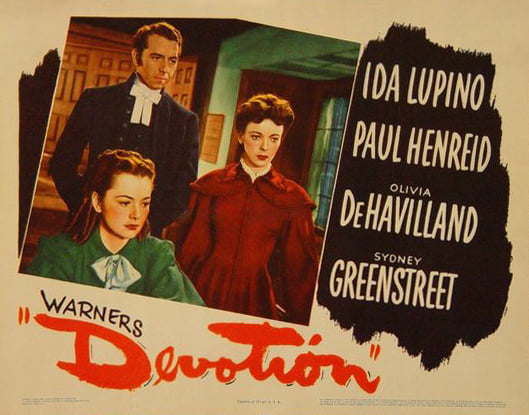

    NOTE: The symphony will be performed on Saturday night at the Fisher Center at Bard, as part of the second weekend of this year’s Bard Music Festival, held at Bard College, “Korngold and His World.” More information is available at fishercenter.bard.edu.

Tag Cloud

Aaron Copland (92) Beethoven (95) Composer (114) Film Music (123) Film Score (143) Film Scores (255) Halloween (94) John Williams (187) KWAX (229) Leonard Bernstein (101) Marlboro Music Festival (125) Movie Music (138) Opera (202) Philadelphia Orchestra (89) Picture Perfect (174) Princeton Symphony Orchestra (106) Radio (87) Ralph Vaughan Williams (85) Ross Amico (244) Roy's Tie-Dye Sci-Fi Corner (290) The Classical Network (101) The Lost Chord (268) Vaughan Williams (103) WPRB (396) WWFM (881)

DON’T MISS A BEAT

Receive a weekly digest every Sunday at noon by signing up here


RECENT POSTS