31 DAYS OF HALLOWEEN (DAY 14)
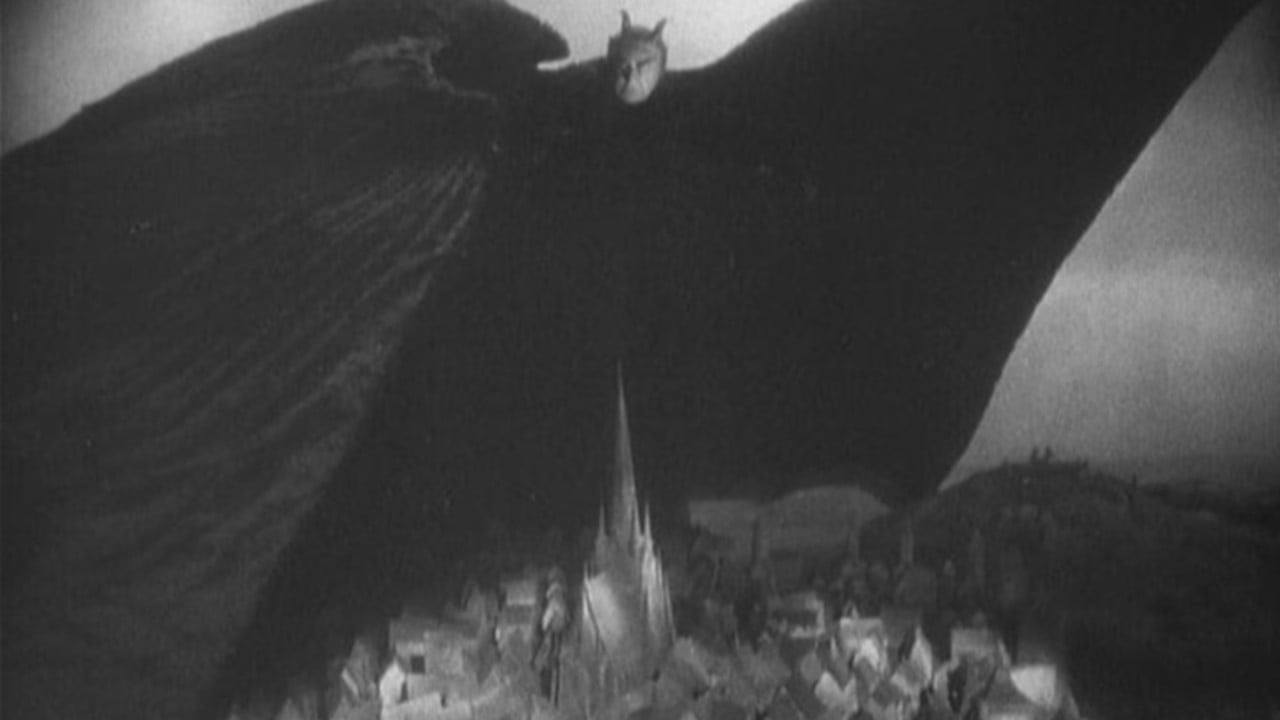
F.W. Murnau’s “Faust.” Watched this alone one night in the back of a cavernous bookstore and the opening sequence freaked me the hell out. In a good way. Effective score by Timothy Brock.
31 DAYS OF HALLOWEEN (DAY 14)
F.W. Murnau’s “Faust.” Watched this alone one night in the back of a cavernous bookstore and the opening sequence freaked me the hell out. In a good way. Effective score by Timothy Brock.
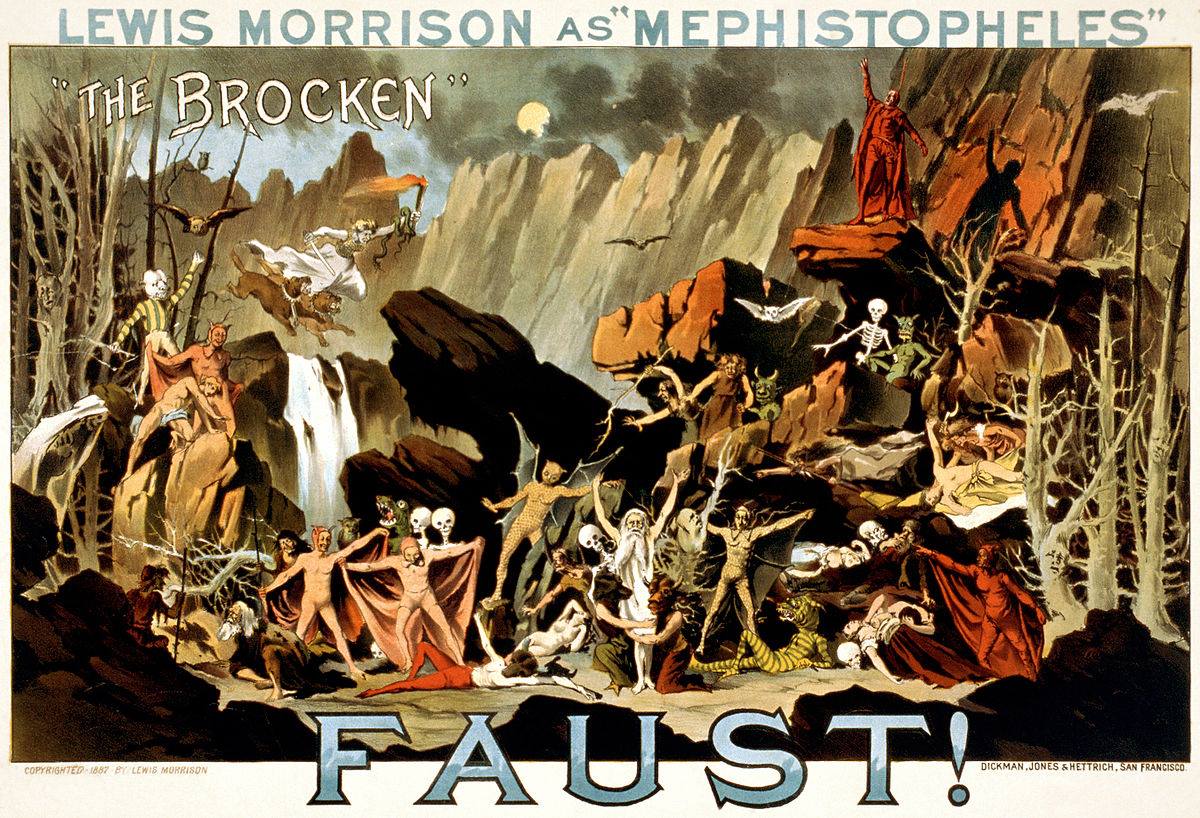
Goethe is king on Walpurgis Night.
Walpurgis Night, the eve of the feast day of Saint Walpurga, is a time when evil spirits are believed to roam the earth. Tradition tells of a witches’ sabbath and orgy of the damned held atop the Brocken, the highest peak of the Harz Mountains in Central Germany. It’s the last blast of diablerie before May Day. In Goethe’s “Faust,” Mephistopheles guides his imperiled charge into a swirling cauldron of witches and demons so as to complete his moral degradation.
This Monday afternoon on The Classical Network, we’ll have some musical depictions of Faust and Mefistopheles. Luciano Pavarotti will sing the role of Faust in the Classical Walpurgis Night scene (no witches, but a romantic interlude with the shade of Helen of Troy, sung by Montserrat Caballé) from Arrigo Boito’s “Mefistofele.” We’ll hear the irresistible ballet music from Charles Gounod’s “Faust.” Then, clearly relishing his demonic laughter, Bryn Terfel will sing “Mephistopheles’ Serenade.”
Felix Mendelssohn wrote a cantata, after Goethe’s “Die erste Walpurgisnacht” (“The First Walpurgis Night”), in which prankish Druids get the best of their superstitious occupiers. It ain’t “Faust,” but it will do.
The afternoon will open with Wilhelm Stenhammar’s overture, “Excelsior!” The score is prefaced by a motto which begins, “Yet each in him may find a native longing/To rise and travel far and far away,” lifted from – you guessed it – “Faust.” As time allows, we’ll also hear Charles-Valentin Alkan’s “Quasi-Faust” from his “Grande Sonata,” Edward MacDowell’s “Hexentanz,” and Edmond Dédé’s “Mephisto Masqué” (complete with kazoo choir). To place a seal upon our musical pact, Carlos Paita will rock the Brocken with Hector Berlioz’s “Symphonie fantastique.”
There’s plenty percolating for Walpurgis Night, this Monday from 4 to 7 p.m. EDT, on WWFM – The Classical Network and wwfm.org.
More about Lewis Morrison, a remarkable figure who achieved world fame as Mephistopheles, here:
http://www.blackpast.org/aah/morris-morris-w-lewis-morrison-1845-1906
Right now, we’re enjoying music by the Polish violin virtuoso Henryk Wieniawski on themes from Gounod’s “Faust.”
Coming up in the next hour, we’ll have highlights from Arrigo Boito’s opera “Mefistofele.” Perhaps better known as the outstanding librettist for Verdi’s “Otello” and “Falstaff,” Boito could be quite the composer himself.
We’re celebrating Goethe until 11:00 this morning on WPRB 103.3 FM and at wprb.com.

Richard Strauss’ final opera, “Capriccio,” is an extended, though lighthearted debate on the relative merits of words and music. In the case of Arrigo Boito, the two never really came into conflict.
As one of the great librettists, Boito provided the texts for Verdi’s late masterpieces, “Otello” and “Falstaff.” He also worked up a revision of “Simon Boccanegra” and – under the anagram Tobia Gorrio – provided the libretto for Ponchielli’s “La Gioconda.”
But Boito himself was also a composer of merit, if not a prolific one. Although he destroyed his first opera, “Ero e Leandro,” and his last, “Nerone,” was left incomplete at the time of his death (to be finished by Arturo Toscanini and Vincenzo Tommasini), he totally nailed it with “Mefistofele.”
There may be those who look down their noses at Boito’s take on Goethe’s “Faust,” yet the work stubbornly clings to the outskirts of the standard repertoire. Audiences love it. For me it is much more entertaining than anything in Verdi (I know, them’s fightin’ words) and I personally find the melodic invention much richer than that in the more popular version by master melodist Charles Gounod.
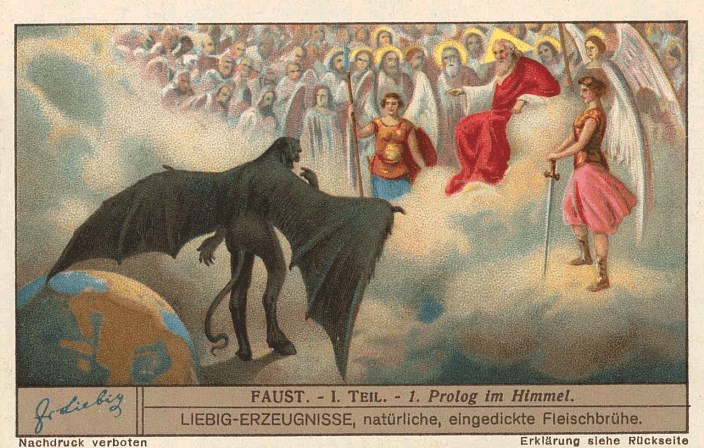
Sure, as narrative it’s a little clunky – it’s as if Boito presents the story as a series of tableaux that are just kind of stitched together – and the most hair-raising set piece, the prologue in Heaven, comes right at the beginning. How could it not be all downhill from there? But the composer has the good sense to bring it all back at the end.
What the opera really demands is a strong personality at its core, someone who, through his magnetic stage presence and sheer force of will, can haul the circus train of wonders, boxcar after boxcar, before our astonished ears and eyes.
Feodor Chaliapin, by all accounts, was just such a force. He gained wide notoriety in the title role, for his earthy interpretation and his insistence on playing it half-naked.
In the recent past, Samuel Ramey owned the piece. He too preferred to show a fair amount of skin (though less than Chaliapin) – but really, couldn’t that be said for just about any of Ramey’s roles?
Here’s the stunning – and fun – San Francisco Opera production from 1989. The first 26 minutes will knock your socks off.
https://www.youtube.com/watch?v=1AyGJyXfgFw
Happy birthday, Arrigo Boito (1842-1918)
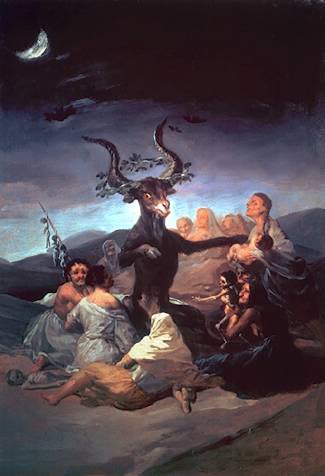
Strap on your goat leggings! Tonight is Walpurgis Night, the eve of the feast day of 8th century abbess Saint Walpurga. It’s a great witches’ holiday – the “other” Hallowe’en – and therefore a popular celebration in Europe, where they still know how to make everything festive creepy. And more power to them.
Music lovers and devotees of German romantic literature, of course, already know a thing or two about Walpurgisnacht. It’s the night Mephistopheles escorts Faust to the Harz Mountains, where they encounter witches and warlocks cavorting on the Brocken. It’s also the night Faust, Mephistopheles and Homunculus travel to ancient Greece to encounter the shade of Helena (a.k.a Helen of Troy).
Mendelssohn wrote a fairly tame cantata, “Die erste Walpurigisnacht” (“The First Walpurgis Night”), on another Goethe poem about prankish Druids freaking out some Christians. Brahms wrote a song, “Walpurgisnacht,” about a mother freaking out her daughter, by telling her a thunderstorm is actually the sound of witches celebrating on the Brocken; as if that isn’t enough, she tells her she herself is a witch. Ha ha! So German.
It is a holiday for leaping over bonfires, vandalizing neighbors’ property and rioting, all in the name of welcoming spring. It is not to be confused with St. John’s Eve (June 23), the night the demon Chernobog emerges from the Bald Mountain. More on that later, I’m sure.
Have fun, but remember… keep Walpurga in Walpurgis Night!
Samuel Ramey doing his thing:
https://www.youtube.com/watch?v=PuRZUlAnXVc
“The Goat of Mendes! The Devil himself.”
PHOTOS: Goya’s “Walpurgis Night”, The Goat of Mendes from “The Devil Rides Out,” Norman Treigle as Mefistofele
Aaron Copland (94) Beethoven (95) Composer (114) Film Music (149) Film Score (143) Film Scores (255) Halloween (97) John Williams (197) KWAX (232) Leonard Bernstein (105) Marlboro Music Festival (125) Movie Music (164) Mozart (91) Opera (215) Philadelphia Orchestra (90) Picture Perfect (174) Princeton Symphony Orchestra (110) Radio (90) Ross Amico (244) Roy's Tie-Dye Sci-Fi Corner (290) The Classical Network (101) The Lost Chord (269) Vaughan Williams (107) WPRB (397) WWFM (881)