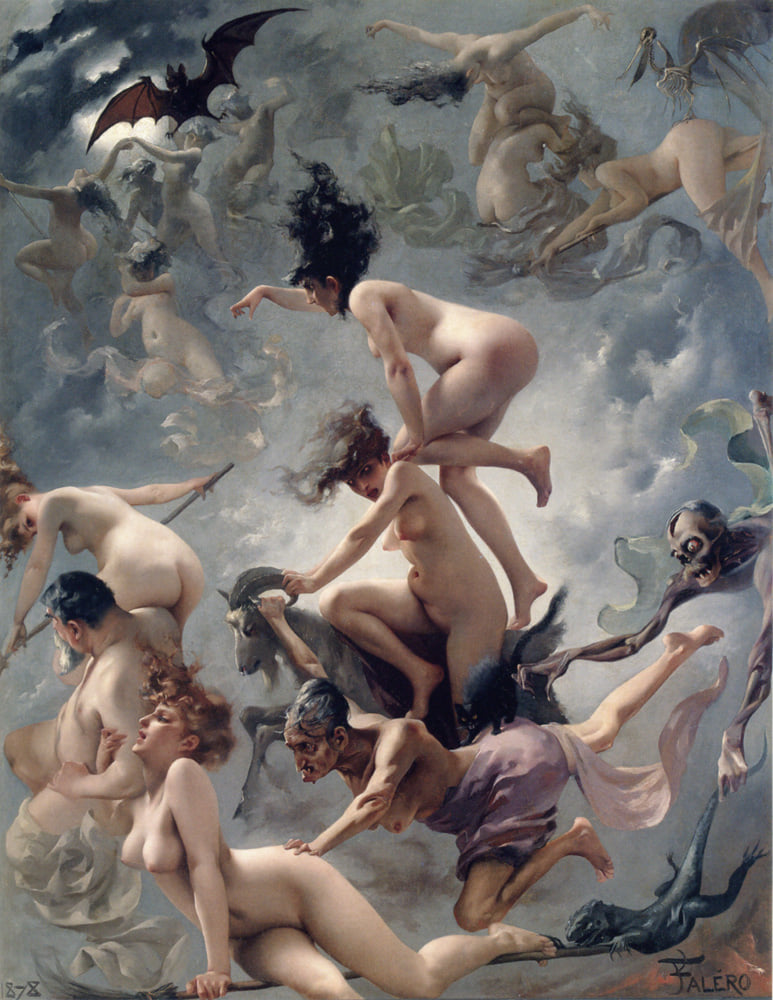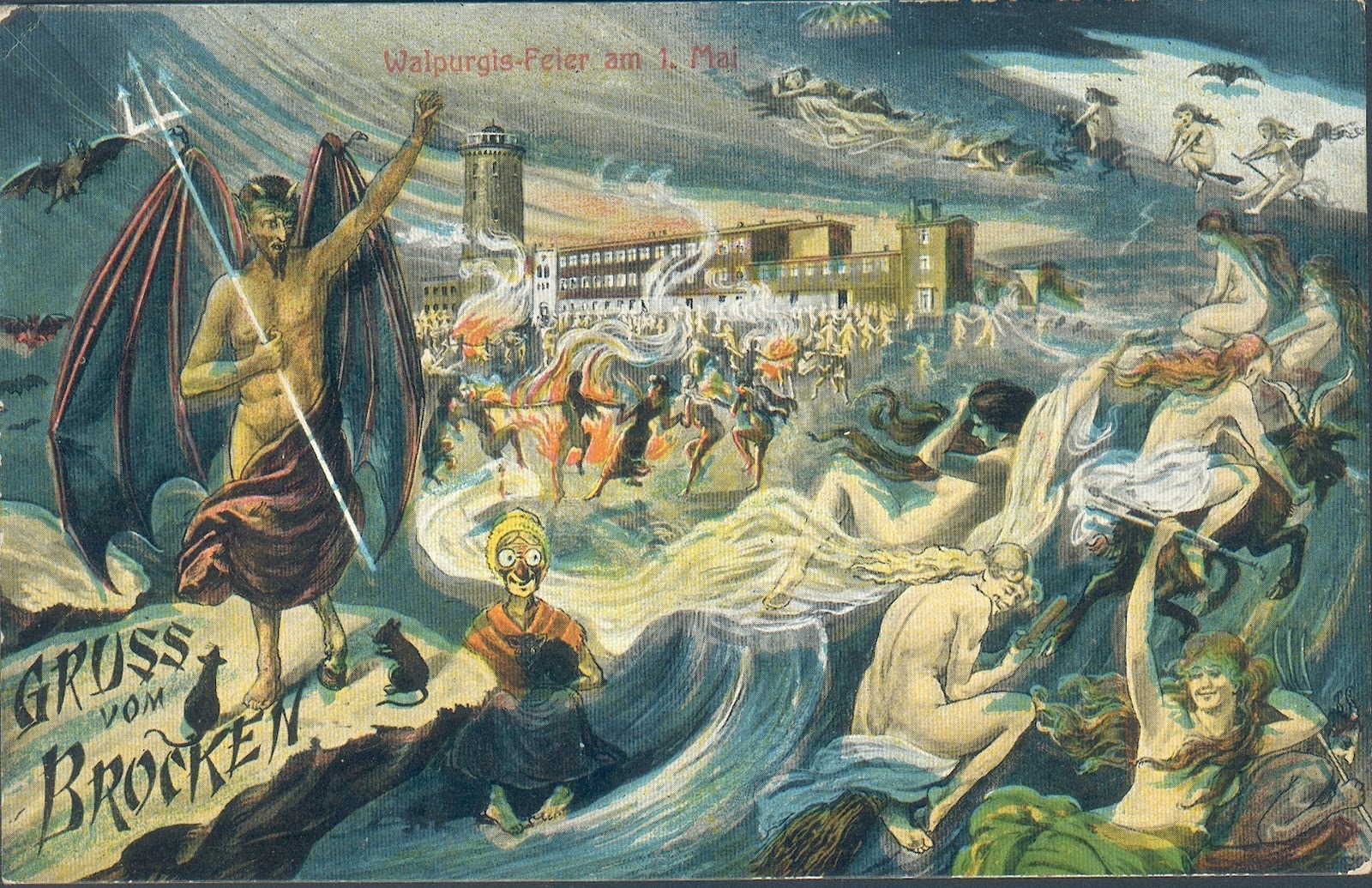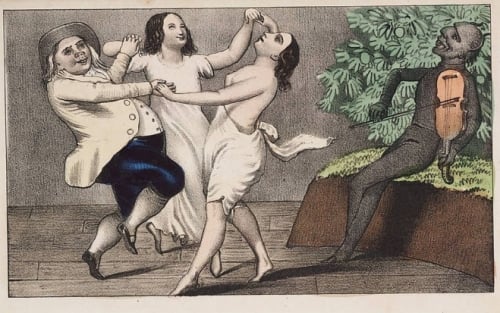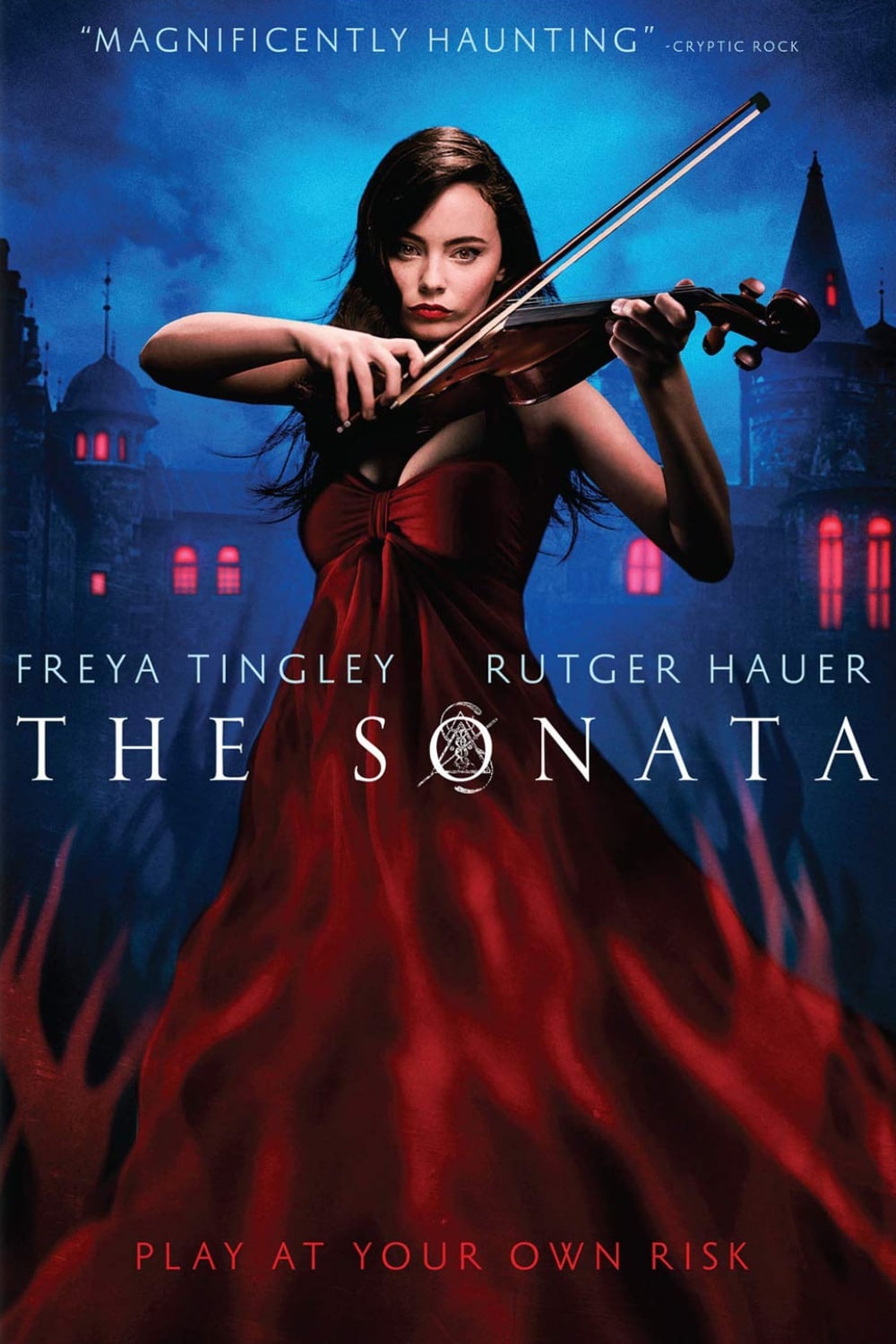
Paganini. Liszt. Warlock. Classical music has plenty of sulfur for anyone looking for Faustian inspiration. If longhair music is your thing, chances are you’ll find “The Sonata” (2018) a hoot. Especially for Halloween.
The film opens with Tartini’s “The Devil’s Trill,” naturally – Satan’s most infamous gift to the field. (It came to the composer in a diabolical dream.)
Rutger Hauer plays a reclusive, disproportionately revered, and somewhat sinister British composer by the name of Richard Marlowe (surely named for Christopher Marlowe of “Doctor Faustus” notoriety). When Marlowe dies by his own hand, we learn from the story’s heroine, violinist Rose Fisher (Freya Tingley), of their secret bond, which sends her to France to leisurely poke around his 11th century château. Discovered in his desk, under lock and key, is his final composition, a violin sonata, that sets Rose’s manager, Charles (Simon Abkarian), salivating.
And here’s where we take one step further into some unintentionally bizarre alternate reality, as Charles actually believes that this discovery is the “big break” he has been dreaming of his entire career. “Rose,” he says, “you do know, if this is your father’s final work, it could be a huge sensation.”
If you’re not scratching your head yet, “The Sonata” is set in a modern world where haunted mansions and medieval grimoires coexist with a widely-relevant classical music culture – where major record labels are still subsidizing recordings by important artists and the discovery of an unknown manuscript by a contemporary composer is enough of a windfall to ensure fame and fortune for those who inherit the copyright and control its promotion. It’s a world where Shostakovich is name-dropped and Yehudi Menuhin is used as a comparative is newspaper headlines. A world where composers are still interviewed on television talk shows. In short, a world that hasn’t existed since the 1980s.
Furthermore, disulfiram hasn’t commonly been used to treat alcoholism since the 20th century. Yet this clearly is not intended as a period piece. In fact, it may be the first film I’ve seen with someone talking on a cell phone in a haunted house.
Director Andrew Desmond, whose first feature this is, evidently picked up a trick or two from Robert Wise, who helmed, for my money, the most chilling of haunted house thrillers, “The Haunting,” made all the way back in 1963. There are low-angle shots of the house, gloomy close-ups of portentous statuary, disembodied children’s laughter, and creepy turning doorknobs. It also reminds me a bit of “The Legend of Hell House” (1973), with the spirit of a departed sadist – in the former, played by Christopher Plummer; in this one, Hauer – looming spookily over the proceedings.
Hauer, whose last completed film this is, only has a minute or two of screen time, but he’s never out of our consciousness, thanks in large part to audio and video recordings (cassette tape… really?) and a portrait that dominates the mansion library. Is anyone really surprised when the old man turns out to be a modern-day Gilles de Rais? Thankfully, Marlowe’s misdeeds are conveyed by way of suggestion, which is more than enough, thank you. And you just know that the sonata, with its arcane symbols sprinkled in amidst the standard notation, is going to be used to conjure the Antichrist.
The film is well-made, with good production values, and on the whole, good acting. James Faulkner is especially fine as an authority on Baroque music and the occult. He does a lot with his one or two scenes, and I wish he had played a larger part, with his authoritative voice and forked goatee. The movie doesn’t go into it, but there really were a lot of artists, writers, and composers tied up in the occult in the U.K. in the late 19th and early 20th centuries. I know I’ve written about it. I’ll link one of my posts about the Hermetic Order of the Golden Dawn below.
Abkarian is good too, skillfully navigating a role that requires some spackling over of the cracks in what could have been a much flimsier suspension of disbelief.
A few quibbles from a classical music perspective:
Why is Rose recording Wieniawski’s Violin Concerto No. 1 without an orchestra? If it’s supposed to be at a separate session – for a patch, perhaps? – shouldn’t she at least be wearing headphones?
When Rose discovers Marlowe’s sonata, why does she try it out at the piano instead of picking up the violin that is precariously propped on a chair right next her? Beyond setting us up for a M. Night Shyamalan moment, that is?
How is the violinist Charles consults to assess the unknown sonata able to surmise so much about its content and structure from merely flipping through the score?
Finally, would a professional violinist really allow a taxi driver to unpack her instrument from the trunk of his car?
Fortunately, in a film that places so much emphasis on music, Alexis Maingaud’s score is of a considerably higher caliber than what is usual in movies today, serving as more than just sound design, with an 80-piece orchestra – although at times electronically modified – and actual melodies. (Olivier Leclerc plays Rose’s violin solos.) Amusingly, the composer receives a cameo of sorts: look sharp for his name on the digital display of a sound system as Charles unwinds to some jazzy saxophone music. (Relatedly, the director’s voice can be heard as Marlowe’s interviewer on an archival videotape.)
Best of all is the selection from one of Marlowe’s compositions (played from CD), “The Double Life of Persephone,” which is spot-on for a post-romantic concert piece. If the music isn’t lifted from an actual concert composer, it is wholly convincing, and I for one would like to hear more! The title suits the film thematically, of course, as Persephone, the Queen of Hades, spends half her time in the underworld.
In an interview I turned up (an actual interview this time, as opposed to a fictional one), Maingaud confesses his admiration for Jerry Goldsmith. Bernard Herrmann too is mentioned. So his head is in the right place. A former classmate of the director at Sorbonne University, he is also fairly close to the start of his career. I hope to hear more from him and that he doesn’t just disappear the way his compatriot, the French composer Ludovic Bource, seems to have done, in this country anyway, after winning an Academy Award for his music for “The Artist” (2011).
By now, we all know the Gothic tropes and trappings of the old, dark house. The fixtures are mahogany, the keys are iron, and the lofty staircases navigated by candelabra. How many times does the heroine have to soak in a leisurely bath, in a clawfoot bathtub by candlelight, in a big “empty” manor, or wander the stairs in a silk peignoir? There are a few scenes, especially one in which Rose explores a grotto by striking matches that make me wonder why she doesn’t simply use the flashlight function on her cell phone.
To his credit, Desmond leans into slow-burn mystery and atmosphere, which personally is what I really value in a ghost story. But horror cliches abound and the manufactured jump scares become more risible (with the exception of one or two) as the film progresses. Most of them seem as if they might have been afterthoughts, dreamed-up in post-production and achieved by inserting musical stings and sound effects.
Then, just when I fully believed Desmond had learned his lesson well – that the less seen, the scarier the unfathomable becomes – he drops his cards to the floor and blows it in a climactic scene that must be the biggest letdown in a movie of this sort since “The Ninth Gate” (1999). This is one film that could have done without the CGI. I was hoping for something a little less literal and a little more… uncanny.
But hey, if your flawed film is being compared to Roman Polanski, it’s still something to be proud of. If you don’t remember, “The Ninth Gate” dealt with Satan and rare books. It’s been a quarter century since I’ve seen it, but I think I like this movie better.
With a stronger ending, “The Sonata” could have become a wink-and-a-nudge Halloween classic for classical music folk. Still, I’d be lying if I were to say I didn’t enjoy being seduced into this fantasy world where books and music are treated as matters of life and death.
I got an additional chuckle out of it, as there is also the grave revelation of a secret society devoted to the dark arts that calls itself the Famulus Order. Famulus was the name of the book business I ran in Philadelphia for 13 years. (I’m only just now noting the numerical significance!) And yes, my logo was ripped from a 17th century woodcut of some guy in Elizabethan breeches swapping books with the Devil.
Unfortunately, after leading us down a lot of compelling, creepy corridors, “The Sonata” drops us at a dead end. With the big build-up and weak fizzle, I couldn’t help but think of another film, one starring Richard Dreyfuss, from about 30 years ago, that pretty much did the same thing, teasing the audience and building expectations for a climactic musical masterpiece, the protagonist’s life’s achievement, which in the end turns out to be a three-minute wet noodle. In the case of “The Sonata,” they might just as easily have called it “Mr. Horror’s Opus.”
“The Sonata” is streaming free on Amazon Prime and Tubi and, for all I know, elsewhere. It’s a fun movie for classical music fans; just not the enduring genre favorite it could have been.
Interview with composer Alexis Maingaud
One of my posts on occultism and English music
https://www.facebook.com/photo/?fbid=1193772614875133&set=a.883855802533484