Tag: Film Adaptations

  • Little Women & Literary Classics on Film

    Little Women & Literary Classics on Film

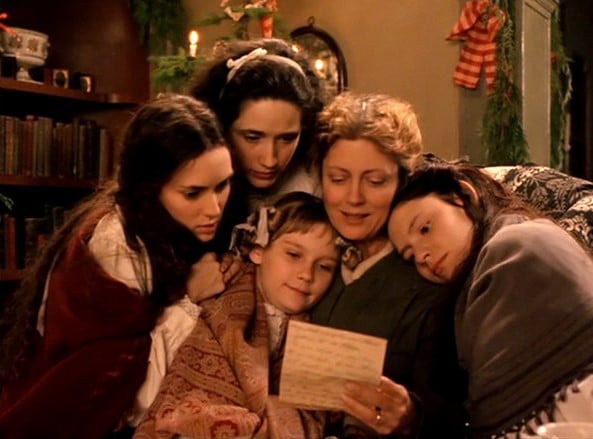
    Among the many enduring charms of “Little Women” is a memorable Christmas chapter, in which the March family helps out a neighbor in need by donating their Christmas breakfast – only to be rewarded later in the day with a feast of their own.

    This week on “Picture Perfect,” Louisa May Alcott’s magnum opus forms the centerpiece of a musical sampler of girls’ literary classics. Of course readers of either gender have enjoyed these books (I’ve read two of them myself), but with female protagonists and female authors, they have proved great favorites among generations of female readers. All of them have been adapted for film numerous times.

    We’ll hear selections from “The Secret Garden” (1993). Frances Hodgson Burnett’s 1911 novel tells of an ill-tempered child who loses her neglectful parents in India, only to blossom at the discovery of the titular garden on her uncle’s otherwise gloomy estate on the Yorkshire moors. Agnieszka Holland directed. The film was released through Francis Ford Coppola’s independent studio, American Zoetrope. Zbigniew Preisner provided the music.

    Alfonso Cuarón directed an adaptation of another popular novel by the same author, written in 1905, “A Little Princess” (1995). In Cuarón’s version, a well-bred English girl, again brought up in India, is placed in a boarding school in New York. Her fortunes change when her father goes missing in action during World War I. The girl entertains her fellow students by reciting tales from the Hindu epic, “The Ramayana.” Her Indian connection is reflected in Patrick Doyle’s score.

    “Little Women” (1994) follows the four sisters of the March family, through their formative years at their home in Concord, Massachusetts, around the time of the American Civil War. A sensation on its publication in 1868, the book remains one of the most beloved of all time. In its fifth adaptation for the big screen, Winona Ryder plays Jo and Susan Sarandon is Marmee. Thomas Newman, one of the sons of famed film composer Alfred Newman, and a cousin of Randy Newman, wrote the music.

    Finally, we’ll turn to “Heidi” (1968), after the popular novel of Swiss writer Johanna Spyri, about a young girl who shares a home with her grandfather in the Swiss Alps. There have been roughly 20 film or television productions of “Heidi” to date. This one stars Jennifer Edwards, daughter of Blake Edwards, and stepdaughter of Julie Andrews. Maximilian Schell, Jean Simmons, and Michael Redgrave are in the supporting cast. The music was written by an up-and-coming composer then known as “Johnny” Williams. And there’s plenty in the score to indicate great things to come.

    Escape to a secret garden of literary classics for little women, on “Picture Perfect,” music for the movies, this Saturday evening at 6:00 EST, on WWFM – The Classical Network and wwfm.org.
  • Maugham’s Hollywood: Music from His Film Adaptations

    Maugham’s Hollywood: Music from His Film Adaptations

    W. Somerset Maugham is said to have been the highest paid writer of the 1930s.

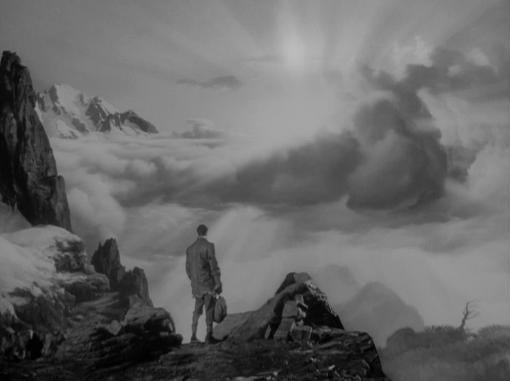
    This week on “Picture Perfect,” we’ll have music from four Maugham adaptations, including the 1946 version of “Of Human Bondage” (with music by Erich Wolfgang Korngold), the 1946 version of “The Razor’s Edge” (with music by Alfred Newman), and two versions of “The Painted Veil – one from 2006 (with music by Alexandre Desplat) and one from 1957 (released as “The Seventh Sin,” with music by Miklós Rózsa).

    As a former medical student who experienced World War I, first as an ambulance driver and then in the British Secret Intelligence Service, Maugham was involved with adventures all over Europe and Asia, which he then turned to the service of his fiction.

    In 1938, he remarked, “Fact and fiction are so intermingled in my work that now, looking back on it, I can hardly distinguish one from the other.”

    Maugham also worked in Hollywood for a time, writing scripts and making a pretty penny from film adaptations of his books.

    Maugham’s the word this week, on “Picture Perfect,” music for the movies, this Saturday evening at 6:00 EST, on WWFM – The Classical Network and wwfm.org.


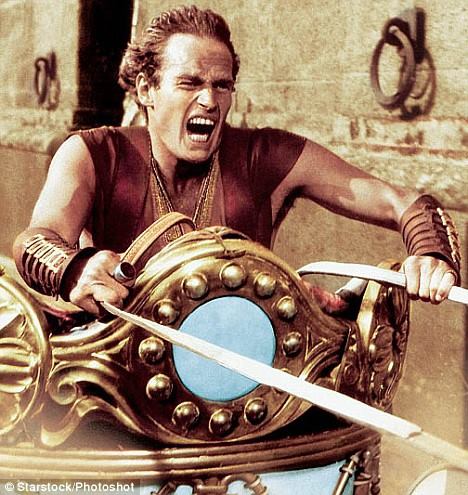
    PHOTO: Tyrone Power sees the light in “The Razor’s Edge”

  • Picaresque Novels on Film Anti-Heroes & Adventure

    Picaresque Novels on Film Anti-Heroes & Adventure

    Calling all rapscallions and scapegraces! This week on “Picture Perfect,” get ready to revel in some freewheeling lack of judgment, with an hour of films based on picaresque novels.

    For those of you who weren’t English majors, the picaresque novel is a literary genre often characterized by the presence of rogues or anti-heroes as protagonists, episodic, wayward structures, and, not infrequently, low humor.

    We’ll hear music from “The Reivers,” after William Faulkner’s Pulitzer Prize-winning novel, a coming-of-age story about a boy swept into automobile theft and illicit horseracing in the American South. Mark Rydell directed the 1969 film, which stars Steve McQueen as the rakish Boon Hogganbeck and features narration by Burgess Meredith. John Williams wrote the breezy Americana score.

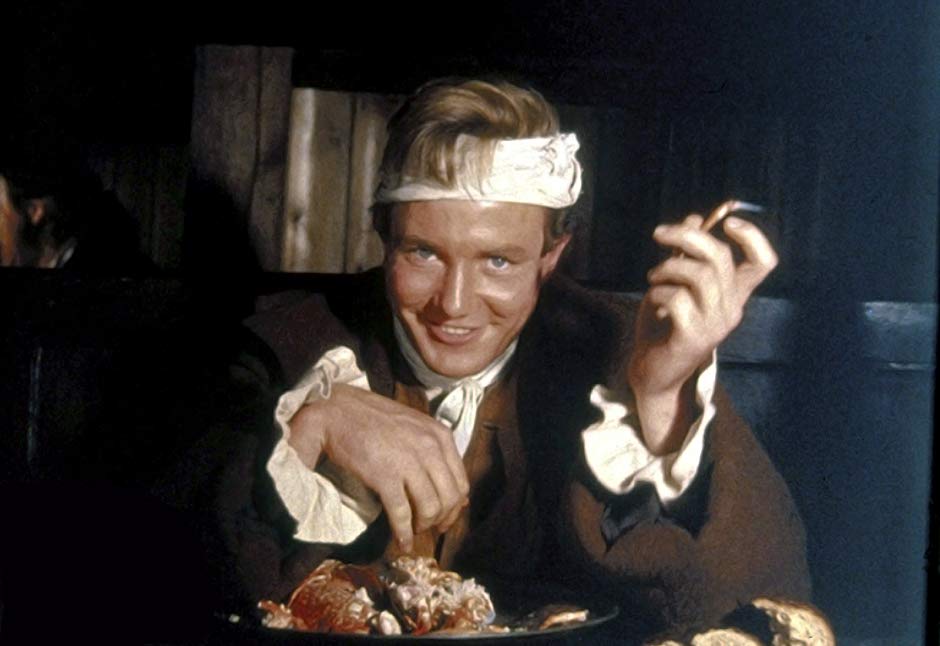
    Mark Twain’s “The Adventures of Huckleberry Finn” is frequently characterized as an American picaresque. It’s certainly one of the funniest of “serious” books. A middling film adaptation was made in 1960, directed by Michael Curtiz, with Tony Randall given top billing, shifting the focus of the story to the con artistry of the King and the Duke. It features an evocative score by Jerome Moross.

    If Hervey Allen’s “Anthony Adverse” had any humor to begin with, it was definitely lost in translation. (Too bad the novel was written in English.) However, the 1936 screen adaptation certainly does sprawl. One could say it’s picaresque in the worst way. It just doesn’t go anywhere. It does, however, feature a top-notch cast (Frederic March, Olivia De Havilland, Claude Rains, etc.) and an Academy Award-winning score by Erich Wolfgang Korngold.

    While the modern picaresque novel has its roots in the Renaissance, the genre really seemed to hit its stride in the 18th century, with comic novelists like Henry Fielding. Fielding’s “Tom Jones,” perhaps the quintessential picaresque, was made into a film in 1963. It went on to win Academy Awards for Best Picture, Best Director (Tony Richardson), Best Adapted Screenplay (John Osborne) and Best Original Score (John Addison). Addison’s music suits Richardson’s quirky virtuosity like an off-kilter powdered wig.

    We’re up to no good, with an hour of picaresque adventures, on “Picture Perfect,” this Friday evening at 6:00 EDT, on WWFM – The Classical Network and wwfm.org.

  • Biblical Epics Adapted from Novels on Picture Perfect

    Biblical Epics Adapted from Novels on Picture Perfect

    This week on “Picture Perfect” it’s the second installment in a mini-festival of very big films, as we present another hour of Biblical epics, though this time with a twist. Rather than go directly to the Gospels, these are all films adapted from bestselling historical novels.

    Lloyd C. Douglas’ “The Robe” was given the Hollywood treatment in 1953. Richard Burton plays Marcellus, the Roman tribune who oversees the crucifixion and wins Christ’s robe in a game of dice. Victor Mature (last week’s Samson) is his well-oiled slave, Demetrius, and Jean Simmons, his childhood sweetheart, now betrothed to Caligula (a scene-stealing Jay Robinson).

    “The Robe” holds the distinction of being the first film released in CinemaScope. Allegedly, it is also the only Biblical epic ever to yield a sequel (“Demetrius and the Gladiators”). The score, by Alfred Newman, has always been popular.

    Thomas B. Costain’s “The Silver Chalice” was brought to the big screen in 1954. The film introduced Paul Newman in the lead, as a lowborn artisan commissioned to fashion a decorative casing for the cup from which Christ drank at the Last Supper (i.e. the Holy Grail).

    The film is interesting in that it features quasi-abstract sets by stage designer Rolfe Gerard and a stunning score by Franz Waxman, which incorporates the “Dresden Amen,” also used in Wagner’s “Parsifal.” However, Newman was mortified by his performance and famously took out an ad in Variety, essentially to apologize.

    “Barabbas” is worlds away from the usual Hollywood epic. Based on the Nobel Prize-winning novel of Pär Lagerkvist, the film is a ruminative slog through the guilt-ridden psyche of the title character, played by Anthony Quinn. Barabbas is the thief who is pardoned to make way for the crucifixion of Christ. He spends the rest of his life searching for meaning in a meaningless world.

    In a quixotic attempt at verisimilitude, director Richard Fleischer shot the crucifixion scene during an actual solar eclipse. Mario Nascimbene (who composed the music for last week’s “Solomon and Sheba”) wrote the score.

    Finally, we’ll wrap things up with music from one of the all-time Oscar champs, “Ben-Hur,” from 1959. Based on the 1880 novel of General Lew Wallace, “Ben-Hur” was honored with 11 Academy Awards, including those for Best Picture, Best Director (William Wyler) and Best Actor (Charlton Heston).

    The highlight of the film, of course, is the amazing chariot race, but there is a grandeur to the whole which makes it difficult to look away. Miklós Rózsa wrote the magnificent score, arguably the best of any film of its kind.

    The “Ben-Hur” Oscar record has been tied twice – in 1998, by “Titanic,” and in 2004, by “The Lord of the Rings: The Return of the King” – but this is before computer generated imagery, folks. They just don’t make ‘em like this anymore.

    The New Testament is all-new, by way of adaptations from historical novels, this Friday evening at 6:00 EDT, on WWFM – The Classical Network and wwfm.org.

  • Gilded Age Novels on Film Picture Perfect

    Gilded Age Novels on Film Picture Perfect

    The opening scene of Martin Scorsese’s “The Age of Innocence,” in which Newland Archer (Daniel Day-Lewis) first glimpses his cousin, Ellen Olenska, during a performance of Gounod’s “Faust,” was actually shot at the Academy of Music in Philadelphia. I remember the call for anyone with a tux to come down to the Academy so that they could fill out the balconies with extras. Sadly, I had to work (not that I owned a tux).

    “The Age of Innocence” is but one of the films we’ll be treating this week on “Picture Perfect,” as the focus will be on adaptations from novels of, or about, the Gilded Age. “The Gilded Age” was a term coined by none other than Mark Twain to describe the era extending roughly from the end of Reconstruction (following the Civil War) to the turn of the 20th century. He didn’t mean it as a compliment. A gilded age is one which conceals serious social problems beneath a veneer of gold.

    “The Heiress” (1949) was adapted from a play by Ruth and Augustus Goetz, which in turn was based on the Henry James’ novel, “Washington Square.” Olivia De Havilland is the “plain Jane” heiress of the title, Ralph Richardson her overbearing father, and Montgomery Clift, the adventurer who may or may not be out for her fortune. De Havilland won an Oscar for her portrayal, as did the music, by Aaron Copland.

    “The Age of Innocence” (1993) is based on a novel by one-time James correspondent and close friend, Edith Wharton. The book was published in 1920, but looks back to the 1870s, its story dealing with the impending marriage of an upper class couple and the appearance of a disreputable interloper who threatens their happiness. The title is an ironic play on the outward manners of New York society, in contrast to its inward machinations. The novel earned a Pulitzer Prize, the first Pulitzer awarded to a woman. The film was something of a curve ball from director Martin Scorsese, who made his name on meaner streets. Veteran composer Elmer Bernstein provided a lovely, Brahmsian score.

    “The Magnificent Ambersons” (1942) is based on another Pulitzer Prize winner, this time by Booth Tarkington, from 1918. The novel is part of trilogy that tells the story of the declining fortunes of three generations of an aristocratic Midwestern family, between the end of the Civil War and the early years of the 20th century. With industrialism on the rise, the Ambersons’ “old money” wealth and prestige wane.

    “Ambersons” became the basis for only the second film directed by Orson Welles. By that time, however, the fall-out from “Citizen Kane” caused the film to be removed from Welles’ control and re-cut by the studio, shaving a full hour off the original running time. It says something about the quality of the film that it yet remains in itself a magnificent achievement.

    The score was by Bernard Herrmann, CBS staff composer from Welles’ radio days. Herrmann had followed Welles to Hollywood to provide the music for “Citizen Kane.” Like the film, the score was drastically edited, with half the music removed. The famously irascible Herrmann, who had just written his Academy Award winning music for “The Devil and Daniel Webster,” was so angry that he threatened legal action if his name was not removed from the credits.

    The action of “Mr. Skeffington” (1944), based on a 1940 novel by Elizabeth von Arnim, begins at a point some consider the end of the Gilded Age, the eve of World War I. Bette Davis stars as a woman so enamored of her own beauty and the suitors it attracts that she fails to value the affections of the man who eventually becomes her husband. Mr. Skeffington, played by Claude Rains, is a Jewish financier, riding high in the ‘teens, but his fortunes change when he’s caught in Europe during the rise of the Nazis.

    Both Davis and Rains earned Academy Award nominations for their work. The vivid score is by Franz Waxman. Davis was going through a period of emotional turmoil during the filming, so that she was allegedly insufferable to everyone during the entire shoot. Someone finally poisoned her eyewash. When the police questioned the director, Vincent Sherman, he wished them good luck with their investigation. “If you asked everyone on the set who would have committed such a thing, everyone would raise their hand!”

    Certainly all that glitters is not gold, this week. We peel back the veneer of prosperity with “Novels of the Gilded Age,” on “Picture Perfect,” this Friday evening at 6:00 EST on WWFM – The Classical Network and wwfm.org.

Tag Cloud

Aaron Copland (92) Beethoven (95) Composer (114) Film Music (123) Film Score (143) Film Scores (255) Halloween (94) John Williams (187) KWAX (229) Leonard Bernstein (101) Marlboro Music Festival (125) Movie Music (138) Opera (202) Philadelphia Orchestra (89) Picture Perfect (174) Princeton Symphony Orchestra (106) Radio (87) Ralph Vaughan Williams (85) Ross Amico (244) Roy's Tie-Dye Sci-Fi Corner (290) The Classical Network (101) The Lost Chord (268) Vaughan Williams (103) WPRB (396) WWFM (881)

DON’T MISS A BEAT

Receive a weekly digest every Sunday at noon by signing up here


RECENT POSTS