Tag: Film Adaptations

  • Vampire Movie Soundtracks & Adaptations

    Vampire Movie Soundtracks & Adaptations

    This week on “Picture Perfect,” it’s all widow’s peaks and plastic fangs, as we listen to music from film adaptations of novels about vampires.

    “Interview with the Vampire” (1994), based on the novel by Anne Rice, featured some pretty counterintuitive casting, including Tom Cruise as Lestat (Rice would have preferred Rutger Hauer), but thanks largely to director Neil Jordan the film still managed to deliver the goods. Elliot Goldenthal’s music was nominated for an Academy Award. Interestingly, The American Boychoir sings the opening “Libera me.”

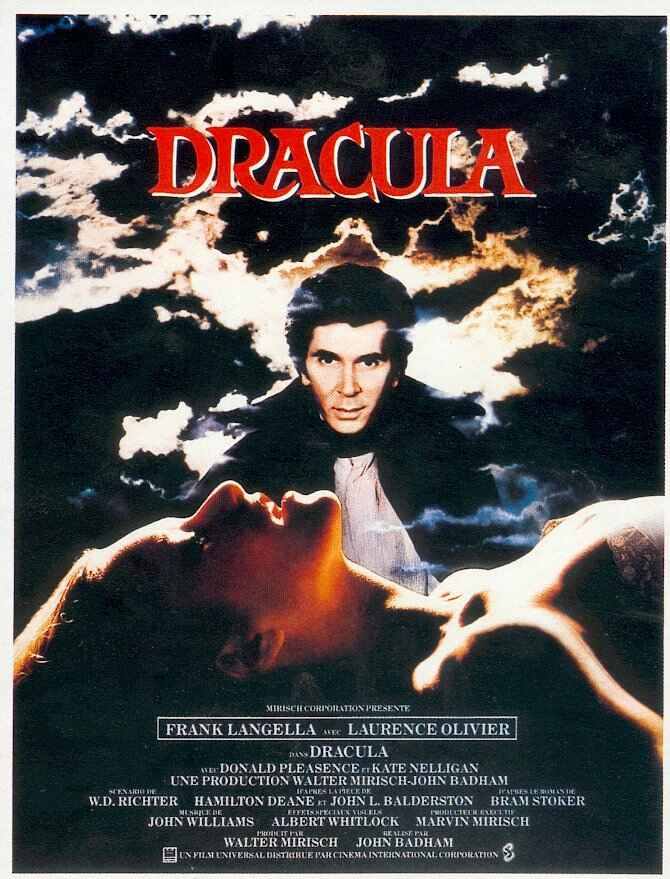
    Frank Langella’s characterization of Bram Stoker’s Dracula drove the critics wild when the play by Hamilton Deane and John L. Balderston was revived on Broadway in 1977. (It was the same adaptation that launched Bela Lugosi on his big screen career.) But when the film “Dracula” (1979) was released a couple of years later, reviews were mixed. Langella retained his dreamy magnetism, and the producers managed to secure Sir Laurence Olivier and Kate Nelligan for the parts of Van Helsing and Mina, respectively, but I wonder if John Badham was the best choice for director. Badham had just come off the enormous box office success of “Saturday Night Fever,” and it looks as if his Dracula retains John Travolta’s hair. You know, just for luck.

    I remember being so excited to see this when I saw the trailer at the movies. The sight of Langella leaping through a window and transforming into a wolf in mid-flight to John Williams anticipatory music was almost more than I could bear. Watch the trailer here:

    How could a film called “Abraham Lincoln: Vampire Hunter” (2012) ever live up to its title? The answer is, it can’t, but the adaptation of Seth Grahame-Smith’s supernatural-historical mash-up wasn’t as terrible as everyone says it was. Sure, I would have preferred it had Daniel Day-Lewis played Lincoln, but put anybody in a stove-pipe to fight vampires with an axe, and I would have been happy. I probably wouldn’t have been so permissive had I seen it in the theater, where the noise and effects would have pushed me over the edge, but it was a diverting rental, with a gothic score by Henry Jackman that ping-ponged between Americana lyricism and an orchestra bolstered by electronics and heavy metal guitars. But what are you going to listen to when you’re fighting vampires, a string quartet?

    James Bernard’s music for Hammer Studios’ “Dracula,” released in the United States as “Horror of Dracula” (1958), is one of his best-known efforts. His Dracula theme, with its clashing harmonies, laid the groundwork for the sound of the film’s numerous sequels, most of which featured Christopher Lee in his most iconic role. Bernard became so closely associated with Hammer and vampires that he was approached late in life to provide a score for the silent classic “Nosferatu.”

    Finally, “Bram Stoker’s Dracula” (1992), despite the claims of fidelity in its very title, was not a faithful adaptation of Stoker’s book. Why? WHY??? The film was lovely to look at, with eye-popping costumes and production design that combined Universal Studios in-the-camera trickery and honest-to-goodness miniatures with a few more Jean Cocteau references than perhaps was for its own good. This could have been THE Dracula film. Alas, it wasn’t. However, for me, it had THE Dracula score. It was a stroke of genius to hire Polish composer Wojciech Kilar to give the film just the right Eastern European sound.

    I hope you’ll join me for page-to-screen vampires this week on “Picture Perfect,” tomorrow night at 6:00 ET, with a repeat Saturday morning at 6; or that you’ll listen to it later as a webcast at wwfm.org.

    NOTE TO FILMMAKERS: “Dracula” is NOT a love story. And it is not about disco.
  • Maugham’s Hollywood Soundtracks Picture Perfect

    Maugham’s Hollywood Soundtracks Picture Perfect

    W. Somerset Maugham is said to have been the highest paid writer of the 1930s.

    This week on “Picture Perfect,” we’ll have music from four Maugham adaptations, including the 1946 version of “Of Human Bondage” (with music by Erich Wolfgang Korngold), the 1946 version of “The Razor’s Edge” (with music by Alfred Newman), and two versions of “The Painted Veil – one from 2006 (with music by Alexandre Desplat) and one from 1957 (released as “The Seventh Sin,” with music by Miklós Rózsa).

    As a former medical student who experienced World War I, first as an ambulance driver and then in the British Secret Intelligence Service, Maugham endured adventures all over Europe and Asia, which he then turned to the service of his fiction.

    In 1938, he remarked, “Fact and fiction are so intermingled in my work that now, looking back on it, I can hardly distinguish one from the other.”

    Maugham also worked in Hollywood for a time, writing scripts and making a pretty penny from film adaptations of his books.

    I hope you’ll join me for music from movies inspired by Maugham this week, on “Picture Perfect.” The show airs tonight at 6 ET, with a repeat Saturday morning at 6. You can also listen to it later as a webcast, at http://www.wwfm.org.

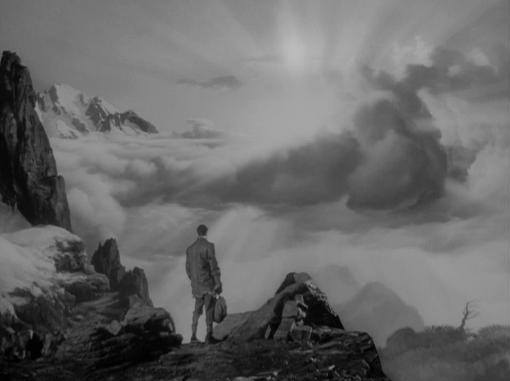
    PHOTO: Tyrone Power sees the light in “The Razor’s Edge”

  • Picaresque Novels on Film: Rogues & Road Trips

    Picaresque Novels on Film: Rogues & Road Trips

    It’s May Day! This week on “Picture Perfect,” revel in some freewheeling lack of judgment, as we present an hour of films based on picaresque novels.

    In case you weren’t an English major, picaresque novels are generally characterized by rogues or anti-heroes as protagonists; episodic, wayward structure; and not infrequently, lowly humor.

    We’ll hear music from “The Reivers,” after William Faulkner’s Pulitzer Prize-winning novel, a coming-of-age story about a boy swept into automobile theft and illicit horseracing in the American south. Mark Rydell directed the 1969 film, which starred Steve McQueen as the rakish Boon Hogganbeck and featured narration by Burgess Meredith. John Williams wrote the breezy Americana score.

    Mark Twain’s “The Adventures of Huckleberry Finn” is frequently characterized as an American picaresque. It’s certainly one of the funniest of “serious” books. A middling film adaptation was made in 1960, directed by Michael Curtiz, with Tony Randall given top billing, shifting the focus of the story to the con artistry of the King and the Duke. It features an evocative score by Jerome Moross.

    If Hervey Allen’s “Anthony Adverse” had any humor to begin with, it was definitely lost in translation. (Too bad the novel was written in English.) However, the 1936 screen adaptation certainly does sprawl. One could say it’s picaresque in the worst way. It just doesn’t go anywhere. It does, however, feature a top-notch cast (Frederic March, Olivia De Havilland, Claude Rains, etc.) and an Academy Award-winning score by Erich Wolfgang Korngold.

    While the modern picaresque novel had its roots in the Renaissance, the genre really seemed to hit its stride in the 18th century, with comic novelists like Henry Fielding. Fielding’s “Tom Jones,” perhaps the quintessential picaresque, was made into a film in 1963. It went on to win Academy Awards for Best Picture, Best Director (Tony Richardson), Best Adapted Screenplay (John Osborne) and Best Original Score (John Addison). Addison’s music suits Richardson’s quirky virtuosity like an off-kilter powdered wig.

    Tune in for an hour of picaresque adventures, this Friday evening at 6 ET, or listen to it later as a webcast, at http://www.wwfm.org.

Tag Cloud

Aaron Copland (92) Beethoven (95) Composer (114) Film Music (123) Film Score (143) Film Scores (255) Halloween (94) John Williams (187) KWAX (229) Leonard Bernstein (101) Marlboro Music Festival (125) Movie Music (138) Opera (202) Philadelphia Orchestra (89) Picture Perfect (174) Princeton Symphony Orchestra (106) Radio (87) Ralph Vaughan Williams (85) Ross Amico (244) Roy's Tie-Dye Sci-Fi Corner (290) The Classical Network (101) The Lost Chord (268) Vaughan Williams (103) WPRB (396) WWFM (881)

DON’T MISS A BEAT

Receive a weekly digest every Sunday at noon by signing up here


RECENT POSTS