Tag: Film Scores

  • Superhero Movie Music A Picture Perfect Soundtrack

    Superhero Movie Music A Picture Perfect Soundtrack

    Look! Up in the sky!

    It’s a bird! It’s a plane! It’s “PICTURE PERFECT” – where the focus this week is on superheroes!

    It’s true, I was wasn’t all that crazy about Tim Burton’s “Batman” (1989). In fact, I’m still waiting for someone to make the Batman movie I’ve got in my head. But that probably isn’t going to happen – we’re too far down the computer-generated, dystopian road at this point.

    At least Danny Elfman actually made the effort to write a decent score. I admit I was underappreciative of it at the time of the film’s release. To me, Elfman was still “that guy from Oingo Boingo.” But it sounds better and better in light of all that has followed. Elfman’s love for Bernard Herrmann is evident. And don’t worry, I will spare you the Prince songs.

    “The Avengers” may have provided the satisfaction of seeing Iron Man, Captain America, Thor, and the Hulk on the screen all at the same time, but arguably “The Incredibles” (2004) was more fun. Pixar’s clever satire/adventure featured the vocal talents of Craig T. Nelson, Holly Hunter, and Samuel L. Jackson.

    The score is a smart throwback to the swinging espionage films of the 1960s. Originally the producers approached John Barry to write the music, hoping for something very much in the style of his work on the James Bond films. But Barry declined, not wanting to return to his earlier style. In the event, composer Michael Giacchino was only too happy to step into Barry’s well-polished shoes.

    “The Avengers” (2012), of course, is the 800-pound gorilla of superhero franchises, but in these days when each hyper-spectacle seems to surpass the last, not only in terms of din and seizure-inducing effects, but in the epic scope of its box office, that could very well change at any time. Before it does, we’d better sample some of the music from the first film, by Alan Silvestri.

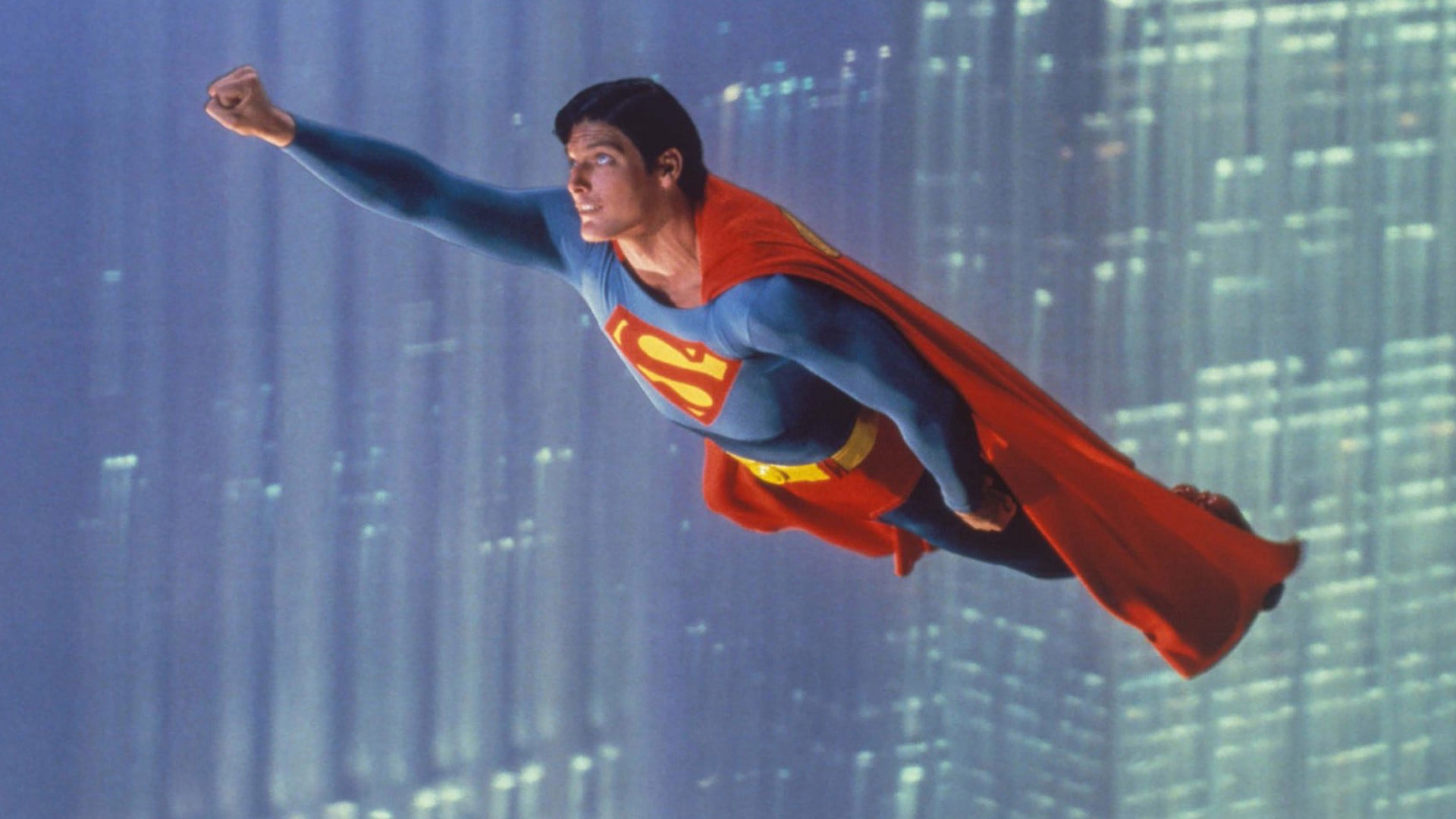
    To truly understand what is missing from superhero music these days, one need only refer to the gold standard of the genre, “Superman” (1978). John Williams’ score was from smack-dab in the middle of his heroic period, falling as it did, between “Star Wars” and “Raiders of the Lost Ark.” Its star-spangled fanfare and march beautifully conjure memories of Superman music past – for the George Reeves TV series and, before that, the Fleischer Brothers cartoons – yet effortlessly surpass them like leaping a tall building in a single bound.

    I know, I know, not every film can be, nor should be, the same, and Williams’ primary colors wouldn’t sit as well, perhaps, with the dark streets of Gotham. But why does everything have to be so grim these days? I read comic books when I was a kid, and I don’t remember everything being so hopeless.

    I don’t want to hear about how the real world is a gritty place right now. “Superman” was made in the wake of Watergate and Vietnam, for crying out loud. Entertainment molds the world, every bit as much as the world shapes our entertainment. Is it too much to ask for a little fun and inspiration from our superhero movies? Can we leave the theatres feeling exhilarated, for a change, as opposed to simply exhausted?

    All kryptonite will be encased in lead for “Everything’s Super,” on “Picture Perfect,” music for the movies, this Saturday evening at 6:00 EST, on WWFM – The Classical Network and wwfm.org
  • Russian Literature Movie Music for Winter Nights

    Russian Literature Movie Music for Winter Nights

    Long winter’s nights are made for reading.

    This week on “Picture Perfect,” you’ll find plenty of inspiration in music from movies adapted from Russian literature.

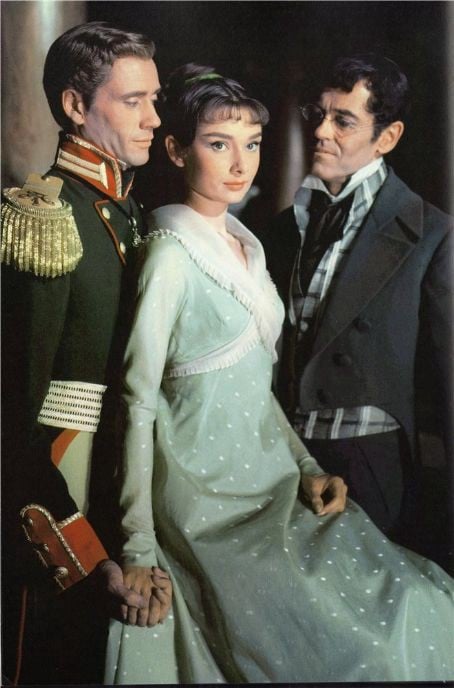
    Tolstoy’s “War and Peace,” one of the most revered novels of the 19th century, has been filmed at least twice. A seven-hour Soviet adaptation, begun in 1965, is generally regarded as the superior of the two. The other, released in 1956, was a big-budget Italian-American venture, supervised by Dino di Laurentiis, with an all-star, international cast, including Henry Fonda, Audrey Hepburn, Mel Ferrer, Vittorio Gassman, Herbert Lom, and Anita Ekberg. It was directed by King Vidor, the cinematography was by Jack Cardiff, and the music was by Nino Rota.

    Tolstoy’s “Anna Karenina” has also been adapted several times. A 1948 British production stars Vivian Leigh, Ralph Richardson, and Kieron Moore. The score is by Constant Lambert, also well-respected for his concert music, though perhaps even better recognized as conductor of the Vic-Wells (later the Sadler-Wells) Ballet.

    Even more highly-regarded was Arthur Honegger, who wrote five symphonies, nine ballets, and a number of large-scale choral and theatrical works. His best-known piece is probably the symphonic movement “Pacific 231,” which famously emulates the sound of a steam locomotive.

    Perhaps the most “serious” of the composers that made up the group known as Les Six, Honegger nonetheless enjoyed a sideline working in film over a period of three decades. His scores include those for Abel Gance’s “Napoléon” and a 1934 French version of “Les Misérables.” He was also a mentor to Miklós Rózsa, the Hungarian émigré he met in Paris, who went on to great success writing film music, first for the Korda brothers in England, then in Hollywood.

    Honegger’s score for a 1935 version of Dostoyevsky’s “Crime and Punishment” includes a part for the ondes martenot, an electronic keyboard instrument with an uncanny, otherworldly timbre.

    Finally, we’ll turn to what some regard as the greatest Russian novel of the past century, “The Master and Margarita.” Mikhail Bulgakov began his book in 1928, but destroyed it in despair over the state of things as he saw them in the Soviet Union. He restarted it in 1931, and the manuscript went through multiple drafts until his death in 1940. It’s only since the late ‘60s that uncensored editions of the novel found their way into print. The first complete version was published in 1973, with an even more authoritative edition following in 1989.

    In one particularly meta episode in this multi-layered tale, the author burns his own manuscript! Faustian imagery abounds: Satan figures prominently, the Master’s love is named Margarita, and there are elements of intellectual curiosity and redemption.

    A film version, released in 1994, attracted one of the biggest names in, by then, post-Soviet music, Alfred Schnittke, a composer noted for his “polystylism.” In one particularly grotesque passage, he alludes to Ravel’s “Bolero.”

    Pull a chair up to the fire and say “Da” to Russian literary classics on “Picture Perfect,” music for the movies, this Saturday evening at 6:00 EST, on WWFM – The Classical Network and wwfm.org.

  • Doppelganger Delights on Picture Perfect

    Doppelganger Delights on Picture Perfect

    This week on “Picture Perfect,” we’re seeing double.

    James Stewart plays Scottie Ferguson, a traumatized police detective who becomes obsessed with the woman he loves – and loses – in Alfred Hitchcock’s “Vertigo” (1958). Kim Novak portrays both the enigmatic beauty and her spitting image, who Ferguson, rather creepily, attempts to mold. Bernard Herrmann wrote the hypnotic score.

    Krzysztof Kieślowski’s “La double vie de Véronique”/“The Double Life of Véronique” (1991) depicts parallel characters living in Poland and France who are mysteriously linked, both of them played by Irène Jacob. The performance(s) earned Jacob an award for Best Actress at the Cannes Film Festival. The music, which plays a significant role in the actual plot, is by Zbigniew Preisner.

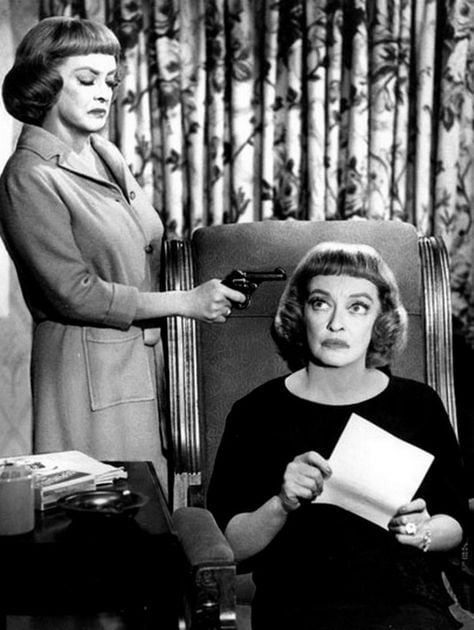
    For the second time in her career, Bette Davis gets a chance to play an evil twin in “Dead Ringer” (1964). The first was in the 1946 good twin-bad twin melodrama, “A Stolen Life.” When asked what the difference was between the two performances, Davis quipped, “About 20 years.” “Dead Ringer” was directed by her longtime friend and “Now, Voyager” co-star Paul Henreid. The music is by André Previn, whose score employs a stock-in-trade sinister harpsichord, yet when he comes to write the love theme, he manages to whip up one hell of a tribute to Erich Wolfgang Korngold.

    Korngold scored a number of Davis’ films in the 1940s, though he is principally remembered for his work on the swashbucklers of Errol Flynn. To capitalize on Flynn’s star-making performance in “Captain Blood,” Warner Brothers produced a big screen adaptation of Mark Twain’s Tudor switcheroo, “The Prince and the Pauper” (1937). Flynn steals the show as Miles Hendon, the devil-may-care guardian of Prince Edward and Tom Canty, Edward’s mirror image, played by real-life twins Bobby and Billy Mauch. If you’re a Korngold fan, or an enthusiast of violin concertos, you may recognize some of the music. Korngold recycled the theme for use in the last movement of his Violin Concerto, championed by Heifetz and others.

    Double your pleasure with an hour of doppelgangers, twins, and dual identities, on “Picture Perfect,” music for the movies, this Saturday evening at 6:00 EST, on WWFM – The Classical Network and wwfm.org.

  • Christmas Movie Music on Picture Perfect

    Christmas Movie Music on Picture Perfect

    BACK, BY POPULAR DEMAND!

    This week on “Picture Perfect,” it’s a yuletide treat: I hope you’ll join me for an hour of musical stocking stuffers.

    We’ll begin with selections from “Miracle on 34th Street,” from 1947. Maureen O’Hara, Natalie Wood, and Edmund Gwenn star. Gwenn won an Academy Award for his portrayal of Kris Kringle. Cyril J. Mockridge’s alternately bustling and sentimental score employs “Jingle Bells” as its Santa motif.

    Then, drawing from the countless adaptations of Charles Dickens’ “A Christmas Carol,” we’ll turn to a 1938 version, featuring Reginald Owen as Scrooge. Franz Waxman’s music draws on traditional carols and, when Scrooge undergoes his Christmas morning transformation, a sly riff on Georges Bizet’s “Jeux d’enfants.”

    For those who enjoy a little carnage with their Christmas, we’ll also hear selections from “Home Alone.” The 1990 film, in which diminutive Macaulay Culkin subjects would-be burglars Joe Pesci and Daniel Stern to a battery of cartoon violence, features a candy-coated score by John Williams.

    There are those who consider “Ben-Hur” to be among the greatest film scores of all-time. From Miklós Rózsa’s work on the 1959 Oscar champ, we’ll hear music from the film’s opening Nativity sequence.

    Then, Cary Grant plays an angel who answers the prayers of David Niven, attempting to raise funds for a new cathedral, in “The Bishop’s Wife.” Along the way, Grant also happens to fall for Lauretta Young. Monty Woolley, Elsa Lanchester, and James Gleason add to the whimsy. This charming 1947 romantic fantasy sports a memorable score by Hugo Friedhofer.

    Finally, any sentiment in “The Holly and the Ivy,” from 1952, is hard-earned. Ralph Richardson plays the clueless patriarch of a troubled family, a village parson more concerned with his parishioners than those living under his own roof. When the family reunites for Christmas, longstanding frictions continue to wear, but they are gradually resolved. Malcolm Arnold’s score gives little hint of the film’s inherent drama. However, he does provide some boisterous arrangements of some familiar carols.

    Pour yourself a cup of cocoa and settle in for a cinematic Christmas this week, on “Picture Perfect,” music for the movies. Yule be glad you did, this Saturday evening, Christmas Day, at 6:00 EST, on WWFM – The Classical Network and wwfm.org.

  • Star Trek’s Epic Music Galaxy

    Star Trek’s Epic Music Galaxy

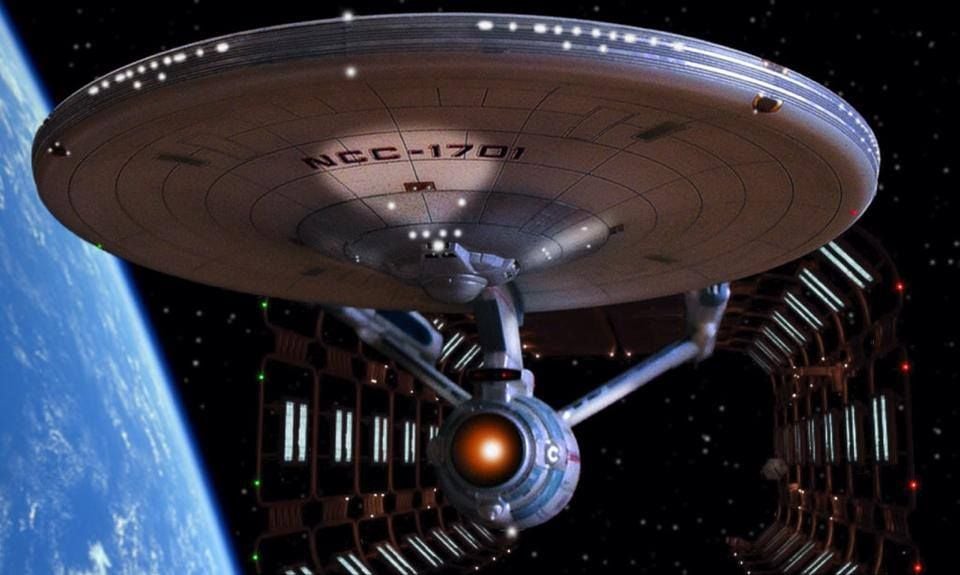
    Space… the final frontier. This week, on “Picture Perfect,” beam aboard for some of the best “Star Trek” music in the galaxy. We’ll hear enterprising selections from the beloved media franchise.

    In retrospect, it’s hard to conceive of “Star Trek,” the original series (1966-69), staggering toward cancellation after a mere three seasons on NBC, so much a part our shared cultural consciousness it has become. The show’s popularity expanded through syndication. Still, prior to the blockbuster success of “Star Wars,” the only other “Trek” would be an animated series that aired on Saturday morning television from 1973 to 1974 (to be discussed tomorrow evening on Roy’s Tie-Dye Sci-Fi Corner).

    In 1977, the one-two box office punch of “Star Wars” and “Close Encounters of the Third Kind” revealed a latent hunger for science fiction that gave “Star Trek” the final boost it needed to reach the silver screen.

    “Star Trek: The Motion Picture” (1979), long-awaited, was ambitious to a fault. Its approach seemed especially ponderous next to the souped-up dog fights of a galaxy far, far away. However, there was undeniably a nostalgic satisfaction in seeing the original crew reassembled on the deck of a refurbished Enterprise, and the production values were nothing less than first-rate.

    Robert Wise directed. Wise was involved in the production of any number of classic films, dating back to the 1930s, including “The Day the Earth Stood Still,” “West Side Story,” “The Haunting,” and “The Sound of Music.” He also edited “Citizen Kane.”

    “Star Trek: The Motion Picture” sported state-of-the-art special effects (by Douglas Trumbull no less), and a knock-out music score by Jerry Goldsmith. I remember leaving the theater on the film’s opening night and remarking that the movie was all right, but the music was fantastic.

    There’s a six-minute, music-and-special effects showpiece of a shuttle flying around the drydocked Enterprise that’s a perfect marriage of music and film. It’s like nothing you’re ever likely to encounter in movies today – and more’s the pity.

    The “ST: TMP” theme has always been a fan favorite, but its resurrection, beginning with the launch of the television series “Star Trek: The Next Generation,” cemented its broader familiarity.

    “Star Trek” had always positioned itself as thoughtful science fiction, and in the case of the first film perhaps it tried a mite too hard. “ST: TMP” strove for stately, but what it wound up achieving was stasis. Although a box office success, the film received mixed reviews and performed below industry expectations. However, it still made enough money to justify a sequel.

    “Star Trek II: The Wrath of Khan” (1982) was a belated continuation of an episode from the original series, “Space Seed,” in which a genetically engineered superman is revived from suspended animation and attempts to take over the Enterprise. Khan, of course, was played by Ricardo Montalban, now with gleaming chest and silver mullet – worlds away from his contemporaneous characterization as Mr. Roarke on TV’s “Fantasy Island.”

    The tone of the film proved a refreshing change of pace, playing up the character relationships that made the original series so enjoyable and providing enough action to satisfy audiences attuned to post-“Star Wars” spectacle. Moreover, it cleverly draws on nautical iconography – while “Star Wars” had its dogfights, “Wrath of Khan” deals more in broadsides – and that nautical flavor extends to the film’s brilliant score, by James Horner. The project proved an important stepping stone to Horner’s acceptance as an A-list composer.

    Another memorable episode of the original series dealt with the usually unflappable Spock losing his cool, as he teeters into pon farr, a period of madness that strikes every seven years during which a Vulcan must mate or die.

    “Amok Time” (1967) opened the show’s second season. It featured alien-world papier-mâché boulders, oversized Q-tip like weapons, and what is now widely recognized as the “Star Trek fight music.” This music was reused in several subsequent episodes and has since been widely parodied.

    The composer was Gerald Fried, who wrote the music for Stanley Kubrick’s first four films. He also provided most of the score for the landmark television mini-series “Roots.”

    Following the disappointing box office of “Star Trek: Nemesis” in 2002, the film franchise was put on hiatus for the next six-and-a-half years, possibly the result of “Star Trek” fatigue – too many movies and too many television series.

    J.J. Abrams was hired in the hopes of revitalizing “Trek” with a fresh makeover. Abrams’ approach might best be summed up as “Damn the social issues! Damn the philosophical underpinnings! Damn the continuity! Full speed ahead!” The result is undoubtedly entertaining, though very much of our time, with a lot of action at the expense of the ideas and humanity that made earlier incarnations more resonant.

    The “reboot” scored a hit with critics and general audiences, though it remains controversial with fans of the original series. Even the title suggests a new beginning, as the film was titled, simply, “Star Trek” (2009). The story employs an alternative timeline, so that the filmmakers are no longer beholden to more than 40 years’ worth of accrued “Star Trek” lore. It’s the kind of thing that is done all the time in comic books. Whether or not the result is for the best, I leave to you.

    Neither is the music quite as rich as that for some of the earlier installments, though it does generate a fair amount of excitement within the context of the film. The composer is Michael Giacchino.

    I hope you’ll join me for these selections from “Star Trek,” on “Picture Perfect,” music for the movies. The music won’t be the only thing that’s transporting. Set phasers for “fun,” this Saturday evening at 6:00 EST, on WWFM – The Classical Network and wwfm.org.

Tag Cloud

Aaron Copland (92) Beethoven (95) Composer (114) Film Music (123) Film Score (143) Film Scores (255) Halloween (94) John Williams (187) KWAX (229) Leonard Bernstein (101) Marlboro Music Festival (125) Movie Music (138) Opera (202) Philadelphia Orchestra (89) Picture Perfect (174) Princeton Symphony Orchestra (106) Radio (87) Ralph Vaughan Williams (85) Ross Amico (244) Roy's Tie-Dye Sci-Fi Corner (290) The Classical Network (101) The Lost Chord (268) Vaughan Williams (103) WPRB (396) WWFM (881)

DON’T MISS A BEAT

Receive a weekly digest every Sunday at noon by signing up here


RECENT POSTS