Tag: Film Scores

  • Horse Racing Movie Soundtracks on the Air

    Horse Racing Movie Soundtracks on the Air

    It’s a rare horse race where everyone comes out a winner. This week on “Picture Perfect, it’s bound to be a photo finish, with four beautiful and rousing scores from films about horses and horse racing.

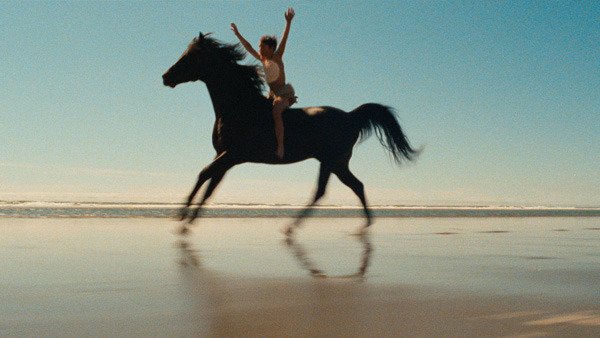
    “The Black Stallion” (1979), based on the classic novel by Walter Farley, depicts the bonding of a shipwrecked boy and an Arabian stallion, whose shared destiny takes them to the race track. Mickey Rooney’s uncharacteristically subdued performance as the former trainer who finds a new lease on life earned him an Academy Award nomination for Best Supporting Actor.

    Francis Ford Coppola executive produced the film, and his father, Carmine Coppola, wrote the music. Reportedly the unsung Shirley Walker, who had been hired as an orchestrator, wound up contributing a fair amount to it, when the composer was put off by requests from director Carroll Ballard that portions of the music be rewritten.

    “The Reivers” (1969), after William Faulkner’s Pulitzer Prize winning novel, is a coming-of-age story about a boy swept into automobile theft and illicit horse racing in the American South. Mark Rydell directed, and Steve McQueen stars as the rakish Boon Hogganbeck. The narration is by Burgess Meredith, who reprises his role in the recording we’ll hear, with John Williams conducting his own music.

    For the film, Williams provided an alternately wistful and carefree Americana score. It’s said that the music for “The Reivers” is what moved Steven Spielberg to hire him to write the music for his first theatrical feature, “The Sugarland Express.” The Spielberg association brought Williams to “Jaws,” the first of his truly iconic film scores. He also worked with Mark Rydell on “The Cowboys” (1972), “Cinderella Liberty” (1973), and “The River” (1984).

    It was inevitable that the nonfiction bestseller “Seabiscuit: An American Legend” would be given the big Hollywood treatment. The miraculous ascent of the real-life dark horse who became a symbol of hope during the Great Depression seemed tailor-made for dramatization.

    Though it presses all the right buttons, “Seabiscuit” (2003) is not to be confused with a superior documentary that was shown on PBS around the same time. Nonetheless, the film, which stars Tobey McGuire, Jeff Bridges, and Chris Cooper, was nominated for seven Academy Awards, including Best Picture. Randy Newman wrote the music.

    Finally, we’ll turn to “Hidalgo” (2004), also allegedly based on a true story, though the source material – the memoir of distance rider Frank T. Hopkins – has also inspired a fair degree of skepticism. In 1890, Hopkins became the first American invited to compete in a centuries-old 3000-mile survival race across the Arabian Desert.

    Viggo Mortensen plays Hopkins, and Omar Sharif is the sheik who asks him to put up or shut up, over the claim made by Buffalo Bill’s Wild West Show that he and his horse are the greatest distance runners in the world. The music is by James Newton Howard.

    It will be a dead heat in June, with the wind in our hair. Enjoy an hour of equine film scores, on “Picture Perfect,” music for the movies, this Saturday evening at 6:00 EDT, on WWFM The Classical Network and wwfm.org.
  • Princeton Record Exchange Film Score Haul

    Princeton Record Exchange Film Score Haul

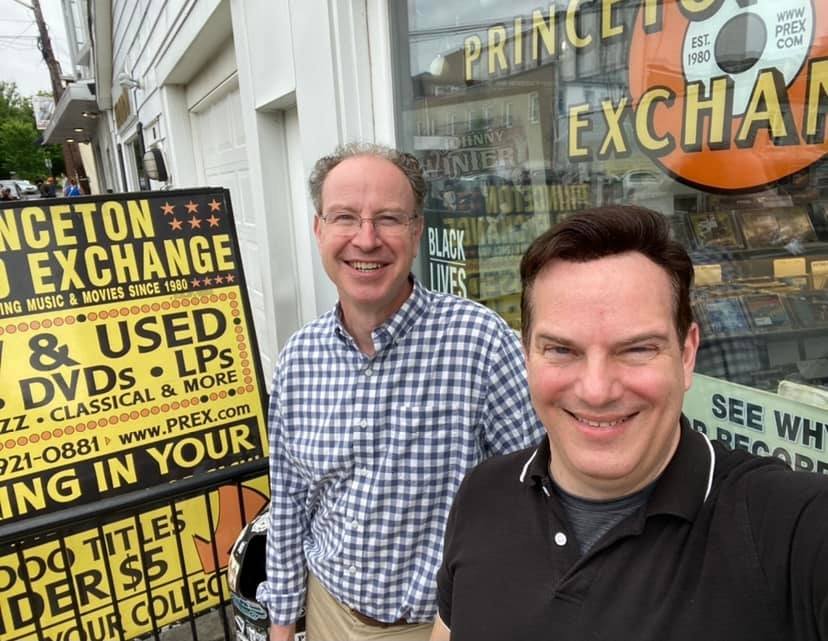
    Roy made the trek down to Princeton yesterday. I showed him around the town and campus and introduced him to Princeton Record Exchange, the Holy of Holies for savvy record collectors. Even just to get through the classical music section can sometimes take me a couple of hours, if I comb through everything, so there’s often little energy left to check out the other sections.

    Yesterday, even though I felt the perspiration beading on my forehead, I deliberately didn’t look too closely as we passed through. However, I had to fight hard not to grow roots when I happened to glance at the soundtracks and noticed a mother lode of classic film scores!

    Not wanting to waste our time together, I came back later and cleaned the place out. I filled up a bag with Max Steiner, Franz Waxman, Alfred Newman, Dimitri Tiomkin, David Raksin, Hugo Friedhofer, Victor Young, George Duning, Alex North, André Previn, Bronislau Kaper, Elmer Bernstein, Ernest Gold, Laurence Rosenthal, John Barry, Ron Goodwin, Ennio Morricone, Mario Nascimbene, Pino Donaggio, and Jerry Goldsmith (among others). I even found a suite from “The Skull” by Elisabeth Lutyens, some French scores for the films of Marcel Carné, and Alessandro Cicognini’s music for Kirk Douglas’ “Ulysses!”

    Roy, you’re my good luck charm!

  • Lost Worlds Fantasy Film Scores on WWFM

    Lost Worlds Fantasy Film Scores on WWFM

    This week on “Picture Perfect,” prepare to get “lost.” We’ll have an hour of music from fantasy films set in lost worlds.

    In “King Kong” (1933), filmmaker and entrepreneur Carl Denham hires a ship to an uncharted island, known only from a secret map in his possession. There the crew discovers the titular gorilla and other outsized and should-be-extinct creatures. Kong is abducted from his natural habitat – and you know the rest. The composer, Max Steiner, pulls out all the stops. “Kong” was one of the first films to demonstrate how truly powerful an orchestral soundtrack could be.

    Then we travel to the earth’s core, courtesy of Jules Verne, and “Journey to the Center of the Earth” (1959). James Mason is the professor who leads the expedition. The film sports one of Bernard Herrmann’s most outlandish soundscapes, the orchestra consisting of winds, brass and percussion, but also cathedral organ, four electric organs, and an obsolete Renaissance instrument called the serpent. Watch out for that giant chameleon!

    “One Million Years B.C.” (1966) is a guilty pleasure if ever there was one. Produced by Hammer, the studio that gave us all those repugnant yet somehow delicious Peter Cushing-Christopher Lee horror team-ups, the film features special effects by the legendary Ray Harryhausen and an equally legendary fur bikini, worn by Raquel Welch. The music is by Mario Nascimbene, who wrote one of my favorite scores for Kirk Douglas, for “The Vikings.” We’ll be listening to the film’s climactic volcano sequence.

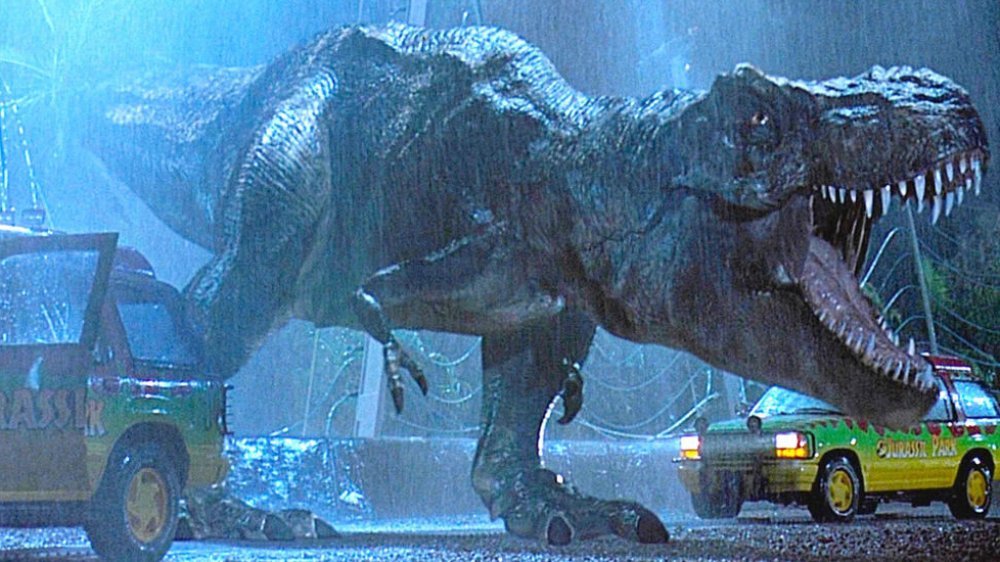
    As he did with the Indiana Jones films, director Steven Spielberg turned to B-movie source material for his visual inspiration for “Jurassic Park” (1993), based on the novel by Michael Crichton. The herky-jerky dinosaur effects of yore are replaced by state of the art computer-generated effects, in the story of a safari park on a remote island gone wrong.

    Sure, we’ve come a long way from Raquel Welch getting carried off by a pteranodon, but admit it, we all still want to see people fight dinosaurs. Instead of fudging history, now we can feel superior by fudging science. “Jurassic Park” plays on the most recent scientific thinking, with DNA extracted from mosquitoes trapped in amber, cloning, and the theory that dinosaurs were not lizards, after all, but rather birds. The music is by long-time Spielberg-collaborator, John Williams.

    I hope you’ll join me for music for these “Lands That Time Forgot,” this Saturday evening at 6:00 EDT, on WWFM – The Classical Network and wwm.org.

  • 1982 Summer of Movies A Nostalgic Look

    1982 Summer of Movies A Nostalgic Look

    Was 1982 the Summer of Fun?

    Projecting myself back 40 years, on the cusp of Memorial Day weekend, I was already caught in the gravitational pull of summer. Sure, school was still on its molasses creep toward final exams and their denouement, the padding of allotted days in hot classrooms until the final bell.

    But I had already seen “Conan the Barbarian” (with a hilarious weeknight audience in a mostly empty theater), I was reading Philip K. Dick’s “Do Androids Dream of Electric Sheep?” in anticipation of the release of “Blade Runner,” and on top-40 radio “Chariots of Fire” was sharing air time with “Ebony and Ivory.”

    There was war in the Falkland Islands, and “Jane Fonda’s Workout” was everywhere, but on the whole, for a high school student in the U.S., summer was about to crest and life was good.

    Here are just some of the popcorn movies that were issued in the summer of ’82, with their release dates, and in parentheses, their composers.

    “The Sword and the Sorcerer” (David Whitaker), April 23
    “Conan the Barbarian” (Basil Poledouris), May 14
    “Dead Men Don’t Wear Plaid” (Miklos Rozsa), May 21
    “The Road Warrior” (Brian May), May 21
    “Rocky III” (Bill Conti), May 28
    “Poltergeist” (Jerry Goldsmith), June 4
    “Star Trek II: The Wrath of Khan” (James Horner), June 4
    “E.T. The Extra-Terrestrial” (John Williams), June 11
    “Blade Runner” (Vangelis), June 25
    “The Thing” (Ennio Morricone), June 25
    “The Secret of Nimh” (Jerry Goldsmith), July 2
    “Tron” (Wendy Carlos), July 9
    “The Beastmaster” (Lee Holdridge), August 20

    I would come to own most of the soundtracks for these movies. In fact, the only three missing from my collection are “The Secret of Nimh,” “Tron,” and “Rocky III” (not that I want it).

    And these were just the foil on a roll of SweeTarts, the tip of a bottomless box of Nonpareils. There were interesting and diverting movies released all summer long, many of them quite good – among them “Fitzcarraldo,” “Annie,” “Gregory’s Girl,” “A Midsummer Night’s Sex Comedy,” “The World According to Garp,” “An Officer and a Gentleman,” “Night Shift,” “Pink Floyd: The Wall,” and “Fast Times at Ridgemont High.”

    On July 4, I was 16 years-old, I could legally drive to a movie theater, and the world was my oyster.

    Were all of the movies good? Not all of them were on a level with “E.T.” or “The Road Warrior” or “Fitzcarraldo,” but most of them have endured fondly in memory, as pop cultural touchstones for a certain generation, or at the very least as guilty pleasures. (There’s a reason I’ve included “The Sword and the Sorcerer,” even though it opened in April.)

    Going by film scores alone, I often cite 1982 as Hollywood’s Second Golden Year – the First, of course, widely accepted as 1939. Few of the movies were of the caliber of those released at the time of “The Wizard of Oz” and “Gone with the Wind,” among many, many others, but the music for even the weakest of ‘82 was generally of a very high quality.

    By 1982, the “summer movie” was a well-oiled machine. There may have been no “Star Wars” and no “Raiders of the Lost Ark,” but man there was a lot of fun and fantasy to be enjoyed in an air-conditioned theater.

    “Jaws” may have given rise to the modern summer blockbuster in 1975, but it wasn’t until “Star Wars” – released on May 25, 1977, a Wednesday, on the week leading up to Memorial Day – that the industry was codified. That’s when the studios figured out that the lazy days of summer were being underutilized as a dumping ground for low expectations and undemanding fare. The old thinking was, it’s summer, right? People are busy. They’re on vacation. Who’s going to go to the movies?

    Now of course the summer movie mentality is year-round, whenever they feel like dropping another Marvel movie. But the magic that so indelibly marked the summer moviegoing experience from the mid-‘70s through the mid-‘80s seems to have entirely dissipated. Who knows, maybe it’s my age. But I think I am correct in observing that commercialism has long since outstripped creativity, if not craft, and a lot of the soul has been superseded by breakneck editing, refinery noise, and computer-generated nightmares.

    Alas, the change of seasons now holds little significance for me, in terms of entertainment. Going to the movies in the summer is no longer a part of my routine. Gone are the days when I would actually create a countdown calendar in anticipation of the next “Star Wars” sequel, or that I would leaf through the movie ads, with their alluring artwork, in the Friday newspapers.

    I guess to some extent I’ve put away childish things. (Don’t you believe it!) But it’s not because I’ve abandoned the movies. Rather, it’s the movies that have abandoned me.

    When I die, if they let me into Heaven, I hope it’s a little bit like 1982.

  • G-Men Movie Music Hoover Untouchables

    G-Men Movie Music Hoover Untouchables

    Fidelity. Bravery. Integrity.

    This week on “Picture Perfect,” special agents of the United States government flex their muscle, ideally in the service of truth, justice, and the American way.

    35 years before Clint Eastwood’s “J. Edgar,” low-budget director Larry Cohen was stirring controversy with “The Private Files of J. Edgar Hoover” (1977). The film was screened at the Kennedy Center, where it was criticized by Republicans and Democrats alike for its dark depiction of American politics, and for its portrayals of Presidents Franklin Delano Roosevelt and Richard Nixon. It went on to receive a limited theatrical release, and then quietly disappeared to television, and later, video.

    Broderick Crawford plays the title role, as the ruthless FBI director, who had died only a few years before, and still elicited strong feelings on the part of many Americas.

    The music was by Miklós Rózsa, who returned to the hardboiled syntax of the crime dramas he had scored largely during the 1940s.

    Leonardo DiCaprio played Hoover in Eastwoord’s “J. Edgar.” But he’s on the other side of the law in the Steven Spielberg film, “Catch Me If You Can” (2002), based on the real-life exploits of the chameleonic Frank Abagnale. Before his 19th birthday, Abagnale managed to successfully pull a series of cons worth millions of dollars, along the way, posing convincingly as a pilot, a doctor, and a lawyer.

    Tom Hanks plays bank fraud agent Carl Hanratty, who develops an unusual relationship with the precocious con artist, as the light-hearted cat-and-mouse thriller unfolds.

    John Williams wrote the intimate and jazzy score, a throw-back to caper films of the 1960s.

    In one of Alfred Hitchcock’s best-loved thrillers, “North by Northwest” (1959), Cary Grant plays a Madison Avenue advertising man who, through a case of mistaken identity, gets sucked into a plot of international intrigue. He’s eventually enlisted by the F.B.I., and he and Eva Marie Saint famously find themselves scaling Mount Rushmore.

    Bernard Herrmann wrote the music, propelling the action with a lively fandango.

    Hoover was not a fan of Eliot Ness, and made it clear that, although he was a federal employee – as a member of the Treasury Department and the Prohibition Bureau (an offshoot of the Internal Revenue Service) – Ness was not part of the Federal Bureau of Investigation.

    Nonetheless, his fame was at least as great as Hoover’s, as he was credited with busting up the Chicago crime ring and taking down its kingpin, Al Capone.

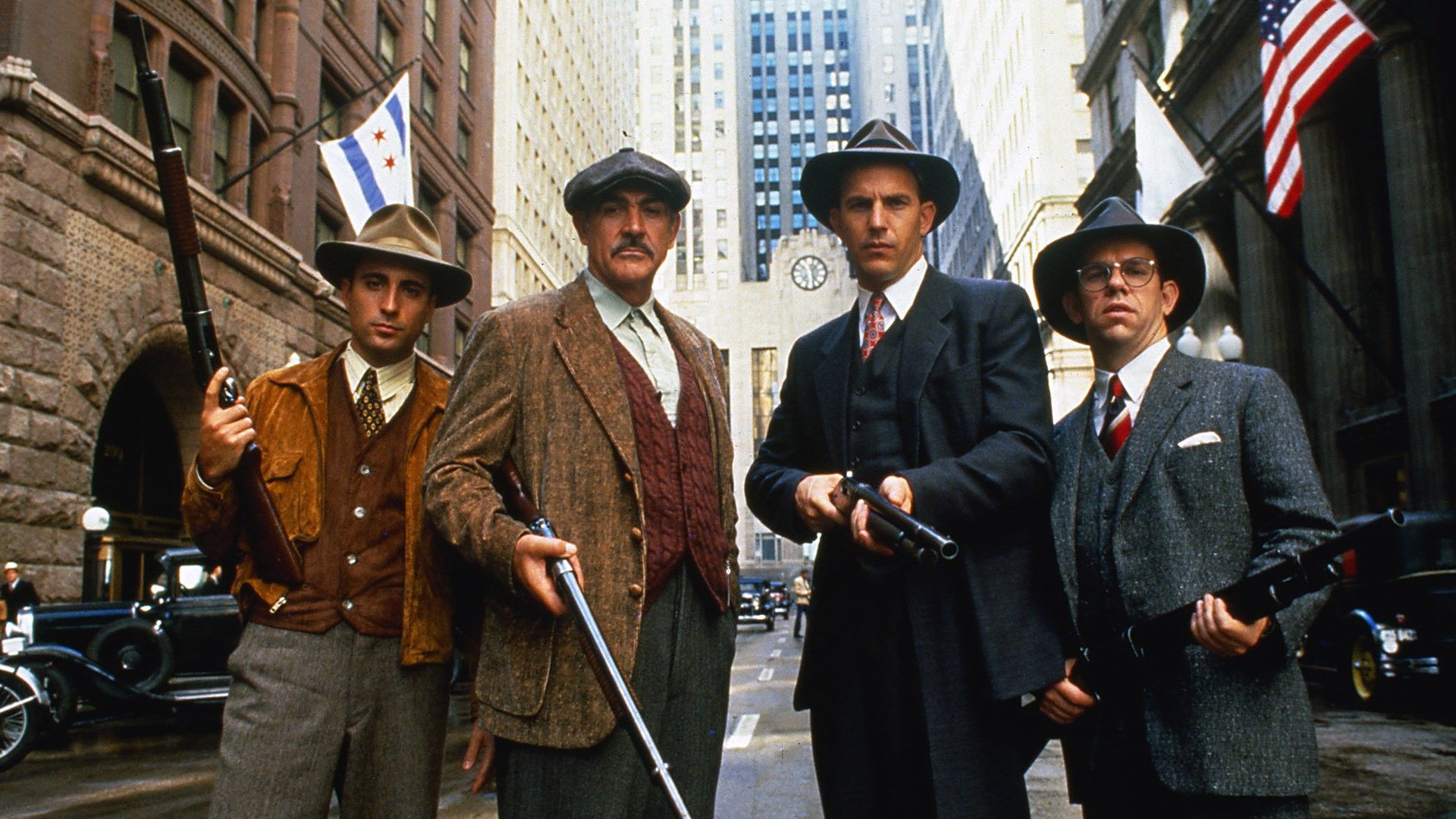
    Ness’ band of enforcers are the heroes of Brian DePalma’s virtuosic crime drama, “The Untouchables” (1987). Kevin Costner stars as Ness, but it was Sean Connery as his mentor, a street-smart beat cop, who won an Academy Award.

    The wistful, dangerous, and ultimately inspiring score is by Ennio Morricone.

    To miss it would be a crime. It’s all G-men this week, on “Picture Perfect,” music for the movies. The entire show’s a bust, this Saturday evening at 6:00 EDT, on WWFM – The Classical Network and wwfm.org.
Tag Cloud

Aaron Copland (92) Beethoven (95) Composer (114) Film Music (123) Film Score (143) Film Scores (255) Halloween (94) John Williams (187) KWAX (229) Leonard Bernstein (101) Marlboro Music Festival (125) Movie Music (138) Opera (202) Philadelphia Orchestra (89) Picture Perfect (174) Princeton Symphony Orchestra (106) Radio (87) Ralph Vaughan Williams (85) Ross Amico (244) Roy's Tie-Dye Sci-Fi Corner (290) The Classical Network (101) The Lost Chord (268) Vaughan Williams (103) WPRB (396) WWFM (881)

DON’T MISS A BEAT

Receive a weekly digest every Sunday at noon by signing up here


RECENT POSTS