Tag: Film Scores

  • Thanksgiving Music Movie Americana

    Thanksgiving Music Movie Americana

    There’s more to Thanksgiving than just turkey and football. This week on “Picture Perfect,” we count our blessings and aspire to do better, with music from movies reflective of what’s best in human nature and most admirable in the American character.

    Aaron Copland’s work on “The Cummington Story” (1945), a semi-documentary produced by the Office of War Information, underscores the gradual acceptance of European war refugees into a cautious but fundamentally decent New England community. The music is pure Americana, with some of the material later finding its way into Copland’s Clarinet Concerto and “Down a Country Lane.”

    “Field of Dreams” (1989) is one of those rare films that has the ability to reduce manly men – even those without father issues – to a pool of tears. Phil Alden Robinson’s superior adaptation of W.P. Kinsella’s novel, “Shoeless Joe,” is a male wish-fulfillment fantasy, in which a man finds redemption, and a new understanding of his father, in the enchanted cornfields of America’s heartland. And it’s all brought about courtesy of America’s pastime, baseball. The evocative score, much indebted to Copland, is by James Horner.

    “The Best Years of Our Lives” (1946) is one of the great American classics. This touching film tells the tale of the three WWII veterans struggling to readjust to civilian life. It isn’t easy, but with the support of family and friends, there’s plenty of hope for the future. Hugo Friedhofer wrote the Academy Award-winning score, earning the film one of its seven Oscars. The orchestrations were by Copland protégé (and composer of “The Big Country”) Jerome Moross.

    Finally, Daniel Day-Lewis elevates Steven Spielberg’s “Lincoln” (2012) to greatness with one of the uncanniest performances ever captured on film. Day-Lewis’ gentle but shrewd Man of Destiny would go to any lengths to hold the country together. John Williams taps into America’s proud musical heritage, clearly influenced by Copland and Ives to create a score of stirring nobility.

    I hope you’ll join me as we give thanks for family, community and country on “Picture Perfect,” music for the movies, this Saturday evening at 6:00 EST, on WWFM – The Classical Network and wwfm.org.

  • Classic Horror Film Scores and Halloween Fun

    Classic Horror Film Scores and Halloween Fun

    Whatever happened to my Transylvania twist?

    This week on “Picture Perfect,” with Halloween just around a creepy corner, we’ll pull the blankets up under our noses, as Dracula, Frankenstein’s monster, and the Wolfman headline an hour of creature features.

    We’ll begin with arguably the best of the Frankenstein films, “The Bride of Frankenstein” (1935). Boris Karloff, Colin Clive, and Dwight Frye return. This time, they’re joined by batty and theatrical Ernest Thesiger, as Dr. Pretorius, and of course Elsa Lanchester. One of the greatest sequels ever made, “Bride” manages to deepen and expand elements of the original film, with plenty of atmosphere, a wry sense of humor, abundant pathos, and one of the finest film scores of the era, by Franz Waxman. Previously, Waxman was involved in the German film industry. Portions of his classic score were reused in any number of other Universal pictures over the years, including the Flash Gordon serials.

    Of course, then came “Son of Frankenstein,” “The Ghost of Frankenstein,” “Frankenstein Meets the Wolfman”…

    Four years before Abbott and Costello would meet Frankenstein’s monster, Dracula, and the Wolfman, all in the same film, Universal brought together its most popular creatures for “House of Frankenstein” (1944). This was the sixth film in the “Frankenstein” franchise, a follow-up to “The Ghost of Frankenstein,” but also a sequel of sorts to “Frankenstein Meets the Wolfman.” Here, Karloff graduates from monster to mad scientist, while Glenn Strange dons the make-up and neck-bolts as “the creature,” John Carradine plays the Count, Lon Chaney Jr. returns in his signature role as Lawrence Talbot (a.k.a. the Wolfman), and J. Carrol Naish portrays Karloff’s hunchback assistant.

    The wackadoodle plot involves Karloff and Naish running a traveling horror show. The doctor revives Dracula for his own nefarious purposes; then later in the film thaws Frankenstein’s monster and the Wolfman from frozen waters. It may not be the best of the Universal Pictures Frankenstein films, but it is undoubtedly entertaining, and good, monster-laden fun. The music is also the result of a monster team-up, of sorts, co-composed by Hans J. Salter and Paul Dessau. The popularity of the multi-monster format ensured yet other follow-ups in “House of Dracula” and “Abbott Costello Meet Frankenstein.”

    Decades later, Mel Brooks and Gene Wilder looked back with affection to the series, when they came to make their horror parody, “Young Frankenstein” (1974). The result is Brooks’ richest comedy. The love of detail extends even to the use of some of the authentic laboratory equipment from the original movies. Composer John Morris’ score reflects the underlying pathos of the monster, in brilliant counterpoint to the onscreen comedy.

    Finally, director Francis Ford Coppola also looked back with affection to earlier classics when he undertook “Bram Stoker’s Dracula” (1992). “Bram Stoker’s Dracula” is the NAME of the film. Despite some intriguing elements, it’s doubtful the author would have recognized his creation in Coppola’s cinematic counterpart. Why can’t anyone figure out how to just film the book? The strongest elements of this version include the opulent costume design, the self-consciously retro special effects, the geek references to classic and foreign films, and the spooky music by Polish composer Woijech Kilar. Kilar was an inspired choice, as he provides just the right Eastern European feel.

    All in all, I think you’ll agree, it’s the perfect mix-tape for drafty dungeons and misty moors. I hope you’ll join me for “Monster Mash” on “Picture Perfect,” music for the movies, this Saturday evening at 6:00 EDT, on WWFM – The Classical Network and wwfm.org!


    If you enjoy either of my weekly shows (or both!), or any of the other music you hear on The Classical Network, please consider making a contribution today. We’re celebrating our 40th anniversary on the air and online, right now. If you’re in a position to do so, leave us a Halloween treat at wwfm.org. Thank you for your continued support of WWFM The Classical Network!

    https://wwwfm.secureallegiance.com/wwfm/WebModule/Donate.aspx?P=DEFAULT&PAGETYPE=PLG&CHECK=vOU2bz5JCWmgCDbf53nm9ezWDeZ%2beA1M

  • Liz & Dick: Music from Their Movies

    Liz & Dick: Music from Their Movies

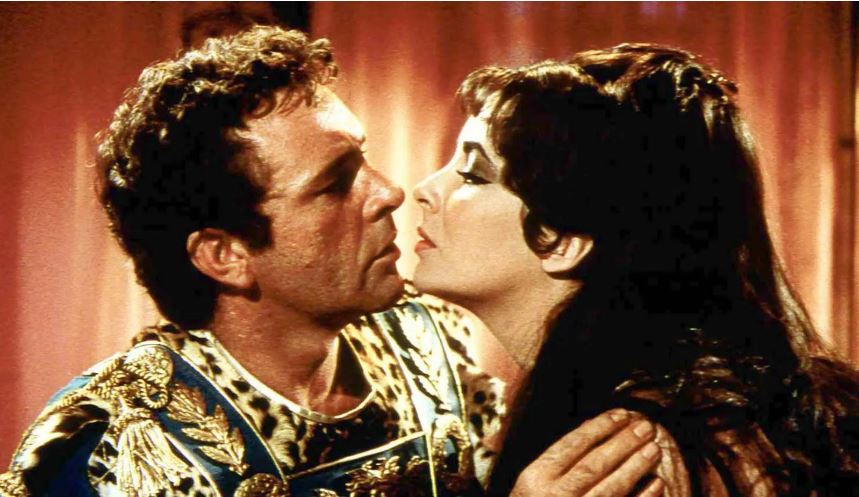
    Elizabeth Taylor and Richard Burton made no fewer than a dozen films together, but it was their tempestuous personal life that made them a source of ceaseless fascination. This week on “Picture Perfect,” enjoy a diverse assortment of musical selections from their movies.

    Regardless of their relative merits, the films of Liz and Dick could be counted on to feature scores by some very fine composers, not the least of whom was Alex North. North is probably most celebrated for his music for “Spartacus.” He would seem a natural fit, then, to write the music for “Cleopatra” (1963).

    “Cleopatra” is the film that first paired Burton and Taylor, on and off-screen. Contrary to popular belief, the epic teaming made a mint. It was the highest-grossing release of its year. However, it simply wasn’t enough to cover the costs of production, marketing, and distribution. “Cleopatra” nearly bankrupted 20th Century Fox. Despite its reputation, there’s still much to enjoy, perhaps most of all in its music.

    For a true sense of North’s versatility, we’ll also sample selections from “Who’s Afraid of Virginia Woolf” (1966), based on the play by Edward Albee. Both Burton and Taylor’s performances were nominated for Academy Awards. Taylor would win – her second Oscar – but despite seven nominations over the course of his career, Burton would never be so honored. It’s not any easy film to watch. There’s always a sneaking suspicion that Liz and Dick were merely playing versions of themselves. The comparatively understated music is full of Baroque touches and characterized by a chamber-like intimacy.

    The dysfunctionality continues, as allegedly “The V.I.P.s” (1963) was inspired by the real-life love triangle of Vivien Leigh, Laurence Olivier, and Peter Finch. The story is set at London Heathrow Airport, where flights are delayed because of a dense fog. The film was written by Terrence Rattigan, and co-starred Louis Jourdan, Maggie Smith, Rod Taylor and Orson Welles. Margaret Rutherford won an Academy Award for Best Supporting Actress.

    The composer was the Miklós Rózsa. Rózsa is perhaps most associated in people’s minds with his work on historical and biblical epics. Here it’s the film’s costars that are larger than life.

    We’ll conclude with music from the Shakespearean romp, “The Taming of the Shrew” (1967), Franco Zeffirelli’s fleet adaptation that also introduced the world to Michael York. The roles of Katherina and Petruchio suit Liz and Dick most satisfyingly.

    The composer was Nino Rota. Zeffirelli and Rota would score a bulls-eye with their Shakespearean follow-up, “Romeo and Juliet,” released the following year. That film became an international hit, and Rota’s love theme immortal.

    Ironically, Taylor and Burton’s final filmed collaboration was a 1973 television movie, “Divorce His, Divorce Hers.” The two, of course, would divorce in real life, only to remarry less than 16 months later, though their second union was short-lived. The exes would pair for one last time, ten years later, for a staged revival of Noel Coward’s “Private Lives,” which was witheringly received.

    It’s a bouquet of dysfunction, but a chocolate box of classic film scores for the films of Taylor and Burton, on “Picture Perfect,” music for the movies, this Saturday evening at 6:00 EDT, on WWFM – The Classical Network and wwfm.org.
  • Australian Outback Film Scores on Picture Perfect

    Australian Outback Film Scores on Picture Perfect

    G’day! This week on “Picture Perfect,” we’re off to the antipodes for an hour of music from films set in the Australian bush.

    Ealing Studios shot several movies there – three independently, and then two in collaboration with MGM. The first was “The Overlanders” (1946), told in semi-documentary style, about a wartime push to evacuate Australia’s Northern Territory, with its 5000 settlers and a million head of cattle, before an anticipated Japanese invasion. The music is by John Ireland. Despite its excellence, it would prove to be Ireland’s only film score.

    Ealing’s final independent Australian venture was “Bitter Springs” (1950). The film tells the tale of an Australian pioneer family, which encounters problems with the local Aboriginal people when its headstrong patriarch denies access to a watering hole.

    The thematic material was by Ralph Vaughan Williams, who left it to composer and conductor Ernest Irving to arrange and orchestrate what he felt needed for the various cues. Vaughan Williams wrote his friend and colleague to express his pleasure with the finished product. Irving would soon receive the dedication of Vaughan Williams’ Symphony No. 7, the “Sinfonia Antartica” (itself derived from RVW’s film score to Ealing’s “Scott of the Antarctic”).

    Both of these films, “The Overlanders” and “Bitter Springs,” are essentially westerns set in the Australian outback. From a little closer to our own time, we’ll hear music from another film that’s unapologetic in its use of American western motifs, “Quigley Down Under” (1990).

    The film stars Tom Selleck as an American cowboy, hired by an Australian rancher, played by Alan Rickman, allegedly to shoot dingoes; however, he soon finds that the rancher’s real purpose is to rid the land of Aborigines – a proposition Quigley naturally rejects, setting up the film’s conflict.

    The score is by Basil Poledouris, a composer who achieved cult status for his work on films like “Robocop” and especially “Conan the Barbarian,” though he never really seemed to receive the recognition the deserved. He did, however, win an Emmy for his score to “Lonesome Dove.”

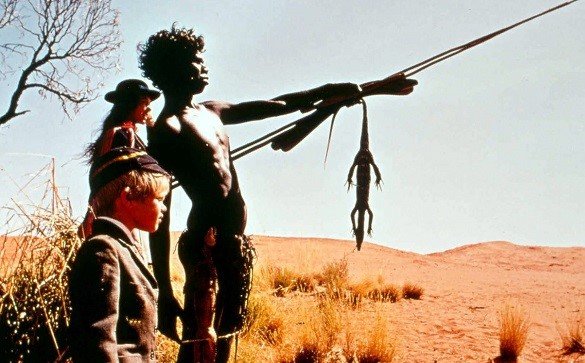
    Finally, we’ll have just a bit from John Barry’s haunting score to Nicholas Roeg’s “Walkabout” (1971), in which two British children find themselves stranded in the bush and survive only through the aid of a young Aborigine.

    We’re heading down under and out back this week, on “Picture Perfect,” music for the movies, this Saturday evening at 6:00 EDT, on WWFM – The Classical Network and wwfm.org

  • Napoleonic War Movies & Their Epic Scores

    Napoleonic War Movies & Their Epic Scores

    There is a pithy quote you may have heard to the effect that England and America are two countries divided by a common language. The observation is sharp and spot-on, so naturally it has been attributed to two of the greatest wits of their day, George Bernard Shaw and Oscar Wilde. Yet these attributions are without verifiable foundation. (The closest Wilde ever came in print: “We really have everything in common with America nowadays except, of course, the language.”)

    Similarly, we all know what is meant by “Napoleon complex.” But did you know there is every possibility that Napoleon was not short? Like the commonality of language that divides the English and the Americans (and I know that Shaw and Wilde were Irish), it turns out that there may be some confusion over Napoleon’s actual height on account of two different systems of measurement that happened to use the same terms.

    Be that as it may, this week on “Picture Perfect,” with Bastille Day (July 14) right around the corner, we’ll surge to power on the allegedly diminutive shoulders of Napoleon Bonaparte. The focus will be on the Napoleonic Wars – which is to say, movies set, at least in part, between about 1803 and 1815.

    There is a lot of unlikely casting in these films. The first English language adaptation of Leo Tolstoy’s “War and Peace” (1956) stars Audrey Hepburn, Henry Fonda, and Mel Ferrer, with Herbert Lom as Napoleon. Lom is fine; but Henry Fonda? At least the music is by Nino Rota.

    Stanley Kramer’s “The Pride and the Passion” (1957) is loosely based on the novel “The Gun,” by C.S. Forester. Forester is best known for the nautical adventures of Horatio Hornblower – also set during the Napoleonic Wars.

    The film depicts the story of a British officer (Cary Grant) who is ordered to retrieve a large cannon from Spain. But before he can do so, he must lend assistance to the leader of the Spanish guerillas (Frank Sinatra!) in the transport of the weapon across 600 miles of treacherous ground to reclaim the city of Avila from the French. Further complications arise from their respective feelings for Sinatra’s mistress (Sophia Loren).

    The score is by Trenton-born George Antheil, self-proclaimed “bad boy of music.” Antheil achieved lasting notoriety as the composer of the raucous “Ballet Mécanique” in the 1920s. He would later embrace a more conservative language for his symphonies and for his music for the movies. Antheil composed over 30 film scores. “The Pride and the Passion” would be his last.

    Ridley Scott’s first feature, “The Duellists” (1977), is based on a story by Joseph Conrad. It relates the tale of an obsessive duellist (Harvey Keitel), who takes it as a personal affront when he is arrested by a fellow hussar (Keith Carradine) for crossing swords with the mayor’s nephew, whom he has fatally wounded. This sets the two men in a kind of combative pas de deux, a series of duels that spans the entire Napoleonic era. The sheer beauty of the film is matched by Howard Blake’s haunting score.

    Abel Gance’s “Napoleon” (1927) is widely regarded as one of the towering achievements in all of cinema. I’ve had the good fortune to see it on the big screen twice. However, it was with a new score by Carmine Coppola, the father of Francis Ford Coppola, who financed the film’s revival. The original score was by Arthur Honegger. Honegger was the famed French composer (of Swiss birth), who was one of the members of Les Six, a lose collective of artists that also included Francis Poulenc and Darius Milhaud.

    Gance’s epic was gargantuan at the time I saw it, in the 1980s – about four hours long. A more recent restoration places the film’s running time at 5 ½ hours. That’s still down from a 9 ½ hour version shown in 1927!

    The film is crowned by a celebrated triptych, for which the screen widens to accommodate the simultaneous projection of three reels – an extraordinary innovation for its time. “Napoleon” is full of such touches. Apparently, there had even been a sequence shot in 3-D, which was left on the cutting room floor. If you’re at all interested in the squandered potential of cinema, this is a film which must be seen in the theater.

    I hope you’ll join me for music from big movies set during the Napoleonic Wars. It will be a satisfying show by any measure, this Saturday evening at 6:00 EDT, on WWFM – The Classical Network and wwfm.org.
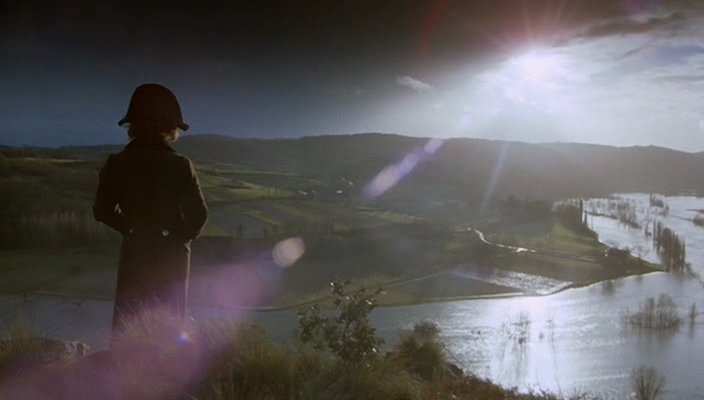

    PHOTO: A brooding Harvey Keitel in the extraordinarily beautiful “The Duellists”

Tag Cloud

Aaron Copland (92) Beethoven (95) Composer (114) Film Music (123) Film Score (143) Film Scores (255) Halloween (94) John Williams (187) KWAX (229) Leonard Bernstein (101) Marlboro Music Festival (125) Movie Music (138) Opera (202) Philadelphia Orchestra (89) Picture Perfect (174) Princeton Symphony Orchestra (106) Radio (87) Ralph Vaughan Williams (85) Ross Amico (244) Roy's Tie-Dye Sci-Fi Corner (290) The Classical Network (101) The Lost Chord (268) Vaughan Williams (103) WPRB (396) WWFM (881)

DON’T MISS A BEAT

Receive a weekly digest every Sunday at noon by signing up here


RECENT POSTS